
Applied History Project
-
Faculty Director
-
Co-Chair

-
Faculty

-
Associate Director

Applied History This Week: October 12, 2026
Article of the Week
“Trump Is Gutting America’s Core Geopolitical Advantage” by Robert Zoellick (Senior Fellow, Harvard’s Belfer Center; former US Trade Representative, Deputy Secretary of State, and President of the World Bank) in Foreign Affairs
Zoellick argues that a friendly North America is an American strategic asset and highlights the long tradition of support for closer economic ties with Canada and Mexico. Secretary of State William Seward, best remembered for buying new territory such as Alaska, in fact “envisioned a North American union created through free choice, not coercion or conquest...Commerce, he maintained, would be the new ‘god of boundaries’ that would redraw borders and pull countries together.” In the twentieth century, the US increasingly recognized the strategic value of integration. For example, the US cooperated with its southern neighbor despite Mexico’s “stunted democracy, prickly nationalism, and closed economy,” launching the Bracero employment program in 1942.
Quote of the Week
“What presidents and their advisers think are innovations usually are not that at all, but rather some earlier administration’s forgotten mistakes.”
– John Lewis Gaddis, Strategies of Containment (1982)
About the Applied History Project
The mission of Harvard’s Applied History Project is to revitalize applied history by promoting the production and use of historical reasoning to clarify public and private challenges and choices. Founded by Professors Graham Allison and Niall Ferguson in 2016, the Applied History Project builds upon the foundation laid by Professors Ernest May and Richard Neustadt in the 1980s, reflected in their book Thinking in Time: The Uses of History for Decision Makers.
Advancing its mission, the Project sponsors the Applied History Working Group of faculty members across Harvard University to organize discussions with scholars and practitioners; supports historians and policymakers in producing Applied History; develops courses in Applied History; funds the Ernest May Fellowships in History and Policy for pre- and post-doctoral students; and holds Applied History Events open to the Harvard Community and the public. Harvard’s project is one of the leaders among a rapidly expanding network of universities and think tanks that are furthering the discipline of Applied History by clarifying predicaments and choices to inform better decisions.
The Project gratefully acknowledges the Stanton Foundation's generous support for its Applied History endeavors.
Network Newsletter
Our latest monthly issue.
Latest Analysis
The latest Applied History insights from project faculty, fellows, and affiliates.
-
 Reports & Papers
Applied History in Practice
-
-
-
-
In The News
Building a Durable Peace in Ukraine
-
Applied History Course
"Reasoning from the Past: Applied History and Decision Making," taught by Fredrik Logevall, provides a basis for using history as a tool for analyzing foreign, security, and scientific policy, calling attention to some common fallacies in reasoning from history and discussing ways to avoid them.
Our Work
The Applied History project sponsors events, publishes a newsletter, and supports a course at the Kennedy School to fulfill its mission of promoting the production and use of historical reasoning in policymaking.
Engaging Historians and Decisionmakers

Former Secretary of Defense Jim Mattis, in conversation with Graham Allison: "Ultimately, a real understanding of history means that we face nothing new under the sun."

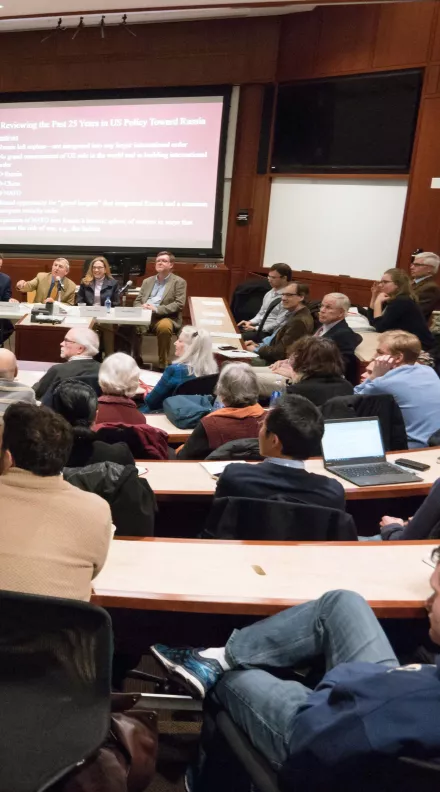
Niall Ferguson, Graham Allison, and Mary Elise Sarotte at an Applied History event on "The Collapse of the Soviet Union."

Niall Ferguson gave a presentation on "The History of the Future" with Nancy Koehn at a meeting of the Applied History Working Group.

John Lewis Gaddis discussing "Grand Strategy" in a seminar with the Applied History Working Group.
Seminars
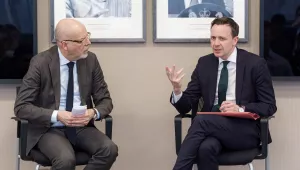
The Applied History Working Group of faculty members and affiliates across Harvard University and other institutions organizes discussions with scholars and practitioners to develop and support Applied History research and its use in policymaking.
-
-
 Seminar
Nathaniel L. Moir — Number One Realist: Bernard Fall and Vietnamese Revolutionary Warfare
Open to the Public -
 Seminar
Victory at Sea: Paul Kennedy on How Naval Power Reshaped the World
Harvard Faculty, Fellows, Staff, and Students -
 Seminar
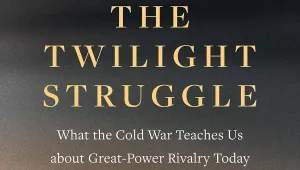
Hal Brands — The Twilight Struggle: What the Cold War Teaches Us about Great-Power Rivalry Today
Open to the Public -

-
 Seminar
Fiona Hill — There Is Nothing for You Here: Finding Opportunity in the Twenty-First Century
Open to the Public -
-
 Seminar
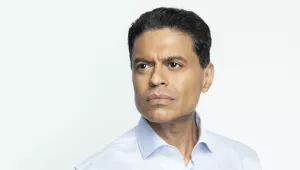
Fareed Zakaria – Lessons for Building Back Better
Harvard Faculty, Fellows, Staff, and Students