Article
The Cold War at the Top of the World
Calder Walton reviews Polar War: Submarines, Spies and the Struggle for Power in a Melting Arctic by Kenneth R. Rosen.
Author
Calder Walton

Research, ideas, and leadership for a more secure, peaceful world

Calder Walton reviews Polar War: Submarines, Spies and the Struggle for Power in a Melting Arctic by Kenneth R. Rosen.
Author
Calder Walton
Donald Trump has a habit of saying publicly what American strategists discuss privately. Some have complained that this tendency produces diplomatic chaos. However, his approach can expose uncomfortable strategic truths.
Greenland is a case in point. When Trump first proposed buying Greenland in 2019, critics viewed the idea as the fantasy of a property developer contemplating the world’s largest real-estate acquisition. But strip away the theatrics, and it’s clear that Trump had identified something important. Greenland occupies one of the most valuable pieces of strategic geography on earth. And its value is increasing.
That strategic proposition has now become policy. On September 22, 2026, Trump signed a new trilateral security agreement with Danish prime minister Mette Frederiksen and Greenlandic prime minister Jens-Frederik Nielsen. The pact does not give the United States Greenland, nor the sweeping political control Trump has claimed. It does something more practical: it turns Greenland into a more durable platform for American and NATO power in the Arctic while reaffirming Danish sovereignty and Greenlanders' right to self-determination.
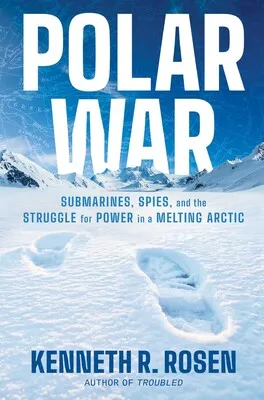
In a fascinating new book, Polar War: Submarines, Spies and the Struggle for Power in a Melting Arctic, Kenneth R. Rosen describes an Arctic undergoing two revolutions simultaneously. The physical environment is changing as ice retreats, opening waters to shipping and exposing resources. At the same time, the relatively cooperative post-Cold War Arctic is disappearing. Military rivalry and intelligence competition are returning to the High North.
Rosen provides a telling symbol of America’s predicament: icebreakers. Russia possesses a formidable fleet, including nuclear-powered vessels. America has precious few. The USCGC Healy, America’s principal Arctic research icebreaker, entered service a quarter-century ago. Rosen recounts breakdowns and shortcomings that become almost a metaphor for America’s Arctic position: impressive technology and global ambitions undermined by inadequate infrastructure and capacity.
Trump recognized the problem during his first administration, calling for a fleet of American icebreakers. In the Arctic, an icebreaker is more than a ship. It is infrastructure, scientific platform, intelligence asset and instrument of sovereignty rolled into one. Russia understands this better than anyone.
Look down at the world from the North Pole and Greenland suddenly ceases to appear peripheral. It dominates the approaches connecting North America, the Arctic and North Atlantic. The United States understood this during the Cold War. Today Pituffik Space Base, formerly Thule, remains critical for missile warning and space surveillance.
But today’s Arctic contest contains something the original Cold War did not: China. A report by the strategic intelligence firm, Strider Technologies, offers granular details of the new great game in the far north. The report, Shifting Ice, reveals an extraordinary transformation. Moscow traditionally regarded China’s Arctic ambitions suspiciously. Beijing proclaimed itself a “near-Arctic state” and proposed a “Polar Silk Road”. Russia wanted Chinese money without allowing China an independent strategic presence in its backyard.
Russia’s war in Ukraine changed Moscow’s calculation. Western sanctions and corporate withdrawals following Putin’s invasion created financial and technological gaps that China filled. In 2024, Strider identified 234 Chinese-owned companies registering to operate in Russian-controlled Arctic territory between January 2022 and June 2023, an 87 percent increase over the previous two years.
This is what geopolitical realignment looks like when viewed through corporate records rather than summit communiqués. There is a bitter irony at the heart of Russia’s strategy. Putin invaded Ukraine partly to reverse Russia’s supposed encirclement by western powers. Instead, he enlarged NATO. He also has made Russia increasingly dependent upon its enormous neighbor to the east. Nowhere is that paradox clearer than in the Arctic. The competition there is not simply about submarines and missiles. It is about resources.
As Rosen observes, the contemporary scramble accelerated after a 2008 U.S. Geological Survey assessment highlighted the Arctic’s enormous potential hydrocarbon wealth. Russia’s northern territories contain immense oil and natural-gas resources. Exploiting them requires investment, technology, infrastructure and customers. Western sanctions have made all four harder to obtain.
China offers alternatives. Strider documents expanding Sino-Russian cooperation in liquified natural gas (LNG), mining, transportation and infrastructure. Chinese companies invested in a massive, US sanctioned development, Arctic LNG 2. Chinese suppliers provided technology as western firms withdrew.
Then there is the Northern Sea Route. Cargo volumes have risen from approximately 31.5 million tons in 2019 to a record 37.9 million tons in 2024, before easing slightly to about 37 million tons in 2025. Remarkable resilience despite western sanctions on Russia. More significant still, transit cargo reached a record 3.2 million tons in 2025. A navigable northern passage can dramatically shorten some journeys between Asia and Europe, potentially cutting thousands of miles from the traditional route through the Suez Canal.
China sees not only Russian resources, but geography itself becoming available. Greenland presents another part of the same resource competition. It possesses significant potential deposits of rare earth elements and other critical minerals needed for electronics, batteries, radar, precision weapons and advanced technology. These obscure-sounding materials are essential to western economic security. China currently dominates many of their processing and supply chains.
Artificial intelligence makes them even more important. AI may appear to be a synthetic competition over algorithms, but its infrastructure is fundamentally physical: semiconductors, data centers, and electrical grids all require enormous quantities of energy and raw materials.
Greenland potentially offers Washington part of a strategy for reducing dependence upon China. But the most intriguing Arctic competition is invisible. Where great powers go, their spies precede them.
One of Rosen’s chapter titles captures it perfectly: “Scientists, Researchers, Diplomats, Spies.”
Nowhere is the ambiguity clearer than Svalbard. The Norwegian archipelago occupies extraordinary strategic geography north of the Norwegian mainland and west of Russia’s most important Arctic military installations on the Kola Peninsula. Norway’s unusual treaty status restricts military activity. But as Rosen shows, it is a nest of spies.
Svalbard hosts SvalSat, the world’s largest ground station for receiving data from polar-orbiting satellites. Its antennas support civilian scientific and meteorological missions, but satellite infrastructure inevitably has strategic significance. The station’s location makes it extraordinarily valuable for communicating with satellites passing over the poles. It is not difficult to see how damaging an act of sabotage could be to SvalSat. Weeks before the war in Ukraine, one of the two undersea cables connecting Svalbard to the mainland was cut. A Russian trawler was identified in the area.
Svalbard demonstrates what intelligence officers call the gray zone: activity below the threshold at which governments can confidently attribute hostile action and respond.
The intelligence contest may be becoming still more complicated. Norway’s Intelligence Service reported in 2026 that China had increased its Arctic activity and was expected to seek an enhanced presence on Svalbard, whose position is valuable for both polar research and future shipping routes.
The United States does not need to own Greenland to defend it against Russian and Chinese ambitions. It needed access, infrastructure, allied consent and a strategy. The new pact amends the 1951 defence agreement to provide all four. Washington may modernize and expand Pituffik Space Base, establish additional defence areas at Narsarsuaq and Mestersvig, and propose further sites by mutual agreement. American aircraft, vessels and forces receive broad rights of access, movement and overflight across Greenland and its territorial waters. The agreement explicitly anticipates a Golden Dome missile-defence system, stronger NATO exercises and joint intelligence collection. It also commits the parties to cooperate against espionage.
The economic clauses are just as revealing. Non-NATO states are barred from establishing military installations or maintaining a persistent military presence. Greenland must screen investment in sensitive sectors, including critical infrastructure and resource extraction, to prevent hostile control, influence or access to non-public information. China is not named, but it is plainly one of the principal targets. The contest over Greenland is now formally about rare earths, infrastructure and data as well as runways, radar and missiles. The arrangement has no end date, although it enters into force only after the necessary Danish and Greenlandic parliamentary procedures. If Greenland becomes independent, the parties intend that it should remain within NATO and inherit the agreement's obligations. This is a substantial American strategic gain. But Trump's claim of permanent American 'control' goes beyond the text: new defence areas still require mutual agreement, and the treaty expressly protects Danish sovereignty and Greenlandic self-determination.
That distinction matters. Trump identified the strategic problem but nearly converted an ally into an adversary by threatening force and economic coercion. The agreement shows that the same security objective could be achieved through alliance diplomacy rather than annexation. It strengthens the West's Arctic position, but Greenland's prime minister has acknowledged that trust with Washington must now be rebuilt.
Countless war games have simulated how an attack by China on Taiwan could lead to World War Three. History, however, tends to throw up surprises. The Arctic could also become a flashpoint between the United States, Russia and China.
It may begin with an LNG terminal. A mine. A scientific expedition. A fishing trawler lingering above an undersea cable. A satellite ground station. Or an 'accident' whose author can never quite be established.
Whatever the future holds, this much is certain: the Arctic ice is retreating. And, as it does, geopolitical fault lines are being exposed. The Greenland agreement does not end the new Cold War at the top of the world. It marks the moment the West began preparing seriously for it.
Statements and views expressed in this commentary are solely those of the authors and do not imply endorsement by Harvard University, the Harvard Kennedy School, or the Belfer Center for Science and International Affairs.
Walton, Calder. “The Cold War at the Top of the World.” October 15, 2026


From Intelligence Project