Intelligence Project
-
Director
-
Staff

-
Staff

Announcements
QLab Application Now Open: Applications for the QLab Spring 2027 cohort are now open! To apply, fill out this QLab Application by October 23, 2026.
QLab, a national security innovation accelerator at Harvard Kennedy School, brings together Harvard and MIT student entrepreneurs with intelligence and defense practitioners to catalyze solutions for real-world challenges. QLab organizes weekly workshops and guest speaker sessions with the QLab student teams during the spring and summer, featuring luminaries in defense strategy, venture capital, and emerging technologies.

QLab: Featured in The Washington Post
"A surprising thing has happened at Harvard University amid the Trump administration’s tirades about its supposedly “woke” culture: Defense technology has become popular on campus, with undergraduates and grad students racing to build start-ups through a defense-tech incubator called QLab."
David Ignatius writes about the real impact QLab is having on national security applications and in the private sector for The Washington Post.
The Latest
Find out the latest insights and ideas from the Intelligence Project.
-

-
 In The News
Opportunities Born of Revolution
-

-
-
-
 In The News
Unilateral Disarmament in the New Cold Wars
-
 In The News
Is the Trump Administration SNAFU or FUBAR?
-

Recent Research
Read the latest research from our project's experts.
-
-

-
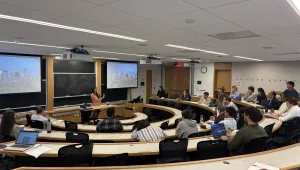
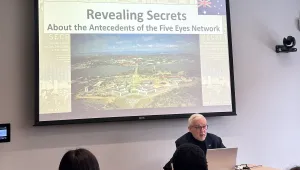
 Event Summary
Intelligence Skills in the Past, Present and Future
-
-

-

-

-
Our Mission
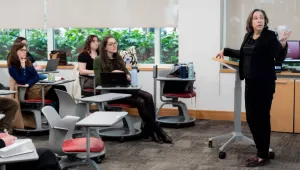
The Intelligence Project seeks to build a new generation of intelligence practitioners prepared to serve in a rapidly changing world and to help future policymakers and intelligence consumers understand how best to interact with intelligence to gain a decision advantage. Building on multi-disciplinary research at the Belfer Center, from history to geopolitics to emerging technologies, the Intelligence Project links intelligence agencies with Belfer researchers, Faculty, and Kennedy School students, to enrich their education and support public policy decision-making.
Program Activities
Our four main programming pillars:
Experts
Meet our expert staff



Experts
Meet our expert Senior Fellows & Senior Associates