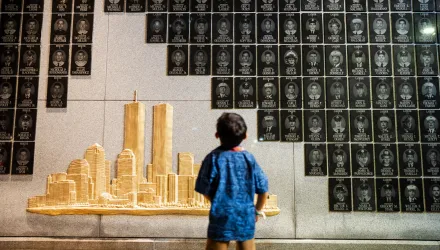
Belfer Reading Brief | The Strategic Discipline of Imagination: Lessons from 9/11 for the Threats Ahead
Twenty-five years after September 11, much of this month’s reflection will rightly be about remembrance. This month's Belfer Reading Brief considers the 9/11 Commission's conclusion that the most important failure before the attacks was “one of imagination.”
What threats then, and now, can we learn from pre-9/11 warnings about catastrophic terrorism, through the lessons of September 11 about institutionalizing imagination, to emerging challenges in biology, AI, and cyber?
Director's Note
Twenty-five years after September 11, much of this month’s reflection will rightly be about remembrance. For me, that remembrance is also personal: my uncle, Timothy O’Sullivan, was killed that day when the World Trade Center buildings collapsed. I have found myself thinking about how an event can remain part of a family’s private history even as it becomes part of the country’s public history. On this anniversary, we remember those who were lost. But it is also, for this Belfer community in particular, an occasion for us to ask what the experience of that day still requires of us.
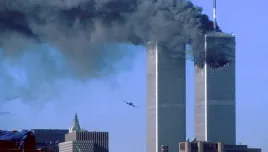
The 9/11 Commission concluded that the most important failure before the attacks was “one of imagination.” But that phrase is more complicated than it can sound twenty-five years later. Pieces of the danger had, in fact, been imagined. Officials had considered suicide hijackings, aircraft used as weapons, and unconventional terrorist attacks. What proved far harder was to systematically develop thinking about those possibilities, test assumptions against them, identify the indicators that might make plots visible, and turn analysis into institutional priorities and defenses. The deeper challenge was not simply to imagine once, but to make imagination part of how national-security institutions work.
This question also reaches back into the history of the Belfer Center. In the years before September 11, scholars here were examining catastrophic terrorism; covert nuclear, biological, and chemical attacks; and the weaknesses of American domestic preparedness. The Center’s Preventive Defense Project identified weapons of mass destruction and “grand terrorism” among the emerging dangers it sought to address. America’s Achilles’ Heel, one of the publications featured below, examined covert WMD attacks in 1998; work on catastrophic terrorism and domestic preparedness continued at the Belfer Center through the months before 9/11. None of this amounted to predicting what happened on September 11, and it would be a mistake to read it that way with the benefit of hindsight. But it points to an enduring role for institutions like ours in making room to investigate consequential risks before events force them to the center of the policy agenda.
That responsibility feels particularly important today. Advances in artificial intelligence, biotechnology, and laboratory automation are changing who can acquire powerful capabilities and how quickly they can spread. Cyber threats cross borders and institutional jurisdictions, while much of the infrastructure and expertise needed to detect and defend against them resides outside government. These challenges are different from the threat the United States faced in 2001, and treating each as a new version of 9/11 would obscure as much as it illuminates. But they pose a familiar strategic question: are our institutions built around the threats we already know, or are they capable of recognizing and preparing for dangers that do not fit established categories?
Strategic imagination is not prediction. Its purpose is not to guess the next catastrophe correctly. It is to widen the range of possibilities policymakers are prepared to consider, challenge assumptions before they harden into blind spots, and build systems resilient enough that surprise does not have to become disaster. That can mean red-teaming an unfamiliar attack scenario, creating new forms of public-private cooperation, improving detection and attribution, or asking how a new technology could alter the capabilities available to states and non-state actors. The point is to connect imagination to preparation.
This month’s Belfer Reading Brief follows that thread from pre-9/11 warnings about catastrophic terrorism, through the lessons of September 11 about institutionalizing imagination, to emerging challenges in biology, AI, and cyber. It closes with reflections on the twenty-five years since the attacks. The aim is not to turn every future danger into “the next 9/11.” It is to resist the temptation to prepare only for the last crisis. I hope these readings offer both an occasion to remember and a reason to think about what it means to address failures of imagination in this rapidly changing world.
Director of the Belfer Center for Science and International Affairs
Belfer Reading Brief | September 2026

Deterrence by Resilience: Securing the United States and Promoting Innovation in the Age of Bioconvergence
From Emerging Technology, Scientific Advancement, and Global Policy
America's Achilles' Heel: Nuclear, Biological, and Chemical Terrorism and Covert Attack
From International Security Program
The Path to AI Arms Control: America and China Must Work Together to Avert Catastrophe

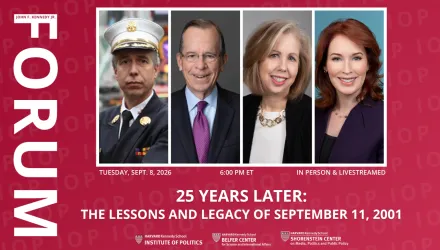
25 Years Later: The Lessons and Legacy of September 11, 2001