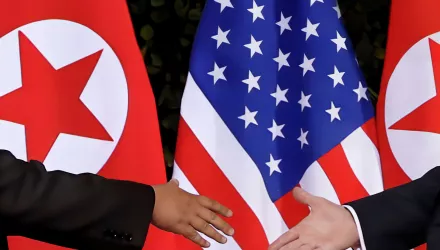
Assessing the Role of Security Assurances in Dealing with North Korea
After conducting nuclear weapon tests in 2006 and 2009, North Korea has increasingly insisted that it has become the world's ninth nuclear weapon state. Many interpretations of North Korean nuclear decision-making leading to this predicament are inadequate in explaining Pyongyang's nuclear behavior. While hostile U.S. policy is frequently cited by North Korea as the reason it needs a nuclear deterrent, a close examination of its nuclear behavior reveals that even when the United States offered explicit security assurances, North Korea continued with its nuclear weapons development. Are security assurances relevant in negotiating North Korea’s peaceful denuclearization?
Please join us! Coffee and tea provided. Everyone is welcome, but admittance will be on a first come–first served basis.