To compete and thrive in the 21st century, democracies, and the United States in particular, must develop new national security and economic strategies that address the geopolitics of information. In the 20th century, market capitalist democracies geared infrastructure, energy, trade, and even social policy to protect and advance that era’s key source of power—manufacturing. In this century, democracies must better account for information geopolitics across all dimensions of domestic policy and national strategy.
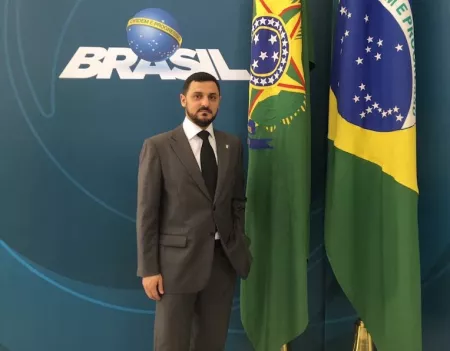
Hussein Kalout - Special Secretary for Strategic Affairs of Brazil, Political Scientist, Professor of International Relations - will be discussing Brazil's Middle East policy and its implications for the rapidly-changing balance of power in the region.
Mr. Kalout’s portfolio in the government includes, among other important matters, topics such as defense, security, intelligence, international politics, energy policy, science and technology. At Harvard, Mr. Kalout is an Associate of the Harvard Kennedy School Belfer Center’s Iran Project and a Research Scholar at the Center for Middle Eastern Studies. He was also previously a Fellow at the Weatherhead Center for International Affairs. Mr. Kalout is a Member of the Advisory Board of the Harvard International Review, Senior Associate at the Center for Strategic and International Studies (CSIS) in Washington-DC, and he has published widely in Brazilian and the international media outlets and academic journals.
The event will be co-sponsored by Harvard's Center for Middle Eastern Studies (CMES) and moderated by the Iran Project Director Payam Mohseni.