To compete and thrive in the 21st century, democracies, and the United States in particular, must develop new national security and economic strategies that address the geopolitics of information. In the 20th century, market capitalist democracies geared infrastructure, energy, trade, and even social policy to protect and advance that era’s key source of power—manufacturing. In this century, democracies must better account for information geopolitics across all dimensions of domestic policy and national strategy.
How can international law better protect both international security and the human rights of people fleeing violence? International refugee law protects only the refugees: those fleeing across borders due to a well-founded persecution on the basis of race, religion, nationality, political opinion, or membership in a particular social group. The world's other 42.3 million people displaced by violence have few protections under international law.
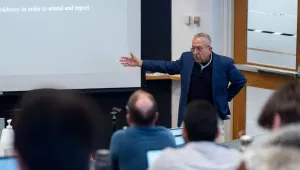
This presentation will argue that the refugee and migration crisis has resulted not only from intractable violence, but from the world's failure to manage it. It will then propose and sketch new international law to address this crucial human rights problem. A new Displaced Persons Convention would better protect the human rights of individuals fleeing violent conflict and state failure, further state interests, and improve international security.
Please join us! Coffee and tea provided. Everyone is welcome, but admittance will be on a first come–first served basis.