To compete and thrive in the 21st century, democracies, and the United States in particular, must develop new national security and economic strategies that address the geopolitics of information. In the 20th century, market capitalist democracies geared infrastructure, energy, trade, and even social policy to protect and advance that era’s key source of power—manufacturing. In this century, democracies must better account for information geopolitics across all dimensions of domestic policy and national strategy.
Some civil wars are marked by a surprising confluence of decisions on the part of the participants: the belligerents continue to fight but at low levels of intensity, while foreign states continue to support them in this dead-end endeavor. What distinguishes these quagmires from other civil wars?
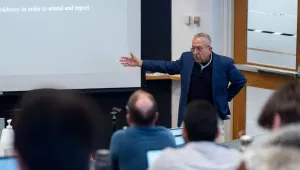
This seminar will study the channels through which the simultaneous interplay of three sets of interactions — between the warring parties, between each warring party and foreign backers, and the international rivalry between these backers — structures decision-making and thereby the likelihood of a quagmire. Episodes from the Lebanese civil war, 1975–1990, illustrate the theoretical mechanisms in action.
Please join us! Coffee and tea provided. Everyone is welcome, but admittance will be on a first come–first served basis.
Co-sponsored by the Middle East Initiative