To compete and thrive in the 21st century, democracies, and the United States in particular, must develop new national security and economic strategies that address the geopolitics of information. In the 20th century, market capitalist democracies geared infrastructure, energy, trade, and even social policy to protect and advance that era’s key source of power—manufacturing. In this century, democracies must better account for information geopolitics across all dimensions of domestic policy and national strategy.
Biography
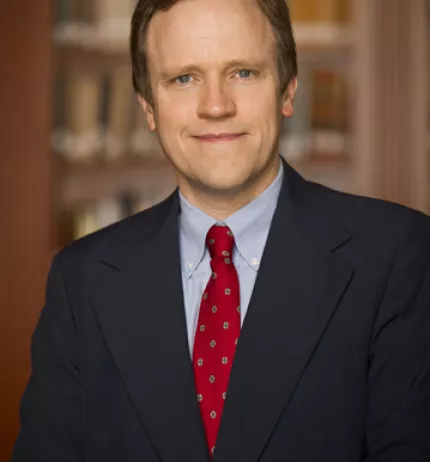
Bruce Rutherford is a non-resident research fellow at the Belfer Center's Middle East Initiative. He is an associate professor of political science at Colgate University. He is the author of Egypt after Mubarak: Liberalism, Islam, and Democracy in the Arab World (Princeton, 2008) as well as several articles and book chapters. His research project at the Middle East Initiative examines why the large-scale public demonstrations of the Arab spring produced such widely varying outcomes -- from a more open and democratic regime (Tunisia), to a deeper and more brutal authoritarianism (Egypt), to state weakening and regime collapse (Libya, Syria), to regime continuity with little change (Saudi Arabia, Morocco).
Last Updated: Jan 14, 2020, 1:17pm