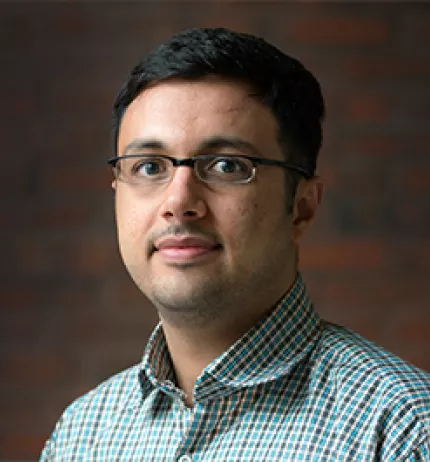
Jamal Ibrahim Haidar
Jamal Ibrahim Haidar is currently an assistant professor of economics at the Lebanese American University and a faculty affiliate at the Middle East Initiative at Harvard University. He joined the Lebanese American University after being an assistant professor of economics at the American University in Cairo for four years. He completed a three year postdoctoral research fellowship at Harvard University and his doctoral studies in economics at the Paris School of Economics, University of Paris-1 Pantheon Sorbonne in France. He also holds a master's degree in applied economics from Johns Hopkins University in the United States, a master's degree in international finance from Cass Business School, City University London in the United Kingdom. Previously, he also worked at the World Bank, International Finance Corporation, International Monetary Fund, and the Institute of International Finance in Washington DC. His fields of specialization are international economics and development economics. His economics research work investigated how exporters behave after sanctions; how business regulatory reforms affect economic growth; how job creation can be improved; how firms can learn from each other in international markets and export more; how investor protections can affect investment and economic growth, among other topics with evidence-based policy implications. His research work is available here and has been featured in The Economist, Wall Street Journal, Washington Post, La Tribune, Le Monde, Project Syndicate, and other media outlets. In addition, Dr. Jamal Ibrahim Haidar won the Abdul Hameed Shoman Arab Researchers Award in the field of economics in 2022.
-
Faculty Affiliate, Middle East Initiative
Former Postdoctoral Research Fellow, Middle East Initiative 2015 - 2016