Newspaper Article - The Australian
Niall Ferguson's Message from History's Ages of Disruption
An interview with Niall Ferguson for The Atlantic.
Social networks aren’t the answer. There are few instantly recognisable historians who have managed to bridge the divide between the academy and a wider audience through books, documentaries and newspaper columns like Niall Ferguson.
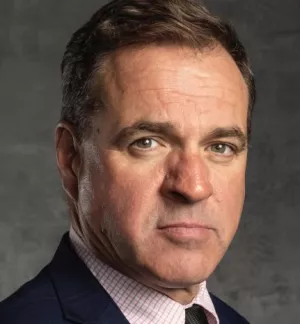
But the ever energetic and prolific Ferguson, who is often piercingly original yet infuriating to his critics, bristles at the description in countless profiles that he is handsome, dashing or even glamorous. “I am a 53-year-old Glaswegian father of five and I am frequently the precise opposite of all these descriptions,” Ferguson tells Inquirer in an exclusive interview.
Ferguson holds academic posts at Stanford, Harvard and Tsinghua University in Beijing. He is married to Somali-born political activist and writer Ayaan Hirsi Ali. As a couple, they brim with trans-Atlantic intellectual star power. But only rarely do Ferguson and Hirsi Ali appear together in public. They were the talk of Sydney two years ago when they held an audience enraptured at the Art Gallery of NSW and Ferguson gave a sold-out lecture at the Sydney Opera House. The charismatic one, Ferguson insists, is Hirsi Ali.
Ferguson is known for being forthright in defence of individual liberty. He brushes off the focus on his private life, which has provided fodder for the British tabloids. However, being attacked by the left for being an apologist for imperialism or a racist or homophobe, or just getting his facts wrong, only spurs him on. “I just pursue truth with a reckless disregard for how much it may upset people with erroneous views,” Ferguson says with relish.

Want to Read More?
The full text of this publication is available via the original publication source.
For more information on this publication:
Belfer Communications Office
For Academic Citation:
- Recommended
- In the Spotlight
- Most Viewed
Recommended
In the Spotlight
Most Viewed
Policy Brief
- Quarterly Journal: International Security
The Future of U.S. Nuclear Policy: The Case for No First Use
Discussion Paper
- Belfer Center for Science and International Affairs, Harvard Kennedy School
Why the United States Should Spread Democracy
An interview with Niall Ferguson for The Atlantic.
Social networks aren’t the answer. There are few instantly recognisable historians who have managed to bridge the divide between the academy and a wider audience through books, documentaries and newspaper columns like Niall Ferguson.
But the ever energetic and prolific Ferguson, who is often piercingly original yet infuriating to his critics, bristles at the description in countless profiles that he is handsome, dashing or even glamorous. “I am a 53-year-old Glaswegian father of five and I am frequently the precise opposite of all these descriptions,” Ferguson tells Inquirer in an exclusive interview.
Ferguson holds academic posts at Stanford, Harvard and Tsinghua University in Beijing. He is married to Somali-born political activist and writer Ayaan Hirsi Ali. As a couple, they brim with trans-Atlantic intellectual star power. But only rarely do Ferguson and Hirsi Ali appear together in public. They were the talk of Sydney two years ago when they held an audience enraptured at the Art Gallery of NSW and Ferguson gave a sold-out lecture at the Sydney Opera House. The charismatic one, Ferguson insists, is Hirsi Ali.
Ferguson is known for being forthright in defence of individual liberty. He brushes off the focus on his private life, which has provided fodder for the British tabloids. However, being attacked by the left for being an apologist for imperialism or a racist or homophobe, or just getting his facts wrong, only spurs him on. “I just pursue truth with a reckless disregard for how much it may upset people with erroneous views,” Ferguson says with relish.
Want to Read More?
The full text of this publication is available via the original publication source.- Recommended
- In the Spotlight
- Most Viewed
Recommended
In the Spotlight
Most Viewed
Policy Brief - Quarterly Journal: International Security
The Future of U.S. Nuclear Policy: The Case for No First Use
Discussion Paper - Belfer Center for Science and International Affairs, Harvard Kennedy School
Why the United States Should Spread Democracy