Presentations
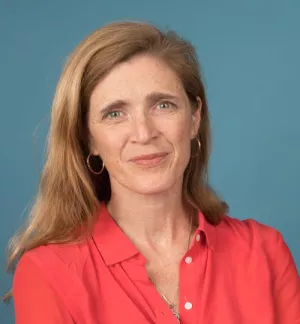
Remarks by Ambassador Samantha Power at the 2016 UN Security Council Open Debate on Women, Peace, and Security
Author
Samantha Power

Research, ideas, and leadership for a more secure, peaceful world

Author
Samantha Power

Thank you, Mr. President. Thank you very much, Secretary-General Ban, Under-Secretary-General Mlambo-Ngcuka, and Ms. Lopidia, for your briefings and your reality checks from the real world.
I have two impressions from this debate so far. First, the energy in the room is palpable; it’s not an energy we often feel here, and it is very fair to say that this agenda would not be before the Security Council if not for the work of nongovernmental organizations, civil society, women’s groups. This is something, I think, the Member States at the UN need to bear in mind, especially those who are increasingly trying to keep NGOs, civil society groups, and others from participating in UN meetings.
Second, listening to Council speakers, I am very struck that we are all drawing from the same handful of examples – and that’s kind of sad, that we only have a limited roster of very inspiring examples to draw from. And I think the true measure of our progress, perhaps – or another true measure of our progress – would be if each of us spoke and we were not repeating the same – Liberia, Yemen, et cetera. And you will hear me draw on the very same examples that my colleagues have drawn upon. So we’ve got to do better, and it’s incredible that women are fighting out in the world in the way that they are and giving us these great sources of inspiration and learning; but it shouldn’t be so exceptional, and there shouldn’t be so few.
Don’t get me wrong – there has been, of course, genuine progress since Resolution 1325 was adopted 16 long years ago. And some of that progress shows up on paper. In 2015, 70 percent of peace agreements signed had gender-specific provisions, compared to just 22 percent of agreements in 2010. That’s a big leap in a short period of time. Over the past year alone, 11 new countries completed national action plans explaining how they’re going to empower women to resolve conflict and promote development; that brings the total number, as we’ve heard, to 64. Some of the progress has been on representation, if not on this UN Security Council. There was at least one woman present in the delegations for nine of 11 active negotiation processes in 2015, compared to four out of 14 in 2011, so that’s not nothing. The United States continues to support this progress. President Obama released our second national action plan in June. And in addition to contributing $31 million to new initiatives launched over the past year, we’re also looking at – through our plan – looking at how to address new challenges, including how women can more effectively contribute to strategies on countering violent extremism.
Unfortunately, what the statistics miss is the persistent gap between how men and women actually contribute to peace processes. Even if women are present at the table, which is still too rare, men are the ones who almost always decide when and how to make peace. So today I want to talk briefly about why we need to do more to promote not mere participation, but meaningful, effective participation, with a stress on the word effective.
Let me start by describing the benefits of women’s participation. As we’ve heard – and again, these are the same studies all of us cite – peace processes are more likely to succeed when women are involved. One study of 40 peace processes since 1989 found that the more that women influenced a negotiation, the higher the likelihood that an agreement would be reached. Another study that we all cite found that the likelihood of a peace agreement lasting more than two years goes up by 20 percent when women are involved. Now why is that? In part, it’s because women often demand results. And when negotiations stall, as they inevitably do, women’s groups can help push for talks to resume and press the parties to reach consensus. And women tend to demand more than what is politically expedient or in their narrow self-interest. Again, this is on the basis of limited data, because of the limited participation. But women’s groups are known for lobbying for causes that do go beyond gender – including for human rights, transitional justice, and reconciliation – to be addressed in peace agreements. These are causes that are all too often deferred or ignored when women aren’t there.
Here, I will turn to the example of the Philippines. In negotiations between the government and the Moro Islamic Liberation Front, a group seeking greater autonomy for the country’s south, women were active at every level – from working groups to serving as lead negotiators. After negotiators reached an impasse in 2010, these women participants called for a national dialogue that generated new ideas to get the parties talking again. When violence broke out after the signing of the 2012 Framework Agreement, women helped organize protests calling for the parties to get back to the table. Or consider the Colombia peace process, where up to one-third of the participants at the table were women. These female representatives lobbied relentlessly so that those who committed sexual violence in the conflict would not be eligible for pardons, and they advocated for economic support to help women access new development opportunities in rural areas.
But these examples are still the exception. In Syria, South Sudan, and Yemen, men are the ones making decisions – even as we sit here – in negotiations. And maybe it’s time to heed the famous aphorism that the definition of insanity is to do the same thing over and over again and expect a different result. Too often, what gets labeled as women’s participation is just checking a box – a perfunctory meeting of male negotiators with female members of civil society. This matters not just for the content of a peace agreement itself; when children see peace accords signed by groups of men, the message received is that the men are the ones who matter in affairs of state and who are empowered to end conflicts. We don’t want young girls internalizing that message.
We members of the Security Council need to demand that women have the ability to influence the course of negotiations. Not just because women deserve it, which, of course, they do. But because when women are effective participants, meaningful participants, we have a better chance at achieving the mission of this Security Council, which is preserving peace and security.
That brings me to my second and final point. In places where sexual violence is used as a weapon of war, this Council needs to address more fundamental needs: protection of women and accountability for those who commit abuses. Consider, as we’ve heard, South Sudan. In South Sudan’s Unity State, government soldiers killed and raped civilians, pillaged homes, and destroyed livestock – forcing families to flee into swamps to hide. Anyone who left the swamps risked sexual assault. So when women had to start venturing out to find food, these communities reportedly nominated the oldest women to go first to protect the children and teenagers from being raped. And when the first ones grew too weak or had been raped too many times, these communities moved to the next oldest woman. Just imagine for a moment what the impact of these choices must be on the women of Unity State, South Sudan. Imagine that was your mother or grandmother, going out to shield your daughter.
Extremist groups are using medieval tactics elsewhere to subjugate women. We see this with Boko Haram, where the organization kidnaps schoolgirls to be forcibly married to fighters or brainwashed to be suicide bombers. And we see this with ISIL, when Yazidi women and girls are sold as sex slaves in markets.
So building peace in these conflicts must start by stopping the attacks against women, making sure that women will not be attacked with impunity. This means ending impunity generally, which we are not doing a good job of. These women, though, are not just victims of violence; their experiences need to be part of the long process of healing and rebuilding from a conflict. Recognizing their dignity means not just inviting them to negotiations, but making sure that they are not relegated to waiting in a side room for the men to break from the real negotiations and to deign to come in and receive their petition or hear their views.
That may sound simple, but frequently, Member States treat violence against women as a tragic byproduct of conflict, left to resolve itself once the men stop fighting. Protecting women from attacks and holding accountable those who commit these abuses need to be essential components of brokering peace – whether in our resolutions, in mediation processes, or in peace operations.
We’ve seen – and we live every day – how challenging this is. One place for members of this Security Council to start is to make certain that all components of the UN system do their utmost to keep women in conflicts safe. That is why the United States will continue to demand that peacekeeping missions carry out their mandates to protect civilians; and why the Secretary-General must ensure – as he recommitted to again today and as is stipulated in Security Council Resolution 2272 – that when there is credible evidence of widespread or systematic sexual exploitation and abuse by a peacekeeping unit, that that unit is swiftly repatriated. Zero tolerance must come to mean zero tolerance.
Let me conclude with Liberia. Nobel laureate Leymah Gbowee organized women who were fed up with the violence of Liberia’s civil war. When the negotiators went to Ghana, Leymah and her growing movement went, too – surrounding the negotiators in their hall to make sure that they did not come out until peace was reached. As she told a reporter at the time, the protest was “a signal to the world that we the Liberian women in Ghana at this conference are fed up with the war…and tired of fighting the killing of our people.” And, Leymah added, “We can do it again if we want to.” Imagine where we would be if every conflict had groups of women like this. Now imagine our world if people like Leymah were not just calling for peace from outside conference centers, but if she and others like her were sitting at the table on the inside. Before a conflict, during a conflict, and after a conflict, women must have an effective, meaningful, impactful voice. And we on this Council must not rest until paper progress becomes tangible progress and “check the box” participation becomes meaningful participation. I thank you.
###
Power, Samantha. “Remarks by Ambassador Samantha Power at the 2016 UN Security Council Open Debate on Women, Peace, and Security.” October 25, 2016