Book Chapter - Oxford University Press
In the Shadow of the Islamic State: Shi'i Responses to Sunni Jihadist Narratives in a Turbulent Middle East

Overview
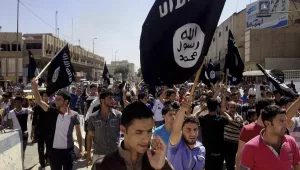
This chapter examines how the Arab Spring was gradually sectarianized, leading to the emergence of much more rigid and puritanical sect-based identities and inter-communal conflicts across the Middle East and extending even further outside of the region and across the Muslim-majority world. Using the social movement theory concept of 'framing,' it considers how the various political and armed actors involved in the Syrian civil war and the conflict in Iraq, including regional actors such as the Iranian government, Hizbullah, Sunni and Salafi actors in the Arab Gulf states, and Sunni rebel and other militant jihadi organizations such as Jabhat al-Nusra/Jabhat Fath al-Sham, Islamic State, Jaysh al-Islam, and Ahrar al-Sham, have drawn on competing historical narratives and memory in combination with contemporary events to produce a thoroughly modern but also selectively 'historicised' social mobilization narrative meant to encourage activism from their target audiences. The ways in which clashing historical memory and narratives are deployed in regional conflicts, which constitutes a form of re-fighting the past in the present, are analyzed. Specific historical references, such as the invocation of Shi‘i legendary heroes of Karbala such as Abu al-Fadl al-Abbas, which are today deployed as rhetorical weapons in geopolitical contests over power and political dominance, are also considered in detail.
About This Book Chapter
In the Shadow of the Islamic State: Shi'i Responses to Sunni Jihadist Narratives in a Turbulent Middle East
For more information on this publication:
Please contact
International Security
For Academic Citation:
Anzalone, Christopher. “In the Shadow of the Islamic State: Shi'i Responses to Sunni Jihadist Narratives in a Turbulent Middle East.” In Jihadism Transformed: Al-Qaeda and Islamic State's Global Battle of Ideas, Edited by Simon Staffell and Akil Awan, New York: Oxford University Press, 2016.

- Recommended
- In the Spotlight
- Most Viewed
Recommended
Report
- Hate Speech International
Continuity and Change: The Evolution and Resilience of Al-Shabab's Media Insurgency, 2006–2016
Analysis & Opinions
- OpenCanada
Who is Winning the Syrian Digital War?
In the Spotlight
Most Viewed
Policy Brief
- Quarterly Journal: International Security
The Future of U.S. Nuclear Policy: The Case for No First Use
Discussion Paper
- Belfer Center for Science and International Affairs, Harvard Kennedy School
Why the United States Should Spread Democracy
Report
- Belfer Center for Science and International Affairs
David Petraeus on Strategic Leadership
Overview
This chapter examines how the Arab Spring was gradually sectarianized, leading to the emergence of much more rigid and puritanical sect-based identities and inter-communal conflicts across the Middle East and extending even further outside of the region and across the Muslim-majority world. Using the social movement theory concept of 'framing,' it considers how the various political and armed actors involved in the Syrian civil war and the conflict in Iraq, including regional actors such as the Iranian government, Hizbullah, Sunni and Salafi actors in the Arab Gulf states, and Sunni rebel and other militant jihadi organizations such as Jabhat al-Nusra/Jabhat Fath al-Sham, Islamic State, Jaysh al-Islam, and Ahrar al-Sham, have drawn on competing historical narratives and memory in combination with contemporary events to produce a thoroughly modern but also selectively 'historicised' social mobilization narrative meant to encourage activism from their target audiences. The ways in which clashing historical memory and narratives are deployed in regional conflicts, which constitutes a form of re-fighting the past in the present, are analyzed. Specific historical references, such as the invocation of Shi‘i legendary heroes of Karbala such as Abu al-Fadl al-Abbas, which are today deployed as rhetorical weapons in geopolitical contests over power and political dominance, are also considered in detail.
About This Book Chapter
Anzalone, Christopher. “In the Shadow of the Islamic State: Shi'i Responses to Sunni Jihadist Narratives in a Turbulent Middle East.” In Jihadism Transformed: Al-Qaeda and Islamic State's Global Battle of Ideas, Edited by Simon Staffell and Akil Awan, New York: Oxford University Press, 2016.
- Recommended
- In the Spotlight
- Most Viewed
Recommended
Report - Hate Speech International
Continuity and Change: The Evolution and Resilience of Al-Shabab's Media Insurgency, 2006–2016
Analysis & Opinions - OpenCanada
Who is Winning the Syrian Digital War?
In the Spotlight
Most Viewed
Policy Brief - Quarterly Journal: International Security
The Future of U.S. Nuclear Policy: The Case for No First Use
Discussion Paper - Belfer Center for Science and International Affairs, Harvard Kennedy School
Why the United States Should Spread Democracy
Report - Belfer Center for Science and International Affairs
David Petraeus on Strategic Leadership