QLab Session Archives
QLab organizes weekly workshops and guest speaker sessions with the QLab student teams during the spring and summer, featuring luminaries in defense strategy, venture capital, and emerging technologies. Session summaries from past semesters are below!
For more information, or to see the most recent events, please see the main QLab page.
Spring 2026 Past Sessions
-
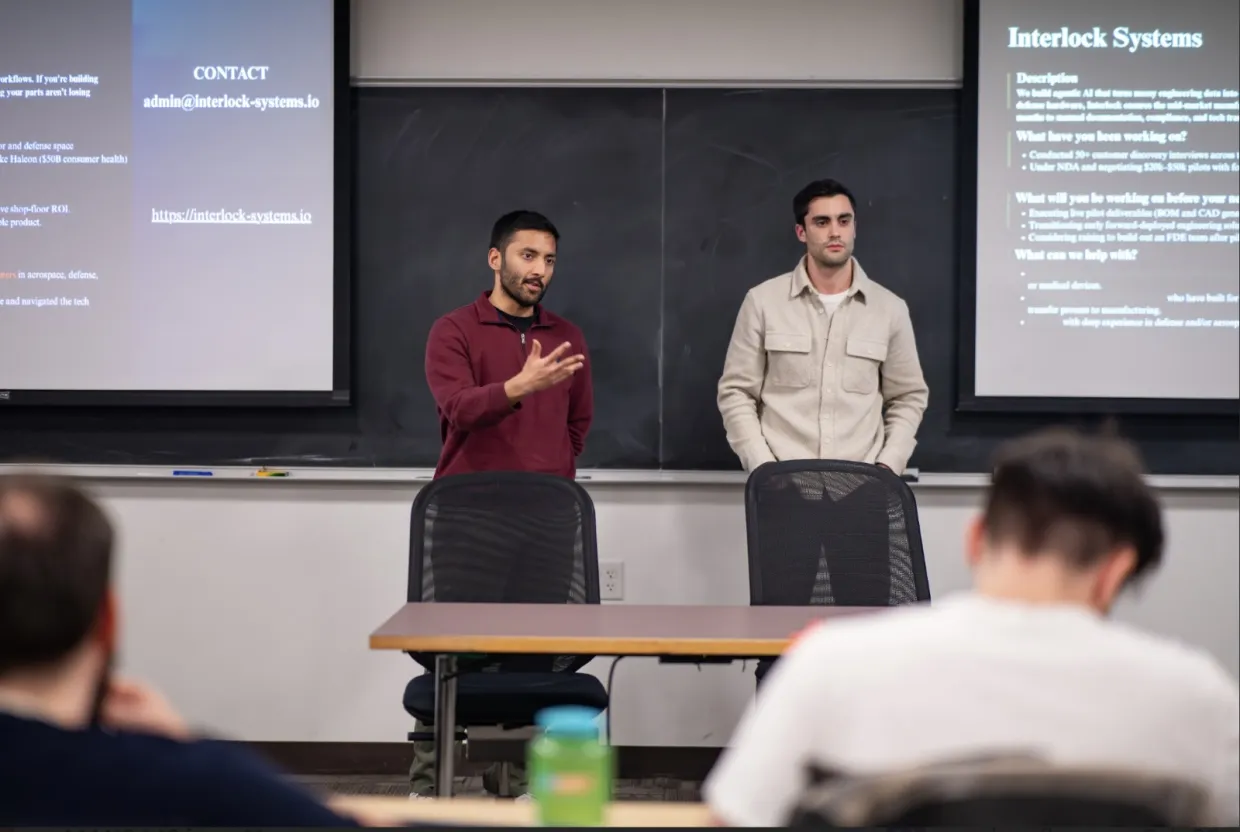
Lab's seventh session featured Erin Scott, Ph.D., from MIT Sloan, who introduced the Entrepreneurial Strategy Compass, a framework for how startups choose among fundamentally different paths to create and capture value. Scott walked teams through four core strategies defined by two key decisions: whether to collaborate or compete with incumbents, and whether to invest in control of a resource or speed of execution. The central message was that good ideas always have multiple routes to market, and each route implies different customers, different competitive dynamics, and a dramatically different version of success.
Scott also made the case for hypothesis-driven experimentation, citing research across over 3,000 startups showing that founders who formally write down and test their strategic assumptions terminate bad paths faster, pivot more deliberately, and generate more revenue. The practical takeaway for QLab teams was a simple discipline: formulate at least two distinct entrepreneurial strategies, design low-cost experiments to test the critical assumptions behind each, and then commit. Test two, choose one.
-
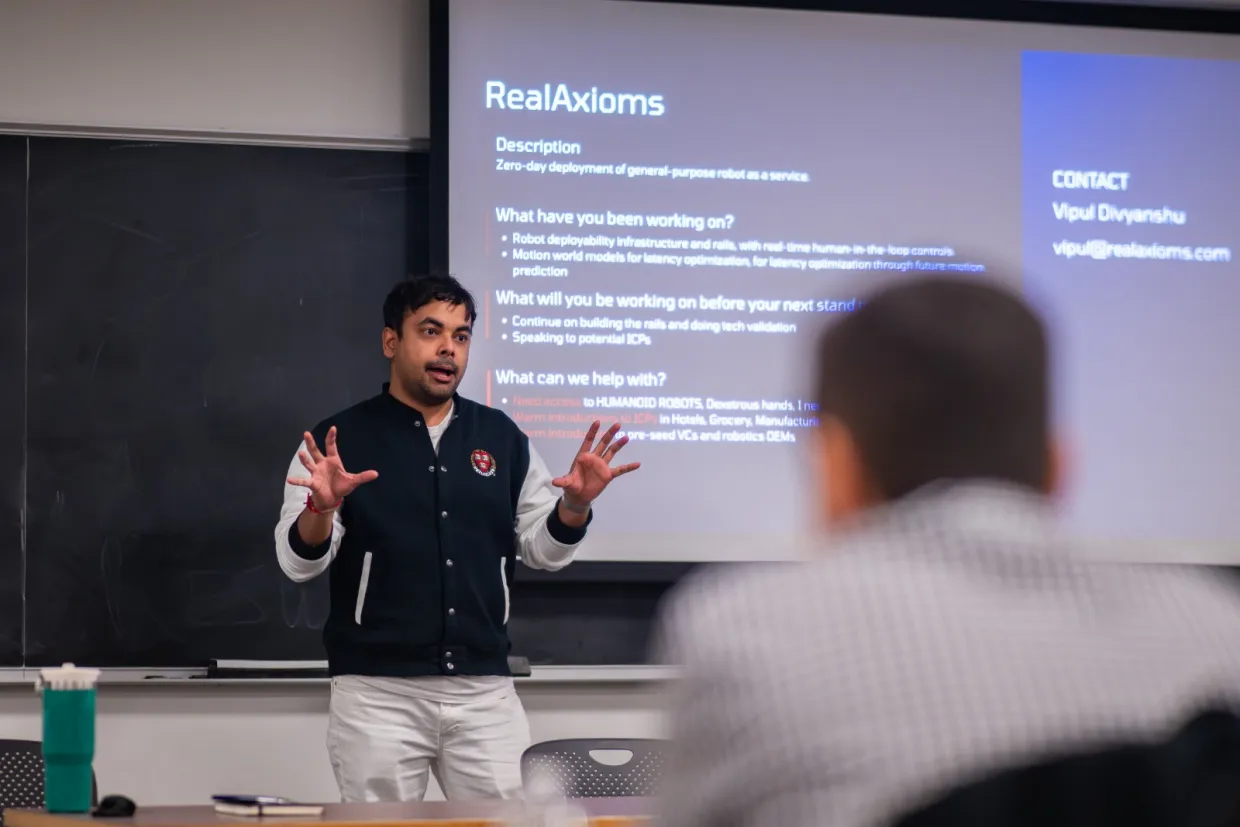
Lab’s sixth session featured Nick Sinai, former U.S. Deputy CTO, and Grant Demaree, founder of Onebrief, for a conversation about speed, authority, and innovation in national security. The discussion looked at how decisions get made under pressure, why large institutions often struggle to move quickly, and what it takes to create real progress without losing accountability.
One of the biggest themes was that speed does not come from urgency alone. It comes from having the right structure in place. That means clear decision-making authority, aligned incentives, and strong feedback loops between builders and the people actually doing the work. New ideas only create impact when teams can build trust through small wins, understand who has the power to say yes, and turn early momentum into real adoption.
The session also emphasized that moving fast still requires discipline. Teams have to be honest about constraints, stay grounded in the mission, and focus on outcomes instead of process for its own sake. For QLab teams, the takeaway was clear: if you want to move quickly, you need more than a good idea. You need the right champions, the right approvals, and something that operators can actually use.
-
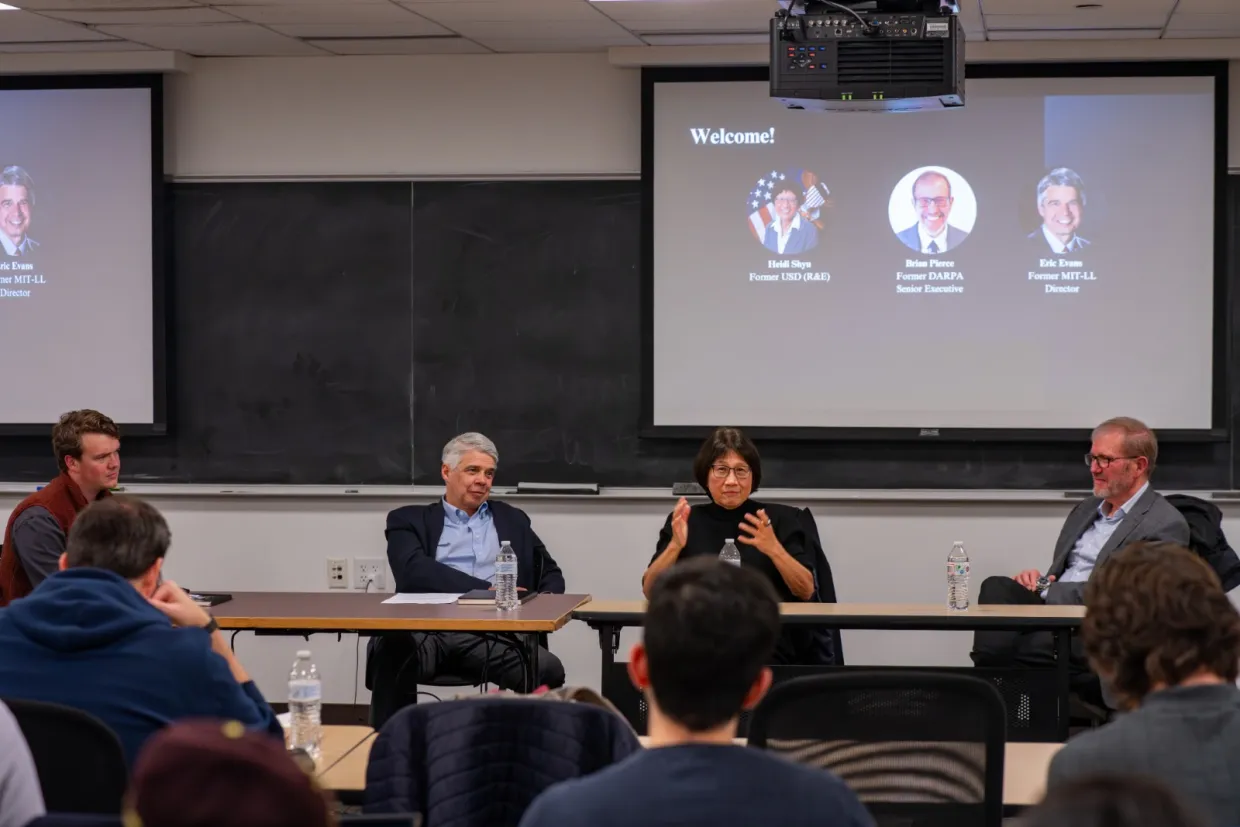
QLab’s fifth session focused on how the U.S. government funds, organizes, and carries out basic research, and what that system looks like from the inside. Eric Evans of MIT Lincoln Laboratory, Heidi Shyu, and Brian Pierce walked through the major institutions that shape federal R&D and explained how broad priorities turn into actual programs.
A big point from the conversation was that the federal research world is not one single system. Different organizations play different roles. Some are focused on early-stage science, some help move research toward prototypes, and others help bridge the gap to transition and adoption. For founders and researchers, that matters because where your work fits in the pipeline affects the timeline, the incentives, and even how success is measured.
The panel also got into practical ways to engage with the government, including grants, consortia, CRADAs, and pilot programs. The main takeaway for QLab teams was that this ecosystem can be understood and navigated, but it rewards people who do their homework and build relationships early. Learn how programs get built, show up before opportunities are fully formed, and connect technical progress to real mission needs.
-
QLab’s fourth session, How to Pitch, featured HBS Professor Randy Cohen in a practical conversation about how founders communicate value. The focus was on pitching as a core skill: taking something complex and explaining it in a way that is clear, convincing, and easy for others to repeat once the meeting is over.
The discussion came back to a few basics that matter whether you are talking to customers, partners, or investors. Start by defining the problem in simple language. Show who has that problem, why it matters, and how your solution addresses it in a real and concrete way. Just as important, explain why this is the right moment. The strongest pitches combine ambition with credibility. They show a big vision, but they also make clear that the founder knows how to execute.
The session also highlighted the founder qualities that build trust quickly: clear thinking, real focus on the customer, openness to feedback, honesty about risks, and the ability to keep improving. The main takeaway for QLab teams was that a strong pitch is not about putting on a show. It reflects how a founder thinks, how they respond to challenges, and how they are likely to build.

-
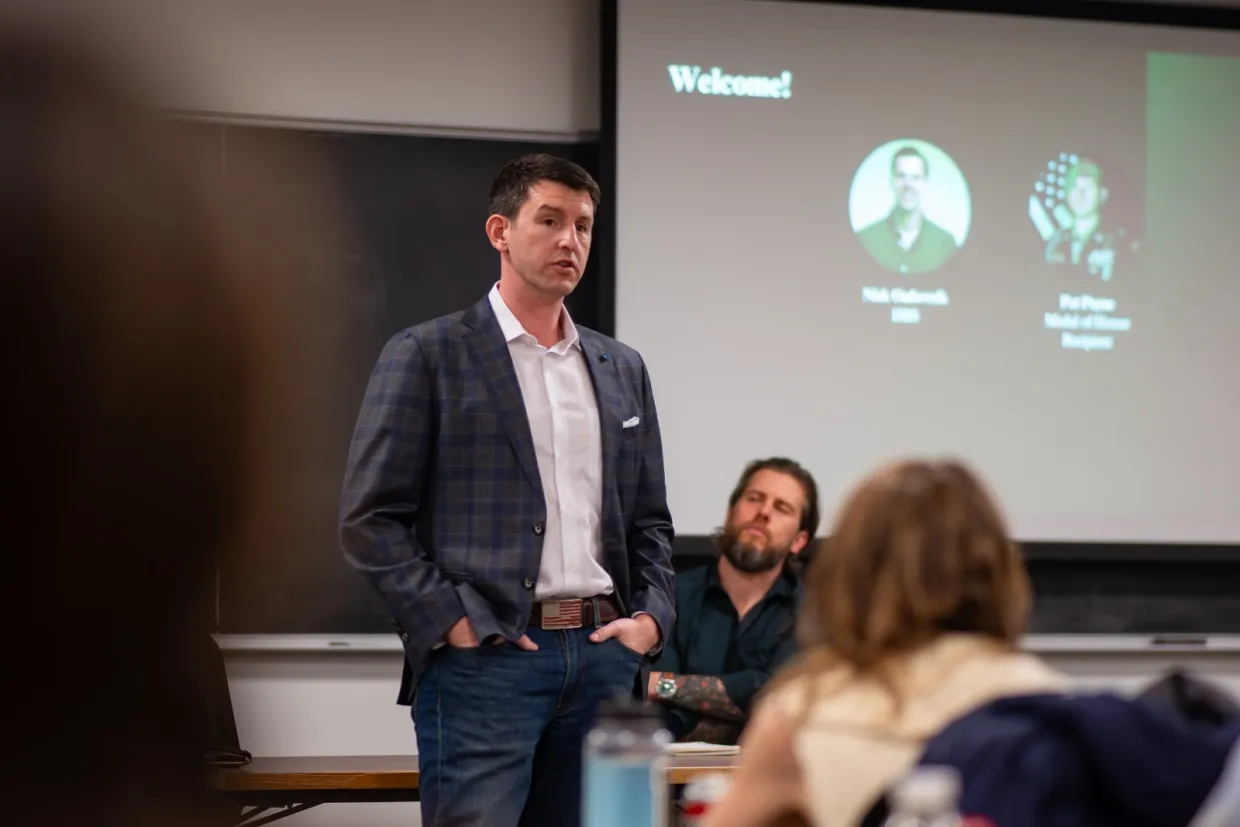
QLab’s third session, the End User Panel, focused on the people who actually have to use new technology in high-stakes settings. With practitioners working at the front lines of national security, including Medal of Honor winner Thomas “Patrick” Payne, the conversation made one thing clear: if you build for the bureaucracy instead of the mission, you are probably building the wrong thing.
The discussion focused on the real limits and tradeoffs that shape what gets used in the field. End users are not looking for the flashiest demo or the newest idea. They care about whether a tool helps them do their job under pressure, makes things easier, and fits into the way they already work. If a product creates more friction than value, it usually will not last in practice.
Trust came up again and again. It is not something you can talk your way into. It comes from showing that a tool works, solves a real problem, and makes the operator better right away. For QLab teams, the message was simple: start with the actual problem, get feedback from real users early, and build for the environment that exists, not the one you wish existed.
-
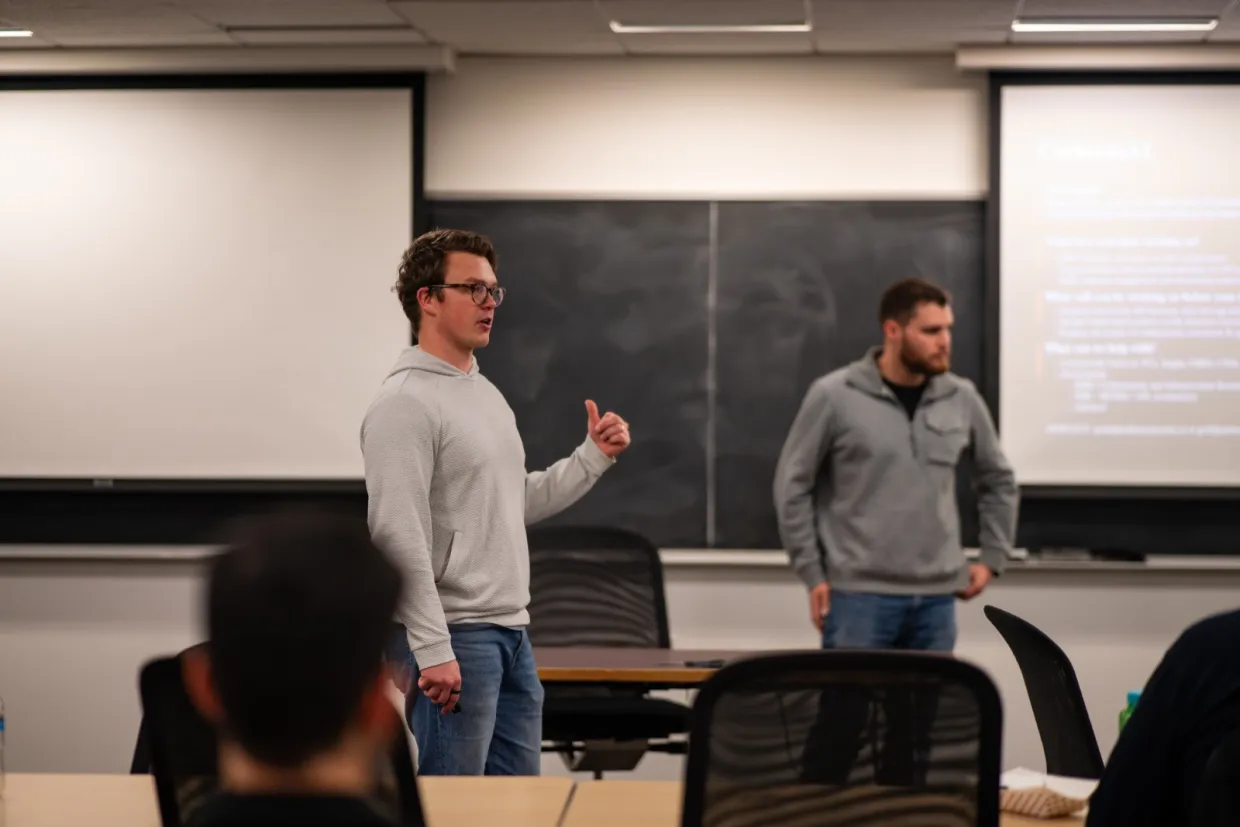
QLab’s second session featured QLab Founder Ryan Holte and Andrew Ermitano, Deputy Chief of Space Ventures at SpaceWERX, for a practical walkthrough of how dual use startups actually get adopted inside the Department of Defense. Ermitano framed the core challenge clearly: great technology does not fail because it lacks capability, it fails because the system is hard to navigate and founders do not align the right funding, the right contracting path, and validated demand.
The conversation focused on what founders can do differently. First, know your customer and understand the difference between the end user and the buyer. Founders need operator pull, but they also need to map who controls the budget and requirements, then build a path that connects the two. Second, plan for the budget reality. Getting into baseline funding takes time, so bridging strategies matter while longer budget cycles catch up. Third, choose the mechanism that matches your goal, whether that is speed for prototyping or a pathway that can actually scale.
The takeaway for QLab teams was simple: the “valley of death” is not mysterious. It is a set of predictable hurdles, and founders who design for adoption from day one give themselves a real shot at getting capability into the field.
-
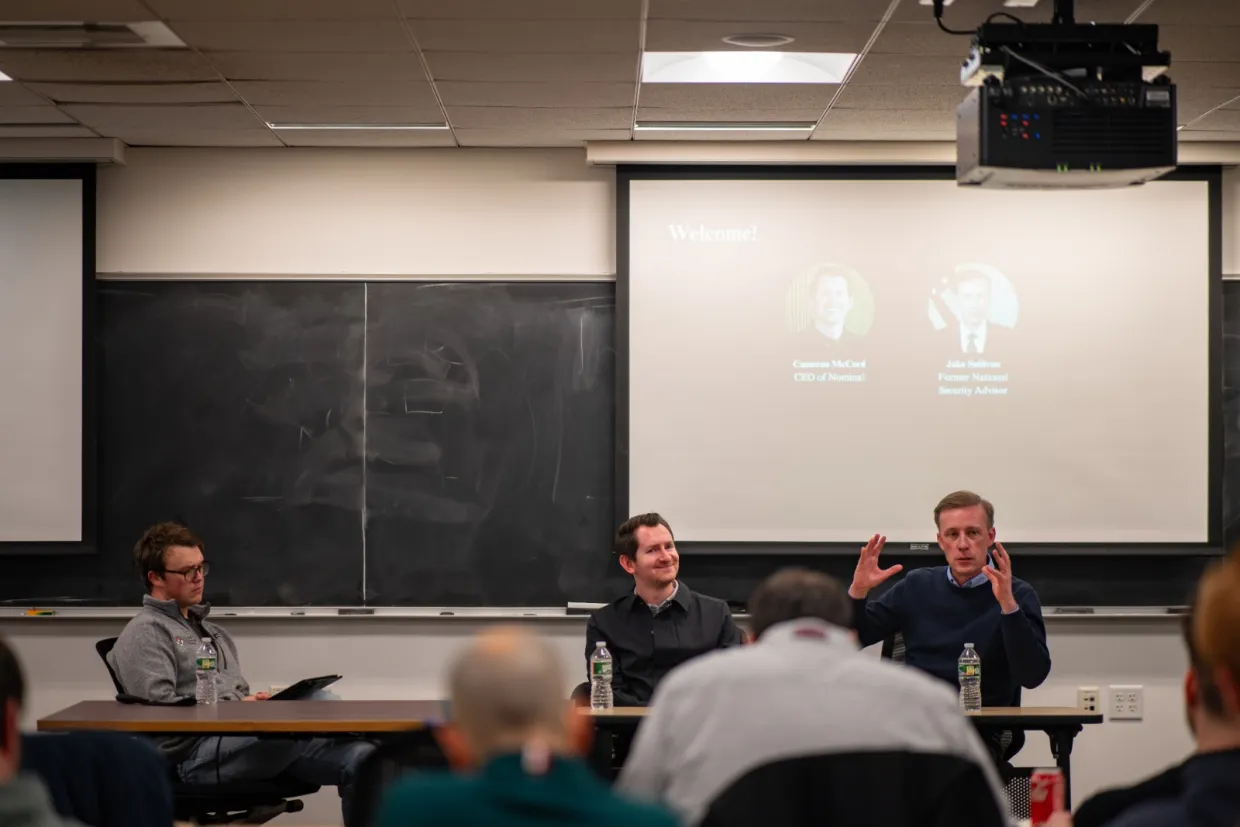
QLab kicked off the spring with Jake Sullivan and Cameron McCord for a wide ranging conversation on what it will take for the United States to win in dual use innovation. Sullivan reflected on how national security competition is increasingly shaped by industrial capacity, faster technology cycles, and the ability to turn policy into real outcomes. McCord brought the operator and founder view, sharing what breaks when programs cannot test and validate quickly, and why modernizing test and evaluation is a quiet force multiplier for deterrence and readiness.
Together, they returned to a few core themes. Speed is not a nice to have. It is strategic advantage, and delays in fielding compound across entire portfolios. Entrepreneurs need to understand how government actually works, then design a path that gets to real users, real budgets, and real adoption. On procurement, both were pragmatic: reform is possible, but founders should optimize for what is achievable now, not what they wish the system were. On AI and emerging tech, they emphasized responsible innovation, starting with strong data foundations and clear governance before adding more autonomy in mission critical systems.
They closed with a direct message to the room: the country needs builders who can pair mission clarity with execution. Move faster, stay grounded in real operational problems, and choose the hard path of getting capability into the field.
Fall 2025 Past Sessions
-
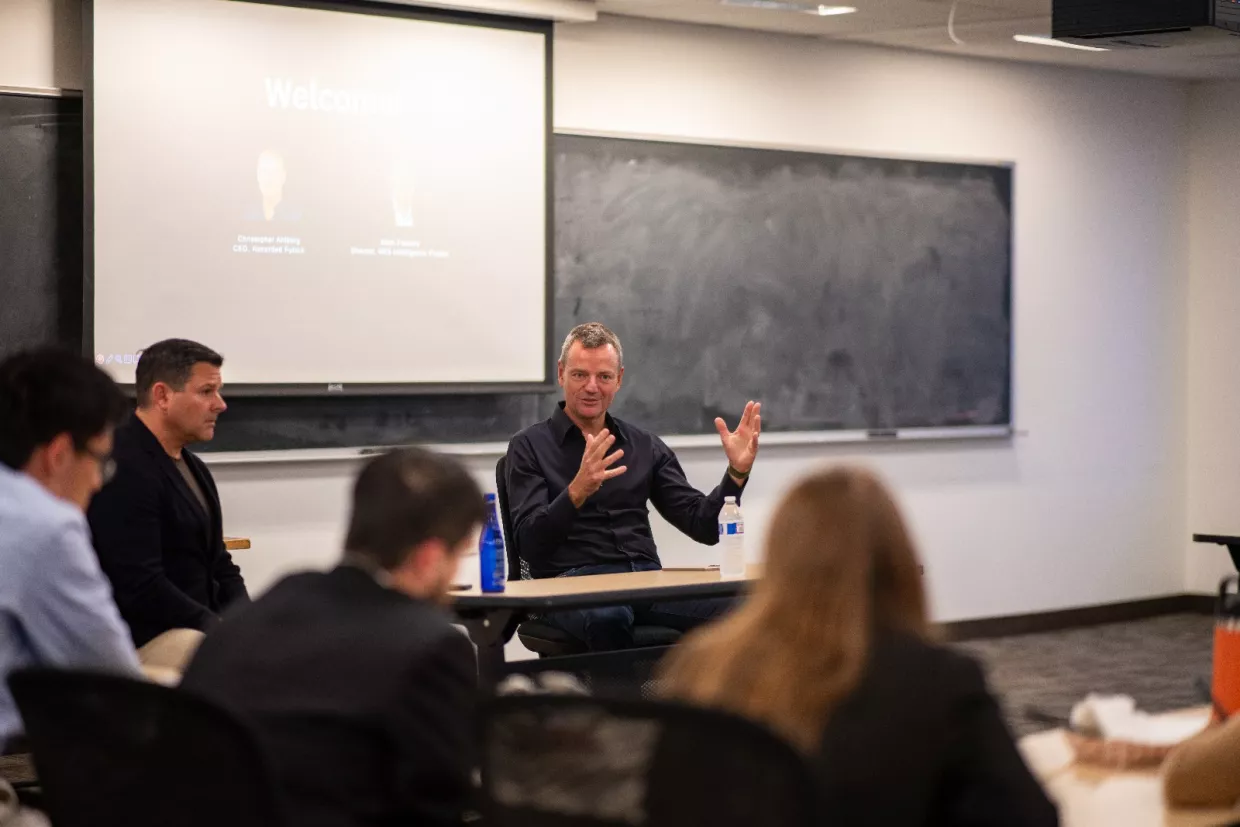
QLab welcomed Christopher Ahlberg, founder and CEO of Recorded Future, for a candid conversation on building one of the world’s leading threat intelligence companies. He reflected on the importance of partnering with government entities to unlock scale and impact, while also stressing the discipline of doing rather than overthinking as a founder. Ahlberg underscored the value of being uncompromising in hiring, choosing teammates who bring expertise and align with the mission and values. His story highlighted the intersection of entrepreneurship, national security, and relentless execution.
Summer 2025 Past Sessions
-
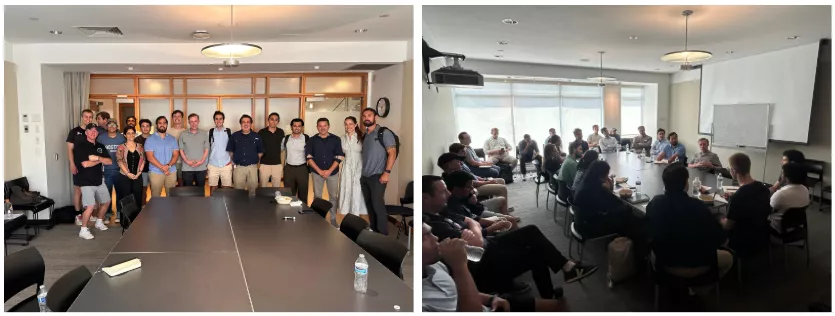
QLab welcomed Jake Sullivan, former U.S. National Security Advisor, for a timely and energizing discussion fresh off his remarks at Reindustrialize, the July summit in Detroit focused on American manufacturing and innovation. Reflecting on the experience, Sullivan shared two key takeaways: first, there is a deep well of national energy to build, solve, and scale, but the U.S. must urgently expand its capacity to manufacture at scale and deploy new technologies. Second, there’s growing recognition that innovation alone isn’t enough, it must be matched by execution and speed.
Sullivan closed by speaking directly to the QLab founders in the room. He emphasized their unique role in addressing the threats of tomorrow, whether in AI, autonomy, biotech, or beyond. With conviction, he noted that the future of American competitiveness may well rest in the hands of builders like those at QLab: fast, mission-driven, and unafraid to challenge the status quo.
-
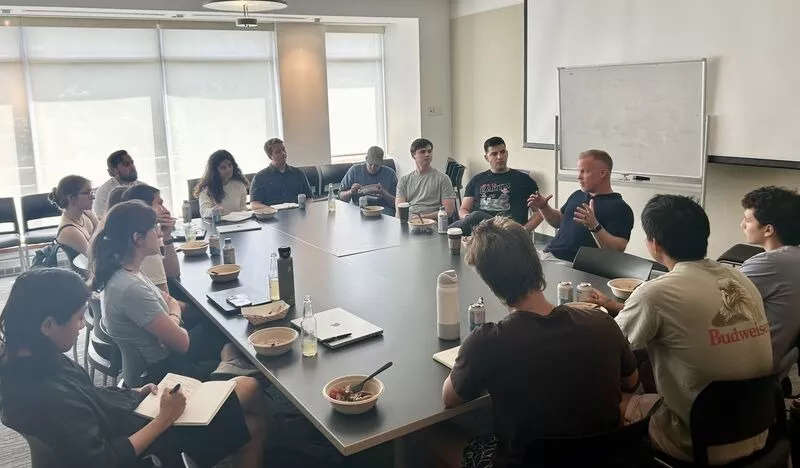
QLab welcomed Luke Fischer, Co-Founder & CEO of SkyFi and former CV-22 Osprey pilot, alongside J2 Ventures—SkyFi’s pre-seed backer—to explore what character-driven leadership looks like in dual-use startups. Fischer drew on a career that spans Special Operations missions, Uber’s global ops, Joby Aviation, and the Defense Innovation Unit, illustrating how combat-honed judgment transfers to company-building. He challenged founders to stay customer-obsessed, designing every UI choice around the end-user’s pain points, and to build a moat early, even if the defensible layer is not the first product you monetize. Culture, he argued, demands ruthless clarity: keep only A-players—“good enough” erodes mission speed—and remember that venture rounds signal opportunity but fundamentals and the right partners ultimately win markets. Fischer’s final reminder, delivered with the kind of iron-grip handshake that once commanded flight decks: resilience matters—stay in the gym, because decisive execution still counts.
-
QLab hosted Wilson Sonsini, a highly respected law firm for dual-use startups navigating high-stakes growth. Their team walked founders through the critical building blocks of startup formation, venture financing, and government contracting, tailored specifically to companies operating at the intersection of defense and commercial markets.
They broke down why most venture-backed startups incorporate as Delaware C-Corps, how to structure founder equity with vesting to avoid early missteps, and the nuances of equity financings from SAFE notes to Series A rounds. On the IP front, they emphasized the need for airtight assignment agreements and explained how to protect innovations while working with government agencies, including SBIR-funded projects. The team also addressed regulatory complexity, offering frameworks to navigate export controls, foreign investment (CFIUS), and the intersection of IP rights with government contracts.
The takeaway was clear: momentum and mission aren't enough, founders need the right legal foundation to scale both fast and smart.
-
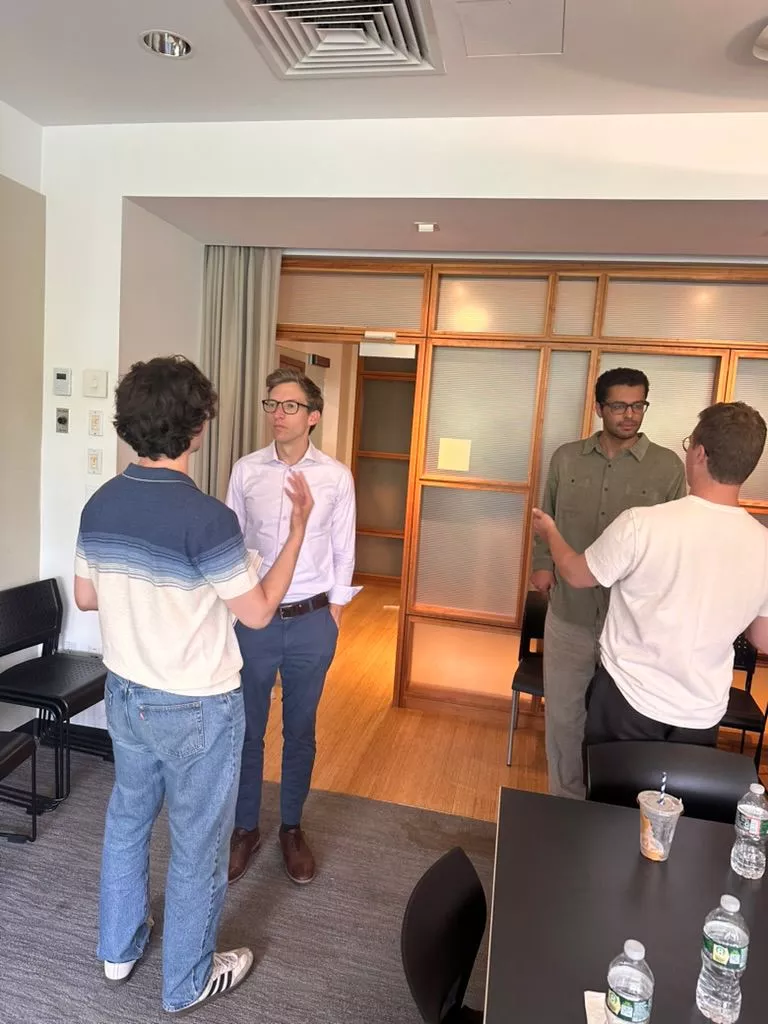
QLab welcomed Chris Miller, author of Chip War and leading voice on the geopolitics of semiconductors, for a wide-ranging conversation on the strategic stakes of emerging technology. Framing the current landscape as a race not just for innovation but for influence, Miller outlined what he sees as the most pressing gaps: a lack of manufacturing resilience, fragile supply chains, and insufficient collaboration between technologists and policymakers. He challenged QLab founders to think beyond product—to consider how their startups can shape systems, not just software. Innovation, he noted, is necessary but not sufficient; what's missing is deployment at scale and alignment with national strategy.
-
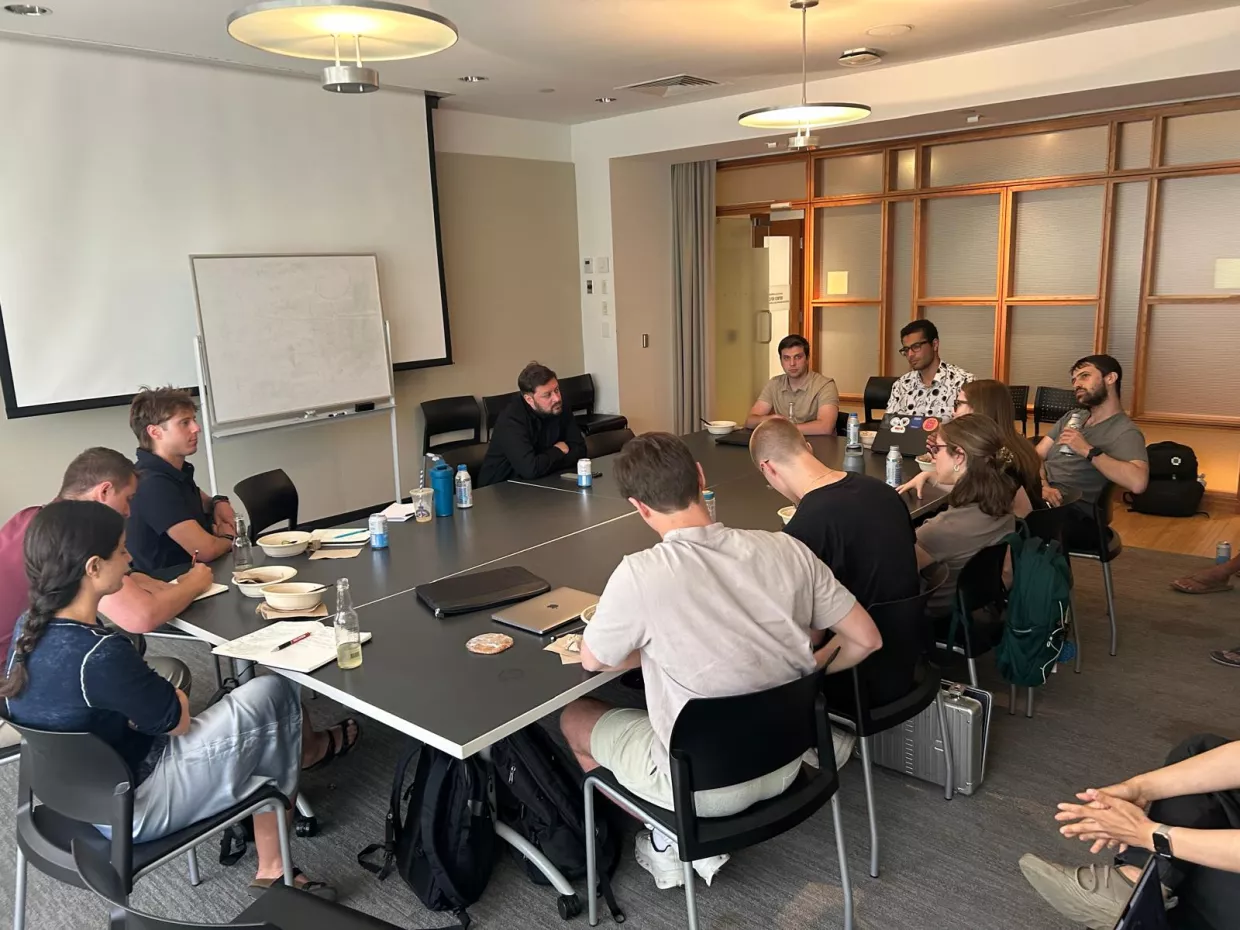
QLab welcomed Tarun Chhabra, Head of National Security Policy at Anthropic and former Deputy Assistant to the President for Technology & National Security at the White House. Drawing on his vantage point at the intersection of frontier AI and policy, Chhabra traced a sharp arc from today’s AI-safety imperatives to the strategic upheaval an eventual AGI could bring. He forecasted the “next wave” of defense technology and urged founders to pitch new technologies by anchoring every claim to mission-risk reduction, naming the stakeholder who owns the budget line, and showing a credible path to safe and scalable deployment within the Pentagon’s acquisition maze. The discussion left QLab teams excited about how to build responsibly and convince the right decision-makers at the speed of strategic necessity.
-
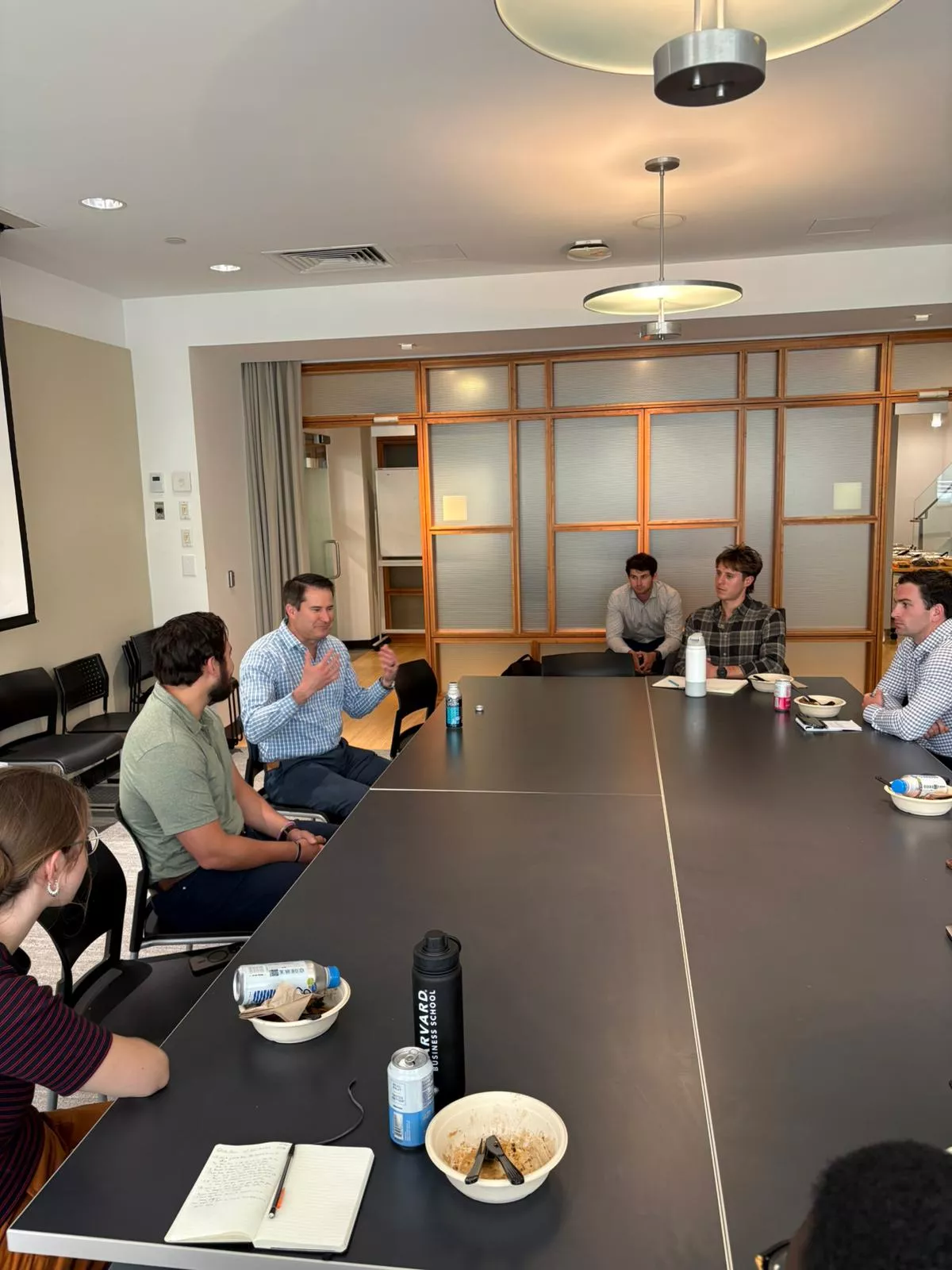
QLab continued its summer programming with Congressman Seth Moulton (MA-6), a Marine veteran and national security leader in the House, who offered founders a candid view from Capitol Hill. Framing his remarks around the generational challenge posed by China, Moulton emphasized the need for speed, bold thinking, and a modernized acquisition approach to maintain American advantage. He encouraged founders to not only innovate technically but to seek out champions within the Department of Defense, operators, program managers, and policymakers, who can help shepherd dual-use solutions from garage to ground truth. The session sparked an energetic dialogue on the role of emerging tech in national strategy and closed with a reminder: in today’s world, service can look like founding the right company.
-
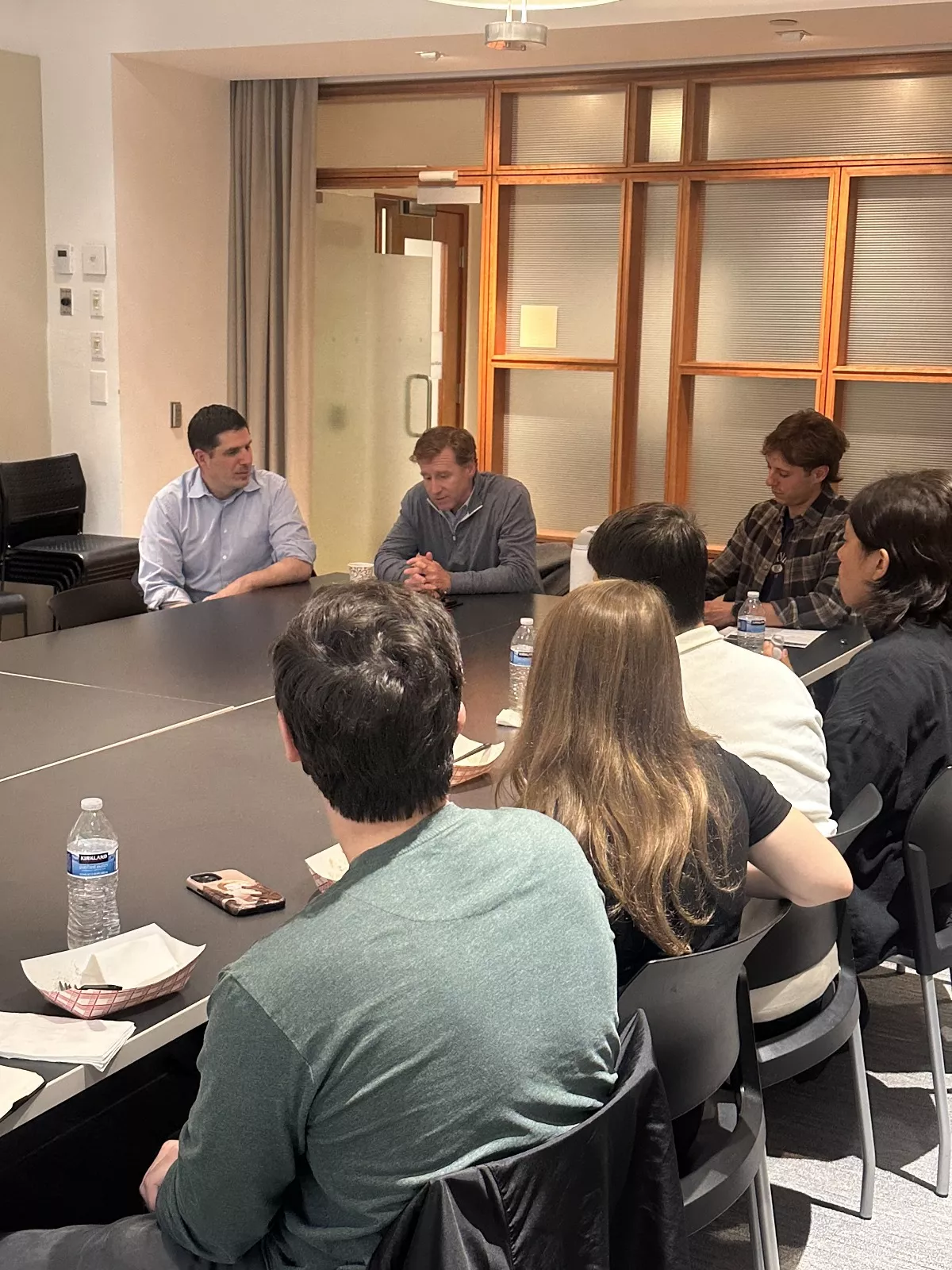
QLab kicked off its summer programming with John Serafini, CEO of HawkEye 360, and Nick Sinai, former U.S. Deputy CTO under President Obama, who brought hard-earned insight on navigating the earliest stages of dual-use venture building. Serafini, drawing on his path from concept to capital, emphasized the value of sequencing: secure strategic validation before raising venture. He recounted how early traction with Lockheed Martin helped derisk HawkEye 360’s tech and catalyze VC interest. Sinai offered a pragmatic lens on founder-VC dynamics, urging teams to ask: Why now? Why me? Why you?; framing each pitch around urgency, credibility, and investor fit. Both speakers echoed a shared truth: organic momentum matters. Build something people care about, and the right capital will follow.
Spring 2025 Past Sessions
-
QLab wrapped the spring term with Blake Hall—HBS alumnus, former Army officer, and Founder/CEO of ID.me—who traced his path from Harvard classroom insight to a unicorn dual-use venture. Drawing on experiences from his Army deployment that originally inspired ID.me, Hall underscored two early unlocks: rigorously validating a problem that straddled defense and commercial markets, and pairing non-dilutive funding with savvy venture backing to preserve speed and control. The talk segued into a celebratory dinner for QLab’s 14 spring teams, toasting milestones that included a Y Combinator acceptance, fresh pre-seed rounds, SBIR wins, and pitch-competition victories. Looking ahead, ten teams will remain in Cambridge for the Summer QLab Cohort to build their startups full-time.

-
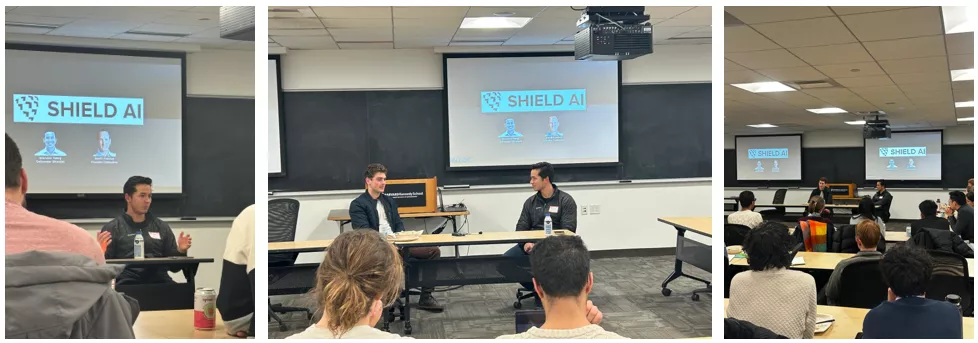
QLab welcomed David Rothzeid of Shield Capital—a venture firm investing in AI, autonomy, cyber, and space—and Peter Morales, Founder/CEO of Code Metal, for an energetic Q&A on the founder-investor relationship in dual-use tech. They explored how to balance commercial velocity with defense timelines, when to layer venture capital on top of grants, and the importance of shared mission focus between entrepreneurs and their backers.
The discussion equipped QLab teams with practical guidance on navigating early raises, structuring cap tables, and identifying investors who actively de-risk government pathways rather than slow them down. Founders left with clearer criteria for choosing partners who add real strategic value as they scale from prototype to program.
-
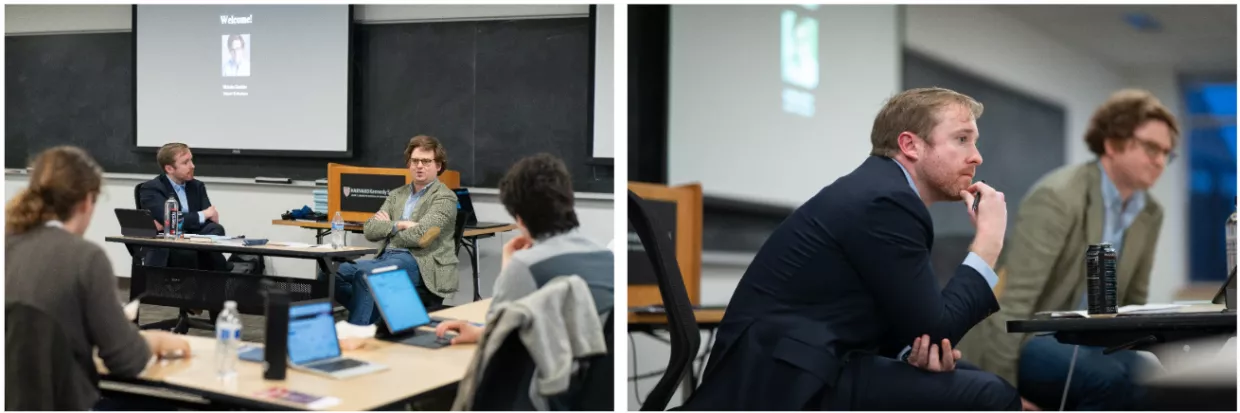
This week, QLab welcomed Nick Zamiska from Palantir, who discussed his co-authored essay The Technological Republic and how technology, conviction, and national security can shape the future of the West. Zamiska revisited Palantir’s landmark legal challenge against the U.S. Army—centered on the Federal Acquisition Streamlining Act (FASA)—which established key precedents allowing non-traditional vendors to compete for major defense contracts. Tracing Silicon Valley’s national security origins, he highlighted Palantir’s conscious choice to stay mission-focused while much of the tech sector shifted to consumer applications.
Zamiska also shared practical insights for dual-use founders seeking to align engineering-centric cultures with mission-first principles. He warned of bureaucratic traps like the “Meeting Industrial Complex” and overbuilt hierarchies, urging startup leaders to leverage public service as a strategic advantage. Emphasizing the responsibility of Harvard-affiliated innovators, Zamiska underscored the importance of adaptive governance, principled decision-making, and strong cultural foundations to address the nation’s most pressing security challenges.
-
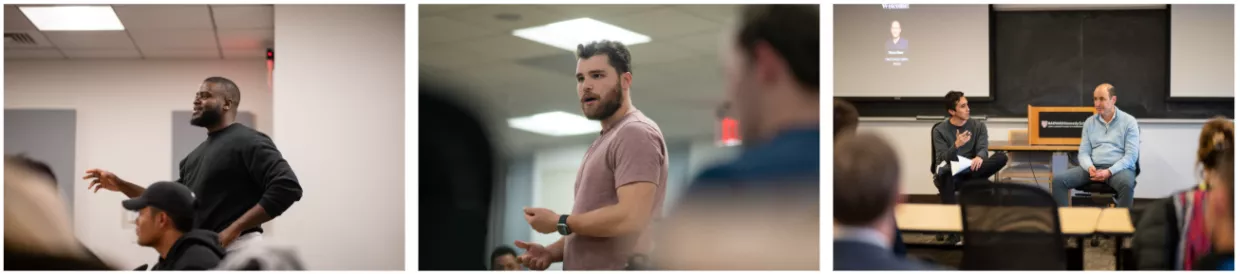
This week, QLab welcomed Nitzan Shaer, CEO and Co-founder of WEVO, for a fireside chat on early-stage fundraising, building a foundational team, interviewing effectively, and shaping company culture. Shaer, a former captain in the Israeli Air Force and an MBA graduate of Harvard Business School, has played key roles at Skype and Microsoft, and has co-founded four startups to date. He shared lessons learned from his entrepreneurial journey—from navigating pitch meetings without an established product-market fit to crafting an intentional culture that helps startups thrive.
Shaer offered practical tips for early-stage fundraising, underscoring the importance of identifying VC partners who bring more than just capital, such as mentorship and relevant networks. Founders often struggle with deciding how much to raise, and Shaer advocated for securing enough runway to reach clear milestones without over-diluting. When it comes to building the early team, look for "10Xers." Shaer also highlighted a few favorite interview questions designed to draw out how candidates handle ambiguity and whether they possess a learning mindset.
On the topic of culture, Shaer stressed the outsized impact of the first 10 hires. He believes that culture is partly set by the founders but also shaped by everyday behaviors: transparent communication, shared ownership of successes and failures, and establishing rapport through regular feedback loops. Throughout the session, Shaer’s overarching message was clear: by approaching funding, hiring, and culture with intentionality, early-stage ventures can accelerate their path to meaningful impact.
-
This week, QLab hosted John Griffin, who offered a behind-the-scenes look at how Department of Defense (DoD) funding and organizational structures truly work. Griffin began by clarifying the distinctions among Geographic Combatant Commands, Functional Combatant Commands, and Service Components, underscoring that while operators and end users often drive the immediate needs, the actual funding frequently comes from separate channels. He highlighted how organizations like the Defense Innovation Unit (DIU) or Office of Strategic Capital (OSC) can tap into unfiltered conduits of DoD leadership, accelerating access to decision-makers who wield real budget authority.
Griffin also stressed the necessity of familiarizing oneself with key legislative processes, such as the National Defense Authorization Act (NDAA) and annual appropriations cycles. Founders and innovators who understand how programs move from pilot to program of record will be far better positioned for long-term success.
In a testament to the growing momentum around QLab, the session saw robust attendance from cutting-edge operators across the Intelligence Community and several high-level venture capital allocators. Their presence created a unique blend of technical end users and financial backers—precisely the mix QLab aims to convene for maximum impact in national security innovation.

-
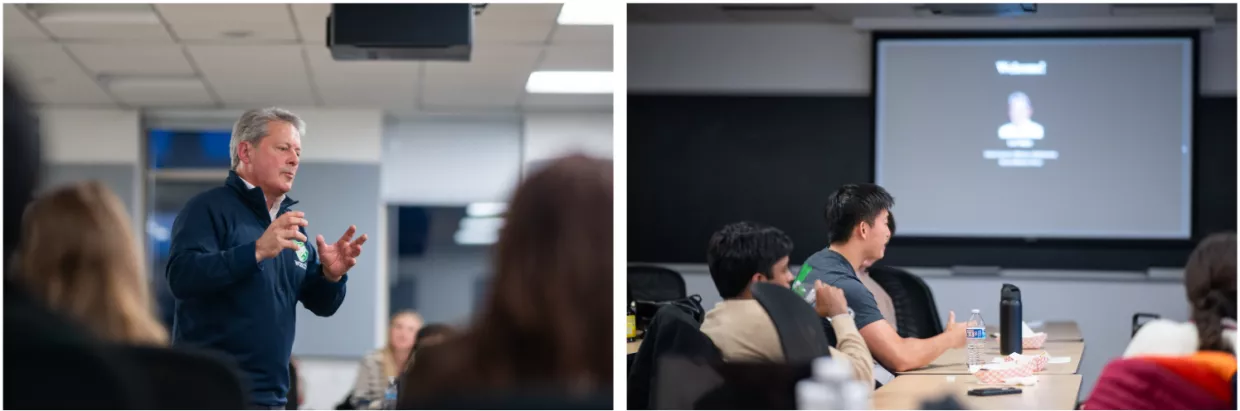
This week, QLab was thrilled to host Lou Shipley, a Senior Lecturer at Harvard Business School and a three-time tech CEO. Lou brings deep experience in scaling enterprise software companies and now teaches HBS’s Entrepreneurial Sales 101: Founder Selling. His session delivered a masterclass on founder-led sales—equal parts practical advice and hard-earned wisdom.
Lou reminded us that sales isn’t about being pushy—it’s about understanding the customer and solving their problem. Using frameworks like BANT (Budget, Authority, Need, Timeline) and SPIN (Situation, Problem, Implication, Need-payoff), he broke down how to qualify real opportunities. A key takeaway: the people who give you the most time often don’t have decision-making authority—those who do have authority rarely have time.
He emphasized that early-stage founders shouldn’t delegate sales too quickly. Instead, they should run the sales process at least 20 times themselves before even thinking about hiring a sales rep. Lou also cautioned against “happy ears”—don’t put anything in the forecast until it’s truly qualified, and sell to multiple stakeholders whenever possible. He closed by championing strong sales enablement: build a team that listens to sales calls, learns from losses, and supports future wins. For anyone serious about scaling their venture, Lou recommended The Sales Learning Curve as required reading.
-
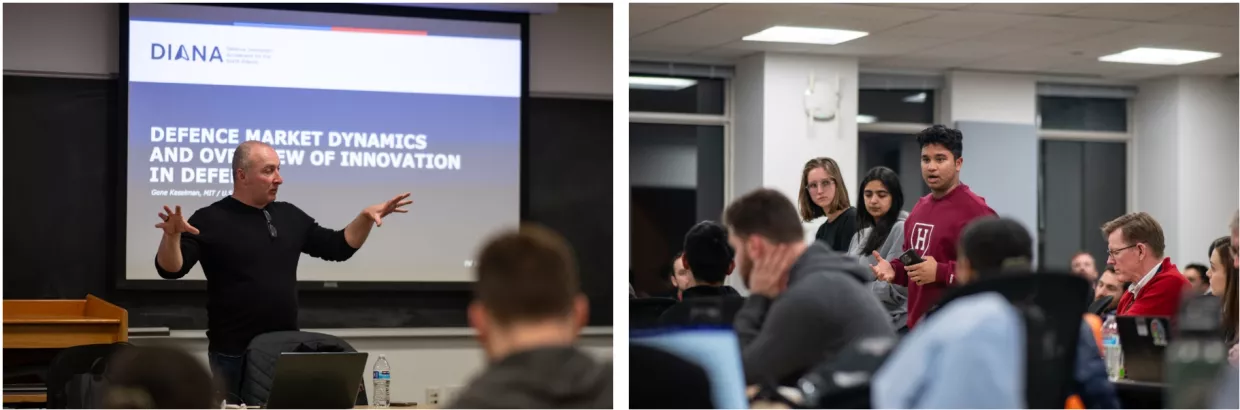
Gene R. Keselman — Lecturer at MIT Sloan, Executive Director of MIT Mission Innovation Experimental (MIX), and Managing Director of MIT’s venture studio, Proto Ventures — emphasized that dual use is a strategy, not a sector, referencing this War on the Rocks article. He explained that nearly any technology can be “dual use,” but startups must clearly define their government and commercial applications to determine if (and when) pursuing defense customers is worthwhile. Government procurement can be slow, which can hinder growth if founders haven’t identified the right end user and customer — or if they don’t understand critical budgeting processes like PPB&E. Keselman also touched on non-dilutive funding opportunities for European partners and underscored how QLab’s network helps bridge the gap, connecting innovators to the right stakeholders to validate and scale dual-use solutions.
-
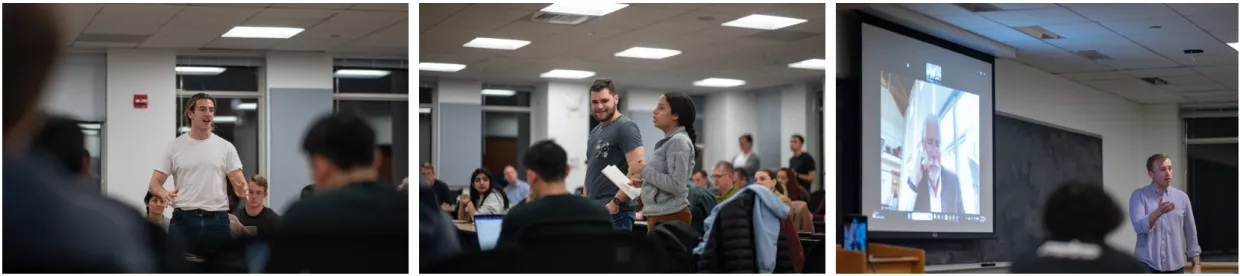
This week, the QLab was honored to host Steve Blank, the Silicon Valley entrepreneur and educator credited with co-creating the Lean Startup movement. Blank—who served four years in the U.S. Air Force during the Vietnam War and later co-founded eight high-tech startups—now teaches at Stanford, UC Berkeley, and Columbia. He pioneered the Customer Development process, wrote the influential books The Four Steps to the Epiphany and The Startup Owner’s Manual, and helped launch national programs like the NSF’s I-Corps and the Department of Defense’s Hacking for Defense.
During his QLab session, Blank stressed that tactical knowledge of government acquisition (FAR, SAM.gov, OTAs, SBIRs, etc.) is essential for breaking through the bureaucracy in a national security startup. He urged founders to stay laser-focused on the end user’s problem, warning that any drift from true problem-centric thinking dilutes a venture’s mission. Finally, Blank revisited his hallmark concept of the Minimum Viable Product (MVP)—emphasizing that while an MVP tests assumptions and gathers feedback early, it isn’t simply a “lite” version of the final product. Instead, it’s a strategic milestone that, if defined with a clear goal, saves time, money, and a great deal of frustration along the path to innovation.
-
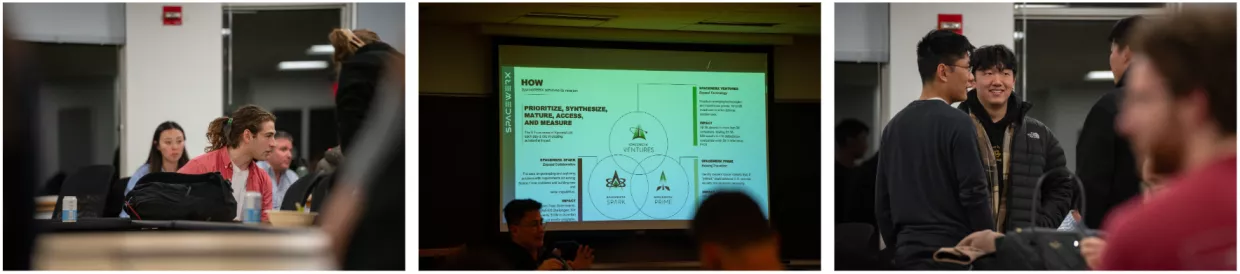
QLab hosted SpaceWERX Leadership, welcoming Capt. Andrew Ermitano, Dani McNeely, and Mary Shippy from SpaceWERX for an insightful discussion on the future of space innovation. The session highlighted SpaceWERX’s three focus areas:
Spark – Fostering collaboration to solve Space Force challenges, with thousands of open topic submissions and six ongoing challenges.
Ventures – Investing over $5.5 billion in emerging technologies, supporting 3,000+ companies.
Prime – Identifying markets to enhance national security, with 175 Orbital Prime contracts totaling $112 million.
SpaceWERX funds innovation through SBIR/STTR programs, offering $75K-$1.9M for small businesses to develop and transition space technologies. Additional STRATFI/TACFI funding provides $375K-$15M to scale solutions.Key investment areas include Tactically Responsive Space, Alternative PNT, Digital Spaceports, and Sustained Space Maneuver, ensuring U.S. space dominance. The Cohort Development Program supports startups through mentorship, partnerships, and networking.
SpaceWERX leaders encouraged innovators to engage in funding opportunities, challenges, and partnerships. QLab looks forward to continued collaboration in driving space technology, economic growth, and national security advancements.
-
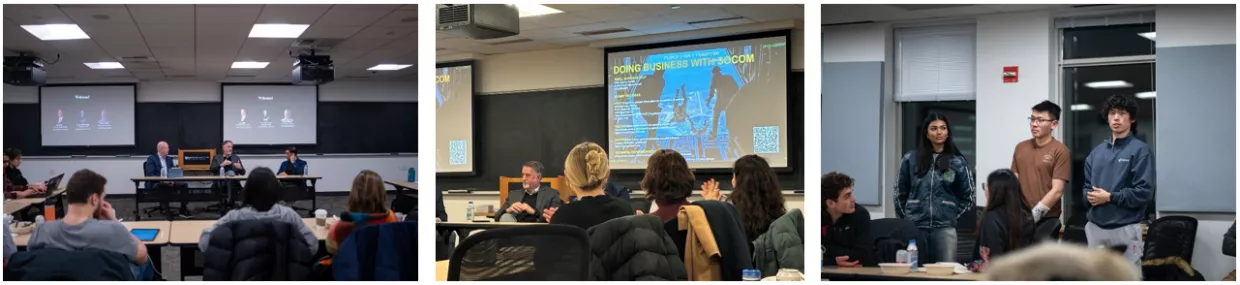
This week, the QLab welcomed Jim and Adam from U.S. Special Operations Command (SOCOM), who offered an insider’s perspective on how SOCOM operates as both a Combatant Command and an acquisition authority. They highlighted SOCOM’s unique structure, including its early embrace of SOFWERX—a pioneering “Werx” model connecting capability providers with fewer barriers to entry. They also detailed various pathways SOCOM uses for rapid innovation, ranging from Other Transaction Authorities (OTAs) to Software Acquisition Pathways, provisional Authority to Operate (ATO), SBIR funding, and the deployment of SOCOM liaisons to key tech hubs. A key takeaway from their talk was the importance of understanding your environment as you evolve from idea to product to scale—and knowing which allies can help you reach critical milestones along that journey. It was another productive and insightful session for the QLab!
-
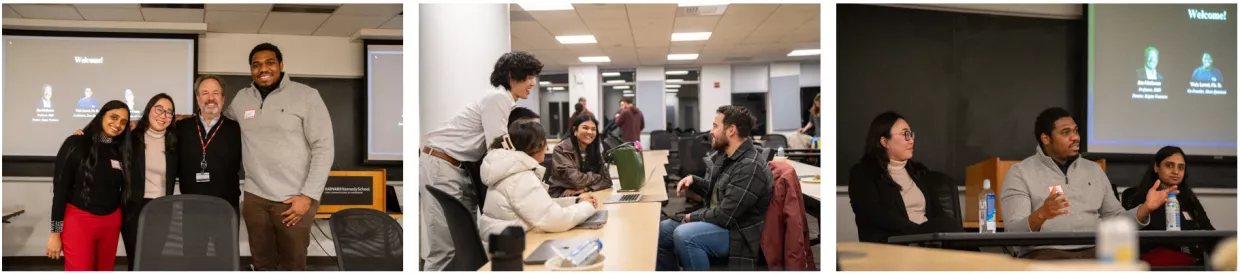
This week, the QLab welcomed Professor Jim Matheson (HBS Professor and former Navy F-14/18 pilot), Mesa Quantum founders Sristy Agrawal and Wale Lawal, and Christine Keung (General Partner at J2 Ventures) for its second session. Professor Matheson drew on his operational expertise and academic background to emphasize the importance of thoughtful, early-stage team dynamics and the value of leveraging both venture capital and non-dilutive funding sources in tandem. Sristy and Wale from Mesa Quantum shared candid insights into building a strong founding team—even when it means having uncomfortable but necessary conversations about “fit” with close friends. Christine underscored the significance of aligning with investors who truly understand your problem space, as specialized venture capitalists can appreciate (and fund) your vision more effectively than generalists. It was another inspiring and educational session for the QLab!
-
This week the QLab had its inaugural session! Following welcome remarks, Team introductions and an overview of the program, the QLab hosted speakers Brandon Tseng, Cofounder of ShieldAI, and David Frankel, Founder of Collective. Brandon, who holds an MBA from HBS, spoke about his transition from serving in the Navy to becoming an entrepreneur, challenges a new business might face in the defense-tech ecosystem, and insights into ShieldAI's development, including how to successfully navigate the defense-tech arena and work with the government. David shared what an investor looks for in a founder, while Brandon shared what to look for in an investor, with both agreeing that it is an important partnership. It was an exciting and inspiring first session for the QLab!