
Belfer Reading Brief | Great Power Rivalry and the Room for Statecraft
Can strategic competition be managed?
The U.S.–China rivalry is the dominant strategic competition in today’s global system, but its course is not predetermined and is open to influence by statecraft exercised in both capitals and beyond.
In October 2026, the Belfer Reading Brief examines the foundations of U.S.–China rivalry, the ways states seek advantage, and the possibilities for shaping a more stable relationship.
Director's Note
At the JFK Jr. Forum last week, Graham Allison and former Australian Prime Minister and Belfer Center Senior Fellow Kevin Rudd explored the rivalry between the United States and China. Early in the conversation, Rudd posed the question at the heart of today’s international order: “Can strategic competition be managed?” He argued that the United States and China must find ways to compete vigorously while limiting the risks of war and preserving scope for cooperation. This challenge animates this month’s Belfer Reading Brief. The U.S.–China rivalry is the dominant strategic competition in today’s global system, but its course is not predetermined and is open to influence by statecraft exercised in both capitals and beyond.
History offers reasons for both caution and ambition. Shifts in the balance of power generate insecurity, and pressures to compete that outlast individual leaders or diplomatic initiatives. But persistent rivalry does not make war inevitable. Understanding the forces that drive competition is essential to identifying the choices that remain, and to judging which efforts to influence an adversary are likely to succeed.
Those choices involve difficult tradeoffs. Alliances can combine capabilities, strengthen deterrence, and improve collective judgment, while also creating commitments and expectations that governments must manage. Economic ties can give countries a stake in stability, but also create vulnerabilities that others can exploit. Military strength can reinforce a negotiating position, but can also cause others to invest in their own counter-capabilities. Institutions can help rivals communicate and constrain dangerous behavior, but their effectiveness depends on whether governments see those arrangements as serving their interests. Measures that enhance competitive advantage do not necessarily reduce the danger of escalation, but could do the opposite.
These tradeoffs are already visible in the U.S.–China relationship. U.S. restrictions on advanced computing chips and Chinese licensing controls on selected rare earth exports demonstrate how economic dependencies can become instruments of strategic pressure. China’s cancellation of several military dialogues after Nancy Pelosi’s 2022 visit to Taiwan, followed by the agreement to resume them in 2023, shows how arrangements meant to reduce the risk of miscalculation remain vulnerable to the political disputes they are intended to help manage.
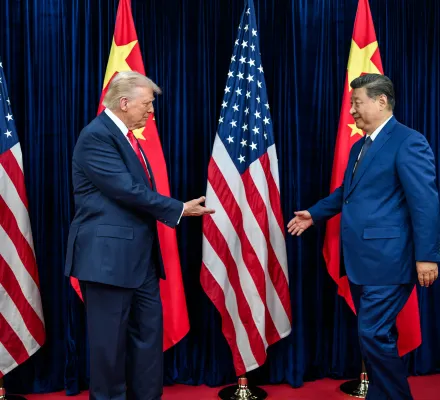
Recent diplomacy also illustrates the room for statecraft. At their September meeting in Washington, Presidents Trump and Jinping agreed to establish a dialogue on AI risks and benefits and a channel for communicating about AI incidents. These commitments still need to be translated into dependable arrangements, but they suggest how efforts to manage shared dangers can coexist with intense competition for technological advantage.
The tensions described above place statecraft at the center of the U.S.–China relationship. How can governments make deterrence credible while conveying the limits of their objectives? Where would reducing economic dependence improve security, and where might it sacrifice benefits without meaningfully reducing vulnerability? Can Washington and Beijing establish workable understandings on their most dangerous disagreements, while preserving cooperation where their interests overlap? Answering these questions requires judgment about the purposes of competition as well as the instruments used to pursue it.
The readings in this edition examine the foundations of U.S.–China rivalry, the ways states seek advantage, and the possibilities for shaping a more stable relationship. They offer differing assessments of the constraints governments face and the room available for policy choice. I hope they encourage readers to consider where competition is unavoidable, where its dangers can be reduced, and what effective statecraft demands when trust is scarce.
Director of the Belfer Center for Science and International Affairs
Belfer Reading Brief | October 2026

The Great Rivalry: China vs. the U.S. in the 21st Century


The past five months have revealed not that the world has become immune to energy crises but that market forces, policy, and government investments in energy security have paid off.

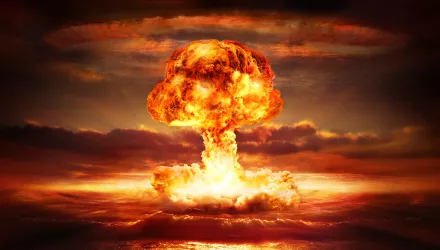

Face-Off: Nuclear Anarchy?
The nuclear age began in secrecy and scientific ambition. The story is familiar, but its implications have never left us. A bomb created in a moment of wartime urgency became the foundation of a global order defined by terror and deterrence. But what happens when that global order breaks down?
Today, the old nuclear order is fracturing. Arms control is dead. China quietly expands its arsenal. Russia threatens nuclear use. And the United States embarks on a $1.7 trillion modernization program. And AI is on the rise.
Face-Off: Nuclear Anarchy? is a new podcast tracing the arc of nuclear danger from the Manhattan Project to today.