
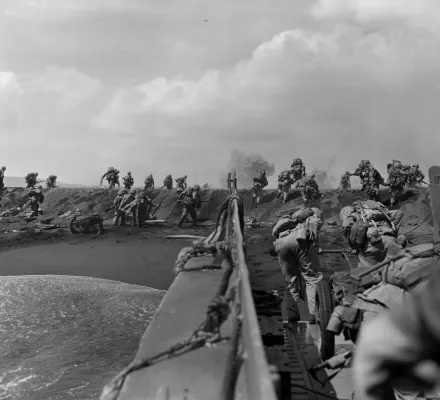
Belfer Reading Brief | Applied History: What History Can and Cannot Tell Leaders
Applied History helps illuminate some of today’s most pressing policy questions: what lessons do past military operations hold for U.S. forces in the Middle East today? Have the United States and China entered a new Cold War? And is the AI boom at risk of becoming a bubble?
In May 2026, the Belfer Reading Brief offers a point of entry into some of these debates, using history not as a script for the present, but as a way to sharpen judgment, test assumptions, and better understand the choices facing policymakers now.
Director's Note
When President Xi invoked Thucydides's Trap in conversation with President Trump, he was placing U.S.-China competition in a broader pattern of international politics—one in which rising and established powers can come to see each other’s actions as more threatening, more intentional, and more irreversible than they may be.
Thucydides’s Trap is an insight that emerged from the discipline of Applied History. Applied Historians look for clues about contemporary geopolitics by analyzing the historical record. As Graham Allison explored in his 2017 book Destined for War: Can America and China Escape Thucydides’s Trap?, in 16 historical cases in which a rising power faced off against a ruling power, 12 ended in war. That historical analysis offers a warning to policymakers contending with the collision between a ruling U.S. and a rising China today.
Applied History does not offer a script for the future. It informs how decision-makers diagnose challenges, sparks strategic imagination, and disciplines snap judgments that a situation is “unprecedented” or “just like” an obvious historical analogy. As my predecessor and former Secretary of Defense Ash Carter said, “The dominant mental methodology of real policymakers is historical reasoning.” We draw lessons from history all the time—Applied History helps us learn from the past without being misled by it.
At the Belfer Center, the Applied History Project, founded by Graham Allison and Niall Ferguson, has helped advance this discipline by bringing historians and policymakers into closer conversation. The aim is not to turn history into prediction, but to make historical reasoning more rigorous and more useful to leaders facing consequential choices.
Applied History helps illuminate some of today’s most pressing policy questions: what lessons do past military operations hold for U.S. forces in the Middle East today? Have the United States and China entered a new Cold War? And is the AI boom at risk of becoming a bubble?
This month’s Belfer Reading Brief offers a point of entry into some of these debates, using history not as a script for the present, but as a way to sharpen judgment, test assumptions, and better understand the choices facing policymakers now.
Director of the Belfer Center for Science and International Affairs
Belfer Reading Brief | May 2026

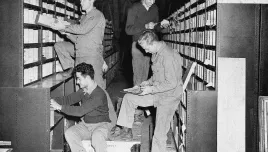
Thucydides Trap Case File

Ultimately, thinking historically is about asking better, more probing questions. It is a disciplined curiosity that fosters an appreciation for the complex interplay of individual agency, structural forces and pure chance.

Graham Allison, Niall Ferguson, John Bew | Hoover Institution — “Applied History Today”
Today's Headline Choices and Challenges
How can Applied History illuminate our most urgent contemporary problems?
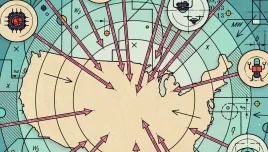
A Grand Strategy of Consolidation
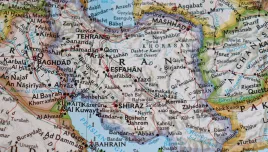
Brace Yourselves. A Recession Is Coming.


How Venezuela Becomes a Quagmire
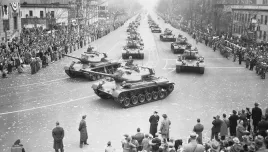
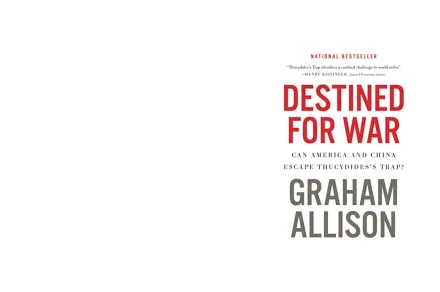
Can America and China Escape Thucydides’s Trap?
In 16 historical cases from the past 500 years in which a major rising power has threatened to displace a major ruling power, 12 ended in war. President Xi Jinping suggested recently that the U.S. and China can beat these odds. The cases illuminate the ways in which states might stumble into a war that neither desired and offer insights for managing great power rivalry.