Reports & Papers
Applied History in Practice
A Case Study in Applied History: Commissioning Historical Papers for the UK’s National Security Secretariat
Research, ideas, and leadership for a more secure, peaceful world

A Case Study in Applied History: Commissioning Historical Papers for the UK’s National Security Secretariat

Graham Allison
Ten years ago, my colleague Niall Ferguson and I published the Applied History Manifesto and launched the Applied History Project at Harvard Kennedy School’s Belfer Center. Defining Applied History as the explicit attempt to illuminate current challenges and choices by analyzing historical precedents and analogues, we called for “revitalizing” its practice in the academy and promoting its use in government. The Manifesto notes the marked “history deficit” in policymaking today. The past decade has seen a healthy revival of Applied History around the world.
One core node in today’s Applied History network is the Centre for Statecraft and National Security, formerly the Centre for Grand Strategy, at King’s College London. Our colleagues there have energetically taken up the task set out in the Manifesto. Their Case Study in Applied History: Commissioning Historical Papers for the UK’s National Security Secretariat is the result of their collaboration with the UK government to inject historical perspective into its Integrated Review of Security, Defence, Development and Foreign Policy. As a model example of Applied History, this project demonstrates how history, rigorously applied, can illuminate today’s headline choices and challenges.
As the authors explain in their preface, the Centre assembled carefully researched and clearly communicated case studies, produced rapid-response memos on questions posed directly by policy officials, and embedded doctoral researchers inside the UK Cabinet Office. The Centre drew inspiration from an analogous effort undertaken by esteemed historians during the world wars to write a number of “handbooks” for policymakers.
Historians working in policy must be alert to live debates and make their expertise useful and accessible to busy policymakers. A Case Study in Applied History offers a clarifying example of how historians can rise to these challenges and meaningfully contribute to better policymaking. It offers valuable reading both for those aspiring to practice Applied History and for policymakers committed to effective statecraft.
Andrew Ehrhardt, Maeve Ryan and Oliver Yule-Smith
In 2019, the UK government under Boris Johnson announced that it would carry out an Integrated Review (IR) of security, defence, development, and foreign policy. It had been four years since the publication of the last major strategic defence review, and the announcement of the IR reflected an awareness of a deteriorating strategic outlook and sharpening systemic competition, in which the openness of the international system – so vital to UK prosperity and interests – was under direct challenge. The UK’s closest ally had shifted to a more confrontational stance with its announcement of the return of great-power competition, and Britain, since its departure from the European Union, seemed adrift in a world that was in a state of systemic transformation. Within months, a global pandemic threw the world even further into disarray, with compounding and cascading geopolitical, economic, and strategic implications.
Observers of UK foreign policy and strategy had long bemoaned the dearth of serious strategic thinking in the system and stressed the need for a shared comprehension of the key national interests that should be at the heart of a grand strategy for the twenty-first century. Fundamental, then, to the project of the IR was an intent to achieve a modern ‘grand strategic reset’. The core purpose of the IR would be to identify core national interests, and to establish clear and ambitious grand strategic handrails to guide the strategic reset.
As historians working at the Centre for Grand Strategy (now the Centre for Statecraft and National Security) at King’s College London, we looked to history to see what precedents existed for the strategic challenge the UK government had set itself – and what cautionary tales officials might learn from. Established in 2016 with Applied History at its core, the central mission of our centre is to bring a greater degree of historical and strategic expertise to statecraft, diplomacy and foreign policy, particularly in the UK. Our community has built deep connections with the wider Applied History network, including Harvard, Stanford, Johns Hopkins SAIS, the University of Texas at Austin, the University of Cambridge, the Stockholm School of Economics, and more. Through the Engelsberg Applied History Programme, we had set up a programme of teaching and research that embodied this spirit of bringing historical knowledge to bear on the most pressing challenges of our time. We took the opportunity of the IR as a moment to do something new: to innovate, test, and refine different models of injecting deep historical expertise and targeted insights into the government strategy process. This was completely novel in the UK context. Unlike in the US, where there are deep connections and almost a revolving door between academia and the policy world, this needed to be built from scratch here.
We set to work building relationships with the National Security Secretariat, and over a period of months we learned from officials about the barriers to effective engagement. These include an aversion to talking shops, a perception that academics will come in and waffle (especially historians who might share examples that are either abstract, irrelevant, or too detailed as to be unclear), and a general sense that it would be hard to find and apply insights. It was a process beset with anxiety on the part of officials around the candid sharing of information.
With this in mind, we began designing our approach. Even at the very beginning, our entire endeavour would be shaped by historical precedent, namely, of the way that British historians were brought into a close working relationship with the British Foreign Office during the First World War. These academics, among them Arnold Toynbee, Alfred Zimmern, and Charles Webster, produced ‘political handbooks’ – short historical pieces of 10-15 pages on subjects such as ‘The History of the Danzig Corridor’ and ‘The Congress of Vienna, 1814-1815’ – which provided policymakers and negotiators at the Paris Peace Conference with a historical grounding for their work. Two decades later, at the outbreak of the Second World War, many of these same historians were brought into similar advisory roles. Charles Webster, then on leave from his position as Chair of International History at the London School of Economics, was the shining example from these years. He was considered the foremost expert on both armistices and international organisation, due to his extensive scholarship on the Congress of Vienna, the nineteenth century ‘Concert of Europe’, and more recently, the League of Nations. Papers he produced in the first months of 1943 included: ‘The Political and Procedural Problems of the Armistices of 1918’, ‘The Maintenance of Order in Europe 1918-19’, and ‘The Causes of the Failures of the League of Nations.’ As the Foreign Office began to focus more on post-war planning, Webster became one of its most influential minds working to establish the United Nations Organization.
With these historical precedents in mind, we designed a range of approaches and methods of policy engagement, but the most effective were:
Inspired by Webster’s approach outlined above, we proposed commissioning concise, focused, policy-oriented historical case studies on themes directly relevant to the strategy-making challenges the National Security Secretariat was facing. The first round of case studies would be focused on ‘strategic resets’ in foreign policy. The reception from government officials to these proposals was at first mixed. Some saw the benefit of past historical precedents for their work, while others were sceptical. Just how much could stories from past experience really illuminate and inform modern policy challenges? Hadn’t the world changed too much, say, from the 1940s and 1970s, for case studies from these periods to be of any relevance? This scepticism was understandable, but we continually stressed that the purpose of looking to historical precedents was not to find easy answers but to glean insights that could help shape a more general strategic outlook.
We cast a wide net, both geographically and historically. We invited Professor Rana Mitter, then at Oxford University, to write about Chinese strategic resets in 1945 and 1972. Three scholars from King’s College London – Ramon Pacheco Pardo, Rudra Chaudhuri, and Alessio Patalano – wrote about strategic recalibrations in South Korea, India, and Japan, respectively; while Gill Bennett (a former Foreign Office historian herself), Oliver Yule-Smith and Andrew Ehrhardt wrote about specific approaches to British and American strategic resets from earlier in the twentieth century. As for ‘findings’, we resisted the urge to construct any kind of larger generalisations from these different cases and instead worked to highlight certain insights that cropped up from specific studies. For example, Rana Mitter described how the cases of Chinese strategic resets in the 1940s and 1970s pointed to the fact that often, strategic realignments do not proceed in a smooth linear trajectory, and costs and benefits can accrue over time.
These papers were ultimately well-received among officials and they led to another round of work. The purpose of the next iteration of reports was to understand how, once a new national strategy has been decided, governments can best implement it. For this series of papers, we brought together a range of analysts and historians, including Georgina Wright, David Morgan-Owen, William James, and Kori Schake. Far from an exercise in ordering national strategy’s greatest hits, these contributors used case studies to discern sources of procedural tensions and organisational harmonies right at the heart of a government’s policy machinery. To name a few findings, contributors argued for the importance of so called ‘agents of change’, the necessity of bipartisanship for a durable strategy and that – much as we might want to think otherwise – budget documents were essentially strategy documents. Kori Schake in her contribution chose to drill down into the implementation of national security policy under President Dwight D. Eisenhower, showing the value of a bespoke bureaucratic structure in which the US president had an outsized influence and how he was able to advance his strategy by ‘structuring circumstances’, fostering coalitions, and treating the budget as a powerful lever of control.
This was followed by a third and final series of papers related to the Integrated Review (IR). One of the initiatives from the government review was to design a Strategy Unit that could sit within the Cabinet Office and be concerned with the coordination of long-distance planning across various government departments. In line with this objective, we set out to commission papers looking at the ‘mechanics of strategy-making’, and in particular, best practices in designing certain structures and functions of dedicated strategy units within and across governments. Authors including Louise Kettle, Philip Zelikow, and Sir Lawrence Freedman described a range of precedents in designing strategy units and coordinating high-level foreign policy. Select findings from this report include the importance of ensuring strategic thinking – both within and between departments – benefits from a two-way conversation, with an opportunity to feed assessments, ideas, and recommendations up and down the hierarchy; the necessity of protecting institutional memory to avoid a disconnect between governments or administrations; and, the value of officials recognising and assessing a wide range of contingencies at each stage of the policy process.
Balancing the need to be responsive to specific topics that officials were grappling with, we also felt there was an important place for rapid-response ‘think pieces’ that pointed to questions or ideas that deserve special attention. These were often conceptual, regional and issue-led. They emphasised important concepts or ways of thinking that lay in the hinterlands of what officials were already thinking about. For example, during the course of a meeting with an official about US-China competition, there was a brief, offhand mention of a ‘Cold War 2.0’. Given the range of interpretations and various meanings that that term carries, we thought it was important that officials had a firm grasp of the term’s deeper intellectual tributaries. Similarly, in the course of a conversation about international order, there seemed to be some confusion about the difference between an ‘international order’, a ‘world order’, and a ‘rules-based international order.’ There was also a question about the utility of thinking in terms of ‘regional orders’. Once again, we felt that it was important that there was a common understanding of these terms, which we believed would contribute to these officials’ wider strategic fluency. These rapid-response ‘think pieces’ continue to be an important element of our approach.
One of the most unique developments to come out of this academic collaboration with the National Security Secretariat was a pilot project whereby several doctoral students working on historical subjects were embedded within the Cabinet Office, tasked with investigating how officials engaged with the Integrated Review (IR) thought about the development of national strategy, the optimal structures and systems to underpin national strategy, and the state of international order. The embedded doctoral students interviewed officials at every level of the IR and from across Whitehall, ranging from highly specialised desk officers to pen holders of the review charged with pulling together the written document. The findings of these interviews were compiled into an internal report. The doctoral students were invited to extend the period in which they were embedded to help with the next phase of translating the published IR into reality, playing an important role in the conceptual development of IR sub-strategies and implementation approaches. The value of this was recognised in a personal note of thanks that each participant received from the Deputy National Security Advisor.
This potted history of the early years of our work, trying to find our Applied History ‘method’, is the basis of a working relationship with government that continues to this day. In the wake of the election of the first Labour government since 2010 and in the shadow of the first Strategic Defence Review since 1998, our work continued. We produced papers on subjects like European security architecture and policy planning and the machinery of government, but we also continued to fine-tune the centrepiece of our approach: the Forum on Future Strategy. For these forums, we decide on a specific brief and get a set of orienting questions from officials, before identifying and commissioning contributors to write papers, which are then presented before they are discussed with senior officials. We have run these types of forums on subjects like the future of multilateralism, the war in Ukraine and the development of national strategy. As far as possible, we aim to create the conditions for frank and open discussions between officials and experts.
As these forums have become more agile and efficient, we have not lost sight of the fact that the indispensable ingredient for all of this is trust: trust that when hard-working senior officials in a perennial time deficit sign-up to attend these sessions, their time will not be wasted – that they will be able to have conversations that engage them, that challenge them or even inspire them to seek fresh approaches.
The Centre for Grand Strategy, now Centre for Statecraft and National Security, approach can best be summarised as:
Much as we might want to say this approach was quickly conceived and seamlessly deployed from day-one, the reality is that we adapted and improvised, based on feedback from government officials.
The reason that this collaboration has lasted as long as it has is not only because we offered something unique within the constellation of governmental thinking, but because we delivered knowledge and insights that were of direct relevance to officials. These results were:
Reproduced in the following pages is the first historical case study report that was produced for British officials involved in the Integrated Review (IR) by the then Centre for Grand Strategy in 2020. Aside from some formatting changes to make these reports cohere as a single volume, none of the material presented herein has been amended from what was originally submitted to the UK government.
We would like to thank everyone who contributed the excellent case studies that made these reports so impactful. We particularly thank Rana Mitter, Ramon Pacheco Pardo, Rudra Chaudhuri, Alessio Patalano, Hillary Briffa, Gill Bennett, William Reynolds, James Barr, Benedict Wilkinson and Matthew R. H. Uttley for their permission to reproduce their original contributions below. We would also like to thank the Engelsberg Applied History Programme who funded all three of our reports and without whose support this ambitious project would not have been possible.
In coordination with the Cabinet Office, the Centre for Grand Strategy has commissioned a series of papers to help inform the planning and delivery of the United Kingdom’s forthcoming Integrated Review. The purpose of these reports is to understand how major strategic ‘resets’—i.e. significant redirections and realignments of foreign policy—have been conceived and implemented across a range of historical and contemporary contexts. By examining specific instances in which countries, including the United Kingdom, have undertaken strategic realignments, the papers offer valuable insights for policymakers currently developing the Integrated Review.
Part I of this paper first dissects China’s unprecedented and anomalous position at the ‘winner’s table’ after the Second World War, a moment which provided Chinese leader Chiang Kai-Shek an opportunity for a major strategic reset. The study sketches how the objectives of economic and political reconstruction at home, coupled with a newfound desire to become a global (non-western) leader, was crushed under the weight of the emergent Cold War. Part II of this paper turns to the 1972 rapprochement between China and the United States, an initiative which had profound implications for China as well as the global balance of power. Among a number of points put forward in this report is the importance of domestic economic strength and stability as well as the fact that strategic resets do not often proceed in a smooth linear trajectory, with benefits—as well as costs—possibly accruing over time.
This study explores the strategic and intellectual framework around which President Roh Tae-woo crafted his grand strategy of Nordpolitik in the late 1980s. Inspired by West Germany’s Ostpolitik, this successful strategic realignment had economic and political components, including the promotion of trade and the improvement of relations with North Korea, the Soviet Union and China. Having buy-in from both the public and the ‘elites’ from the outset provided a strong foundation from which to begin seeking internal reforms and new external economic relationships, particularly with China. Though he was constrained by a single five-year premiership, Roh’s initiatives built a transgenerational consensus and allowed his strategic realignment to survive across successive governments.
Part I of this study on recent Indian strategic realignments begins in the 1990s, when the country’s near-bankruptcy forced policymakers to alter economic and foreign policy priorities. The government of Narasimha Rao first enacted reforms to liberalise finance and trade, and then, sensing the changing international dynamics brought about by the end of Cold War, set about to improve relations with the United States and China. Key characteristics of Rao’s approach included a determined political will, the absorption of expert advice and the circumvention of protocol to enact swift and decisive changes. Part II of this study turns to the government of Narendra Modi, who, upon entering office in 2014, spoke of delivering ‘India’s Century’ by resetting India’s relations with countries across the world. While significant reforms—such as reorienting supply chains back to India, or in agriculture and industry—were undertaken, these are yet to achieve fruition. The rise of China and its effects in South Asia have made the task of strategic reset harder to achieve.
This paper discusses the strategic reset implemented by Prime Minister Shinzo Abe during his second tenure as a Prime Minister. Abe’s success in re-engineering Japan’s international profile and influence was the result of three core initiatives: he centralised the Japanese decision-making system around the Prime Minister’s office (Kantei); he expanded the realm of the ‘politically possible’ in foreign and security affairs; and he injected Japanese foreign and security policy with a worldview focused on the Indo-Pacific region. In particular, the paper explores how the importance of Abe’s centralisation of power cannot be disentangled from the fundamental ideational and behavioural changes implied in the second and third initiatives. Abe took power to the Prime Minister’s office and used it to shake the bureaucracy out of established patterns of behaviour and offered a vision which made new policy—a reset—possible.
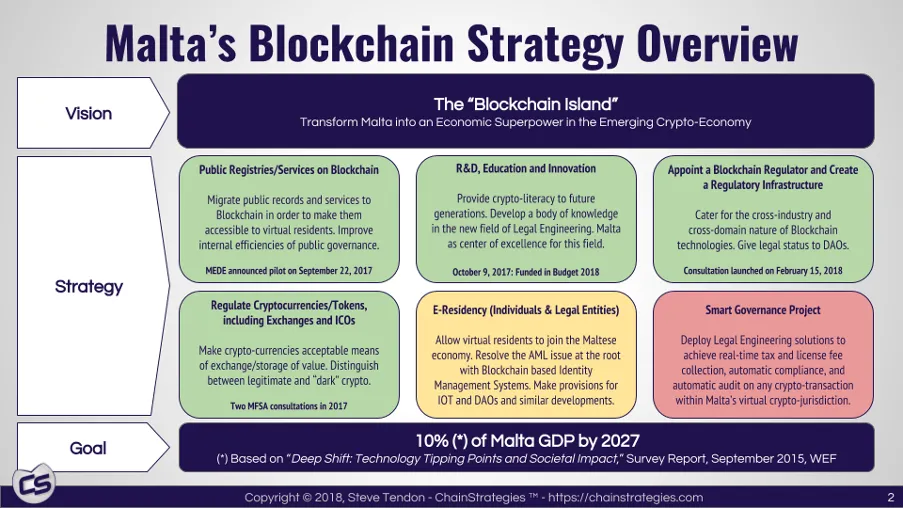
This report examines Malta’s recent effort to adopt Blockchain technology as a fundamental pillar of its future economic, political and diplomatic strategy. Though it has been considered an unsuccessful realignment, Malta’s effort to reconstitute itself as ‘Blockchain Island’ contains a number of important insights. First, it highlights the way in which the online space enables states of all sizes, with varying material resources, to become more economically competitive. Next, it displays the importance of aligning values with strategic efforts, especially when such initiatives engage with novel, unregulated technologies. Finally, the study underscores how the best ideas will still falter if the national reputation of the country does not foster credibility and public trust.
This paper comprises the oldest historical study of the series, and examines an unsuccessful strategic reset initiated by American President William Taft in 1909. This mercantilist strategy, known as ‘Dollar Diplomacy’, prioritised financial and economic tools of statecraft, including the use of generous loans and the promotion of stronger commercial ties with foreign populations. The paper presents a cautionary tale that demonstrates the importance of striking a balance between different tools of statecraft, the dangers of mismanaging regional pivots, and the costs associated with undertaking a reset without broad domestic support. In Taft’s case, the mismanagement of the political economy of a pivot towards another region, undertaken without the support of Congress and public opinion, proved to be a folly.
This paper examines certain elements of the British diplomatic planning efforts during and after the Second World War. It focuses on two moments in particular—the creation of the United Nations Organization in 1945 and the creation of the North Atlantic Treaty Organization in 1949—and highlights certain key takeaways. First, officials in the period not only valued but prioritised long-term planning, seeing it as a way to be ‘the master, and not the victim, of events.’ Next, first-order principles and first-order assumptions, assessed in the context of pressing contemporary challenges, often served as the conceptual starting point for strategy. Finally, there was an underlying approach to British grand strategy which held that the country’s interests—as well as its regional and international influence—rest in its ability to lead through larger political, economic and military institutions.
This detailed study re-examines the popular narratives concerning British policy after the Suez Crisis, arguing that there was no strategic reset after the events of 1956. Though the government had long recognised the need for a reprioritisation of defence—based on dire post-war economic realities and a series of geopolitical ‘shocks’ which faced Britain in the years after 1945—there was little serious consideration of Britain reducing global obligations. Even after a more concerted effort to review British defence and security policy in the early 1950s, the ministerial views of Britain’s global role remained largely unchanged—a reality which lasted through the period of the Suez Crisis. Indeed, it was not until 1968 and the decision to withdraw British forces from the east of Suez and the Persian Gulf that a more radical strategic reset was implemented.
This study examines the unsuccessful strategic reset undertaken by the Edward Heath administration between 1970 to 1974, and in particular, Heath’s effort to harness national power through Britain’s accession to the European Economic Community (EEC). With both the Commonwealth and the ‘Special Relationship’ dwindling, EEC membership became the visionary foil for attaining the timeless tasks of ‘finding a role’, and ‘showing leadership.’ While willing to question first order assumptions and to capitalise on the end of Charles de Gaulle’s tenure (during which the French President had vetoed British accession twice), Heath struggled to sell the EEC to the public and ended up alienating his own party. Certain external events—including the American decision to end the Bretton Woods system and to undertake military action in Southeast Asia—served to fracture American-European relations, which remained a key aspect of Heath’s strategy.
This paper examines the strategic reset initiated by the London International Financial Futures and Options Exchange (LIFFE), an institution with certain structural similarities to government. The exchange underwent a commercial strategic reset in 1998, sixteen years after its founding, in reaction to a competitor’s (Deutsche Termin Börse) entry into the market. LIFFE was initially unable to confront the threat because its governance structure required buy-in for radical change, namely from people who would be profoundly affected by that change and were able to block it because they owned stakes in the business. It was not until these stakeholders reconciled themselves to the fall in the value of their investment in the business—and the prospect that it could soon be worthless if they continued to oppose change—that action became possible. New leadership was appointed that offered clear vision, and the realignment focused on the ways by which the market was made available to customers.
This report serves as a warning to those policymakers wishing to undertake a strategic reset. The authors examine the concept of a strategic reset through the prism of the future of conflict. For all the futures thinking which takes place in defence ministries, these exercises very rarely bring about major policy change, let alone strategic resets. One of the main reasons is that strategic resets butt up against a host of ingrained and implied values, images of national identity and subsequent choices about the future of war, force structure and weapons acquisition. For the United Kingdom, in particular, ideas about the type of role on the international stage that Britain ought to occupy are deeply embedded and challenging those will not just be about finding clever military solutions—it will also be about changing and shifting a set of perceptions about national identity. The best course of action may perhaps be to act fast to shift ingrained self-perceptions about Britain’s role on the global stage.
Editors
Andrew Ehrhardt
Postdoctoral Fellow
Centre for Grand Strategy, KCL
Nick Kaderbhai
Doctoral Candidate
Centre for Grand Strategy, KCL
8 September 2020
Ehrhardt, Andrew, Maeve Ryan and Oliver Yule-Smith. “A Case Study in Applied History: Commissioning Historical Papers for the UK’s National Security Secretariat.” April 2026
1. The European Commission. 2019. “Malta.” Summer Economic Forecast. 2019. https://ec.europa.eu/info/sites/info/files/economy-finance/ecfin_forecast_summer_10_07_19_mt_en.pdf.
2. Muscat, Joseph. 2018. “PM Address to UN General Assembly.” TVM, September 27, 2018. https://www.tvm.com.mt/en/news/segwi-d-diskors-tal-pm-lill-assemblea-generali-tan-nazzjonijiet-maghquda-fuq-tvmi-u-tvm2/.
3. Tendon, Steve. 2018. “Malta’s National Blockchain Strategy: The Big Picture.” ChainStrategies, February 18, 2018. https://chainstrategies.com/2018/02/18/maltas-national-blockchain-strategy-the-big-picture/.
4. Ministry of Economic Development - Italy. 2018. “Southern European Countries Ministerial Declaration on Distributed Ledger Technologies.” 2018. https://www.mimit.gov.it/images/stories/documenti/Dichiarazione%20MED7%20versione%20in%20inglese.pdf.
5. Vella, Matthew. 2020. “Malta’s Cryptocurrency Flop: 70% of Firms Have given up on Getting Licensed.” Malta Today, April 24, 2020. https://www.maltatoday.com.mt/news/national/101920/maltas_blockchain_flop_70_of_crypto_firms_have_given_up#.X0Kjx36SlPa.
6. Hamacher, Adriana. 2020. “Is This the End of Malta’s Reign as Blockchain Island?” Decrypt, January 19, 2020. https://decrypt.co/17024/is-this-the-end-of-maltas-reign-as-blockchain-island.
7. Caruana Galizia, Daphne. 2017. “Muscat Says Europe Should Become a ‘Bitcoin Continent’, as the EU Fights against the Rise of Money-Laundering and Terrorism Financing through Bitcoins.” Running Commentary, March 1, 2017. https://daphnecaruanagalizia.com/2017/03/90555/.
8. Reel, Monte. 2018. “Why the EU Is Furious With Malta.” Bloomberg Businessweek, September 11, 2018. https://www.bloomberg.com/news/features/2018-09-11/why-the-eu-is-furious-with-malta.
9. Tendon, Steve. 2019. “Will the Real Blockchain Island Please Stand Up!?” ChainStrategies, September 30, 2019. https://chainstrategies.com/2019/09/30/will-the-real-blockchain-island-please-stand-up/.
10. Office of the Historian, United States Department of State, ‘Dollar Diplomacy, 1909-1913’ https://history.state.gov/milestones/1899-1913/dollar-diplo
11. Michael J. Green, By More Than Providence: Grand Strategy and American Power in the Asia Pacific Since 1783 (A Nancy Bernkopf Tucker and Warren I. Cohen Book on American-East Asian Relations), (New York: Columbia University Press, 2019).
12. Federal Reserve, “Exports to and from the United States Before and After the Outbreak of the War”, Federal Reserve Bulletin October 1 1919.
13. To be made up of the United Kingdom, the Benelux countries, France, Portugal, Italy, Greece and the Scandinavian nations.
14. Signatories were Belgium, Canada, Denmark, France, Iceland, Italy, Luxembourg, the Netherlands, Norway, Portugal, the United Kingdom and the United States.
15. See Gill Bennett, Six Moments of Crisis: Inside British Foreign Policy (Oxford University Press, 2013), Chapter 2.
16. Selwyn Lloyd, Suez 1956: A Personal Account (London: Hodder and Stoughton, 1978), p. 252.
17. For details of the relevance of economic factors in the Suez crisis and after, see in particular G.C. Peden, ‘Suez and Britain’s Decline as a World Power’, Historical Journal, vol. 55, No. 4, December 2012, 1073-96. See also G.C. Peden, Arms, Economics and British Strategy: From Dreadnoughts to Hydrogen Bombs (Cambridge University Press, 2007).
18. Abadan was arguably a worse crisis than Suez. Foreign Office Historical Adviser Rohan Butler wrote a long memorandum, submitted in March 1962, critical not just of British diplomacy but of government policy generally, producing a flood of comment. A second paper of May 1963, ‘A new perspective for British diplomacy’, described Britain as a ‘somewhat impotent middleweight.’ This led, among other things, to the formation of a separate Planning Staff in the Foreign Office. Both Butler’s memoranda are in the National Archives (TNA) at FO 370/2694. See also Peter J. Beck, ‘Using Butler’s Abadan to Reappraise British Foreign Policy’, in Using History, Making British Policy: The Treasury and the Foreign Office 1950-76 (London: Palgrave Macmillan, 2006), Chapter 11.
19. The two Global Strategy reports for 1950 and 1951 are printed in DBPO, Series II, Vol. IV, Appendix I and II. The 1952 report, ‘Defence Policy and Global Strategy’, D(52)26 of 17 June 1952, is in CAB 131/12, TNA.
20. PR(56)3, 1 June 1956, drafted by FO, Treasury and defence officials. This paper and other documentation on the Review can be found in CAB 134/1315, TNA.
21. See Gill Bennett, Six Moments of Crisis, Chapter 4.
22. I worked for LIFFE after the events described here but have no connection with, or financial interest in, the business now.
23. Patrick Porter, ‘Taking uncertainty seriously: classical realism and national security’, European Journal of International Security 1: 2, 2016, p.241