
Belfer Reading Brief | Leadership and Decision-Making
Leadership is central to the work of the Kennedy School and the Belfer Center. Students come here not only to study policy, but to understand how judgment is formed, how power is exercised, and how public institutions can act with purpose amid constraint. Its study can sharpen self-awareness, broaden historical imagination, discipline decision-making, and help future leaders recognize the habits and institutions that make better judgment possible.
In June 2026, the Belfer Reading Brief approaches leadership in that spirit: across history, diplomacy, military command, and contemporary statecraft, these pieces ask not only who leads, but how leaders connect means to ends, near-term pressures to long-term interests, and personal judgment to institutional capacity. In a more contested world, the leaders who matter most will not be those who claim certainty. They will be those who can make consequential decisions without it.
Director's Note
Leadership is easiest to praise or blame after the fact. But for those concerned with statecraft, outcomes rarely tell the whole story. The harder question is how leaders build sound judgment when information is incomplete, stakes are rising, and institutions must act across silos, time horizons, and competing pressures.
This question feels especially urgent at a moment when public life seems to be witnessing a revival in practice—if not in scholarship—of heroic, or “great man,” theories of leadership: the idea that history turns mainly on the will, intuition, or dominance of singular individuals. There is no doubt that individuals matter. The choices of presidents, diplomats, commanders, and institutional leaders can alter the course of events. But much of what we know from scholarship and practice points to a more demanding understanding of effective leadership. The best leaders do not simply project certainty or impose direction. They structure decisions, test assumptions, invite dissent, widen the circle of usable expertise, and create cultures in which responsibility is shared and bad news can travel quickly.
This is also why leadership remains so central to the work of the Kennedy School and the Belfer Center. Students come here not only to study policy, but to understand how judgment is formed, how power is exercised, and how public institutions can act with purpose amid constraint. Whether leadership can be “taught” in any simple sense is rightly debated. But its study can sharpen self-awareness, broaden historical imagination, discipline decision-making, and help future leaders recognize the habits and institutions that make better judgment possible.
The readings in this brief approach leadership in that spirit. Across history, diplomacy, military command, and contemporary statecraft, they ask not only who leads, but how leaders connect means to ends, near-term pressures to long-term interests, and personal judgment to institutional capacity. In a more contested world, the leaders who matter most will not be those who claim certainty. They will be those who can make consequential decisions without it.
Director of the Belfer Center for Science and International Affairs
June, 2026
Belfer Reading Brief | June 2026
Exploring Strategic Judgment and Leadership: How leaders assess risk, learn from experience, and make consequential decisions; and
Strategic Judgment in Practice: How strategic judgment is applied to today's diplomatic and geopolitical challenges.

Tarek Masoud on WIRED: Harvard Professor Answers Iran War Questions
From Middle East Initiative
Forgotten Ally: China's World War II, 1937-45
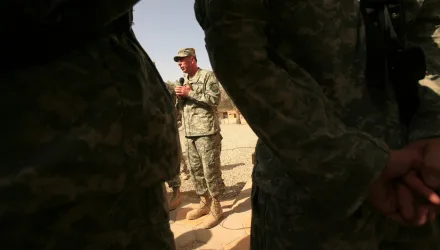
David Petraeus on Strategic Leadership
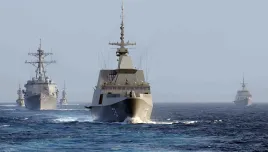
Beyond ‘Pax Americana’: How JFK’s Lessons on Unilateral Nuclear Restraint Show That Trump Should Do More
From Managing the Atom
Much like the United States and the Soviet Union, the United States and China are condemned to compete and to cooperate. Can Biden and Xi find a way to build a world safe enough? It has happened before.

Lessons from the Front Lines of the U.S.-China Relationship
From Future of Diplomacy Project