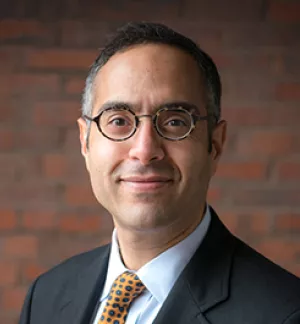
Tarek Masoud (00:00:01):
All right. Uh, welcome ladies and gentlemen. Uh, my name is Tarek, uh, Masood. I'm the Ford Foundation Professor of Democracy and Governance here at the Kennedy School, and I'm the faculty chair of our Middle East Initiative, and it is my, uh, great pleasure and honor to welcome you to, uh, what I think is the 17th in our ongoing, uh, series of Middle East dialogues. It is also the penultimate one. Um, and we have with us a very spe cial-
Dan Senor (00:00:31):
Been getting progressively better in the Middle
Tarek (00:00:33):
East since we-
Dan (00:00:33):
Began the ...
Tarek (00:00:35):
<laugh> Well, we, we, we have decided, I mean, we're not, we're not great at causal identification, but- Right. ... our concern is that the more we've been doing this, the worst things have been getting. Right, right. And so, maybe if we stop, peace will break up. Cutting the
Dan (00:00:48):
Whole thing off. Right.
Tarek (00:00:50):
Um, and so we're joined, uh, today by, uh, Dan Seener, who is really one of our most, uh, trenchant and insightful observers of Israel, uh, and analysts of, uh, the geopolitics of the Middle East, uh, more broadly. Uh, Mr. Seener is the host of Call Me Back, which is a podcast that I think I would be correct in describing as largely focused on Israeli and Jewish affairs. It's a podcast to which I listen quite religiously. It ranks in the top 200, uh, podcasts, uh, worldwide. He is also, uh, a former, uh, American public servant. He was the spokesman for the coalitional provisional authority in Iraq. He was a Middle East advisor to, uh, Republican presidential candidate, uh, Mitt Romney, and he's the author of, uh, two really important and influential books. One written in 2009 called Startup Nation: The Story of Israel's Economic Miracle, and a new, uh, newer book in 2023, uh, uh, a- also on the topic of, uh, the special alchemy of, uh, the Israeli state.
(00:01:57):
Um, so we're really thrilled to have him here at Harvard to talk about the war in Iran, the US-Israel relationship, Israel's broader relations with its neighbors, and the problems of anti-Semitism on American college campuses, and in the United States, uh, more broadly. And what we're gonna do, as, uh, many of you, uh, who are familiar with this series, uh, know we'll talk for about an hour, uh, and after which I will open the floor to your superb, insightful, trenchant and very brief, uh, questions. Um, I will note that the event is being recorded. It will be made available on the internet, so if you do ask a question, just, uh, note that you are thereby being consent- you are thereby consenting to being made, uh, famous by us. So with that, please join me in welcoming Dan Sinor. So, so Dan, um, you know, typically when I have these conversations with, uh, Palestinians or Israelis, I start by asking them about their families.
(00:03:07):
Uh, in part because I want to remind everybody that, uh, people who are, uh, talking about this are all people with real personal stakes in what's happening. And I actually recently, you know, you're an American, I'm an American, but I recently learned that your mother lives in Jerusalem. How is she?
Dan (00:03:24):
She's, she's good right now because she's in New York City. <laugh> Uh, she, uh, she, she was on the, I think was the last flight out of Israel, uh, before the war started. She left, uh, two weeks ago, two weeks, wow, two weeks ago tomorrow, uh, the 1:00 AM flight Thursday night. Uh, she lives in a small neighborhood called Baca in, in Jerusalem, and she's 87 years old, and she's vibrant, and she's resilient, but being woken up by a siren two, three, four, five times a night, and rushing into a sa- what they call the Mahmoud, a safe room, or a bomb shelter, um, is ... Let's just say during the June war ... See, she may see this now, so I have to be careful, you know, but during the, during the June, during the June war, my sister who also lives, uh, around the corner from her in Jerusalem, ha- had to have conversations with her saying, "No, mom, the fact that you're tired is not an excuse for not getting out of bed- <laugh> ... When the siren goes off." Yeah.
(00:04:24):
Okay? Uh, and that you'll, you know ... And, and so th- this was a constant back and forth we had with her. Like, it's not like the, the rockets and missiles that land at 3:00 PM when she's up and about are, are more dangerous than the ones that land at 3:00 AM, right? The, the, you gotta move for all of them. Um, so as the buildup was occurring for this war, we persuaded her to come to New York, uh, during the war. And so she's, she's with us, so she's, like I said, she's, she's doing fine.
Tarek (00:04:55):
Well, look, I hope that this, uh, war ends soon s- you know, too many people in that, uh, part of the world have been subject to, uh, um, projectile attacks from the air, and so I hope that it ends, uh, soon so that she can go back home and, uh, enjoy peace. But I, I wanna talk to you about this war. Um, and i- if you'll permit me, I'll, I'll be a little bit personal. You know, so I have a, uh, an 18-year-old son who's about to join the Navy, and I think to myself, you know, when, when you are confronted with having a son or a child who's going to join the military, at a time when we're engaged in military action, you have to think about the prospect of losing them. And I think to myself, you know, if I had lost a son, say, in World War II, I could tell myself a story by which that really, uh, was a worthwhile sacrifice, you know, died, fighting fascism, et cetera.
(00:05:53):
Um, it's hard for me to tell myself the sa- or the, you know, God forbid, the future version of myself, the same story about a war like this. I think about, uh, the young man, Declan Cody, who was one of the first people to die in, uh, uh, an Iranian drone attack in Kuwait. And I th- and the guy was from Iowa. And I think, like, what must his family tell themselves about the reason that their son died? And so, can you help me construct a kind of a, a, an account of how this is actually in the American interest and worth the expenditure of American lives?
Dan (00:06:31):
I will, but before I do that, can I ask you a question?
Tarek (00:06:33):
Yeah.
Dan (00:06:34):
So you used World War II as the, as the model of a, of a worthy war. Yeah. Is there another American military intervention since World War II that you would've felt the same way you do about World War II?
Tarek (00:06:51):
Look, I mean, it's, it's hard. You know, when, uh, uh, you know, you were, uh, uh, uh, associated obviously with our, our conflict in Iraq. Thank God I was, uh, nobody back then. I actually supported, uh, the war in Iraq. Luckily, I was a graduate student and nobody paid attention to a thing that I said. <laugh> Um, it, um, you know, in, in my view, uh, is, is not a war that I think, uh, was worth the expenditure in American lives. And in fact, at least in the wars that the United States has gotten into in my adult lifetime, it's hard for me to identify one that I think was worthwhile. Like, think about it, Afghanistan, the Taliban were running it before, the Taliban are running it now, okay? Iraq was a crummy, anti-Iranian regime before. It's a crummy, somewhat pro- Iranian regime now. Um, Syria, you know, we've been fighting this global war on terror.
(00:07:46):
I live in a town, Belmont, Massachusetts. We have memorials to all the wars. All the wars have end dates, except for the war, global war on terror. And my view is the global war, the, uh, our defeat in the global war on terror was signaled most dramatically by the fact that 23 years after 3,000 Americans were killed on nine eleven, a former member of the organization that committed that great crime against us, rolled into power in Damascus, and we celebrated it. So, uh, you know, I don't know how you would tell any of the American mothers and fathers who lost sons and daughters in those wars that it was worth it.
Dan (00:08:23):
I think that one of the challenges we have now is that for just about any American under 40 years old- Yeah. ... they'll be hard pressed to point to an example, a case study in their lifetimes and their adult quasi-adult lifetimes of an American military invention that went great, okay? So that, let me, so I think, so it's interesting that you go all the way back. It can't be that nothing between the Iran war going all the way back to just north of the World War II was all not worthy of being ... Which is basically what, what you're effectively arguing. I, so I'm just- I'm,
Tarek (00:08:58):
I'm not make ... I'm just saying, you know, I mean, look, I mean, we could talk about the Vietnam War. Right. I mean, do you think Vietnam War was worth it? I'm
Dan (00:09:05):
Not saying we should go ... I'm just saying we shouldn't go war war. I'm simply saying that America engages militarily all over the world and has been doing it for decades to protect the United States and advance US security interests and national interests. You, these wars, which were really messy and really problematic, these, the Iraq war and the, the post nine eleven wars. And let me just pause and say on that- Yeah. ... to just ... I mean, it's okay. We can get into it a little bit, right? <laugh> For you- That's the point, yeah. For you to just make this sweepy, like, there was this government before the Iraq war and there was this government after the Iraq war. Okay. There was a government before the Iraq war that, like, committed a genocide against Kurds and Shiites and literally or used chemical weapons on their own citizens and buried tens of thousands of people in mass graves.
(00:09:49):
And I mean, I'm not saying this, this government and power now and the system is imperfect. It is not that. That's fair. Now, so it's, it, we, you know, we should be a little, um ... I just wanna, I just wanna drag it-
Tarek (00:10:00):
No, that, that's totally
Dan (00:10:01):
Fair. Okay. Secondly, we fought wars after nine eleven to make sure that there was another, never another nine eleven again. Now we can debate whether or not those wars were necessary to prevent another nine eleven from happening, but that was why we were engaged the way we were. That was the global war on terror. Yeah. And the reality is, thank God, thank God, and I hate saying these things, there has not been a nine eleven or anything comparable to nine eleven since ni- since nine eleven. And there's a variety of reasons why, but I just ... So it's not just like, "Oh, what did we get for it? " I mean, you can make the argument that we got a lot for it.
Tarek (00:10:38):
Well, I mean, we do, we, we don't know. I mean, we would have to really, uh, uh, try to adjudicate between my, uh, argument, which is that I'm not sure that we, that the, the peace that we got at, or the absence of nine elevens that we got after, uh, that incident or a function of our kinetic actions in Afghanistan and Iraq, as opposed to, uh, better security, better intelligence, et cetera. Right. I, please, I want you to explain
Dan (00:11:01):
This war to me. This war, yeah. Um, well, no, you, you, you, you touched some sore spots, so I felt like I couldn't let those go undressed. Yeah. Um, okay.
Tarek (00:11:10):
I, I really wanna be convinced.
Dan (00:11:12):
No, no, I'm, I'm, I'm, yeah, so I wanna, I wanna tell you about, uh, the way I think about this war and I think of the way the administration thinks about this war. Iran has been a serious threat to the US going back to the revolution in 79. I hate, you know, if you'll indulge me, like, I don't always wanna just go through all these ... They're not talking points. It's important, right? It's important that in 1979, the revolution comes in, it takes Americans hostages, ho- 63 Americans hostage over, close to over 50 of them for 44 days. Like, why are they, why were they keeping American citizens hostage for a year? In 1983, they bombed the US Marine barracks and kill over 240 Americans. Like, why did they think it was so important to kill all these American Marines? From 2003 to 2011, over 600 Americans killed by these roadside bombs, these IEDs that were, we know, I mean, they don't even really deny it, were coordinated, org- organized, funded by Iran.
(00:12:18):
So Iran has been in the business of murdering Americans, and not just murdering Americans in America, but conducting terrorist attacks and supporting terrorist attacks through Hezbollah and other terror proxies all over the world in the Western hemisphere, in Europe. So the idea that, that Iran as a regime is not a threat and a menace consistently and continuously against Americans and Westerners more broadly is just, it's, it's just disconnected from reality. I read, but
Tarek (00:12:47):
Nobody made that claim. They were contained. You're,
Dan (00:12:49):
You're ... Okay, so let, let me ... I make, you asked me to make <laugh> I'm making the claim. Okay. So now, Iran is, is murdering Americans, and at the same time, it is developing not only a nuclear program, a nuclear weapons program, but also a ballistic missile program- Spread
Tarek (00:13:07):
The nuclear weapons program pres- according to President Trump last summer.
Dan (00:13:11):
We, today, Irans, not today probably, because they've taken considerable hits, but before 10 days ago, Iran's missile and rocket program, if you look at the range of it, it could reach, it was a, within range of one third of the world's population. Basically, from Paris to Calcutta, Iranian
Tarek (00:13:28):
Missiles- Which right in Paris and Culcotta.
Dan (00:13:30):
I'm saying they could reach all over the world- mm-hmm. ... and for a country, a government, a regime- Yeah. ... that has hegemonic ambitions, their ability to reach more and more parts of the world, and more and more American interests, whether it's our bases or other facilities and other assets around the world, is basically them putting a gun to our head. Now, we could say they don't have a nuclear bomb. So there are four countries today, four governments today, that are a real problem for US interests and US security, China, Russia, North Korea, and Iran. Three of those, three of those four countries do not have a nuclear program. Do not have a ... Three of those four countries do have a nuclear weapons program. Iran is the only one that doesn't.
Tarek (00:14:10):
Yeah.
Dan (00:14:10):
It was clear that Iran wanted one. Like, take their word for it. Like, every step of the way, they were never like saying, "We're gonna pull back and we're gonna shut down our ambition for a nuclear weapons program." If you listen to Steve Witkoff and Jared Kushner, from their negotiations, what do they say? They say they have enough highly enriched uranium to at some point, assuming they continue to enrich, they had enough materials to get, to build 11 nuclear bombs. And in those negotiations- Yeah. ... when the administration was saying, "Take yes for an answer, we want a deal. We want you to shut down this program." And according to Witkoff, the Iranian negotiator said, "We are not gonna concede anything diplomatically that you weren't able to take out militarily." So if you look at this regime- So you don't believe-
Tarek (00:14:54):
Yeah, you don't believe the Imani foreign minister who said on, uh, February 27th that the Iranians had committed to not stockpile and to having- You
Dan (00:15:02):
Should stop me as I believe the Iranian foreign minister. Yeah. I, you don't have to tell me what, what he said. I do not believe the Imani foreign minister. I think this administration was serious about getting a deal. I re- so, and, and, and they, and the Iranians, for reasons we can
Tarek (00:15:16):
Get into- I do, the Iranians, you know, you know, it is true that obviously enrichment and stockpiling were an issue, you know, my understanding is that the weaponization program had really stopped from, after 2003, you know. So in other words, it's not like they were weeks away from getting a bomb, and in fact, again, my president told me that we had obliterated their nuclear program in the summer. So I, I'm just trying to understand how we got from an obliterated nuclear program in the summer to suddenly killing the Supreme Leader <laugh>.
Dan (00:15:48):
So that, okay. So now let's, so, so we, we can talk ... Let, let's break this up. Yeah. There's, there's the why, right? The why, why confront Iran militarily and then the why now. And you're moving to the why now.
Tarek (00:15:58):
Well-
Dan (00:15:58):
Okay? So let, let me, let, let's just break it up that way, okay? So why? I think I laid out why Iran consistently, despite it being impoverished and despite it being isolated, has some reason had this obsession with building a nuclear program that they would not make meaningful concessions on, A, and B, before October 7th, they were also investing in a proxy system in the Middle East-
Tarek (00:16:21):
Which had been demolished.
Dan (00:16:22):
Which had been largely demolished. I'm, I'm, but this is a window into ... So, so-
Tarek (00:16:26):
Yeah. Okay.
Dan (00:16:26):
Therefore- Yeah.
Tarek (00:16:27):
...
Dan (00:16:27):
Military action against Iran to take away their capabilities is important. That- Yeah.
Tarek (00:16:32):
...
Dan (00:16:32):
You're saying it'd been demonstrated.
Tarek (00:16:33):
It already happened,
Dan (00:16:34):
Yeah. Right. But my point is they clearly have this ambition to u- to build military, both conventional and unconventional capabilities, to wreak havoc in the region, to put pressure on US interests, to threaten our interest, to threaten our own people, and here there were signs that they were trying to rebuild their nuclear program. The administration is going to great, go to great lengths, to at, at the time, many people, including me, were concerned that they were gonna, like, agree to some version of, you know, JCPOA2, and for some reason, the regime would not fold. They would not say, "We're gonna shut this program down." They would not say, "We're gonna stop trying to rebuild proxies in the region." So you tell me, what's that about? Like, why, why won't the regime let up, even when they're isolated, even when they're impoverished? What's going on there?
Tarek (00:17:25):
Well, so I, I don't know the details of the negotiation, but here's what I do know. Again, I know that our president told us nuclear program is, is, is, is destroyed. I know for a fact that Hezbollah and the proxies were basically destroyed, right? So, you know, it doesn't mean that Iran wasn't a threat. It doesn't mean that bad Iranian, uh, leaders want to do bad things. It just suggests that maybe we didn't need to, you know, uh, uh, eliminate the entire, uh, leadership of Iran and plunge us into a war that now really is threatening the entire Gulf. So- And, and by the way, for which our president has not articulated a clear rationale. By the way, you have said more to explain why we are in this war than the President of the United States. You know, if in fact what you're saying is why- Is that really
Dan (00:18:11):
Why you brought
Tarek (00:18:12):
Me? <laugh> You know-
Dan (00:18:14):
Someone,
Tarek (00:18:14):
Just
Dan (00:18:14):
Tell me. <laugh>
Tarek (00:18:17):
So, so I guess, you know, you can frame it as a why now question, but I still think it's a why question. I think ... So, and by the way, Marco Rubio and, and Mike Johnson gave us a why. They said we knew the Israelis were gonna hit them and, uh, consequently, we also knew that they were gonna retaliate directly against us, so we had to get involved, which makes it sound like we got into this-
Dan (00:18:38):
Ruby thing
Tarek (00:18:38):
Was a
Dan (00:18:38):
Little garbled. It was a- it was- Mik Johnson said the same thing, but the same word. He's speaking for the ... Yeah, but Ruby- Sorry, makes it sound like
Tarek (00:18:45):
We got dragged into
Dan (00:18:45):
This- Let's just, let's just stay on this for a second. So I, so I believe at some point this, if you believe the regime's behavior's not gonna change, like there's nothing between 1979 and today, including today, like including who is now in charge of Iran. There's no sign that there's, there's any intention to deescalate or stop or, or, or, or stop pursuing this like messianic ambition.
Tarek (00:19:11):
I mean, I mean, Messianic, like, look, they're terrible, but like l- you know, we should, we should not jump from the, the data of, uh, their behavior to an interpretation about what's driving it. Like, it's a country that wants to be hegemonic, their interests are not aligned with ours. Let's, let's stay there for a minute. You know, the fact that- Do you think they're
Dan (00:19:28):
Committed to their own survival
Tarek (00:19:31):
At
Dan (00:19:31):
All costs?
Tarek (00:19:31):
Every, everybody is. So,
Dan (00:19:32):
So, so-
Tarek (00:19:33):
If you kill, what do you expect when you, we kill, we went ... Look, we had a, a negotiation that failed. We instantly killed- Yeah. ... their leadership. So, so that's- What do you expect them to do? So- Of course they're gonna pop off, but they have to increase the costs on us of an action like that. Yeah. And I guess my question is, like, becau- look, if I were an Israeli, I would think, what is my interest? My interest is to destroy this regime, to make it impossible for them to fire rockets on me, I really don't care about what comes after, whether you have an Iranian democracy, whether you have a failed state there, it really doesn't matter for me as an Israeli. But as an American, we have a more encompassing interest, right? And the fact of the matter is, like, we need to guarantee the free flow of oil.
(00:20:17):
We have allies in that part of the world. We have a major non- NATO allies in that part of the world. And the fact is that this action has resulted in their serious, uh, uh, uh, you know, e- endangerment.
Dan (00:20:29):
And years of inaction has resulted, think of what they
Tarek (00:20:32):
Accomplished- Containment. You like-
Dan (00:20:33):
Containment, you think the proxy system they were building in the Middle East was containment? You think our Gulf allies were, like, happy with the Houthis and Hezbollah? I, by the way, when the-
Tarek (00:20:42):
Golf allies aren't excited about this war. ...
Dan (00:20:43):
Gulf allies aren't allowing us to- During the Pedro operation in, against Hezbollah, I heard more- Pedro operations. ... from our golf, golf allies cheering on- Yeah. ... what, what Israel was doing. So I'm just saying they built up this proxy system.
Tarek (00:20:56):
Yeah. And I guess my question for you is- I love the Pedro operation. Why not that instead of this war that's now threatening Arab- Okay. Arab cities and threatening Israelis. Like, it just feels like this was a step that was unnecessary.
Dan (00:21:10):
So I think I'm gonna, I'm gonna blur here points of view, but indulge me because I, I wanna articulate Israeli security doctrine here because I think it is relevant to how American, American policy is being driven right now, not because it's being driven by Israel, but I think they think along the same ways, it's just the Israelis are more explicit about it, more, more specific about it. Before October 7th, Israel, in terms of its own security in the region, was focused on deterrence, right? We've got a lot of people who wanna kill us, a lot of players who wanna wipe us off the map, and we're just gonna like deter them all. Mm-hmm. And after October 7th, the consensus in Israel, from right to left, was we're out of the deterrence business, right? When we see a serious threat, we remove it, okay? Yeah. We can't hope that we're kind of speaking the same language- Yeah.
(00:21:58):
... and we understand that we have this, like, this, this, this, uh, game here where things are basically quiet, but every few years there's a little bit of a military skirmish and then things get quiet again and then, and then everything's hunky-dory, that that is over- Yeah. ... given that Israel faced an existential, uh, threatening attack, uh, on its own border on October 7th. And so Israeli
(00:22:20):
Doctrine evolved to the point that now we, we seek out threats that we have a feeling we may not be able to de- deter and we remove them. Yeah. Okay.
Tarek (00:22:28):
Like kill the leadership. Sure. Like when Naftali Bennett says- But what other- Turkey is the new Iran, Erdogan is dangerous. We gotta kill Erdogan now. I, I just wanna understand the Israelili,
Dan (00:22:38):
First of all, if, if, if you, if I've done two things here today, if you think, one, I've, I've delivered the case for Iran on behalf of the President of the United States- <laugh> ... And you now think I'm gonna declare that, that Irdowan is a marked man, um, I'm not gonna do the second. <laugh> Um, I don't think ... I mean, Turkey's a problem, we can get into it for Israel. Turkey is not the problem that the Houthis Hezbollah Hamas-
Tarek (00:23:00):
Yeah.
Dan (00:23:00):
... the Assad regime and Iran is.
Tarek (00:23:02):
Yeah.
Dan (00:23:03):
If you believe there was a world in which Iran's regime could moderate its behavior or cooler heads could prevail ... Let me, let me finish the thought. If cooler heads could prevail within the Iranian regime that would change their behavior, I'm all ears, have not seen it since 1979, okay? And so, and, and so, and when you assess their capabilities and you don't see any change of behavior, I think the case, and given how much American blood they have on their hands, I can't think of another government in our times, another regime that has more American blood on its hands than the regime in Iran. What makes you think that is going to stop? This has been th- th- this, this geopolitical and hegemonic ambition- Yeah. ... and supportive terror has been their obsession. You don't want you say it's not Messianic? Fine. We won't call it Messianic.
(00:23:49):
Whatever we agree, this is, this is the business they were in, and I, and I think the administration- And I
Tarek (00:23:54):
Think they've been contained. And the, and the administration- Great
Dan (00:23:57):
Job. And the administrator- Yeah. First, I bet it's the only time I'm gonna hear you say that. No. Um, yeah, I'm on record, yeah. And, and the administration has basically said, we need to put Iran out of the wreaking havoc business. Now, then the question is why now? We can, we can, because I said, why can it be a year from now? Fair enough. Go ahead. Why can it be two year from now? Why can it be two months from now? And I think there are basically three reasons, the why now, okay? One was, obviously, what, what accelerated things- Yeah. ... was January and February was the, was the protest movement in Iran and the unbelievably brutal crackdown that we don't know the exact numbers, but it's estimated over 30,000. Obviously, I'm sure-
Tarek (00:24:36):
We're doing this to liberate the
Dan (00:24:37):
Iranian people. Let, let me, let, let me finish, let me finish. I said three, so, so that accelerated things, meaning the whole world got focused on the slaughter of, of Iranians, including the administration, okay? And, and so that, that was a factor. It led to the president making certain threats and drawing certain red lines about that he was not gonna tolerate the slaughter of, of pa- of Iranians, certainly at that scale, and so that was a factor. Two, I do think there was this increasing concern about Iran's missile production capability, which is considerable, and, and, and the speed with which Iran was producing missiles, this is not the nuclear stuff, but just producing these missiles that are flying all over the Middle East right now was happening at a much faster rate than anyone in the West or Israel was producing the interceptors to, um, protect against that.
(00:25:28):
At some point, does Iran, is Iran in a situation where we can look around and say, "Contain me from what? " I'm sitting, I mean, I, the number of, of missiles I have, as I said, that can reach one third of the world's population eclipses the number of interceptors you, the West has. So who's containing who here? And that concern, I know, was of increasing alarm to security military planners and, and, uh, over here. And then the third point is, I mean, I did an episode of my podcast about this. I, I mean, I, I, this is like out there. I think we'll learn more about it.
Tarek (00:26:01):
Yeah.
Dan (00:26:02):
The Israelis and the Americans were made avail of some intelligence, uh, that created an opportunity to take out the leadership in a very surgical strike. It wasn't, you know, mass civilian collateral damage who could take out these 40, uh, officials, these leaders, including the Supreme leader on a Saturday morning in one hour in a very surgical operation. And so, you know, which one of those, which one of those inputs was the actual accelerator? It's hard to know. Yeah. But I think it's a swirl of those three things. But I think once you arrive at the, it's just a matter of time before we're gonna have to deal with Iran one way or the other- Yeah. ... then, then we're debating about when and you, I think, would've been just upset and posing the same question to me, you know, one year from now or 18 months from now as you are now, I think you're frustrated that we're doing it, which is okay.
Tarek (00:26:51):
I, I am frustrated we're doing it this way. Like, look, I mean, this is a country that I thought we were negotiating with. Like, look, I have no love for Iran. Iran is one of the most avid killers of, uh, of, uh, Sunni Muslims on, on the planet. Like, um, but, you know, this is a country we're negotiating with. Negotiation wasn't going well. You're making the case that Iran was building up some conventional capabilities that were very dangerous. And I think, you know, you didn't mention, but the drone program also very dangerous. So like, I can imagine a world in which we start hitting the nuclear production, the, uh, missile production facilities and the drone program. I guess the point is then when we also do this thing, which again, very on brand for the Israelis, but not really so on brand for us. Like, you know, President Reagan in, in 1981 i- issued an executive order saying, "We don't do, uh, political assassinations." When we assassinate their leadership, you're kind of starting at the very top of the escalatory ladder, you're virtually guaranteeing that the Iranians are gonna respond in the way that they have, and that's a way that frankly, for the American ... Let me just finish the point, Dan, that for the American interest, it's not so obvious to me.
(00:27:57):
Like, I don't think it's good for America when the Strait of Hermus is closed or when Dubai and Abu Dhabi are hit with more rockets than Israel is hit with. Like, you know, part, part of the thing we want, right, is to promote, you know, stability in that part of the world. We want to promote these friendly Arab governments who are liberalizing and becoming more, uh, modern and progressive. And this puts all of that at risk. And, you know, I, I'm not the only one who thinks this, like, why do you think it is the case that those governments are not allowing us to, uh, launch military strikes from their territory? Like, so I guess that, that, that's the point. I could, again, totally see us doing something short of the, you know, uh, you know, uh, assassination and, you know, all out war that we've been getting.
(00:28:44):
Like why not a more targeted-.
Dan (00:28:45):
So you want, you're okay then with my why.
Tarek (00:28:49):
Yeah.
Dan (00:28:49):
You're even okay with my why now, you're just how is making it, the how is kind of icky.
Tarek (00:28:54):
Because I think it's not just kind of icky. I think it resulted in a level of response that we wouldn't have seen if we had done something more targeted.
Dan (00:29:01):
Okay. So that's one way to think about it. Another way to think about it is if this war is going to be relatively quick and, and successful from the US
Tarek (00:29:12):
Perspective- What is successful?
Dan (00:29:13):
Well, we'll get to that, but if, if, I will. Well, let, let me come back to that. If, if we meet our objectives with relative speed, it may be because we totally disrupt the leadership and the command and control and the decision making within their security apparatus, one. And so when you have 40 of these leaders in one place in the center of Tehran on a Saturday morning and the opportunity to take them all out, an, a miracle, a complete miracle that they have not figured out how to use Zoom, and so they're all there, and we can, we can take them out, does that actually accelerate the speed, uh, of this war? I mean, the, there are many in the Pentagon who argue that, that we've completely jammed up Iran's ability to conduct this war. Yeah. A, B,
(00:30:01):
You keep talking about this war as it's like it's some kind of disaster. I'm not saying it's not gonna be messy. I'm not saying there aren't gonna be setbacks, and I'm not, certainly not saying there aren't gonna be surprises, including some we've experienced. But on balance, on balance, what we've accomplished so far is extraordinary. And I actually think we are making tremendous progress in this war. Again, there will be twists and turns. Hmm. But you saying that we've just like thrust ourselves into ... We're already in quagmire mode, basically. Mm-hmm. And I'm just not there yet. I, I think one of the, one of the, one of the many, um, problematic legacies of the post nine eleven wars- Yeah. ... is we tend to think of military intervention in a very binary way. And it's either do nothing-
Tarek (00:30:48):
Yeah.
Dan (00:30:49):
... hunker down-
Tarek (00:30:50):
Or quagmire.
Dan (00:30:51):
Or quagmire. Or endless war.
Tarek (00:30:52):
And you're saying we have a third way here.
Dan (00:30:54):
We do.
Tarek (00:30:54):
Yeah.
Dan (00:30:55):
We do. And, and we're actually watching it. And that third way may be, being made possible in part because we've so disrupted their leadership and their ability to make decisions and their command and control. And so when you say symbolically, it was so terrible to take out the Supreme leader, whereas American military planners may say, "We've just made this war a lot more winnable because we've injected chaos into their decision making loop." Yeah. And so, and then the last point I'd
Tarek (00:31:23):
Make- And now we've put every other country that we're negotiating with on notice that if the negotiation doesn't go away, we might kill you, right? That's the other, that's this new theory of American conduct in world affairs, right?
Dan (00:31:34):
I, okay. I, I, that, you made that leap. I would not make that leap. Okay. Uh, and the last point I would make is if we hope at some point for there to be Iranian, the Iranian people rising up in some way, similar to what they were doing earlier this year-
Tarek (00:31:50):
Yeah.
Dan (00:31:50):
... the likelihood of them doing it-
Tarek (00:31:52):
Yeah.
Dan (00:31:52):
... one would think, uh, goes up if they believe the regime is weak and wobbly. And part of what I think is impressive about what the US and Israel and now others, including some of these Gulf States are doing, is not only are they targeting the weapons capabilities, so the missiles, the drones, the defense, air defenses, they're taking all that out. So that's very important- Yeah. ... sort of phase one and then blurring into phase two is really taking out the instruments of Iranian, the regime's repression, the prestige security forces, the IRG security forces. And so if those security forces, if, if Iranians see the people who've been doing the killing and the torturing of Iranian civilian life over the last four decades, if they see those people getting killed, and those people are wondering, wait, do I wanna stick with this or do I risk getting killed?
(00:32:46):
Uh, does that potentially change things up where the Iranian people can kind of join this effort?
Tarek (00:32:52):
You're not seriously worried about the risk of a failed state.
Dan (00:32:56):
Um, a- a- in any military action, that is a huge risk. Absolutely. But I, I, I think that, again, the, I think there's something in between-
Tarek (00:33:05):
But it's worth it to ... Like, in other words, because the alternative was, again, like what I, what I'm proposing to you is a contained Iran where we're maybe mowing the lawn every few years, we're attacking, you know, but we're avoiding the prospect of a failed state that becomes a serious problem for decades for our Gulf allies. And you're saying it doesn't matter, the risk is worth
Dan (00:33:26):
It. Yeah. I'm saying that, uh, uh, a failed state and all that goes along with it, including, I mean, it's even worse than a failed state. It's like a whole system collapsing and possible civil war, uh, would be a disaster, and I don't think we're ready for that, but I, but I, but I think the risk of that to our interests and to the, you know, specifically the US and the broader actors in the region, the risk from that is lower than what we were facing with, with a strong state. And Iran was, as far as their capabilities were concerned, and their ambition, the combination of the capabilities and the ambition, put them in a very strong position.
Tarek (00:34:06):
You, you know, you, you correctly, you know, uh, uh, um, acute, you know, I think you're right when you said TARC, you're already in quagmire mode. Like we're only a few days ago. Right, right. Are you worried, like, are we totally wrong to be worried about a quagmire? Like when President Trump was asked about ground troops, he said something non-committal, like leaving open that possibility. I, I don't know. I feel like there's much-
Dan (00:34:30):
In the lead up, in the lead up to the Iraq war, we moved about 250,000 ground forces to the region. Yeah. Nowhere near that. We're not ... I mean, we have the equivalent in the region right now, in the Middle East. We have the equivalent to what we had in the lead up to the Iraq War in terms of naval assets and air assets. Okay. And that's where it ends. Right. We don't have ground forces. Right. And, and it's not like President Trump is gonna one day say, "I've changed my mind, we're deploying..." It took months and months and months to move those assets and those people to the region and lead up to the Iraq war. We s- we just, it's just not happening. We're just not doing it. Okay. So I'm not saying you can't have a really messy situation- Yeah. ... uh, but I, but I don't think it's gonna be a messy situation that's gonna be left to American ground forces to manage.
Tarek (00:35:16):
Okay. So at what point does Dan Cenor, if you're like a decision maker say, "Okay, mission accomplished, we're done." What, how do we know when we're done?
Dan (00:35:26):
Uh, well, I, let me give you a few scenarios
Tarek (00:35:29):
Because- No, no, no. What are the metrics? Give me metrics. I think, I think- Things I can read like in the news, oh, we did this, now we're done.
Dan (00:35:35):
Watch, watch the Pentagon- Yeah.
Tarek (00:35:38):
Stay
Dan (00:35:38):
With me. Watch the Pentagon press briefings- Yeah. ... daily, okay? Daily.
Tarek (00:35:43):
Wow. <laugh>
Dan (00:35:43):
I'm, I'm, I'm giving you some homework, okay? <laugh> If you listen to General Keynes- Yeah. Yeah. ... where he briefs out actually the progress we're making. But by the, one of my frustrations is that the Israelis, probably by design, are not doing any of these kinds of briefings. M- But the Pentagon Press, uh, since the war started, but the Pentagon briefings are actually quite good and quite informative, and you can just see when you watch these briefings, there's this systematic effort to taking out the drone program, taking out the missile program, not only taking out the actual missiles and the drones, but taking out the production facilities, I think what we're gonna see next is taking out the industrial base that supports that production, so taking out that infrastructure, and then taking out these, the security apparatus of the state, as I said, the Besige, the IRGC and other ... So once we can- No when
Tarek (00:36:25):
You've done that.
Dan (00:36:26):
Well, we, we are going to, uh, it's, I mean, how do you know the government-
Tarek (00:36:30):
It took Israel like two, three years to, to get rid of Hamas and by some accounts, Hamas still hasn't been gotten rid of. Like, you wanna get rid of the Basis, you wanna get rid of the RGC? Like, I don't know how many years that's gonna take.
Dan (00:36:41):
So Hamas, wiping out Hamas is an entirely different project. It is basically an underground militia operating out
Tarek (00:36:50):
Of- It's almost easier.
Dan (00:36:52):
... op- operating under a tunnel system- Yeah. ... that is more than happy to have their civilian pop- population get sh- you know, uh, destroyed and, and obliterated while these 26 battalions or whatever it was are, are hiding in tunnels.
Tarek (00:37:05):
Okay. And the IRGC?
Dan (00:37:06):
Well, I'm just saying-
Tarek (00:37:07):
But they're more rational in your view than Hamas- No,
Dan (00:37:09):
They're, they, it's, it's a whole state. It's a sovereign state and s- basically going from the air using a combination of weapons and very sophisticated technology, technology that's been deployed in, in this war like we've never seen before, I think gives the US the capacity to do real damage to these places and to these things, which you could not do in Gaza. If you really want to start comparing this Gaza, you could not do that in Gaza. I mean-
Tarek (00:37:34):
Do we need an unconditional surrender? Like, can we declare victory without the unconditional surrender that President Trump's that he needed?
Dan (00:37:42):
Yes. Yeah.
Tarek (00:37:42):
Yes. And it,
Dan (00:37:42):
It- I think if we wipe out, if we, if we seriously, seriously, seriously degrade Iran's weapons and defenses, weapons, capabilities and defenses, and their production capacity, and probably their industrial base that supports it.
Tarek (00:37:57):
Yeah.
Dan (00:37:58):
And we get those, that highly enriched uranium, that 400 kilograms of a highly enriched uranium, which we think is in Ishifon, if we get that, yeah, if we get that out, this will be pretty, pretty impressive. And, and I think, I, I, I- Timeframe
Tarek (00:38:13):
You think, like, this is a matter of weeks,
Dan (00:38:16):
I, I, I mean, I don't know. Right now it's, I think it's ahead of schedule. Okay. So, uh, but I, I, I'm not, no, I'm just not read into enough to tell you, is this five weeks, is two, six weeks, is it three weeks? Five months, right. Right. I just, I mean, I, I would be shocked- Yeah. ... if we are in this, um, months from now. Okay.
Tarek (00:38:36):
Interesting. All right. Shocked. Okay. Very good. All right. So look, let's get off this because I, I- Did I convince you? As I t- you always convinced me Dancinor. I didn't, I di- I don't wanna, um, spend too much more time on this, but this is, uh, thank you for, for, um, helping us, uh, uh, uh, see this through your eyes. So I actually wanna talk about sort of bi- bigger issues here and, you know, um, you are one of our, um, you know, most sophisticated analysts of Israel. I mean, I think the book that you wrote, uh, co-wrote Startup Nation, it really, um, captured something, uh, true and worth noting about, uh, Israel aside from, you know, we spend a lot of time talking about the Israel-Palestine conflict and maybe not, we didn't spend enough time really, uh, uh, uh, thinking about the economic miracle that had managed to be, uh, created there.
(00:39:23):
So great, you know, you really are, um, you've done a, a great service in helping us think about Israel, and you are a very strong, uh, defender of the special relationship between, uh, the US and Israel. Um, but it's clear now in 2026 that fewer and fewer Americans share your view about the importance of that special relationship. Um, you know, there's a pew, uh, survey that was done recently says, uh, about half of Americans have an unfavorable view and particular, this is a particularly acute problem among young people, you know, 71% of Democrats between the ages of, um, uh, like, uh, under the age of 50 have an unfavorable view of Israel and about 50% of Republicans under the age of 50, according to this survey, have an unfavorable view of Israel. And then it's not just, you know, Americans are at large. Also, American Jews are starting to develop some real questions about, uh, Israel.
(00:40:21):
So, uh, Jewish Federations of America did a poll in 2025. Only 37% of American Jews identify as Zionists, 14% of Jews between 18 and 34 identify as anti-Zionist. So what are these people getting wrong and what would you try, what, what would you tell them they're missing?
Dan (00:40:44):
Well, uh, l- I'll start with what I think they're getting wrong and what they're missing, and then we can get into the analytical-
Tarek (00:40:50):
Yeah,
Dan (00:40:50):
Why is that happening? Yeah. Why, why is it happening? Uh, Israel is a country. It's a real country. It's a normal country. Uh, it's a normal country that is a democracy. It is a normal country that is a democracy that lives in a very dangerous part of the world that is under extreme pressure in a way that virtually no democracy I can think of has had to navigate in terms of ... So, so a normal country in a very dangerous neighborhood who, as we've seen over the last two and a half years, in this particular case, been fighting a war on multiple fronts, uh, in a war that is the most covered, most scrutinized war in our lifetimes. I mean, you can't think of another war that has been covered like this war. Maybe the Vietnam War, but it's like the Vietnam War was intensely covered, but the Vietnam War with, like, there was no TikTok, there was no Al Jazeera, there was no ... I mean, so it's, so we're, we're, we're ... It's just war that the media has discovered, decided to cover with such intensity, and then there are all these channels, it's the first war, really, with all these channels for people to cover it minute to minute and second to second.
(00:42:07):
In that context, does every decision that the Israeli government make sense? No.
Tarek (00:42:13):
Yeah.
Dan (00:42:13):
Does that mean Israel gets everything right? No. Does that mean that, um, the Israelis are always quote unquote innocent? No. No country at war is ever, once they get drawn into war, once they have to defend their, for their survival, th- they're not innocent of, of, you know, every disagreement or everything that went wrong and it's always- Mistakes. They make mistakes, okay? So, so that's what you get when you get a real country that is, that is fighting to hang onto its democracy every single day and, and to, and to sustain it and, and have it flourish that is under siege for its survival on, on multiple fronts. You, you, you have a, a country that is making mistakes and not doing everything the way those critics of Israel in, you know, Paris or Brussels or Ottawa or Cambridge, uh, would, would, um, would, would prefer Israel do things.
(00:43:12):
But, but because of this scrutiny, everything gets this outsized attention. And so my response is, Israel's a real country, and they got attacked, and they're under siege, and so they're fighting for their survival, and are you, are you saying critic of Israel that the standard is they have to get everything right under those conditions? Is that really your standard? Because if that's true, you have to apply that standard to every other country in the world, and you don't. So you hold Israel to a different standard, and that is inherently, by definition, a form of discrimination. If you want to say, "I'm going to beat up on every country and every government in the world for doing this, this, and this, " fine, let's have a debate whether or not those are worthy standards. But if you say, "I'm not holding any country and any government to these standards, but this one country that's been under siege and, and, and, and faced an existential ta- attack of the most barbaric, possible, uh, terms one could imagine." And then you're saying, "Oh, and by the way, while you're dealing with that and responding to that, we're just gonna hold you to a different standard than we hold to everyone else." Mm-hmm.
(00:44:18):
It's, it's ... I, I put the question back to that critic, like what, what is behind that? I'll give you another example.
(00:44:27):
Gavin Newsome, the governor of California gave this interview the other day- He just said Israel's committing genocide in Gaza. And, but what even, was even, was even more striking to me than that. Not, it's, it's how we've all become numb to these. Yeah, Israel's committing ge- like this is now the talking point. He prefaces it by saying, don't get me wrong, Israel has a right to exist. <laugh> It's the most amazing formulation. I, that, that, that has become so normalized, that like everyone- Yeah. ... who criticizes Israel prefaces it by saying, "Please understand, Israel, I, look, I think Israel has a right to exist." Well, thank you. Thank you, Governor Newsome, that you've granted Israel its right to exist. But again, it comes back, what other country do we say that about? Think about any country. You wanna talk about countries that have, countries that have existed for hundreds of years?
(00:45:18):
You would never say that. You wanna talk about countries that came to life in the, after World War II, after the fall of the British Empire, after ... I mean, go throughout parts of Asia, go throughout the Middle East, these were countries that were created, and we treat them as legitimate, sovereign states, and we never say about any of them, not each single one, particularly close to 80 years after the country was founded. L- I, I wanna have a de- you know, I know some people say it doesn't ever ... I think they have a right to exist. It's like, of course, like, why, why are we even having that discussion? And that, that sort of gives it away. It almost gives it away more than the genocide canard. The genocide canard is complete nonsense, but when you have to preface by saying, "Don't get me wrong, I'll beat the crap out of this, but I think they have a right to exist." It just tells you that people are viewing the Jewish state as something else, as something other.
(00:46:12):
And now if you wanna get into what's behind that, we can get behind that, but it's, it's-
Tarek (00:46:16):
Antisemitism.
Dan (00:46:17):
Of course.
Tarek (00:46:18):
Yeah.
Dan (00:46:18):
Of course. I actually think it's not, I think it's antisemitism and it's anti-Westernism. So I think, I think it's not just, I mean, antisemitism is the core of it, but I think there's something broader going on as well.
Tarek (00:46:29):
Can I, can I, you know, so, uh, uh, you know, far be it for me to defend, uh, Gavin Newsom, um, but, um- That's
Dan (00:46:35):
Me to
Tarek (00:46:36):
Make the case for the
Dan (00:46:37):
Trump administration on-
Tarek (00:46:38):
I mean, the, the only thing I would say on the, uh, where he said, "Don't get me wrong, Israel has a right to exist." You know, remember, he's speaking to Democrats, and a lot of Democrats don't think that Israel has a right to exist, and by the way, by, or a lot of progressives rather, and by the way, like, it is a constant demand of Israel and its friends, and in my view, an appropriate demand that its interlocutors accept Israel's right to exist. And the fact that lots of people don't accept Israel's right to exist as a function of history, et cetera, so I'd, I would not attribute Gavin Newsome signaling the fact that he is on the side of those who believe- No, terro- That Jewish thing is worse than that.
Dan (00:47:21):
It's
Tarek (00:47:21):
Worse than that. No, hold on, hold on. Can I, but can I, can I ... Look, uh, you, you're clearly- I'm not picking
Dan (00:47:26):
On Gavin Newsome.
Tarek (00:47:26):
No, no, it's fine. He's a
Dan (00:47:27):
Weather vein.
Tarek (00:47:28):
100%. I get, I get what you're saying. So, so let, let me, let me try to say, uh, repeat back to you what I think I heard you say, and then I'll ask you a question. Yeah. So, you know, you're pointing out that a lot of people are holding Israel to a standard that they don't hold other countries, um, um, and that, um, you know, Israel is fighting a war for survival and in a war for survival, sometimes there are mistakes and excesses and to go from, you know, to, to not only to give the Israelis any benefit of the doubt, to go immediately to accuse them of the crime of crimes, genocide and other crimes like apartheid, can only be explained by the fact that these people are driven by a deep animus towards Jews because there are other countries that presumably are doing similar things and are not getting, uh, treated similarly.
(00:48:20):
Is that basically the-
Tarek (00:48:21):
Yeah.
Tarek (00:48:21):
Okay, can I, can I just a- a- ask the question? So, so, you know, interestingly, Harvard, uh, uh, uh, last year added to our bullying and harassment policy a definition of antisemitism- mm-hmm. ... and, uh, from the International, uh, Holocaust Remembrance Association. And one of the, um, um, uh, uh, not association, but I can't remember the exact Institute- I- IH- Institute for IHR-
Dan (00:48:47):
International Holocaust, IHRA.
Tarek (00:48:49):
Yes, but what's the age?
Dan (00:48:50):
Alliance.
Tarek (00:48:50):
Alliance, not association. Um, so the, um, and they list as sort of examples or, you know, uh, of, of anti-Semitic discourse. And one of them is holding Israel to a standard to which you would not hold other democracies, which I thought was a very telling, uh, line. It wasn't that, you know, I hold Israel to a standard that I don't hold Iran or China to. Of course, I would hold Israel to a higher standard. It is a democracy. It is a Western democracy. It is an a- a- alliance with which I have a, it's an ally with which I have a very special relationship. So I think holding it, uh, to a standard that we wouldn't hold other democracies, I think is the right s- uh, uh, uh, uh, question. And here, you know, I don't know other democracies that are engaged in, you know, a decade long occupation of another people.
(00:49:37):
You know, I don't, you know, the, the war in Gaza, which again, like, you're gonna, you're gonna accuse me of, of what you just accused Gavin Newsome of, I totally think Israel had the right to defend itself, and it has the right to exist. There you
Dan (00:49:50):
Go. Um,
Tarek (00:49:51):
But-
Dan (00:49:51):
There he goes. ...
Tarek (00:49:51):
But, but, but, but, you know, you could, you could be forgiven for thinking ... By the way, I, I don't think that Israel's committing genocide in Gaza, but I also, I'm not sure that the people who accuse it of committing genocide in Gaza are all unremitting anti-Semites. Like, some of them are, you know, looking at the statements of Israeli officials, where sometimes it looks like killing a lot of people is the point.
Tarek (00:50:18):
Okay. You
Tarek (00:50:18):
Know, there was a, um, a former Israeli, uh, intelligence official who last summer was reported by Channel 12 as saying like, "You've got to give the Palestinians in Ekba for everyone that they kill of us. We've got to kill 50 of them. Doesn't matter if it's children." You know, you had, uh, you know, uh, Prime Minister Netanyahu's famous statement about the Amalekites, I think he was referring to Hamas, but the, you know, lots of people think that he was referring to all Gazans and we know what happened to the Amelikites. Men, women, children, and even their livestock had to be killed, right? And, you know, and by the way, there are also Israeli officials, critics, you know, like somebody like, uh, Moshe Alon who says that Israel has become to quote him a leprous fascist state that's committing ethnic cleansing. So like, in other words, I think- Throwing a lot at me.
(00:51:04):
I got, I gotta- The only, here's what, here's what I'm just trying to, I'm trying to get you to admit that maybe some of the people who are, are really critical of Israel's conduct of the war since October 7th are not driven necessarily by antisemitism. They're driven by the same things that are driving Moshe Alan or Ehud Ulmer or, uh, any other number of Israeli officials that, that the war has been conducted with, um, you know, what feels like a disregard for civilian life.
Dan (00:51:35):
So I think it's very, um, I, I think it's, it's ... I'm not, I'm not saying you're being unfair. Hold, there's so much I want to respond to. I just gotta keep track of this. Okay, hold on. Take your time. Okay. I think, uh, I don't think you're being unfair, but I think it is unfair to, um, when a country's at war and it has within the population a handful, and I mean a handful of critics of the way it's conducting the war, to cite those individuals. And again, I'm not saying you're, but just there's this thing as saying, you know, aha.
Tarek (00:52:14):
Okiea-alon is not a, you know-
Dan (00:52:15):
Well, but, but let me, let me tell you this, okay? Overwhelming, like over 90% of Israel's cu- of the population of Israel from right to left supported what Israel did in Gaza and are supporting the war now in Iran. It was, it's overwhelming. The consensus ... Let me, I let you go. Let me, let me finish. Okay, go ahead. The consensus was wide, all right? The number of Israelis that par- participated in the fighting of that war, you had about somewhere between 315 and 330,000 Israelis fought in the war, okay? And that includes soldiers, the standing army, it includes a lot of reservists, people in their 20s and 30s, and these are people who left their jobs at tech companies and left their children at home to go fight and got called up. As a percentage of Israel's population, as a percentage of Israeli society, it was a higher percentage than Americans that fought in World War II, just to give you a sense.
(00:53:10):
This, this is a war that touched everybody, okay? Everybody in Israeli life, there are tens of thousands of Israelis today, the ones who survived fighting in the war, not the ones who were hit on October 7th, but the ones who were fighting the war, who survived the war, who have missing limbs or no more eyesight or hearing or severe PTSD or all of the above, okay? So the, these are huge part of the country that has experienced this war, suffered in this war, fought in this war, and yet the overwhelming majority of public opinion stands with, yes, we had to fight this war, warts and all. So the fact that you have some officials who are, again, I don't want to, some of these people are political critics of Natanyahu. I'm not here to be a diff- I mean, I'm just saying, I'm saying they're, so they have gripes-
Tarek (00:53:56):
They're
Dan (00:53:56):
Not responding
Tarek (00:53:56):
To
Dan (00:53:56):
My point.
Tarek (00:53:57):
I didn't, I didn't bring them up.
Dan (00:53:59):
Well, you brought them up to say that maybe the criticisms over here are legitimate.
Tarek (00:54:02):
Are not driven by anti-Semitism.That's all I'm
Dan (00:54:03):
Saying. But I'm saying in, in, in that country, there's a lot going on with those criticisms. One of those is there's some pretty heated political rivalries going on. Like just, I, I just don't think it's the same thing. I don't think Gavin Newsom and the others who represent were Gavin Newsom at is, there are those who've been fighting with Natanyahu politically. I mean, Yahoo Merit, really. Yeah. I mean, has been fighting with Natanyahu for decades and saying the same things about Israel and so it's just not, it's not a real, it's not representative, I think of where Israel is at. I think you were trying to say, well, there are Israelis who think this too. And I'm saying I, I-
Tarek (00:54:36):
I might have Israeli friends who think this. Like I, I, I don't-
Dan (00:54:39):
Bring him up. Bring him to
Tarek (00:54:40):
The Kennedy School and get
Dan (00:54:41):
Him on stage.
Tarek (00:54:41):
I, but I guess the point, the, just the point is I, again, I'm trying to get you to comment on, you know, the, uh, you know, the increasing American uni-
Dan (00:54:48):
Yes. Yes. So that's conduct. So, so thank you. So let's, let's just stay for a minute on Gavin Newsom and then I'll get to that. And again, I, I don't wanna, I don't wanna dwell on Gavin Newsom. Yeah. Um, I think he's representative of something. I don't think, this is not about him. What it tells me is, if you look at his career, he's like quintessential finger in the win politician. And so this, I'm making your point. This is where the center of gravity in the Democratic Party is right now on this issue. And it's not just progressives, by the way. Yeah. Okay, I think there, so I, this is where the energy of the Democratic Party is. It's not where the center of gravity is in the Republican Party among conservators. We can get into that. There's a separate thing going on. I
Tarek (00:55:27):
Mean, you're going in, yeah, the whole Tucker Carlson wing is going- Which,
Dan (00:55:30):
Which, which, so you now have Tucker Carlson invaying against this war, and President Trump is not blinked, there's not a Republican member of Congress that's blinked. There are Republican primaries happening as we speak, you know, there were just primaries in Texas and North Carolina and Arkansas, there'll be primaries coming up in, in Florida where races are, are, these primary races include candidates who are as critical of Israel as Gavin Newsom was. And guess what's happening to them? They're all losing. They're all losing their primaries. In this entire House of Republican majority- Yeah. ... you can point to two members of Congress, two that have used this kind of rhetoric. Okay. Marjorie Taylor Green, she's gone, Tom Massey is in, in the middle of a primary. So I just, I think what's, my only point is I think what's going on among Democrats is a much bigger problem.
(00:56:18):
I'm much more alarmed by it. And again, I think what Newsom said is just, it's, to your point, it's where he's speaking because that's where the party's at. And that, that, that, I'm really alarmed by that. The last point I want to make is, do you think Israel, do you think Zionism is, is racism? No. Right.
Tarek (00:56:38):
I think Zionism is a form of nationalism and it's as legitimate as any other form of nationalism.
Dan (00:56:43):
Okay. So in 1975, as you know-
Tarek (00:56:47):
Yeah, yes. There
Dan (00:56:49):
Was
Tarek (00:56:49):
This- There was a resolution- Yes,
Dan (00:56:50):
Yes.
Tarek (00:56:50):
... that
Dan (00:56:50):
Passed in the United Nations-
Tarek (00:56:52):
Calling Zionism racism.
Dan (00:56:53):
Right. Overwhelming majority of member states voted for it. Yes. Over 70 governments voted to say Zionism is racism. Yes. Okay. Now, this was after Israel had fought defensive war after defense, defensive war, it was before not only the second Intifada, it was before the first Intifada, it was before the first Lebanon war. It was the, you know, it was Prime Minister at the time when Zionism was racism risen-
Tarek (00:57:22):
Five was that? Okay.
Dan (00:57:24):
Nietzsegrabin was prime minister and Israel's is, is a racist state that the overwhelming majority of the world said, "That's, that's right." So what we are seeing today-
Tarek (00:57:35):
It's just that.
Dan (00:57:36):
It's, it's, this has been going on for a while. That's why people say, oh, it's BB, or it's APAC, or it's, or it's, it's ... But it wasn't- Or, or something's going on, or something-
Tarek (00:57:47):
I mean, that was not the mainstream of American opinion, it was not the mainstream of opinion, the Democratic Party. Yeah. What, you know, so let me ... So, so I tried to offer you one hypothesis- Yeah. ... which is simply like, it's a kind of na- you know, first of all, these people are not, you know, again, a lot of these people, their criticism of Israel is tied to particular conduct after October 7th. For others, it's tied to conduct during the occupation. And again, you've got to admit, like, you do see images of settler violence, settlers burning down olive groves- Do you think that, do
Dan (00:58:19):
You think that's what this is about?
Tarek (00:58:21):
So, so Dan, I- I really, I really do. It's a hypothesis I'm offering you. You're, you're telling me it's none of that, it's just that these people are driven by an ancient animus against Jews. And I'm saying like, well, I, I, I, I feel like we don't have a very good test of this because a lot of bad stuff seems to be happening that is making its way onto televisions and that people are, uh, uh, incorporating into their view of, uh, Israelis conduct. And so here, here's another, can just- Yeah.
Tarek (00:58:50):
And
Tarek (00:58:50):
Then I'm gonna shut up. Like another, another reason why you might expect Americans' views on Israel to change. You know, I was thinking about this when I was a kid, okay? I was born in the US, but I grew up in Saudi Arabia and I grew up with all of the standard views about Israel, like, that's the Zionist entity, et cetera. And I remember the first time I saw, uh, Aba Ibon on television and I was just shocked and a- actually a little bit depressed. I was like, "Oh my God, this is who the Israelis have. This guy who speaks in the Queen's English brilliant, like, quite admirable." And I was like-
Dan (00:59:28):
You
Tarek (00:59:28):
Know, you
Dan (00:59:28):
Know what Manakumbegan said about Aba Iban?
Tarek (00:59:30):
No. He, he's the only-
Dan (00:59:31):
Probably
Tarek (00:59:32):
Not something kicked out. He's the
Dan (00:59:33):
Only Israeli that, that can't be understood in seven languages.
Tarek (00:59:35):
Okay. In any case, and then, and I thought to myself, "Who do, who do we have? We've got Arafat and Mubarak and all these, you know- Kadafi.
(00:59:43):
And so, so, you know, how much do you think of the a- you know, so when, you know, in the 1970s, Israel was the place. Prime Minister was, you know, you had people like, uh, Itakrabin, you had people like Golda Mayer, you had people like Moshe Dan. Like Israel was admirable Western Uh, and, you know, sort of center left. Um, and today, Israel is much more, um, to me at least, uh, much more l- legible now as a kind of levintine country. I remember after, uh, October 7th, you had that guy, I'm blanking on his name, the, um, the Drew's, uh, general, uh, uh, Alien, I think is or something like that. Um, who, you know, went on Twitter and he said, "Hamas ." He looked like a double WF fighter like, "Hamas has opened the gates of Helen Gaza and we're gonna come at you.
(01:00:34):
" And, and I thought, wow, this is very different from the Israel of Aba Ibon and Moshe Deyon, et cetera. So how much do you think of the American sort of increasing unease with Israel or increasing feeling like that this isn't, uh- Okay. So- Is driven by the fact that Israel has tr- been transforming over the past few years into an Eastern right wing, uh, uh, country as opposed to the Western center left quite admirable country that, um-
Dan (01:01:03):
So we're getting into real, uh, pop psychology territory here. Are you cool with that?
Tarek (01:01:10):
Well, you started, you said they were all anti-Semites and I'm, I'm trying to s- you know, you got us there.
Dan (01:01:15):
I, I, I think there's a reason why they call it the oldest hatred. It's very persistent, okay? Uh, so that's part of it. Interestingly, in the days after October 7th, naively, by the way, I, I, I naively thought the world would rally to Israel. I, I really did. I remember having this conversation with my wife on a walk, like the two days after October 7th telling her, "Well, now the world's gonna see what Israel has to deal with. This is what Israel's contending with. " And she was like, "You're clue, you're delusional." Right? It's not the only time she said that, but she said it on that particular day. And, and the reason I was so take, like, shocked by the world's reaction, again, you're saying, we're saying the world fixated on the way Israel fought back. I'm saying the world was pouncing on Israel days after October 7th.
(01:02:02):
That's perplexing, right? I mean, I, I would have thought the outrage of the world after October 7th would have been directed at those massacreing Jews. And instead, the outrage of the world was directed at Jews for objecting to being massacred. That, that is what happened. So, so you're saying this aggressive Levon country, Israel was roadkill, a roadkill on October 8th, 9th, 10th, you know, thousands of people, 1200 people slaughtered, people mass raped. I mean, this, it was like, they- Terrible. It was the most dangerous, geopolitically, the most dangerous. Obviously, I was heartbroken for Israel to see this country and the society and this population shattered.
Tarek (01:02:42):
Yes.
Dan (01:02:42):
But if I wanted to just be geo- like a geopolitical hat on analytically, what I was horrified by is Israel is now gonna be perceived as a paper tiger in the region because all these countries before October 7th thought of Israel as a military and intelligence juggernaut, and now they're like, they're, they're roadkill. And I think that is partly why so many critics of Israel, and I would say so many critics of Jews pounced on the days after October 7th, because if you look at the history of antisemitism, the pouncing begins not when you look strong, the pouncing looks, the, the pouncing begins when the Jews are weak and under siege. And October 8th, 7th, 8th, 9th when Israelis were picking up body parts, you know, from the Nova Festival and, and pulling dead children out of kitchens and Kibutsim in the South, Israel looked pathetic- mm-hmm.
(01:03:29):
... that this just happened to Israel and that's when the world, that, that is like consistent with antisemitism is the pouncing, the pylon typically occurs when Israel looks weak, first of all. Second of all, this is the pop psychology part. You're basically saying to me, Tariq, it can't just all be antisemitism. There must be something else going on. And you're, and you're saying Israel's, it's Israel's fault. No, I mean, <laugh> well, basically, Israel bears some responsibility for these negative attitudes.
Tarek (01:03:57):
The fact that some Americans, yeah, have, are increasingly skeptical of Israel.
Dan (01:04:00):
And what, where I can't- Negatively is an antisemite- What I'm not, what, what I, where I challenge the, your, your, you on this is I also think there's something else going on in terms of attitudes towards the West and Western society and Western civilization and, you know, I'm often asked by people, you know, how, I, I have my American friend who is very critical of Israel, disproportionately critical, you know, hostile to Israel, what's the best argument you can make to respond to that person? How do you make the case for Israel? I get asked this all the time. Mm-hmm. And my response is always the following. Before we have a conversation about how to respond to your friend's criticisms of Israel, what do they think of America? They're always, like, very confused. They're like, look, America, I asked you about Israel. I said, no, no.
(01:04:50):
But how, how do they feel about America? Are they, do they, do they think the original sin of is the founding of the United States? Are they like 1619 project, you know, are they, they think that is the, the, the story of America is one ... Uh, by the way, or do they think that on balance, warts and all, hiccups and all, America has been the greatest contributor to the advancement of mankind that we know, that this democratic experiment is the United States of America is while, while some aspects of it certainly took time to fulfill, is this extraordinary, extraordinary thing that we should cherish and, and continue to, to build and, and not constantly demonize.
Tarek (01:05:30):
Yeah.
Dan (01:05:31):
And I think you will find a lot of overlap-
Tarek (01:05:34):
Yeah.
Dan (01:05:34):
... among the Americans who are quick to demonize Israel and are also quick to never give America the benefit of the doubt.
Tarek (01:05:42):
Actually, on the progressive side, that's almost certainly true. It doesn't cover the other side, you're at the 50% of Republican, uh, of young Republicans now who, uh, view Israel unfavorably. Like, those are people who do think America is the greatest thing since sliced bread, but they're just not, you know, happy with- Do you want to respond to that?
Dan (01:06:00):
Can I respond to that?
Tarek (01:06:00):
I, I do want to let you respond, but I also sense the, uh, folks are getting restless and they also want to ask you questions. Yeah. So please respond to this and then-
Dan (01:06:08):
I think what's going on on the right is a different situation. Yeah.
(01:06:13):
I think many on the right, not all, have much more of a transactional relationship with foreign policy and a much more of a transactional relationship with who we partner with around the world and the case has not been made to them. What is what the United States gets out of its relationship with Israel, that has been a mistake. Mm-hmm. And I, I think as we're witnessing now, I mean, don't, don't take my word for it. Take Admiral Cooper, the head of CENTCOMs, listen to him talk about what it's like working with Israel. He literally described the other day, the United States and Israel's two most powerful Air Forces in the world. Mm-hmm. It's funny because like one, one, one of those countries has like a GDP 50 times the size of Israel's and he just talked about like they're equal players and, and the, and the kind of leverage the United States leverage the United States is getting out of this relationship with Israel is, and, but this, what we get, I mean, there was someone, I won't mention his name who's in this, who's serving this administration who's very much in this camp like of, of what you're describing, like, why do we need to be so close to ... And, and the way he talks is it's all about capable allies, right?
(01:07:19):
Like, all I care about, you're talking about allies, you say alliances are important to me, don't talk about shared values, don't talk, tell me about like what we're getting out of the alliance, capable allies. They will say South Korea is a capable ally, they'll say Poland is a capable ally, they'll say India even is a capable ally. What these people are now seeing in terms of what Israel is contributing, contributing to the United States and its partnership is capable ally on steroids. I actually think there's no other ally America has that can do what Israel can do in terms of its military security, technology, cyber capabilities. So now the question is, how's that explained to those on the right?
Tarek (01:07:56):
Okay. Uh-
Dan (01:07:57):
I know we got to
Tarek (01:07:57):
Think- There's a few other questions, but I, I wanna, I wanna, uh, bring our great audience in. So we have two microphones, one, uh, uh, at either end of the room. So just, uh, line up at the mics. I, I don't see anybody lined up. Oh, are the, is that the line? Good. Um, I'd love some gender diversity in the questioners as well. Um, okay. Um, I'm going to start on this side over here. Please introduce yourself and ask a very tight question.
Speaker 4 (01:08:22):
H i, I'm Avi Eisen. I'm a student here at the Kenny School. Uh, Tariq, thank you for bringing the best speakers who are the right people at the right time. Dan, thank you for everything you did since the beginning of the war and in general. Thank you. I also want to say Pesach is just two weeks away. So Hak Pesachel is amazed you and your family.
Tarek (01:08:37):
Thank you.
Speaker 4 (01:08:39):
It's been my dream to do this. So now you're in the hot seat. It's 10:00 to 12:00 AM in Israel. It's also 10:00 to midnight in Lebanon. For those who don't know, that's how you start this podcast.
Dan (01:08:49):
But what time is it in Tehran? <laugh>
Speaker 4 (01:08:52):
Yeah. Not a good time. Um, the question on Lebanon specifically. Last night, Morgan Ortegas was here. She made her first public appearance after she left the administration. And she essentially said what she said when she was in her position as well, which is that the Lebanese government and armed forces are not doing enough to dismantle Hezbollah for their own reasons. Do you think the US government can do more than just point at Lebanon and say, "Try harder. Can we offer them tools and can we do it without intervening and changing the very delicate switch- situation within Lebanon itself?"
Tarek (01:09:22):
Okay. Can we take two questions at a time for a question about Lebanon and then-
Speaker 5 (01:09:26):
Thank you very much for your time. Uh, my question is the following end is about nuclear weapons. In 1992, Netanyahu said that Iran was three, five years away from nuclear weapon, and he repeated the same at the UN in 2009. In 2002, he said that in front of the US Congress that Saddam Hussein ultimate goal was to find nuclear weapons. And he said many times that hostile regimes, uh, cannot be allowed to have nuclear weapons. Then my question is, uh, what is a not hostile regime for Israel and Middle East? Will a force like UAE, like Saudi one day be able to get a nuclear weapon like Israelis or, uh, it will never be allowed? Thank you.
Tarek (01:10:06):
Thank you for the question. Okay. Do you get the two questions here?
Dan (01:10:09):
Well, on Lebanon, uh, it's, it's a fluid situation, obviously. Um, I, the, the way I've asked Israelis this question, Israeli security officials, and the way they explain it is we do have to deal, figure out a Lebanon strategy, but so much of it will be driven with the outcome of this war with Iran. In other words, we've got to figure out this war with Iran. Absent a, a robust regime fueling chaos in the region, dealing with the Hezbollah problem in Lebanon becomes a lot easier. So it's not, it's not a never deal with it, um, but it's, it's, Iran is the focus right now. So I, I can't, you know, I don't know much more than that. I think they view it as like a problem they got to keep swatting at, but they're, but it's just not the focus right now. Um, Iran has been a concern of many players around the world, uh, beyond Benjamin Netanyahu.
(01:11:06):
Uh, the first person to seriously talk about dealing with the Iranian threat was Yidsak Rubin. Yidsak, one of the reasons, one of the rationales Yitzek Rabin gave for the Oslo accords for the Oslo peace process, one of them, not the only one, but one of them was, we got to focus on Iran. That is the biggest threat in the region, and the more we are bogged down with this Palestinian issue, it is a distraction from dealing with Iran. So this, and that, he said that in the early '90s, okay? So this is an issue in Israel. I think a consensus position from right to left, as I said earlier, you have Israeli political ... Some of the fiercest critics of Natanyahu today, Yer Lapid, who's the leader of the opposition in the Kaneset. The, uh, Yergolan, who's the head of leader of the Democrats Party, which is far to the left of Lapid, they're all out there publicly defending what Israel is doing with Iran and saying that Israel needed to deal with it.
(01:12:00):
In fact, some of them from the left are being critical of Netanyahu because they're worried he's not going to go far enough and he's not going to finish the job. So this was not just a, a Natanyahu kind of the boy who cried wolf situation. And by the way, the IAEA, I mean, we can start going through international bodies, also had real concerns, uh, about what Iran was up to. So I just, I, I think it was, it was very much a bipartisan consensus in Israel or cross-partisan, and it was also a bipartisan view over here in the United States. Go back last couple years, statements from Congress, statements from administrations from both parties. They may not have arrived at the same solution we are in right now, but they were all saying Iran developing a nuclear program is a serious, serious threat. Um,
Tarek (01:12:43):
All right. So I have a question over here.
Tarek (01:12:46):
Uh, so this actually is, um, as much to professor as for both of you. But, um, one, I, I was struck by your saying that you think US policy to the Middle East should be a mow the grass, you know, periodic, take them out approach, which Israel has totally rejected now and, you know, that used to be their policy, and I think they've totally rejected it now. So, so that surprised me. I don't know if you want to comment on whether you really meant that that should be our strategy. And the other thing in terms of why now, you know, like, so that was, you know, more earlier in the discussion why now. The, the issue is, for example, in Lebanon, um, you had said le- uh, Hezbollah was pretty much eliminated in June, but clearly looking at the number of missiles they have, they have not been eliminated, and that's another reason to figure out how to help Lebanon get rid of Hezbollah, which I think is basically Lebanese, what they want.
(01:13:54):
So, so I just wanted you to comment in terms of why now, because I think that has to do with why now.
Tarek (01:14:01):
Yeah. Uh, certainly the point about, you know, uh, Israel could have, uh, uh, uh, uh, or we could have taken an approach to Iran that was more modest than decapitating the leadership in all out war. That was a point I made. He disagreed, uh, with it. Uh, so, so I think, you know, you have no disagreement with him there. So, but the second question I think is picking up on the Hezbollah point. Let's take two- Okay. ...
Speaker 6 (01:14:21):
Yeah. Uh, Dan Kurtzka's from the medical school. Um, if Tyrek's fear has come to m- uh, to fruition and we do end up in a quagmire, are you concerned that there will be blowback, uh, against Jews, not just in the US, but worldwide that the Israelis, that is the Jews dragged us into this war, the kind of thing that Hitler was saying before the Second World War.
Dan (01:14:44):
Yeah. Yeah. I, I, so I am concerned about that. I, I am concerned if, uh, unfairly, uh, for Israel, I mean, being, in terms of being directed at Israel, but I do think if the war drags on, uh, we don't, the US does not meet all its objectives and, um, and there are major setbacks in terms of, in every possible way you can imagine, and American public opinion dramatically turns on the war, uh, I, I do war- I, I, I do worry that Israel will, will be blamed.
Tarek (01:15:21):
Can, can I ask a question? Uh, you know, um, one thing that we did not really talk about in this conversation, and that's, uh, because you had a bad moderator- <laugh> ... Is, uh, is, um, the Palestinians. And, you know, an- another theory I, I, I mean, I, I might offer for why, again, many Americans are, you know, and, and including young American Jews. I mean, half of the people who accuse me of being too much of a Zionist happen to be young, uh, co-religionists of yours, um, um, it's because of the occupation and how long it's gone on. And, you know, don't you, you know, it's, my view is that it's almost in the American interest, it's in the Israeli interest, it's in the interest of the American Israeli relationship, that that occupation get resolved in a way that provides dignity and self-determination for Palestinians.
(01:16:09):
Am I wrong about that?
Dan (01:16:11):
I, I, I feel that Israel needs to resolve, uh, and reach some kind of pal- accommodation with Palestinians as much today as I have for a very long time, for going back years. By the way, not, not, not, not out of, I will say this, this is not about, um ... I, I think we should obviously, it goes without saying have compassion for Palestinians, but when I make the point that this is, this accommodation in some way needs to be met, reached, it's not primarily motivated that. It's about the soul of Israel. It's about the soul of Israeli society. Like, the, the, the, Israel does not want to live the totality of, you know, God willing its enduring life, you know, in this situation, in this, in this talk about a quagmire, right? I mean, this situation. So I, I think it's an ev- obviously it's in its in US interest because for a variety of reasons, not the least of which is, if you're gonna get any kind of broader normalization within the region, I do think dealing with the Palestinian issue in some way is necessary.
(01:17:12):
So we can agree on some kind of endpoint where you and I, I would love to ... I mean, so get me there. Like, like what ... The Rabin process did not work, the Sharon approach did not work, the Omer process did not work, the Barak process did not work, now you layer on October 7th, and you have the overwhelming majority of Israelis, again, right to left saying, okay, everyone ... It, it, it's like a sentiment. It's not even a, it's not even a plan. It's not even a proposal. It's just a sentiment. Israel needs to deal with the, with the Palestinian issue. Okay. I mean, we, we agree. So show me how. And, and in a world in which Israel just went through what it went through on October 7th, it's harder and harder, I think, for most Israelis from right to left to be able to see a path.
(01:18:04):
The Kinesset had a vote. There's a vote in the Kenesset, uh, probably four or five months ago, uh, where there was a resolution passed and one would have thought the way the US talks about this Palestinian issue, that it was just some like fringe group on the right that passed a res- that introduced a resolution saying there will not be a Palestinian state. Out of the 120 seat Knesset, 120 member of Kanesett, over 90 members voted for it. Now the Likud Party represents 32 seats in the Kinesset, which means that all the opposition, most, not all, most of the opposition parties that would form an alternative government to this government came out against it. So I'm just ... Now, I'm not, I'm not ...
Tarek (01:18:41):
I mean, there's
Dan (01:18:42):
A theme,
Tarek (01:18:42):
There's a theme in this conversation, Dan, where, you know, you will take the fact that the consensus of Israeli opinion is in a certain direction as being evidence of the rightness of that position. Like, why isn't the response to that, it's like, okay, this is a problem, Israeli public opinion is as much an obstacle to, uh, to peace as a Air Republican. Look, here's my view. My view is there's two indigenous peoples who are living in that territory, and to be against a Palestinian state is as egregious in my view as to be anti-Zionist. And I don't know why I'm the only per- why I'm the only person on the stage who thinks that.
Dan (01:19:21):
I, I, I, I'm just saying the reason I bring up Israeli-
Tarek (01:19:24):
Why does only one indigenous rule have the right
Dan (01:19:27):
To self-determination? Because you expressed a sentiment. Yeah. Which I'm sympathetic to, as I just said, all right? You expressed a sentiment. So, but this is a serious policy discussion and a serious policy school where we talk about how to get from here to there. So I'm open to ideas on how to get from here to there. The reason I'm citing Israeli public opinion is because the majority of Israelis are like, "We're open to ideas. Like tell me, like, but, but just telling us as though, and therefore, these two, the last two and a half years have been a mess and Israel's almost wiped off the map and we need a Palestinian
Tarek (01:19:58):
Say- What's policy? I'm talking about what you ... I'm an American. Yeah. I'm talking about what US policy should be. Yeah. So my view is that US policy should be to promote a Palestinian state to, to, you know, we can fight this war with Israel, we will support Israel in its self-defense against, uh, Hamas, but ultimately my view is that US policy has to be strongly in support of a Palestinian state. You don't think that. And I, and, and, and that, that's, that puzzles me a little bit. I understand it if you're coming from the standpoint of, you know, somebody who is deeply wounded by what happened on October 7th, but if we lift our heads up- Not
Dan (01:20:36):
Just deeply wounded.
(01:20:37):
Yeah. Yeah. Like, like, you know, this was unlike any war, Israel has fought, right? I mean, the, the, the, the worst war for Israel before this was the 1973 Yom Kippur War. Yeah. And Isra- a lot of Israeli soldiers were killed in like open land areas defending the borders of Israel. On October 7th, the people murdering Israelis were in their kitchens. They were in their kitchens. So it's not just, oh, it's a legacy wound, I'm bitter. It's, I ... These people live the distance from where I live as we from downtown Boston. So, so I'm just saying it's, it's a very practical- No, 100%.
Tarek (01:21:10):
And, and my, my view is like the amount of pain and trauma that both peoples have suffered-
Dan (01:21:14):
And real security implications.
Tarek (01:21:16):
It's not, it's not just pain
Dan (01:21:17):
And
Tarek (01:21:17):
Traumas. It's, it's incalculable.
Dan (01:21:19):
Yeah.
Tarek (01:21:19):
Um, you know, and again, like, as I, I know you have noted elsewhere, like, you know, 60,000, uh, Gazans, if not more, have been killed. Like, this has been a war that has been e- ex- e- uh, uh, um, uh, exacted a massive human toll. But from the American standpoint, I don't see, uh, an alternative, uh, to two states for two peoples. And one of my concerns about US foreign policy in the last few years, particularly in, in the, uh, in the Trump years is that we've sort of given up on, uh, on that.
Dan (01:21:55):
Right
Tarek (01:21:55):
Now,
Dan (01:21:56):
Tara.
Tarek (01:21:56):
And by the way, sorry, let me just, you know, you know, we paint the Palestinians as if it's all Hames, but the fact of the matter, it's not all Hames. And there are, uh, Palestinians who won two states, okay? And did, did the Israelis or the Americans help them when Salem Fayad was the prime minister in Palestine, did the Israelis actually do everything they could have done to help him? And, and, and later, you know, in 2017, you did an interview with Nikki Haley, okay? And Nikki Haley- Wow. ... was crowing. Nikki- Emory. Nikki Haley was crowing about, this was, uh, I think for an APAC audience, she was crowing about how she is, you know, a strong defender of Israel. And one of the examples she gave is she said, "There was a Palestinian who was gonna get appointed to a position in the UN and I stopped it because I wanted the Palestinians to know they don't get a free lunch." Okay.
(01:22:49):
The Palestinian was Salam Fayad, okay, the greatest Arab politician, frankly the greatest politician, I think, um, um, a true, uh, um, uh, uh, um, devotee of coexistence of two states for two peoples of nonviolence. And by the way, he was going to be appointed for a position that had nothing to do with Israel. He was going to be the special envoy for Libya or something, okay? And the American administration blocked him purely because he's Palestinian. Like, that does not seem to me like the policy that my country should be taking towards these two people who are, they're Muslims and mainly Muslims and Jews, okay? But they're in a Catholic marriage. There's no divorce from this day to the end of time, they're going to live together and we need to be the marriage counselor.
Dan (01:23:37):
Okay. Okay. So this summer at the UN, there was a whole convening and resolution passed to formally recognize a Palestinian state, right? I mean, um, you followed it closely this past summer, right? In the resolution, and those governments voting for the resolution, which is this resolution that you want, you want them, you want the world to say, "There's gotta be a Palestinian state."
Tarek (01:24:03):
I want the US to put it ... You know what, let me, please, so many countries have already recognized that Palestinian state.
Dan (01:24:09):
Let me finish. Okay. This resolution did not call for Hamas to be thrown out of Gaza and to be disarmed, okay?
Tarek (01:24:19):
The Saudi French plan did, but anyways.
Dan (01:24:21):
And it did, but this is the one that got, that was overwhelmingly voted on and did not call for the hostages to be released. I mean, the UK position, the UK position was there should be a Palestinian state and we're not commenting now on hostages being released and Hamas being out of Gaza. So in, so you are right. I am with you that the majority of Palestinians want normalcy and dignity. But, but the problem is, the message of, of a resolution like that was Hamas is not an obstacle to Palestinian statehood. Hamas is midwifing Palestinian statehood because by voting for this resolution, they are legitimizing the idea that the Palestinians get a Palestinian state and October 7th is their independence day, and Hamas is the one that made it happen. And oh, by the way, there are over 100 hostages in the tunnels of Gaza that may or may not come out, but we s- so I do think if you start looking for ways to, to, in terms of these political statements and these political initiatives, delink Palestinian society from Hamas, I do think you could get real progress, including from American policymakers.
(01:25:22):
And I, you know, you should be very happy with what the Board of Peace and what Jared Kushner and Steve Witkoff are working on right now in that regard because they are basically saying, again, you may, you may say it's, I don't know what you think of what their, what their vision is,
Tarek (01:25:37):
But it- You don't, yes.
Dan (01:25:38):
I don't.
Tarek (01:25:38):
Yeah.
Dan (01:25:38):
Well, it's, but it's a real vision to actually invest- Right. ... in, in a, in a economic polity in Gaza and give Palestinians an opportunity to live some semblance of a normal life. So I, so that is US policy. You're saying where's US policy?
Tarek (01:25:53):
There are two, two more questions and I'm gonna ask you one more question. So why don't we go here first. Yeah.
Speaker 7 (01:25:58):
Dan Tark, this was very engaging. Uh, my name is Andrew O'Donohue. I'm a political scientist here and I'm worried about a shift towards authoritarianism in Israel. In many countries where democracy backslides like Hungary or Poland, we see politicians attacking the courts. That's exactly what we've seen in Israel for many years. Are you worried about a movement towards authoritarianism under the Netanyahu government? And if so, what can we do even during a war to defend the courts and democracy?
Dan (01:26:24):
I, I think there's a longstanding debate ... Uh, first of all, I did not agree at all with the way the Nethanyahu government went about judicial reform in, in early 2023. Um, but the, but the r- I mean, this is a whole, we could do a whole session on this. The role of the courts, uh, in Israel, the role of the judiciary, the lack of a constitution in Israel, the, this is very complicated stuff that has created all sorts of tension on the political left and on the political right in Israel for a long time. And, and I think people fuse that long running debate. The co- I mean, my, objectively speaking, I do think the j- the judiciary in Israel is way too powerful, uh, relative to elected officials and in terms of the way j- ju- judges are chosen in Israel and the way the Supreme Court is chosen Israel where they basically choose themselves.
(01:27:11):
It's, it's ... So there have been efforts over the years to try to address this. I, I think Netanyahu thought he had a real mandate and, and was like a freight train when his government was formed to tackle this issue. And like in a healthy democracy, he got stopped. He got stopped even though he had the majority in the Kinesset, he got stopped and, and so that has not gone through. I mean, the, the, what you were expressing concern about has not gone through. I can't speak to these other countries, but it seems to me in those other countries, when those leaders are working racing towards these reform efforts like a freight train and consolidating power in all these ways, they don't get stopped. In Israel, they got stopped. This is not me making a blanket defense of every aspect of Israel's political system and its democracy, but I just, I think lumping it in with some of these other countries, it's just, it's apples and oranges.
(01:27:57):
And I do think, and I know we didn't get into it, but there's gonna be an election in Israel between now and October, and I think the outcome of that election is going to be a pretty broad based government, um, uh, far more inclusive, uh, than we have seen from either right wing or left wing governments in Israel over the last number of years. Um, and so I, I think Israeli democracy is actually gonna, is gonna look just fine.
Tarek (01:28:20):
Uh, one over here.
Speaker 8 (01:28:22):
Hi, um, my name is Roy. I'm an Israeli at the college. Um, I wanna ask you about the pro- Palestinian movement, the, the, the tide of prop-Palestinian hood in the United States in general. Um, as an Israeli, I, I, I've experienced it. I, I came to the United States two years ago, exactly on October seven, and I had the chance since then to speak with, with many pro- Palestinian, uh, members of the movement, presidents, heads of ... What, what troubles me the most is that I'm ... There were all ... I mean, you ... Tarek, you've, you've tried to pended it as something that is, is, is driven from a strong moral imperative, but all the conversations I had, none of them spoken about peace, about two state solution. There was no single protest, um, um, calling for two state solution, calling for Hamas to conceit to return the hostages.
(01:29:14):
How could one decipher this phenomena with, without concluding that there is something deeper there? There is anti-Semitism, maybe a anti-Westernism, and if you conclude that, what's ... Who's, who's, who's at fault for that?
Dan (01:29:29):
I think it's a question for you.
Tarek (01:29:31):
Yeah. Look, I mean-
Dan (01:29:32):
I agree
Tarek (01:29:32):
With them. Yeah. Yeah. No, I totally, I totally understand that you agree with them. You know, when, when I talked about the people who are critical of Israel's conduct, I'm not talking about people who are celebrating the taking of hostages, you know? I'm talking about, you know, you know, you know, people who actually, the kind of person that you ridiculed who would start, who would preface their criticism of Israel by declaring very clearly that they are not anti-Zionists. They would say, "I believe Israel has a right to exist." But I don't like what's happening there. That's, that's, that's what I was addressing my comments to. You know, look, um, when we come and talk about student activism, you know, this is a question I had actually wanted to again pose to you. You know, President Trump says that Harvard is an antisemitic far left institution, you know?
(01:30:18):
And, you know, in my own view, um, Noah Harvard is just, and American universities are just institutions populated by people between the ages, uh, predominantly between the ages of 18 and 22 who are full of the spirit of righteous indignation, who see the world in, uh, immoral absolutes, but that, you know, I see this many, much of the protest- We don't
Dan (01:30:40):
Express that to other human rights violations and other governments.
Tarek (01:30:45):
But, but, but see here, Dan, like, again, in part, this is because, you know, Israel is our close ally. It is a democracy and there's a, a sense that actually what happens at Harvard could influence decision making in Israel. You know, nobody's gonna influence decision making in Damascus or Tehran. And by the way, our government is already, uh, uh, uh, uh, putting the squeeze to those, uh, uh, places. But, you know, with Israel, the, I, I think part of the rationale is like, it's a democracy. It's, uh, our country has, uh, close relations with it. Like, that's why these protests, uh, are focused predominantly on that country. It's a, again, I'm sure there's antisemites. Of course there are. But I guess, you know, I feel like, you know, 1948, Nachenbagen came and visited the United States, okay? And there's a letter in the New York Times, 1948, this is three years after the end of World War II, okay?
(01:31:44):
It's signed by Albert Einstein, Hannah Arant, a, a, a, a rabbi named Jessuren Cardozo who I learned was the first rabbi to perform high, uh, uh, uh, uh, holiday services in Spain since, like, 1492. Okay? Very significant people. And they were objecting to Manajimbegan's visit to, uh, uh, the United States because he was, you know, the movement that he was associated with and his party at the time, which was, I believe it was called the Freedom Party. They said in this letter would be the, the, the p- the program of this party would be familiar to anybody who is familiar with fascism and Naziism, okay? Now t- that was three years after the end of the Holocaust. Like, do I think that Albert Einstein and Hannah Aaront and this rabbi and a whole bunch of these other signatories to this letter were driven by anti-Semitism?
(01:32:34):
No, I think they were driven by the fact that, like, they didn't like the Dariusin massacre. And similarly, I think, like, for most of these kids who we teach, like, are they driven by the world's oldest hatred? Again, many of them are your co-religionists.
Dan (01:32:46):
Not many
Tarek (01:32:47):
Of them.
Dan (01:32:47):
No. Some of ... I, I just think you're overstating the numbers. I'm not saying it's zero. Yeah.
Tarek (01:32:51):
But
Dan (01:32:51):
I just think there's a tendency- Fair enough.
Tarek (01:32:53):
Fair enough.
Dan (01:32:54):
... including on this campus- Yeah. ... where every after, days after October 7th, the anti-Israel rallies always featured, like, one or two- Yeah, yeah. ... or three Jewish speakers to open up the rally and then that, that was the only Jewish Jews at the rally. Yeah.
Tarek (01:33:07):
Yeah.
Dan (01:33:07):
So there was like this big like, "See, Jews are with us."
Tarek (01:33:10):
Yes, but don't you think that when we, when we label these people who are criticizing the conduct of a country at war, a normal country at war, when we label them as partaking of the world's oldest and violence hatred, that we just foreclose the opportunities to talk to them and to have any kind of exchange with them-
Tarek (01:33:28):
So- ... And
Tarek (01:33:28):
Maybe even to educate them. Like this whole series was in part driven by the fact that I felt like the people who, uh, uh, wrote that, um, uh, statement after October 7th said, "We blame Israel for all the unfolding violence." I was like, you know, they really don't understand, uh, what's going on. Let's bring a variety of views here so that we can educate the community. But the, the- Don't you think that by labeling these people KKK members that-
Dan (01:33:50):
Well, a lot of them, as you and I talked about earlier today, I mean, I, I mentioned the First Lady of New York City who was liking posts in the days after October 7th that referred to the mass rape hoax. So this wasn't just, "Oh, I don't understand, and I'm uncomfortable with America's selection of its allies and what those allies are doing." This was a level of dark delegitimization of a people trying to survive that I just don't think is, is a little bit of a misunderstanding and they're energetic young people and they just need to be educated. Yeah. I just, I mean, it's, it's when, when people, when students, activists are tearing down posters- Yeah. ... of hostages-
Tarek (01:34:33):
Unconscionable. Well,
Dan (01:34:34):
So that, you can't just be like, they just, they just need to be educated, you know, I mean, there's something else going on.
Tarek (01:34:39):
Yeah. I mean, you know, it was very interesting. There was a movie made about, uh, o- October 7th, I think it was called October 8th or something. Yeah. And they interviewed somebody who was doing this and the person said something like, you know, um, that they felt that, you know, uh, highlighting the hostages was being done to justify, uh, killing Gazans. And there was a, uh, one of the Jewish women activists who was, um, you know, putting the posters back up when she heard that argument, she said, "Okay, I wanna, I wanna actually have that discussion with that person." Like she felt like, okay, we are now finally talking about an issue that deserves to be talked about. And I thought that was an incredibly, um, noble sentiment of hers and, and consistent with this idea- Yeah. ... and your
Tarek (01:35:22):
Tradition
Tarek (01:35:23):
That you have of <foreign>. But, um, so I'm gonna end on this. Um, you know, I want a world in which we can argue about all of it, right? Argue about Israel, argue about Saudi Arabia, argue about Iran. These issues have torn our country and our campuses apart. How do we get to a place where we as Americans can have these arguments in a knockdown drag out way, and sometimes you're gonna win, and sometimes I'm gonna win, but we're both gonna look at each other at the end and be like, "That's my countrymen." Is that possible? Of
Dan (01:35:54):
Course.
Tarek (01:35:55):
Um- We get there.
Dan (01:35:57):
Wow, that's like a quite, quite a ... And, and it's standing on one foot. Um, I, I think what's happened in higher education in the United States, not, not just at Harvard, but generally across the board, is, um, two problems. This will make some people in this room uncomfortable, but, you know, we're allowed to do that. It's
Tarek (01:36:19):
The point.
Dan (01:36:19):
Uh, there are two inputs here. One input is the, the students that you admit to be on the campus and what are they looking to get out of the campus experience? Are they looking for a real dialogue or are they looking to build an encampment, right? Are they look- like, what, what, what ... Are they, are they looking for some kind of polarized existence where they're in their own little world and they demonize everyone who thinks differently from them or they wanna be part of a real conversation? So university admissions departments can choose how they select for one versus the other. And the other input is the faculty, right? What happens outside the classroom after October 7th, the encampments, all fine, but there's also what's happening inside the classroom, and that's a much tougher problem to solve than actually your selection of students, because students are, you, you know, you get, you basically get a new ... You can, you can play with the dials and get a different, you know, chemistry of, or, or composition of student body year to year, and over the course of four years, you can really change things up.
(01:37:21):
But the faculty's a much bigger problem, and I'm not- Wait
Tarek (01:37:25):
A minute. <laugh>
Dan (01:37:26):
I, I'm not, I'm not singling anyone out, but I'm just saying this is a problem, by the way, that's per- that's pervasive. Yeah. That faculty get this lifetime employment, in many cases, and they have this worldview, I don't entirely understand where it comes from, and they have very few checks on their ability to pass on or indoctrinate that worldview in the classroom. If you ask me what I'm more concerned about today on, on ca- campuses, elite college campuses in the United States, it's not what's happening outside of campus. I, I, outside of the classroom. I actually think Jewish life at places like Harvard and others is actually very strong- mm-hmm. ... right now. I mean, I'm not gonna start evaluating every ... But I'm just saying, generally speaking, I think there's a vibrant Jewish life, but what worries me, and then not just for the Jewish students, what worries me for all the students is how these issues, and, and the other issues we talked about, Western history, Western civilization, the classics, how those, how the American history, how those topics are being taught inside the classroom, and I think that is a much, much harder problem to fix.
(01:38:25):
And unfortunately, without addressing that problem, you don't get what you're speaking to because a lot of these con- the most interesting conversations in this regard should be happening in the classroom. Yeah. And I worry that they're not. And they're not because the oxygen in many cases is being sucked out of the room or d- uh, different viewpoints are being suppressed because of the tone that a, that a tenured professor can set.
Tarek (01:38:49):
Yeah. Well, uh, this tenured professor, uh, definitely, uh, feels that this was- I wasn't singling you out. No, no. No, I mean, I, I, I, you know, I feel that this was one of the most, uh, interesting conversations that we've had in this, uh, setting. I'm thrilled that you were able to come and the only thing I will ask of you is that you have to come back because I only got through a third of my questions and there's a lot more for us to talk about. All right. Everyone please join me and thank you again too.
Tarek (01:39:14):
Great.