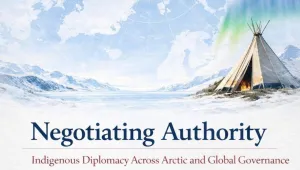
Indigenous institutions have become visible participants in regional and international governance over the past several decades. In the Arctic, organizations representing Indigenous peoples hold formal roles within bodies such as the Arctic Council, while at the global level Indigenous representatives engage with institutional mechanisms developed within the United Nations system. These developments are often presented as evidence of expanding Indigenous participation in governance. Yet an important analytical question remains: how do institutions interpret, structure, and respond to Indigenous representation across different governance systems?
This roundtable will examine Indigenous diplomacy as a form of institutional engagement that operates simultaneously across multiple political arenas. Indigenous leaders today participate in regional governance frameworks, national political systems, and global institutions addressing Indigenous rights. Each of these arenas operates according to different institutional logics, legal structures, and political incentives. Understanding Indigenous authority in contemporary governance therefore requires examining how representation is translated across these different institutional environments.
The discussion will explore how Indigenous diplomacy functions within the institutional architecture of Arctic and global governance. Particular attention will be given to the ways in which governance institutions—from national governance systems within Arctic states to regional institutions such as the Arctic Council and global frameworks within the United Nations—structure the conditions under which Indigenous actors exercise authority.
By bringing together perspectives from Indigenous leadership, academic research, and policy practice, the roundtable seeks to advance discussion on how Indigenous diplomacy operates within and across institutional frameworks that govern the Arctic and shape global Indigenous rights regimes. It will also consider how governance institutions might better interpret and respond to Indigenous representation in ways that support meaningful participation and durable governance arrangements across the circumpolar North.
The event will be followed by a reception.
Sponsorship: This event is co-sponsored by the Davis Center for Russian and Eurasian Studies, the Scholars at Risk Program and the Belfer Center's Arctic Initiative, all of Harvard University.
Accessibility: The Davis Center for Russian and Eurasian Studies at Harvard University encourages persons with disabilities to participate in its programs and activities. If you anticipate needing any type of accommodation or have questions about the physical access provided, please contact us at 617-495-4037 or daviscenter@fas.harvard.edu in advance of your participation or visit. Requests for Sign Language interpreters and/or CART providers should be made at least two weeks in advance if possible. Please note that the Davis Center will make every effort to secure services but that services are subject to availability.