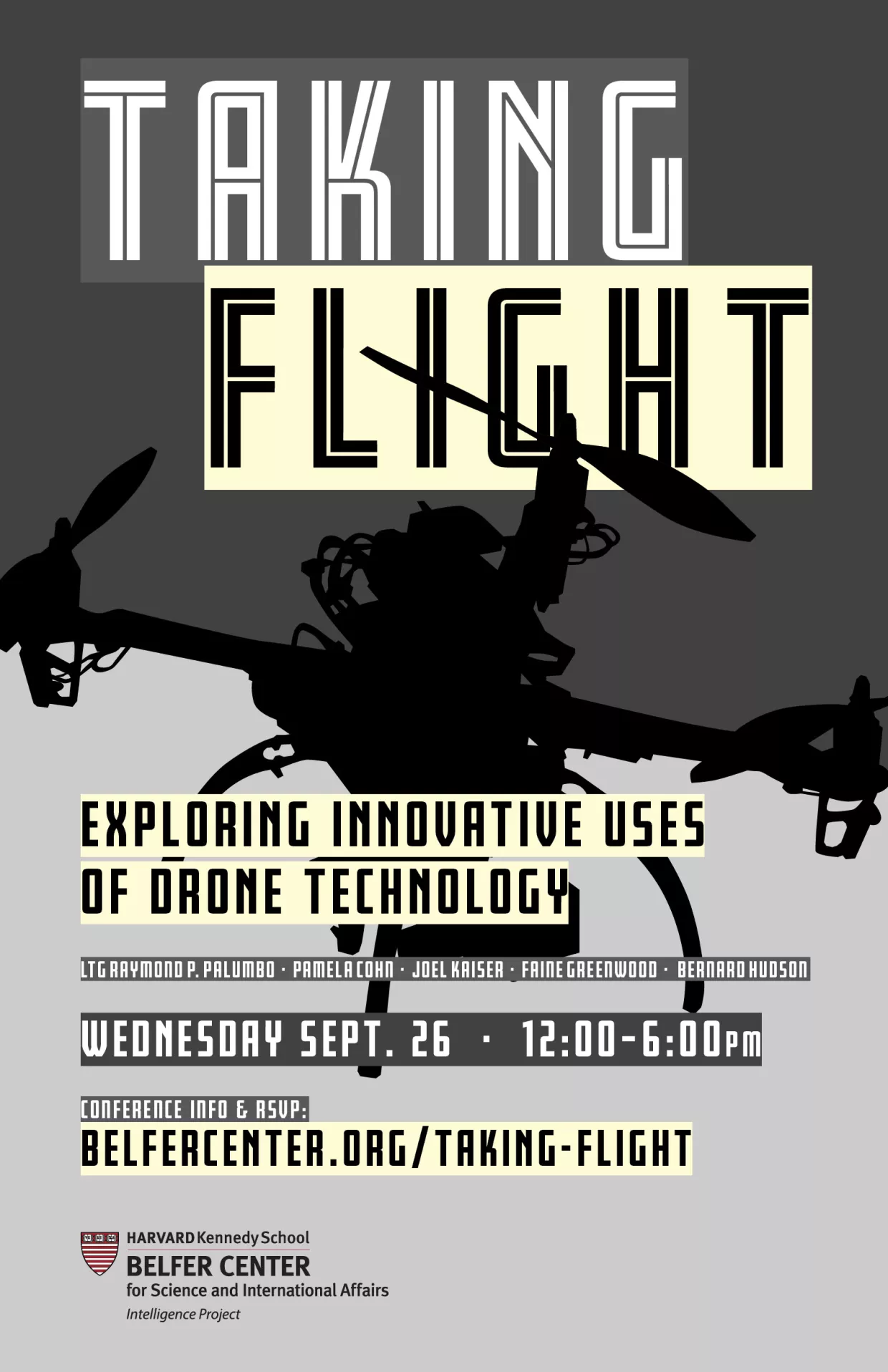
Bernard Hudson, CEO, Looking Glass Technology and Former Chief of Counterterrorism, Central Intelligence Agency
Bernard Hudson is a non-resident Fellow at the Belfer Center where he supports the Intelligence Project and the Saudi and Gulf Cooperation Council Security Project. The project explores the breadth and depth of security challenges facing the region and how these states and their allies are responding.
Mr. Hudson is the President of Looking Glass Limited which specializes in drone technology, business applications and equity investing in the same.
Prior to joining the private sector Mr. Hudson served for 28 years as an operations officer in the Central Intelligence Agency. His final position was as Chief of Counterterrorism where he directed all aspects of CIA's global war on terrorism and is a recognized expert on international negotiation, strategic development, crisis management, risk assessment and the Middle East. He served multiple assignments abroad, including three in key leadership positions. During his career he received the National Intelligence Medal of Valor, the Director of CIA’s Award for Excellence, the Intelligence Medal of Merit and the Intelligence Collector of the Year. Mr. Hudson is a US Army veteran.
Joel Kaiser, Director of AidRobotics at WeRobotics
Joel Kaiser is the Director of AidRobotics at WeRobotics, a role focused on developing and deploying robotics and artificial intelligence to overcome challenges in humanitarian aid and disaster management. Prior to WeRobotics, Joel worked as an emergency response specialist with several different humanitarian agencies including the Canadian Red Cross, Food for the Hungry and Medair. Over the past fifteen years Joel has lead humanitarian and disaster response teams in over a dozen major humanitarian catastrophes including Haiti, Myanmar, Nepal, Somalia, Iraq, Philippines, and Syria. Since 2013 these responses have involved the use of drones to improve operational decision-making, and which lead him to join WeRobotics in 2017. Joel holds an MA in International Development with a focus on Complex Emergencies from Simon Fraser University in his hometown of Vancouver. Joel lives in Switzerland. Follow him on twitter @joelmyleskaiser.
LTG Raymond P. Palumbo, Former Deputy Secretary of Defense (Intelligence) for Warfighter Support
Ray Palumbo is a respected strategist, problem solver and team builder who supports a broad range of public, private, and philanthropic organizations. He is the founder and senior partner of Venturi Solutions LLC, a consultancy that delivers winning solutions in the aerospace, defense, and intelligence sectors. A former US Army 3-star general, Ray led conventional and special operations forces during peacetime and in combat. He completed his 34- year military career as the Director for Defense for Intelligence in the Pentagon where he simultaneously led the Intelligence, Surveillance, and Reconnaissance (ISR) Task Force, an organization that delivered critical intelligence systems to war-fighters around the globe. Ray currently serves as director on the corporate boards of CAE-Mission Solutions Inc., Systematic Inc., W.S. Darley & Co., and Actifio Federal, Inc. He also advises a range of leading defense companies whose products and services contribute to national security and the well-being of men and women in uniform. As director for the non-profits Quality of Life, Plus and the Boulder Crest Foundation, Ray’s philanthropic passion is committed to improving the well-being of our nation's military veterans, first responders, and their families. Ray has a Bachelor of Science degree in engineering from West Point, a Master of Science in administration from Central Michigan University, and a Master of Strategic Studies from the US Army War College. He is a graduate of the British Higher Command and Staff course at the British Defense College in Shrivenham, England.
Pamela Cohn, Managing Partner, Ascension Global
Pamela Cohn is the Managing Partner of Ascension Global, a management consulting firm based in Washington D.C. that focuses on innovative aviation technologies. Pamela is an expert in market and regulatory strategy for innovative technologies and has spent her career helping public and private sector entities navigate the complex ecosystem of aviation and space technology development, integration, and monetization. Prior to founding Ascension Global, Pamela worked at McKinsey & Company, where she was a leader in their Aerospace & Defense practice and the founder of their global Unmanned Aerial Systems (UAS) hub.
In her time at McKinsey, she spearheaded the Firm's work on UAS, Urban Air Mobility (UAM), Unmanned Traffic Management (UTM), and intermodal unmanned/autonomous regulation and policy. Pamela has extensive experience serving a range of public and private sector clients throughout all areas of the aviation and space value chains on strategy, regulation, transactions, and corporate finance. Pamela holds an MA in War Studies from King's College London, where her research focused on the development and regulation of Unmanned Combat Aerial Vehicles (UCAVs).
Faine Greenwood, Researcher, Signal Program on Human Security and Technology, Harvard Humanitarian Initiative
Faine Greenwood is a researcher at the Signal Program at the Harvard Humanitarian Initiative, focused on the use of unmanned aerial vehicles and spatial information in humanitarian aid. Greenwood’s work centers in particular on defining privacy risks posed by the civilian use of drones in disaster, as well as the use of small drones by non combatants in conflict and complex emergency environments. Before coming to the Signal Program, Greenwood worked as a field analyst at New America, and co-authored “Drones and Aerial Observation,” one of the first primers on civilian UAV technology. A former Southeast Asia correspondent, Greenwood is a regular contributor to Slate and Foreign Policy.