We are committed to training the next generation of solutions-oriented Arctic leaders. There are many ways for Harvard Kennedy School students to collaborate with us, including our Arctic course, research assistant opportunities, events, and other programming. Sign up for our newsletter to get updates on events and opportunities to get involved.
Pre- and Postdoctoral Fellowships: Early-career Arctic scholars are encouraged to apply for our academic fellowship program.
Students are deeply involved in the operation and success of our research projects and efforts. They conduct collaborative and independent research under the guidance of faculty, senior fellows, and staff. HKS students are encouraged to apply for research assistant positions as opportunities become available.
Currently, there are no open roles.
Featured Student Work
Research assistants have served as authors and co-authors of Arctic Initiative publications.
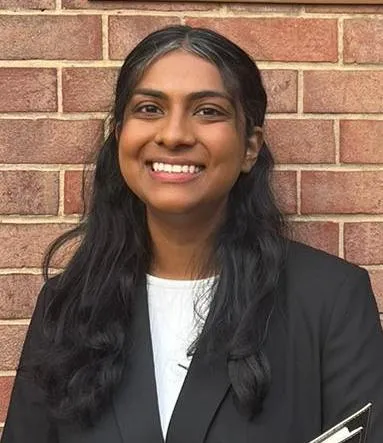
"What brought me to the Arctic Initiative was the focus on the people and communities – I’ve learned so much about how climate change is impacting the health and wellbeing of people across the region, and how different communities are building resilience." - Aruni Ranaweera MPP 2025
IGA-671M: Policy and Social Innovation for the Changing Arctic
The first Harvard course to focus on the Arctic, “Policy and Social Innovation for the Changing Arctic” emphasizes creative thinking about solutions to pressing Arctic issues. The January-term course is taught by Arctic Initiative co-founder Halla Logadóttir and supported by the Arctic Initiative team. Students are individually mentored by senior Arctic experts as they research a policy area of concern and develop their own innovative and interdisciplinary solutions. Op-eds written by students about their ideas have been published in Arctic Today, and students have traveled to the annual Arctic Circle Assembly in Reykjavik to pitch their ideas in the Arctic Innovation Lab.
Watch the course trailer for IGA 671M: "Policy and Social Innovation for the Changing Arctic."
"Halla Logadóttir’s class was perhaps my favorite at Harvard. She made me a better communicator, being one of those unique teachers able to simultaneously convey technical expertise, policy experience, and deep humanity." - Stirling Haig MPP 2024
Events and Programming
Student participation is crucial to many of the events we host and co-host throughout the year. Please keep your eye on our upcoming events; if you have an idea for an event or would like to make the Arctic Initiative aware of one that you or a student organization is planning, please email our Program Manager Tessa Varvares at tvarvares@hks.harvard.edu.
Highlights
1 of 6
In 2026, the Arctic Initiative supported Helen Gao MPP 2026 to participate in the Arctic Resilience through Climate Action, Development, and Education (ARCADE) program, a six-month, multidisciplinary intensive program that brings together graduate students from across disciplines to explore the social, environmental, and political dimensions of climate change in the Arctic and West Nordic regions.
2 of 6
Students explored the impacts of the rapidly changing Arctic Ocean and how those changes relate to their home countries and professions during a five-week study group organized by Senior Fellow Margaret Williams and supported by Research Assistants Jonny Yau MPP 2025 and Bhuvan Ravindran MPP 2026.
3 of 6
Cooperation or Conflict in the Arctic: What to Do About Russia During a Climate Crisis?
A Spring 2024 study group, led by Senior Fellow Margaret Williams, evaluated the costs and benefits of renewing cooperation with Russia on science and conservation issues following the 2022 invasion of Ukraine.
Since 2014, close to 1,000 students from over 30 countries have participated in the Arctic Innovation Lab, pitching their solutions to challenges facing a changing Arctic. Participants have just two minutes to persuade a panel of judges that their idea can promote a sustainable Arctic future.
This workshop offers a fun, low-stakes environment for students to explore the interaction between geospatial data and policy. Students gain literacy in ArcGIS software and learn about climate science and mapping from experts at the Arctic Initiative, Woodwell Climate Research Center, and Esri.
Northern Lights showcases stories from and about the Arctic, as told by students from Harvard and around the world. Since its launchin March 2021, the podcast has featured an eclectic mix of stories, covering subjects such as healing from domestic violence among Alaska Native women and COVID-19 impacts on Arctic tourism.

 Policy Briefs