Arctic Governance, Geopolitics, and Security
Reports & Papers
from Belfer Center for Science and International Affairs

Arctic Technical Cooperation Amid Geopolitical Fragmentation: Lessons from the Cold War

35 minute read

This report examines how Arctic technical cooperation can be sustained under current geopolitical fragmentation by drawing lessons from Cold War science diplomacy.

A U.S. postage stamp commemorating the International Geophysical Year.
A U.S. postage stamp commemorating the International Geophysical Year (IGY). The IGY, also known as the Third Polar Year, was a Cold War-era, multinational scientific effort that included the USSR, NATO allies, and neutral European Arctic states. 

Executive Summary

This report examines how Arctic technical cooperation can be sustained under current geopolitical fragmentation by drawing lessons from Cold War science diplomacy.

Since Russia’s 2022 invasion of Ukraine, Arctic technical cooperation has deteriorated. Though activities are ongoing through the Arctic Council (AC) working groups, scientific cooperation is subject to institutional constraints in some cases more stringent than during the Cold War. This deterioration is creating significant risks: reduced access to Russian environmental data undermines climate modelling; weakens disaster preparedness; and increases uncertainty in shipping safety, fisheries management, and infrastructure planning. 

A return to post–Cold War cooperation is unlikely in the near term. Russia’s shift toward a securitized, war-oriented system and the consolidation of bloc-based rivalry with NATO have embedded Arctic science within a broader context of long-term strategic confrontation. As a result, Cold War–style cooperation—limited, pragmatic, and insulated from high politics—offers a more realistic model than recent multilateral approaches.

The report surveys cases from three areas of Cold War technical cooperation in the Arctic: earth systems science (IGY, World Data Centers, World Weather Watch, 1957–63); wildlife conservation (Polar Bear Agreement, 1973); and fisheries management (Norway–USSR Grey Zone Agreement, 1977). Across the cases, successful cooperation emerged when access to foreign data was more valuable than the risks of sharing, when experts retained autonomy, and when institutional arrangements were narrow, adaptable, and tolerant of imbalance.

Arctic cooperation will remain constrained, fragmented, and selective. High-sensitivity domains (e.g., military-adjacent data) are therefore unlikely to reopen in the near- to medium-term. However, limited collaboration remains possible in low-risk, high-necessity areas, particularly where mutual dependence on data persists. 

Key Recommendations:

  • Focus on narrowly defined, high-priority scientific problems.
  • Frame cooperation in terms of national interest and risk reduction.
  • Distinguish between shareable and sensitive data.
  • Accept asymmetry as a practical necessity and develop mechanisms to manage asymmetric data exchange.
  • Use third-party or neutral intermediaries for data-sharing.
  • Strengthen informal networks, Track II and Track 1.5 engagement.
  • Preserve institutional frameworks to enable future re-engagement. 

While comprehensive Arctic cooperation is currently unfeasible, targeted, Cold War–style technical engagement is both feasible and necessary.

1. Current Problems in Arctic Technical Collaboration

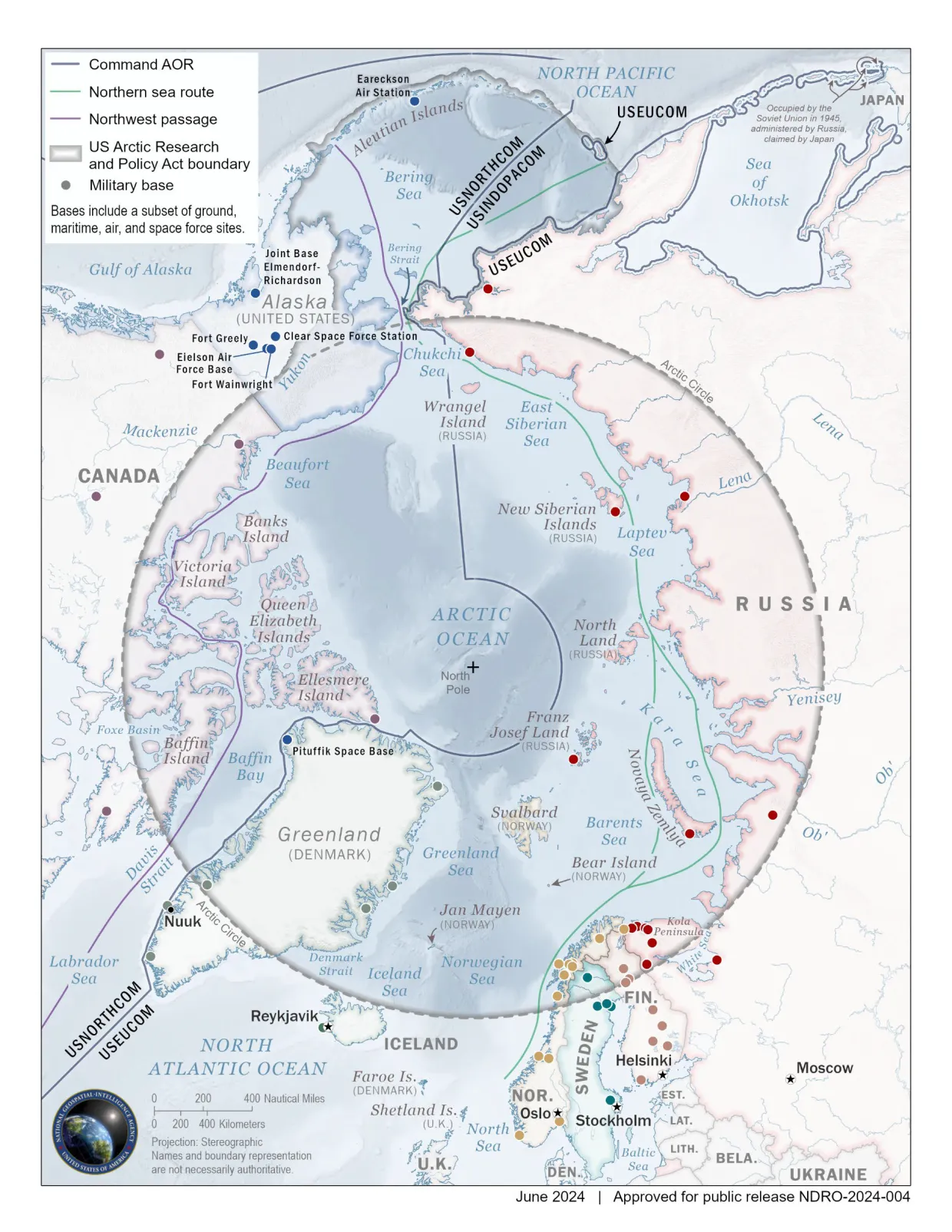
The need for Arctic technical cooperation is rooted in immutable geographic realities. Arctic states cannot change their neighbors, and the region’s tightly coupled ecosystems and shared maritime spaces necessitate some degree of coordination across borders (see map overleaf). This constraint is especially pronounced given that Russia accounts for approximately half of the Arctic’s coastline, territory, and population (Arctic Council n.d.). Efforts to isolate Russia in the Arctic encounter the structural limits imposed by geography which bind Arctic states together in practice even as they diverge politically.

Map of U.S. Military combatant commands in the Arctic.
Map: U.S. Military combatant commands in the Arctic region.

The Arctic science community has been fragmented since the Russian invasion of Ukraine. The seven non-Russian AC member states—Canada, Denmark, Finland, Iceland, Norway, Sweden, and the United States, hereafter the “A7”—initially suspended AC cooperation in projects tied to Russian state authorities in 2022 (Subcommittee on International Science & Technology Coordination 2024, 4; European Commission 2022). Since early 2024, limited working group cooperation has resumed in the AC. However, Western experts are still under pressure to cut off connections with Russian colleagues. In some cases, researchers have had contracts terminated after visits to Russia (Nilsen 2024) and some national research funding agencies will no longer allow collaborations with or funding of Russian experts. As of May 2024, all the International Arctic Science Community (IASC)’s environmental monitoring bases in Russia—nearly a third of the total—were offline (IASC 2024). Though scope remains for cooperation with individual Russian researchers, space for collaboration has narrowed significantly, in some ways exceeding Cold War restrictions.

On the other hand, Russian authorities are securitizing basic scientific work. Russian authorities have resorted to Cold War-era tactics of withholding oceanographic and meteorological data deemed sensitive since the beginning of the full-scale invasion (Hancock and Mooney 2024). Russian scientists now face additional restrictions on their work, such as passing censors before submission for publication and the risk of being labeled a “foreign agent.” In one recent case, Aleksei Dudarev, a public health researcher, was arrested for treason after contributing research to the AC’s Arctic Monitoring and Assessment Programme (AMAP) which, the Russian government alleged, aided Norwegian intelligence services (Staalesen and Krivtsova 2026).

The Russian government tightened restrictions in September 2025, passing a new law giving the security services authority to intrusively monitor interactions between scientific institutions and foreign entities (Meduza 2025). In the current context, scientific autonomy in Russia is already limited and steadily decreasing.

Russia and the United States are increasingly skeptical of traditional multilateralism. Russia’s full-scale invasion has deepened its diplomatic isolation and intensified opposition to its role in multilateral bodies such as the AC and the UN. The second Trump administration has criticized and reduced funding for the UN and unilaterally withdrawn from international organizations like the International Union for the Conservation of Nature (IUCN) which contributed to the development of Arctic technical regimes during the Cold War (The White House 2026). As a result, new clusters of cooperation have emerged within legacy multilateral structures. Russia has announced increased cooperation with BRICS partners in the Arctic. After 2022, the non-Russian Arctic nations began functioning more as a bloc (the so-called “A7”). In response to President Trump’s repeated threats to annex Greenland and Canada, more recently the Nordic Arctic states and Canada have deepened their respective ties (Government of Sweden 2026).

The prospect of returning to post–Cold War cooperation norms is highly unlikely. Since 2022, Russia has shifted toward a whole-of-society mobilization, consolidating a war economy and tightening state control over science and data. Russian officials believe themselves locked in an existential conflict with the “collective West” and are currently waging a campaign of proxy attacks on the European continent (Edwards and Seidenstein 2025). Targets include AC members Finland and Sweden, whose submarine power and internet cables in the Baltic Sea have been severed or damaged by Russian “shadow fleet” vessels eleven times since October 2023 (Satta 2026). With the accession of Finland and Sweden in 2023 and 2024 respectively, all Arctic states except for Russia are now NATO members, reinforcing a bloc-based divide. Arctic cooperation is thus embedded in a broader pattern of systemic animosity unlikely to be resolved even if the war in Ukraine concludes in the near term. With the relationship increasingly resembling a Cold War–style paradigm of sustained confrontation, mechanisms adapted from that era increasingly resemble the most viable options for future engagement. 

Some level of cooperation is essential for forecasting and preparing for the consequences of climate change. The loss of access to Russian climate data undermines the reliability of global models (López-Blanco et al. 2024; Vidal and Saas 2025). This has serious implications, increasing the risks of unanticipated environmental and economic shocks. Gaps in oceanographic and ecological data further reduce the accuracy of sea ice and storm forecasts, creating systemic risks for trans-Arctic shipping. Meanwhile, weakened fisheries monitoring may allow stock declines to go undetected, threatening coastal livelihoods and increasing the potential for interstate competition over remaining resources.

There is still potential for effective technical exchange in the Arctic. Before 2022, Western and Russian experts collaborated effectively under the auspices of the AC on topics from wildlife conservation to emergency response (Williams 2025, 1-5). Since then, scientific opinion on the role of polar warming, permafrost thaw, and threats to wildlife has not noticeably shifted. Russian researchers participated in the recent ICARP IV process (2022-26), for example (IASC 2026). After a period of non-contact, AC operations have resumed at the working group level, albeit only on a virtual basis with all its associated constraints (see Balton and Haig 2026, 2-3). This alignment provides a foundation for future cooperative efforts to address Arctic challenges. 

2. Applying Lessons from the Cold War

2.1. Case Studies and Analytical Framework

Researchers and practitioners would benefit from relearning the lessons of Cold War science diplomacy, which provide a more relevant precedent for current Arctic conditions than the post–Cold War era (Berkman 2024; Devyatkin 2022). During that period, limited but durable channels for data exchange, joint monitoring, and risk reduction were maintained despite deep strategic rivalry, including in areas with clear military and technological sensitivities. Cold War–style approaches provide a more realistic foundation for sustaining essential Arctic science collaboration despite enduring tensions. 

Arctic experts can adapt these Cold War lessons to current geopolitical realities. This report identifies four key criteria for assessing the likelihood of success for current and future initiatives:

  1. National security sensitivity: how decision-makers perceived the balance between the advantages of cooperation and the disadvantages of data-sharing and openness. A positive national security calculus was important for achieving state permission and financial backing for data-sharing and Track II dialogues.
  2. Scientific consensus: a high degree of scientific consensus on the main problems and relevant research fields preceded effective technical collaboration.
  3. Scientific autonomy: even where scientific consensus on factual matters existed, participants could disagree as to the practical implications. Cooperation was more often forthcoming when technical experts were able to cooperate on solutions without undue political interference and where officials aligned with their conclusions.
  4. Institutional form: cooperation was most resilient when delegated to technical experts operating with relative autonomy from formal state representation. Shared professional interests and personal relationships helped sustain collaboration despite political tensions, enabling informal communication and situational problem-solving. Flexible institutional arrangements—such as modular projects and asymmetric data-sharing—allow adaptation to changing conditions. Retroactive renegotiation supported incremental adjustment and incentivized governments with evolving priorities to sponsor continued involvement.

Arctic technical cooperation succeeded during the Cold War despite geopolitical tensions. This report examines three case studies, each yielding insights into how technical collaboration can proceed in geopolitically constrained circumstances. In earth systems sciences, the International Geophysical Year (IGY), World Data Centers (WDCs) and World Weather Watch (WWW) campaigns of 1957-72; in wildlife conservation, the Agreement on the Conservation of Polar Bears of 1973; and in fisheries management, the Norway-USSR Grey Zone Agreement negotiated between 1976 and 1978. These multilateral initiatives, agreed between the USSR, NATO allies, and neutral European Arctic states, operated within the more constrained Cold War environment preceding Mikhail Gorbachev’s Murmansk speech of 1987 and the relaxation of tensions which followed. The following sections examine how these regimes were formed and outline key lessons for current Arctic researchers and policymakers.

2.2. Earth Systems Science: The International Geophysical Year, World Data Centers and World Weather Watch (1957–63)

2.2.1. History and Evolution

Early Cold War tensions prevented almost any technical collaboration in the Arctic. Militarization gathered pace after the USSR obtained the atomic bomb in 1949 and began nuclear tests on Novaya Zemlya in 1957, while the United States expanded its presence in Alaska and concluded an agreement with Denmark in 1951 guaranteeing basing rights on Greenland (Bocking and Chu 2023, 524; Farish 2023; Petersen 1998). Not until Josef Stalin’s death in 1953 did the Soviet Academy of Sciences agree to participate in any multinational scientific efforts (Devyatkin 2022, 326). High geostrategic tensions structurally limited the space for Arctic cooperation.

Existing organizations provided the foundations for scientific coordination. The International Council of Scientific Unions (ICSU) was the top-level coordinating body, overseeing the Special Committee for the International Geophysical year (CSAGI) established in 1952 when planning for the first IGY began. Other venues for cooperation were the International Union of Geophysics and Geodesy (IUGG), the International Geographic Union (IGU) and the International Council for Exploration of the Sea (ICES). The World Meteorological Organization (WMO) became a UN agency in 1951 and led the way on the World Weather Watch (WWW) program. Because these organizations were based neither in the United States nor in the USSR, they were viewed as sufficiently neutral to facilitate the latter’s participation.

Anticipating data-sharing sensitivity, CSAGI created shared repositories. The system of World Data Centers (WDCs) was created in 1955-56 and operationalized in 1956-57. They centralized data exchange—though not processing—in three main data centers: WDC-A in the United States, WDC-B in the USSR, and WDC-C distributed among Western Europe, Australia, and Japan. Nevertheless, the USSR remained highly secretive about its weather data, withholding the dissemination of observations from sensitive sites in the Arctic until the mid-1980s (Edwards 2010, 297). The WDC system was only replaced in 2008.

IGY eventually involved 13 separate disciplines, 10,000 scientists, and 67 countries. Beginning in 1957, 40 IGY research stations were installed to study weather at high latitudes, movements of sea ice, and radio interference induced by aurorae borealis bursts. The Soviets eventually managed 70% of these stations (Doel et al. 2014, 66). The initiative was academically comprehensive, covering research on aurora and airglow, cosmic rays, geomagnetism, glaciology, gravity, ionosphere physics, longitudes and latitudes, meteorology, nuclear radiation, oceanography, seismology, solar activity, and upper atmospheric studies. 

Despite its successes, IGY was beset by limitations on data availability. Data collection and distribution was slow, and the full set of IGY data was not collected until 1961. Seismology and radiation data were also guarded: even information on earthquakes, let alone seismological impacts of nuclear testing, remained a state secret in the USSR (Aronova 2017, 310-311). U.S. authorities rejected IGY proposals for reciprocal transpolar flights between Murmansk and Fairbanks to study polar ice pack dynamics due to concerns over exposing Alaskan ballistic missile defense facilities (Doel et al. 2014, 66). In other areas, the USSR lacked data entirely, including where Western countries declined to provide information in response to Soviet secrecy restrictions (Aronova 2017, 314-315). 

IGY provided a launchpad for the implementation of WWW. Officially as part of IGY, the United States and USSR launched a series of scientific satellites: Sputnik-1 (USSR) in 1957, followed by Sputnik-2 (USSR) and Explorer-1 (U.S.) in 1958, and Television Infrared Observation Satellite (TIROS-1) (U.S.) in 1960. In response, the WMO convened a Panel of Experts on Artificial Satellites in 1958 which developed the idea of a global satellite observation system called the “World Weather Watch.” In April 1963, the UN approved a WWW program consisting of a Global Observing System (GOS), Global Data-Processing and Forecasting System (GDPFS) and Global Telecommunication System (GTS). The system’s costs were underwritten by the United States, Europe, and the USSR through the UN, integrating nation states into WWW’s progress.

The WWW’s establishment survived the heightened tensions of the Cuban Missile Crisis, demonstrating how technical cooperation can succeed with appropriate incentive structures and institutional support.

2.2.2. Key Lessons

National Security Sensitivity

National security considerations drove IGY engagement on all sides. IGY research helped both sides tackle immediate gaps in military planning data, such as sub-surface ocean currents, polar terrestrial magnetism and Arctic weather patterns (Hamblin 2013, 91-92). Much of the funding for IGY came from national governments and militaries, and constituent institutes were often dual use. Examples of this include the U.S. Arctic Research Laboratory (ARL) and the Canadian Defence Research Board (DRB) (Bocking and Chu 2023; Collis and Dodds 2008, 566). Soviet institutions, such as the Northern Sea Route Administration (Glavsevmorput)’s Arctic Research Institute, were tightly integrated with the Soviet Northern Fleet operating out of the Kola Peninsula (Doel et al. 2014, 63). All sides expected net military-strategic benefits from the IGY’s Arctic geophysical research.

Engagement with IGY and WWW derived from interest in satellite technologies. The Soviets used IGY as a scientific venue through which to launch Sputnik-1 (Hamblin 2013, 89). In a race to acquire satellite technology, knowledge of the adversary’s capabilities and the ability to benefit from them was highly desirable, as was the opportunity to launch more into orbit. WWW’s meteorological and atmospheric focus and reliance on satellites coincided with state-level priorities.

Non-cooperation locked participants out of strategically important datasets. The Soviets wanted Western data to complement their own analyses, while Western scientists lacked the extensive Arctic research that the Soviets had classified wholesale as a state secret in 1947, as well as access to the capabilities of the USSR’s extensive icebreaker fleet. IGY secured them that access (Hamblin 2013, 91-92). Engagement with WWW gave the United States and USSR access to new satellite data, filling in critical gaps. Non-cooperation limited access to data which by this juncture was viewed as both scientifically and militarily important. Limited knowledge of the Arctic environment was perceived as a strategic vulnerability by both sides, which IGY and WWW stood to address.

Scientific cooperation was a potential flywheel for other beneficial engagements. In 1956, Soviet premier Nikita Khrushchev announced a new period of “peaceful coexistence” with the West and began relaxing domestic restrictions held over from the Stalinist era. Meanwhile, the Norwegians hoped to leverage cooperation on IGY to engage the Soviets on their maritime boundary dispute ongoing since 1957.1 By effectively underwriting IGY and WWW, the United States and USSR competed to prove their respective national commitments to peace, security, and progress on the world stage (Edwards 2010, 224). Scientific cooperation became diplomatically advantageous.

Not all sides engaged in these efforts with national security as the driving force. Norway’s approach prioritized IGY research as means to affirm political neutrality and sovereignty claims, with funding primarily from the Ministry of Foreign Affairs rather than the military (Doel et al. 2014, 72). American and Soviet participation, on the other hand, required some dual-use application.

Scientific Consensus

The importance of Arctic geophysical research enjoyed scientific consensus. The Soviets had for decades continued to fund polar science, while both North American and European Arctic nations had curtailed it. This fact was responsible for significant anxiety among both Western Arctic researchers and military figures (Doel et al. 2014, 63). Priority topics for researchers and policymakers were pack ice dynamics, hydrothermal weather patterns, and the effects of Arctic climate on soldiers. Soviet antecedent interest and a Western desire to “catch up” incentivized participation in IGY and WWW and the funding thereof on both sides.

Scientific Autonomy

Scientists played the key role in conceiving and executing IGY, WDCs, and WWW. Soviet scientists—A.A. Solotukhin, serving on the World Meteorological Organization (WMO)’s Executive Committee, and physicists S.P. Kapitsa and I.E. Tamm—were instrumental in lobbying for the USSR to join the IGY (Devyatkin 2021; Edwards 2010, 203). Bilateral international engagement was also important: Norwegian meteorologist Halvor Solberg played a significant role convincing initially recalcitrant Soviet officials to participate (Doel et al. 2014, 66). U.S. Weather Bureau Chief Harry Wexler and Soviet satellite expert Academician V.A. Bugaev together prepared the keynote WMO report on the WWW (Edwards 2010, 226). Personal connections between scientists and the latitude given to them by establishments interested in the scheme succeeding were important for negotiating the IGY and maintaining the WDCs.

Institutional Form

Acceptance of informality and asymmetry was crucial for the survival of the WDCs. The national security implications of Arctic climate data meant that significant quantities were not disclosed. Within the remit of IGY, data exchange became “currency,” with asymmetry the “pump.” Soviet institutions, forbidden from transmitting satellite and select weather station data, overprovided non-sensitive data beyond IGY’s scope to compensate (Aronova 2017, 315). This data asymmetry, while not a perfect solution, allowed IGY and the WDCs to function to a satisfactory standard and functionally insulated it from later geopolitical shocks.

Such arrangements required informal, retroactive renegotiation of exchange terms. Soviet authorities’ withholding of data and American scientists’ ad hoc separation of “basic data” (scientific use) from “end products” (dual use) meant that the terms of data exchange were continually renegotiated throughout the five decades of the WDCs’ operation (Aronova 2017, 312). It was critical that this occurred within professional scientific networks, which remained committed to continued research and collaboration throughout. Despite the turbulence of the Cuban Missile Crisis, IGY’s second data catalog was released in 1962 and the third in 1972 during the tail end of the Vietnam War (Edwards 2010, 205). With the WWW, it was gradually acknowledged that the USSR would provide half the funding of the United States, in kind rather than in cash (Edwards 2010, 200). Flexibility on the technical measures of exchange preserved minimal sufficient levels throughout the Cold War.

2.3. Wildlife Conservation: Agreement on the Conservation of Polar Bears (1973)

2.3.1. History and Evolution

Existing organizations again provided the foundations for scientific coordination. The IUCN (established in 1948) spearheaded efforts towards an international agreement to protect polar bears, bringing together 70 countries and 30 full government members. The IUCN’s existence was a precondition for wildlife conservation agreements across the Western-Soviet divide.

Buy-in from national governments was an equally important precondition. The initiative for the 1973 Agreement came from national governments. The Soviets had already forbidden hunting of polar bears on the Arctic coast in 1956 and continuously pressed for a multi-year moratorium on polar bear hunting from then onwards. In 1965, U.S. officials approached their Soviet counterparts with a proposal for an international meeting on polar bears. This meeting occurred in Fairbanks, involving Canada, Denmark, Norway, the United States, and the USSR, and brought each country’s polar bear experts together for the first time. This directly led to the creation of the Polar Bear Specialist Group (PBSG) in January 1968 under the IUCN’s aegis, comprising 1-2 polar bear scientists from each of the five circumpolar states (Fikkan et al. 1993, 100-101). The process was helped by the advent of détente which peaked in the early 1970s with Nixon and Brezhnev’s reciprocal state visits in 1972-73 and the signing of SALT I and the U.S.-USSR Environmental Agreement in 1972. 

Middle power leadership helped resolve repeated U.S.-Soviet negotiating deadlocks. The PBSG met on two-year intervals—January 1968, February 1970, February 1972—before the Agreement was signed (Fikkan et al. 1993, 100-101). Over this period, the sides frequently faced deadlocks. Soviet proposals for a multilateral five- and then ten-year ban on polar bear hunting were blocked by the United States, while a U.S.-sponsored Interim Agreement was vetoed by the Soviets in November 1972 (Larsen and Stirling 2009, 10). Norway’s continued diplomacy, its offer to host the PBSG’s final protocol meeting (at which the Agreement was signed), and implementation of the requested five-year polar bear hunting ban incentivized Soviet participation. Canada—with the largest polar bear population and territory—also played an important intermediary role which tempered American and Soviet hegemony in negotiations, helping all sides to reach a final agreement (Fikkan et al. 1993, 100-101, 125). 

While a positive step, the Agreement showed the limits of what could be achieved. The Agreement established a general prohibition on the “taking” of polar bears in areas they inhabited, rather than in specific national boundaries, as advocated by the Soviets. This ban was qualified by a broad set of exceptions, including subsistence hunting by Indigenous Peoples exercising “traditional rights,” as advocated by the Canadians. The language governing these exceptions was ambiguous, enabling states to interpret and enforce them in line with domestic priorities and national law. Data sharing and collection was subject to a more decentralized regime than the WDCs or WWW, coordinated informally through the PBSG (PBSG 1973). Nevertheless, the deal represented concrete progress in polar bear conservation over the long term. The Agreement was subject to indefinite five-year automatic renewals in the absence of a signatory’s withdrawal and entered into force in all signatory jurisdictions following Denmark’s ratification in 1977. The Polar Bear Agreement remains in force today.


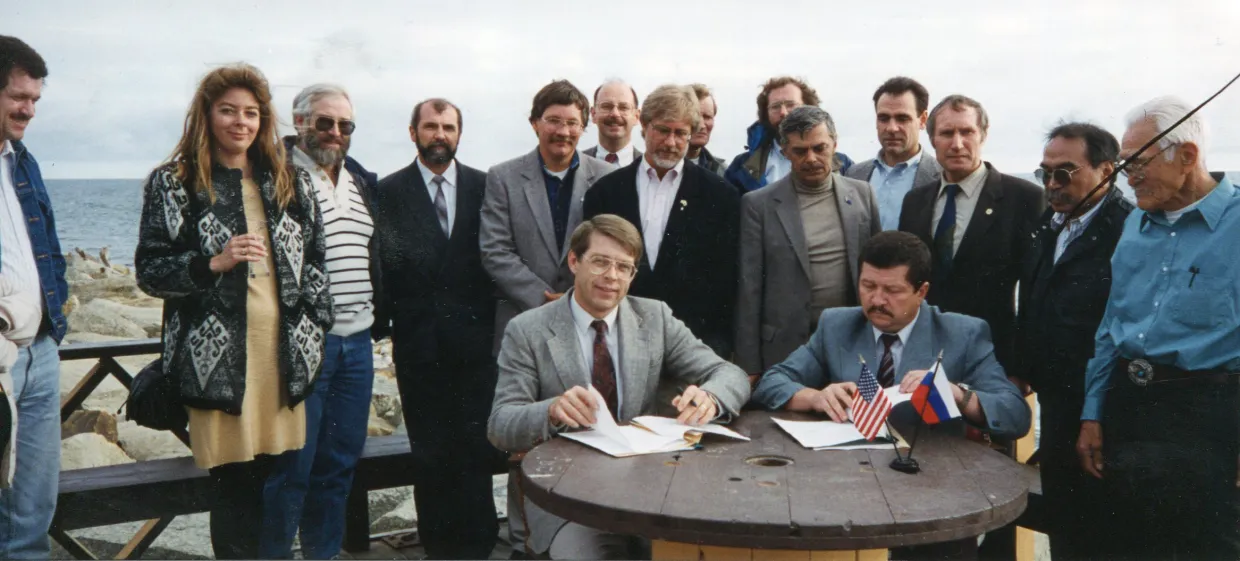
U.S. and Russian wildlife managers discuss polar bear management during a meeting in Nome, Alaska in the 1990s.

2.3.2. Key Lessons

National Security Sensitivity

Polar bear data was not directly tied to core strategic systems, which made reaching a binding multilateral agreement easier. However, it also limited the Agreement’s scope. Later efforts to extend the Agreement to other states and other conservation issues were rejected by Americans, Canadians and Soviets, who at the time favored a limited, specific deal (Larsen and Stirling 2009, 14). Whereas the positive dual-use calculus in IGY and WWW incentivized informal but active data-sharing, the lack of such considerations with polar bears resulted in a more limited, specific agreement.

The costs of cooperation were lower than remaining outside the discussions. Each state had its own calculus. Canada and the United States, which hosted major populations, faced direct risks while Norway and Denmark (through Greenland) confronted localized depletion and reputational pressures. The Soviet Union, having already imposed a domestic hunting ban in 1956, perceived non-cooperation primarily as a failure of other states to match its conservation efforts. Equally, the costs of cooperation were low: the agreement did not require intrusive verification, international enforcement, or major financial transfers.

Scientific Consensus 

The issue of conserving polar bear populations enjoyed scientific consensus. The Soviets had passed laws on it as early as the 1950s, and polar bear conservation enjoyed high public salience at the time the Agreement was signed (Fikkan et al. 1993, 108). The question of whether to act was less contentious than the specific form this action would take. Scientific consensus around the need for action interacted with the institutional form of negotiations to determine the form of the final Agreement.

Scientific Autonomy

Negotiators’ personal connections and deal-making autonomy were crucial. All delegations were headed by representatives of agencies responsible for managing polar bears, except for Denmark. These scientists knew each other personally and were there in a professional, rather than political, capacity. This helped bridge still-considerable gaps between the sides’ negotiating positions, which persisted despite five re-drafts of the Agreement’s protocols before 1973 (Fikkan et al. 1993, 120). Personal connections between participants and leadership from certain individuals incentivized continued involvement and interest in reaching a deal. According to later testimony, the Norwegian and American delegates were instrumental in guiding the final meeting in Oslo in November 1973 to a successful conclusion. Delegates lobbying for an agreement on the Soviet side included an IUCN vice-president and a commission chair (Fikkan et al. 1993, 140).

Institutional Form

The polar bear regime embraced flexibility and ambiguity more than IGY and WWW. Rather than establishing centralized data repositories or formal enforcement bodies, the agreement relied on a decentralized model of national implementation, with each state responsible for translating shared principles into domestic law, giving them more flexibility. Scientific coordination was delegated to the PBSG, which operated outside the formal treaty framework but played a critical role in sustaining cooperation through regular meetings, data exchange, and joint research agendas.

The Agreement leveraged institutional neutrality to incentivize cooperation. The IUCN and PBSG were officially neutral platforms for negotiation and drafting, reducing the salience of superpower rivalry. It also served as a third-party intermediary between the drafting and negotiation phases, helping to ensure the process of signing agreements weathered disputes (Fikkan et al. 1993, 107).

2.4. Fisheries Management: the Norway-USSR Grey Zone Agreement (1976-78)

2.4.1. History and Evolution

Norway and the USSR initially had to overcome irreconcilable legal differences. In 1975, the United Nations Third Conference on the Law of the Sea (UNCLOS III) introduced the concept of 200-mile Exclusive Economic Zones (EEZs). Incentivized by the opportunity to assert national rights to Barents Sea hydrocarbons and fisheries, Norway and the USSR unilaterally asserted EEZ claims to overlapping sectors of the Barents Sea the following year. The USSR argued for a meridian line boundary extending straight from its land border to the Arctic, while Norway opted for a median line equidistant between both coastlines. Each side’s proposal maximized their share of the Barents Sea, along with the hydrocarbon and fishing resources contained therein. This created a 60,700-square-kilometer zone under overlapping jurisdictions (Stabrun 2009, 2-3). Considering its weaker position, Norway initiated talks to forestall unilateral Soviet action.

Bilateral organizations incubated Norwegian-Soviet scientific cooperation. Norwegian and Soviet scientists had worked together on fisheries since the 1950s under the auspices of ICES. An understanding of the need for fisheries cooperation extended to the chief negotiators as well (Stabrun 2009, 16). A Joint Norwegian-Russian Fisheries Commission to manage haddock and cod stocks was established in Moscow in April 1975 and commenced operations in January 1976 (Hønneland 2014, 190).

Flexibility and ambiguity enabled an agreement eventually to be signed. Three rounds of negotiations were held in Moscow in January, March, and June 1977. Though both sides compromised, the Norwegians did so more than the Soviets. Evensen renounced Norway’s median line claim, accepting the formation of a 67,500-square-kilometer “Grey Zone” parallel jurisdiction in the overlap between the claimed Russian and Norwegian zones. Evensen reached this understanding during the June negotiations in private talks with his Soviet counterpart. The latter compromised slightly by abandoning the USSR’s more stringent meridian line claims and relinquishing pressure to reach a formal territorial settlement instead of a resource management arrangement (Stabrun 2009, 21-23). Though territorial balance in the eventual agreement was heavily weighted toward the USSR, both sides accepted the deal by November 1977. Joint fisheries management in the Grey Zone has functioned effectively ever since.

The Norwegians and Soviets managed to sign a deal despite high bilateral tensions. In January 1977, a secretary for the Norwegian Ministry of Foreign Affairs was arrested for espionage on behalf of the USSR, which resulted in Norway expelling six Soviet diplomats, and the Soviets two Norwegians in return. This episode nearly ended the first round of negotiations. In the meantime, the Soviets continued frequent missile tests from the Kola Peninsula, obstructed Norwegian seismological expeditions in the Barents Sea, and in June deployed gunboats and boarded Norwegian fishing boats in the disputed zone (Stabrun 2009, 17, 31). The latter action complicated the third round of negotiations. The resolute desire of both sides to officialize a bilateral regime in the Barents Sea meant the negotiations were not ultimately derailed.

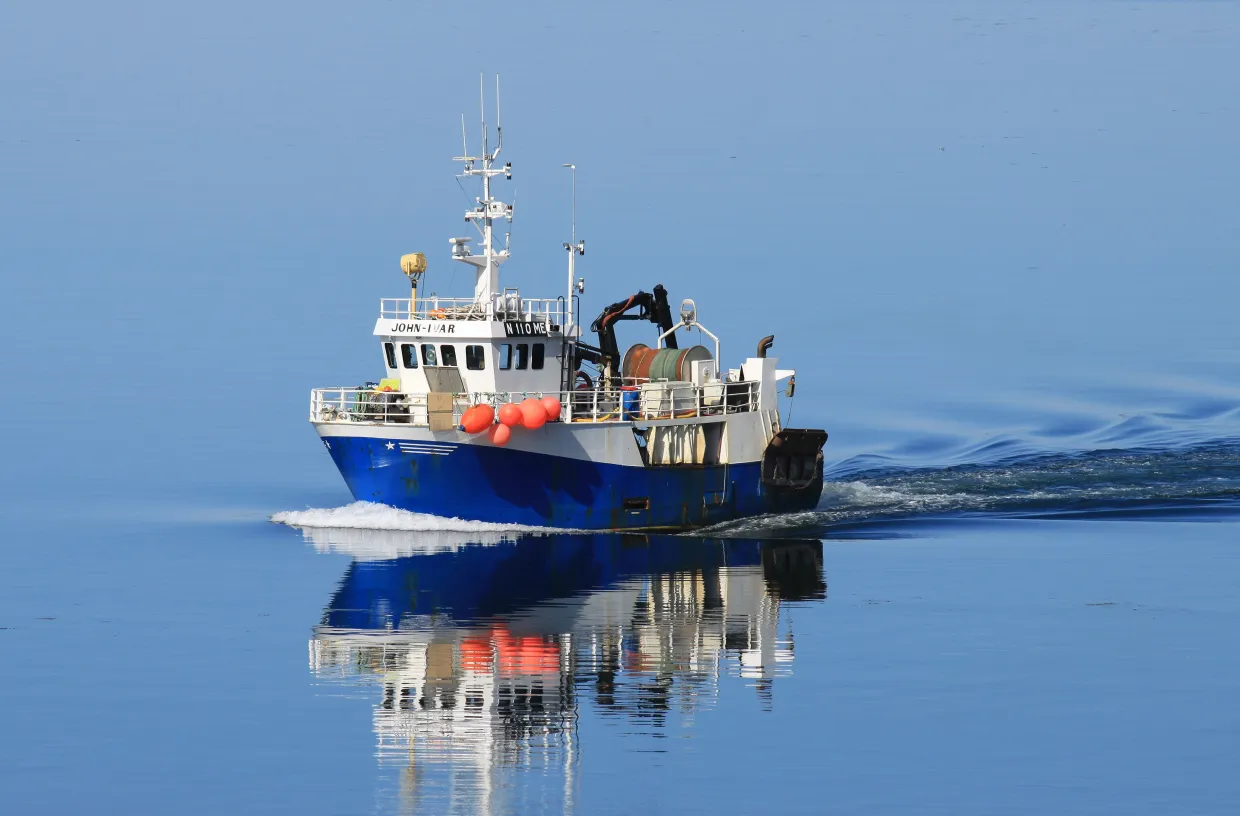
A fishing boat in Bodø, Norway.
A commercial trawler in Bodø, Norway.

2.4.2. Key Lessons

National Security Sensitivity

Fisheries lay at the intersection of technocratic management and naval strategy. Norway anticipated Barents Sea security deteriorating without bilateral action. In government deliberations on the deal, the importance of sustainable fisheries management was secondary to concerns about Soviet naval action (Stabrun 2009, 31). Fisheries was a salient area in which to ground relations in bilateral cooperation, helping to incentivize the Norwegian government to accept the compromise deal their chief negotiator delivered.

The Soviets were equally interested in a stable regime for the Barents Sea. The area was the main outlet for Soviet nuclear submarines from the Northern Fleet’s base on the Kola Peninsula, and Russian circles did and continue to speak of a “battle of interest” between Norway and USSR/Russia (Hønneland 2003, 61). A stable bilateral regime governing Barents fisheries weighted towards Soviet interests was a positive outcome. Non-cooperation, meanwhile, risked worsening the USSR’s hand in the ongoing UNCLOS negotiations for no discernible gain in a scenario where a favorable deal existed.

The economic advantages of effective fisheries management outweighed security risks. Barents haddock and cod stocks were—and are—important sources of food and livelihoods for local communities. This consideration predominated over bilateral concerns about naval balances of power or strategic dominance in the Barents Sea.

Scientific Consensus 

The need for fisheries management enjoyed bilateral scientific consensus. Cod, haddock, and capelin fisheries were collapsing due to overfishing and in their worst state since the end of the Second World War (Stabrun 2009, 43). Scientists and officials agreed that this situation was unsustainable from both an ecological and economic perspective. This incentivized workable proposals for joint/parallel fisheries management.

Scientific Autonomy

The technical officials and scientists leading the bargaining had functional autonomy, particularly in defining stock assessments, quotas, and regulatory practices. On the Soviet side, talks were headed by Fisheries Minister Alexander Ishkov and Head of Legal Affairs of the Soviet Ministry of Foreign Affairs Oleg Khlestov. Minister of Maritime Law Jens Evensen led the Norwegian delegation. Though both the Soviet and Norwegian defense ministries commented on the Grey Zone Agreement, they were not the main institutional penholders. Leadership by technical officials, rather than security figures, allowed the talks to reach a constructive conclusion. Evensen was given considerable latitude to make offers to his Soviet counterparts, who themselves displayed more flexibility than was often customary for Soviet negotiators (Stabrun 2009, 19-23).  Both governments ultimately chose not to subordinate the talks to wider geopolitical disagreements. 

Institutional Form

Like other successful arrangements, the deal’s scope was narrow and technical. Despite Soviet attempts, the Norwegians rejected conditions tied to the status of Svalbard (Stabrun 2009, 25). The two sides remained focused on operational concerns tied to management of three key fisheries, rather than broader questions over Norway and Russia’s maritime territorial border. This allowed negotiations to weather political storms over both these topics that may otherwise have derailed them.

The deal’s flexibility made it amenable to adaptation and retroactive bargaining. The Grey Zone acknowledged the de facto reality of parallel enforcement regimes rather than legally recognizing either side’s authority. This has allowed both sides to engage in “post-agreement bargaining” to continually update relative shares of fish stocks and the stringency of enforcement (see Hønneland 2012). During the 1980s, parties developed specific quota exchanges whereby the USSR traded parts of its cod and haddock quotas in exchange for other species found exclusively in Norwegian waters, such as blue whiting (Hønneland 2014, 190-191). This incentivized Norway and the Soviet Union/Russian Federation to abide by the deal’s terms even when their external calculus changed. Lowering the bar for entry commensurately undermined incentives to withdraw.

3. Recommendations

3.1. For Researchers

  1. Outline the negative implications of data insufficiencies and halts in cooperation. Strengthen public and policy messaging around the practical problems for states and communities downstream of model bias resulting from insufficient data, such as in weather forecasting, shipping, and fisheries management.
  2. Acknowledge baseline geopolitical constraints on Arctic technical cooperation. Collaboration was limited during most of the Cold War. As events deteriorate beyond or remain at similar levels of tension, plan research programs on the assumption that bloc-based scientific systems will persist.
  3. Identify and prioritize areas critically affected by lack of data and/or collaboration. Focus on narrowly defined research questions targeting areas of mutual interest—such as meteorological and oceanographic surveys—where collaboration is technically essential and has a history of weathering external political shocks. Maritime monitoring and search-and-rescue is an example where cooperation has collapsed but cooperation remains necessary due to the high-risk, high-magnitude nature of crisis events (Williams and Patel 2025, 2; Balton and Haig 2026, 13).
  4. Differentiate between “shareable” and “sensitive” data. Adopt practices that separate basic scientific data from higher-risk outputs, enabling partial cooperation even under restrictive conditions.
  5. Develop and sustain informal expert networks. Invest in long-term professional relationships and trust-building, which are critical for maintaining cooperation under political strain. Prioritize forming connections with émigré Russian researchers with personal access to and/or understanding of their institutional networks and data. Consider when and how it might be appropriate to use these informal networks to facilitate in-person meetings to bypass institutional gridlock at the official level. This can include Track II and Track 1.5 dialogues involving scientists and technical officials outside their official capacity.
  6. Contribute research on mechanisms to manage data asymmetry. During the Cold War, actors became accustomed to exchanging scientific data of asymmetric types or in insufficient datasets. Researchers can draw on this history to develop informal “price” or exchange logics (e.g. reciprocal access, substitute datasets) to sustain cooperation when contributions are uneven. Identify highest priority missing datasets and proprietary ones of equal or approximate value. Acknowledge data from sensitive platforms/geographies will not be forthcoming and adjust accordingly.

3.2. For Policy Practitioners

  1. Recognize existing policies’ negative impact on Track II and 1.5-based projects. Governmental responses to Russia’s full-scale invasion of Ukraine were designed to minimize public engagement with Russian officials, which is likely to continue while Russian attacks continue. However, measures like visa bans for individual researchers have spilled over into Track II and 1.5 settings, which enable effective cooperation without affording legitimacy to the Russian government’s actions. Policy practitioners should consider the possibility of better balancing political opposition to Russian aggression and enabling Track II and 1.5 engagement on non-geostrategic issues.
  2. Acknowledge the utility of independent, issue-specific scientific working groups. Groups like CSAGI and PBSG were essential for the IGY and Polar Bear Agreement respectively. Prioritizing non-official work allowed governments on all sides to obtain useful climate and wildlife data without altering stated policy or the broader geopolitical balance of the Cold War. Officials can allow scientific working groups to drive concrete, positive outcomes without diluting their material and rhetorical opposition to Russia’s full-scale invasion of Ukraine. Norway’s spearheading of limited working group engagement in the AC recognizes this, drawing on Oslo’s long history of Arctic engagement with Russia.
  3. Facilitate informal in-person gatherings of the AC working groups. Multinational cooperation in politically neutral settings was a key enabler of technical collaboration during the Cold War, even in tenser periods. Intermittent or virtual meetings reduce project delays, maintain expert-level relationships and sustain political support for vital technical initiatives. As recommended elsewhere (Balton and Stirling 2026, 8), permitting Working Groups to meet in person on the sidelines of other bodies’ in-person meetings would benefit scientific exchange while avoiding impressions of high-level policy changes to Arctic collaboration with Russia at the political level (see Balton and Haig 2026, 11). Particularly relevant bodies include those supervising working agreements, e.g. the International Maritime Organization or the International Seabed Authority.
  4. Align cooperation with national interest incentives. Ensure that any data exchange offers tangible benefits (e.g. access to data, risk reduction, economic stability) that outweigh perceived national security risks, making disengagement more costly than cooperation. Adopt national security-based arguments in favor of technical collaboration with an outcome-based focus.
  5. Enable controlled data-sharing through third party mechanisms. Third-party data escrow facilities overseen by middle power states actively aspiring to an Arctic presence, such as India, Türkiye, or the UAE. These countries maintain working bilateral relations with Russia which may facilitate a minimal degree of practical exchange.
  6. Assess the suitability of novel institutional structures for data-sharing. The WDC system, for example, innovated by leveraging decentralized infrastructure to facilitate data-sharing in a low-trust international environment. Considering the Trump administration’s reluctance to engage with multinational organizations, policy practitioners should assess the potential for private sector-based structures. These might also provide sufficient flexibility to revert to legacy structures like the AC should future conditions improve.
  7. Accept asymmetry as a feature, not a flaw. Design agreements that, where necessary, tolerate unequal contributions (data, funding, access) to sustain participation.
  8. Preserve and pre-build cooperation frameworks. Maintain institutional “scaffolding” so that projects can restart quickly when political conditions shift. Work in Track 1.5 dialogues to ensure minimal levels of government-research coordination.
  9. Develop standards for future re-engagement. Advance the technical, legal, and procedural conditions under which cooperation could resume or expand once political conditions shift. Drafting contingency protocols for reactivating joint monitoring stations, data exchanges, and field access. Defining tiered cooperation levels (e.g., minimal data exchange, limited joint projects, full treaty-bound collaboration), with clear triggers for moving between them. Plan aligned technical standards and data formats to smooth future integration while systems evolve independently in the interim.

4. Conclusion: Lessons from Cold War Science Diplomacy

Arctic science cooperation during the Cold War was often unsuccessful. Multilateral initiatives struggled to operate against considerable geopolitical headwinds, in the scattered instances where they were attempted (for a critical overview, see Young 1998, 31, 188). Arctic researchers should be cognizant of these realities and adjust their planning assumptions accordingly. Yet, in select cases, cooperation proved successful.

In successful cases, the value of new data overrode national security concerns. Data sharing was only permitted where the perceived strategic value of accessing foreign information outweighed the risks of exposing one’s own capabilities. Where sensitivity was high, cooperation could be redirected through data escrows, filtering, and substitution, sharing lower-risk information while withholding critical elements. This effectively capped the scope of cooperation rather than preventing it outright.

Scientific consensus on problems and the need for cooperation was essential. Cooperation was likelier where actors agreed on the nature of the problem or its implications, and far more likely where there was broad agreement on both diagnosis and appropriate responses. This enabled negotiations to focus on implementation rather than political contestation.

It was vital for technical experts to have autonomy from political directives. Technical cooperation depended on the ability of experts to operate, at least partially, outside the immediate pressures of high politics. In successful cases, scientists and diplomats engaged in problem-solving, maintained professional relationships, and communicated across divides without constant political intervention. This autonomy is never complete—state authorization and funding remain essential—but a degree of insulation was critical for allowing agreement to survive external tensions and disputes.

Institutional forms were narrow and flexible to permit bargaining and asymmetry. Indirect exchange mechanisms and third-party intermediaries allowed data to circulate without requiring direct bilateral transparency. Narrow, technical, and modular arrangements limit the scope of cooperation to manageable problem areas, reducing the risk of spillover into contested domains. Flexibility is equally important: agreements accommodated asymmetry and evolved through retroactive bargaining. Neutral, non-national organizations play a central role, providing legitimacy, convening power, and a buffer against geopolitical tensions.

Reviving Arctic technical collaboration needs innovation grounded in historical experience. The Cold War demonstrates that even amid deep rivalry, flexible, narrowly scoped, and pragmatic arrangements can endure when they adapt to constraints. Future approaches should therefore fuse these lessons with new institutional forms, embracing asymmetry, experimentation, and novel intermediaries where necessary.

Recommended citation

Conway, Christopher. “Arctic Technical Cooperation Amid Geopolitical Fragmentation: Lessons from the Cold War .” Belfer Center for Science and International Affairs, June 8, 2026

Footnotes
  1. In 1957, the USSR rejected the equidistance principle favored by Norway and advanced an alternative delimitation approach, marking the beginning of a long-standing disagreement over the two nations’ Barents Sea boundary. See Section 3 for its resolution.

Bibliography

Arctic Council. (n.d.). The Russian Federation. https://arctic-council.org/about/states/russian-federation/. Last accessed May 2, 2026

Aronova, E. (2017). Geophysical Datascapes of the Cold War: Politics and Practices of the World Data Centers in the 1950s and 1960s. Osiris 32(1), 307–327. https://www.journals.uchicago.edu/doi/epdf/10.1086/694094

Balton, D. & Haig, S. (2026). Revitalizing the Arctic Council, Harvard Arctic Initiative Policy Brief, February.https://www.belfercenter.org/sites/default/files/2026-03/Balton%20Haig_Revitalizing%20the%20Arctic%20Council_20260317.pdf

Berkman, P.A. (2024). Russia’s Arctic Council threat requires lessons from cold war science diplomacy. Nature Correspondence, February 27. https://www.nature.com/articles/d41586-024-00557-z

Bocking, S. & Chu, P.-Y. (2023). Cold War Environmental Knowledge in the Polar Regions. In A. Howkins and P. Roberts (Eds), The Cambridge History of the Polar Regions (pp. 510-535). Cambridge: Cambridge University Press

Bruno, Andy (2016). The Nature of Soviet Power: An Arctic Environmental History. Cambridge: Cambridge University Press

Chu, P.-Y. (2020). The Life of Permafrost: A History of Frozen Earth in Russian and Soviet Science. Toronto: University of Toronto Press

Collis, C. & Dodds, K. (2008). Assault on the unknown: the historical and political geographies of the International Geophysical Year (1957-8). Journal of Historical Geography 34(4), 555-573. https://www.doi.org/10.1016/j.jhg.2008.05.016

Devyatkin, P. (2021). Environmental Détente: What can we learn from the Cold War to manage today’s Arctic Tensions and Climate Crisis? The Arctic Institute, June 8. https://www.thearcticinstitute.org/environmental-detente-learn-cold-war-manage-todays-arctic-tensions-climate-crisis/

—. (2022). Environmental Détente: U.S.–Russia Arctic Science Diplomacy through Political Tensions. The Polar Journal 12(2), 322–342. https://doi.org/10.1080/2154896X.2022.2137091

Doel, R.E., Friedman, R.M., Lajus, J., Sörlin, S. & Wråkberg, U. (2014). Strategic Arctic Science: National Interests in Building Natural Knowledge—Interwar Era through the Cold War. Journal of Historical Geography 44, 60–80. https://doi.org/10.1016/j.jhg.2013.12.004

Edwards, C. & Seidenstein, N. (2025). The Scale of Russian Sabotage Operations Against Europe’s Critical Infrastructure. International Institute of Strategic Studies, August. https://www.iiss.org/globalassets/media-library---content--migration/files/research-papers/2025/08/pub25-095-the-scale-of-russian-sabotage-operations.pdf   

Edwards, P.N. (2010). A Vast Machine: Computer Models, Climate Data, and the Politics of Global Warming. Cambridge, MA: MIT Press

European Commission. (2022). Commission suspends cooperation with Russia on research and innovation. Press release, March 3. https://ec.europa.eu/commission/presscorner/detail/en/ip_22_1544

Farish, M. (2023). The First Century of US Militarization in Alaska, 1876-1967. In Howkins, A. & Roberts, P. (Eds), The Cambridge History of the Polar Regions (pp. 563-592). Cambridge: Cambridge University Press

Fikkan, A., Osherenko, G. & Arikainen, A. (1993). Polar Bears: The Importance of Simplicity. In Osherenko, G. & Young, O.R. (Eds), Polar Politics: Creating International Environmental Regimes (pp. 96-151). Ithaca, NY: Cornell University Press

Government of Sweden. (2026). Joint statement by the Prime Ministers of the Nordic countries and Canada. March 15. https://www.government.se/statements/2026/03/joint-statement-by-the-prime-ministers-of-the-nordic-countries-and-canada/

Hamblin, J.D. (2013). Arming Mother Nature: The Birth of Catastrophic Environmentalism. Oxford: Oxford University Press

Hancock, A. & Mooney, A. (2024). Russia ‘withholding’ vital climate data in the Arctic, warns Nato. Financial Times, October 28. https://www.ft.com/content/b7c143ad-d20e-4057-86cb-7c1a5b0de87f?syn-25a6b1a6=1 

Hønneland, G. (2003). Russia and the West. Environmental co-operation and conflict. London: Routledge

—. (2012). Making Fishery Agreements Work. Post-Agreement Bargaining in the Barents Sea. Cheltenham: Edward Elgar

—. (2014). Compliance and Postagreement Bargaining in the Barents Sea Fisheries. Ocean Development and International Law 45(2), 186-204. https://doi.org/10.1080/00908320.2014.898923

Hünemörder, K.F. (2010). Environmental Crisis and Soft Politics: Détente and the Global Environment, 1968–1975.” In McNeill, J.R. & Unger, C.R. (Eds), Environmental Histories of the Cold War (pp. 257–276). Cambridge: Cambridge University Press

International Arctic Science Committee [IASC]. (2024). INTERACT III Newsletter. May. https://iasc.info/news/arctic-community-news/1339-interact-iii-newsletter-may-2024

—. (2026). ICARP IV Final Outcomes Report. March. https://icarp.iasc.info/publications/publications-icarp-iv?download=30:icarp-iv-final-outcomes-report-2026

Larsen, T.S. & Stirling, I. (2009). The Agreement on the Conservation of Polar Bears: Its History and Future. Norsk Polarinstitutt Rapportserie 127, 5-25. https://downloads.regulations.gov/FWS-R7-ES-2015-0141-0013/attachment_87.pdf

López-Blanco, E., Topp-Jørgensen, J., Christensen, T.R., Rasch, M., Skov, H., Arndal, M.F., Bret-Harte, M.S., Callaghan, T.V. & Schmidt, N.M. (2024). Towards an increasingly biased view on Arctic change. Nature Climate Change 14, 152-155. https://www.nature.com/articles/s41558-023-01903-1 

Meduza. (2025). Putin signs law giving FSB oversight of Russia’s scientific collaboration abroad. June 24. https://meduza.io/en/news/2025/06/24/putin-signs-law-giving-fsb-oversight-of-russia-s-scientific-collaboration-abroad

Nilsen, T. (2024). University terminates contract with Lassi Heininen over Moscow visit. The Barents Observer, May 11. https://www.thebarentsobserver.com/arctic/university-terminates-contract-with-lassi-heininen-over-moscow-visit/121055 

Petersen, N. (1998). Negotiating the 1951 Greenland Defense Agreement: Theoretical and Empirical Aspects, Scandinavian Political Studies 21(1), 1-28. https://scispace.com/pdf/negotiating-the-1951-greenland-defense-agreement-theoretical-3u7yav5q1s.pdf

Polar Bear Scientific Group [PBSG]. 1973. Agreement on the Conservation of Polar Bears. November 15. https://library.arcticportal.org/1867/1/Agreement-on-the-Conservation-of-Polar-Bears.pdf

Reuters. 2024. Russia suspends annual payments to Arctic Council, RIA agency reports. February 13. https://www.reuters.com/world/russia-suspends-annual-payments-arctic-council-ria-agency-reports-2024-02-14/

Rindzevičiūtė, E. (2016). The Power of Systems: How Policy Sciences Opened Up the Cold War World. Ithaca: Cornell University Press

Saradzhyan, S. (2025). Would Russia Attack NATO and, If So, When? Russia Matters, June 5. https://www.russiamatters.org/blog/would-russia-attack-nato-and-if-so-when 

Satta, M. (2026). The Silent Front: Cable Crisis in the Baltic Sea. Atlas Institute for International Affairs. April 12. https://atlasinstitute.org/the-silent-front-cable-crisis-in-the-baltic-sea/ 

Spence, J. & Chenok, H. (2024). The Future of the Arctic Council Innovation: Charting a Course for Working-Level Cooperation. Harvard Arctic Initiative Workshop Report, February. https://www.belfercenter.org/sites/default/files/pantheon_files/files/publication/HKS_Arctic_ChartingACourse_Final.pdf

Staalesen, A. & Krivtsova, O. (2026). Russian researcher, who contributed to Arctic Council reports, is accused of state treason. The Barents Observer, February 9. https://www.thebarentsobserver.com/news/russian-researcher-who-contributed-to-arctic-council-reports-is-accused-of-state-treason/444910 

Stabrun, K. (2009). The Grey Zone Agreement of 1978: Fishery Concerns, Security Challenges and Territorial Interests. Fridtjof Nansens Institutt Report 13, December. https://www.fni.no/getfile.php/133911-1756148833/1.%20FNI%20-%20nettside/Import%20fra%20fni.no/Filer/Publikasjoner/FNI-R1309.pdf

Subcommittee on International Science & Technology Coordination. (2024). Biennial Report to Congress on International Science & Technology Cooperation. Briefing Report, February. https://bidenwhitehouse.archives.gov/wp-content/uploads/2024/02/2024-Biennial-Report-to-Congress-on-International-Science-Technology-Cooperation.pdf

The White House. (2026). Withdrawing the United States from International Organizations, Conventions, and Treaties that Are Contrary to the Interests of the United States. January 7. https://www.whitehouse.gov/presidential-actions/2026/01/withdrawing-the-united-states-from-international-organizations-conventions-and-treaties-that-are-contrary-to-the-interests-of-the-united-states/ 

U.S. Department of Defense. (2024). 2024 Arctic Strategy. June 21. https://media.defense.gov/2024/Jul/22/2003507411/-1/-1/0/DOD-ARCTIC-STRATEGY-2024.PDF 

Vidal, F. & Saas, L. (2025). Fragmented Arctic science: Permafrost as a salient feature in the divergence between geopolitical and chronopolitical perspectives. Polar Science 44, 101207. https://doi.org/10.1016/j.polar.2025.101207 

Williams, M. (2025). U.S.-Russian Cooperation on Science and Conservation in the Bering Strait Region: Past Achievements and Current Status. Harvard Arctic Initiative Working Paper, June. https://www.belfercenter.org/sites/default/files/2025-06/Williams_Bering%20Strait%20Interviews.pdf 

Williams, M. & Patel, A. (2025). Preserving U.S.-Russian Cooperation in Science and Marine Stewardship: Opportunities for Civil Society in the Bering Strait. Harvard Arctic Initiative Workshop Report, May. https://www.belfercenter.org/sites/default/files/2025-05/Williams%20Patel_Bering%20Strait%20Civil%20Society%20Workshop%20Report_20250512.pdf

World Meteorological Organization [WMO]. (2013). The World Weather Watch at 50. March 1. Geneva: WMO. https://wmo.int/media/magazine-article/world-weather-watch-50

Young, O.R. (1998). Creating Regimes: Arctic Accords and International Governance. Ithaca, NY: Cornell University Press