The Arctic Council, long regarded as a model institution that delivered real results for Arctic residents, is today struggling to live up to its role as the “the leading intergovernmental forum promoting cooperation in the Arctic.”1 Geopolitical tensions resulting from Russia’s full-scale invasion of Ukraine and the policies of the second Trump administration have combined to diminish the Council’s profile and constrain its operational capacity.
This article assesses the Council’s current situation and identifies the multiple challenges it currently faces. It also argues that, despite these challenges, the governments and peoples of the Arctic need the Council not merely to survive but to evolve—gradually, incrementally, as circumstances allow—to play a meaningful, forward-looking role. To that end, the article presents a menu of recommendations for policymakers to consider.
In researching this article and in developing our recommendations, we engaged with people directly familiar with the current inner workings of the Council. We are grateful for their helpful input; the recommendations, however, are ours alone.
The Current State of Affairs at the Arctic Council
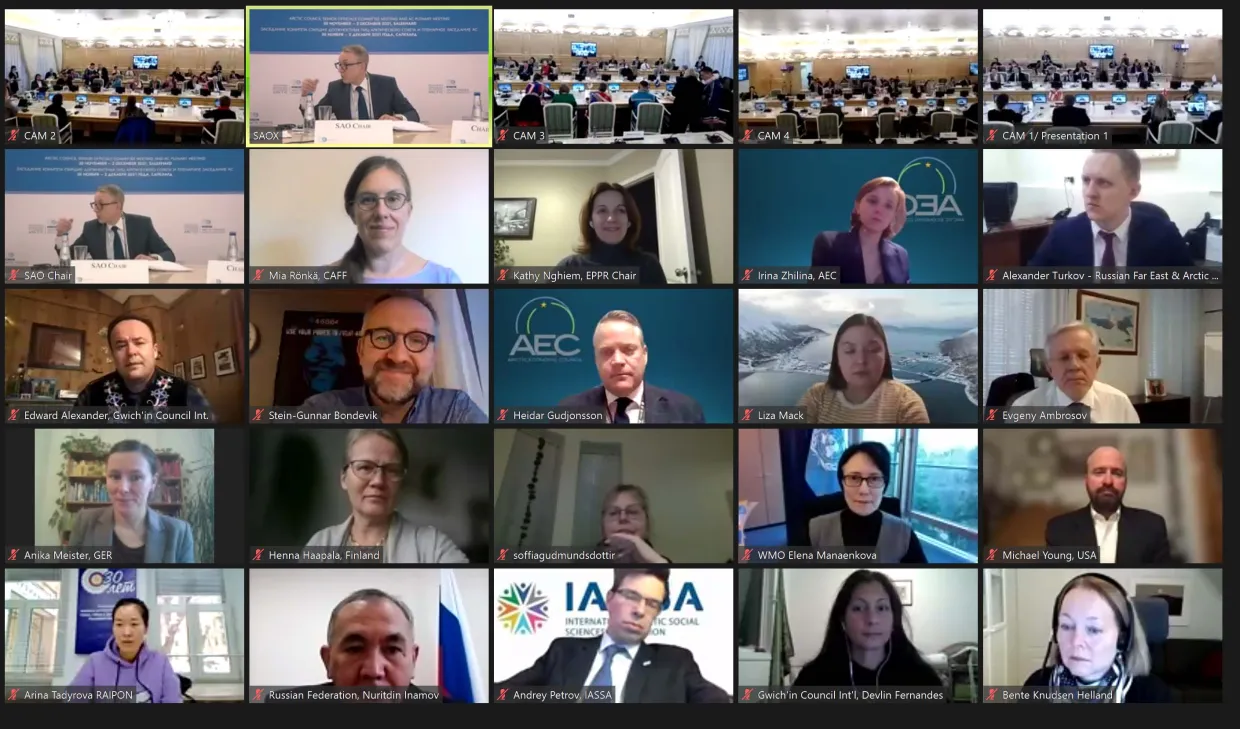
Decades of Arctic Council cooperation broke down in 2022. The Covid pandemic began putting stress on Arctic Council operations in 2020, creating a precedent for virtual meetings. In February 2022, however, cooperation through the Arctic Council came to an abrupt halt in the wake of Russia’s full-scale invasion of Ukraine. With Russia holding the rotating Council Chairship at that time, the other Member nations—Canada, the Kingdom of Denmark, Finland, Iceland, Norway, Sweden, and the United States—jointly paused their involvement in the Council.2 In announcing this pause in their Arctic Council participation, the Western Arctic nations added an important caveat: they would revisit this decision “pending consideration of the necessary modalities that can allow us to continue the Council’s important work in view of the current circumstances.”3
A screenshot of the virtual participants of the Senior Arctic Officials' plenary meeting in Salekhard, Russia, on December 1-2, 2021. The meeting was held in a hybrid format due to the ongoing COVID-19 pandemic.
The Arctic Council resumed functioning, but with serious operational constraints and a significantly reduced scope and diplomatic profile. In June 2022, the Western Arctic nations recommenced their work on Arctic Council projects that did not have direct Russian participation. This action enabled roughly 60 percent of total projects to continue, though constrained communication and collaboration created practical obstacles in carrying out the work.4 Continuing as many ongoing Arctic Council projects as possible without Russia was also made difficult by the simple fact that Russia is the largest nation in the region.
The Norwegian Chairship admirably navigated the region’s profoundly altered political landscape to keep the Arctic Council afloat. Drawing on decades of Cold War experience in maintaining practical relations with Russia, Norway assumed the Chairship from Russia in May 2023 after sensitive backchannel discussions. In September 2023, the Norwegian Chair used a kind of shuttle diplomacy to slightly relax its operational rules. It issued new guidelines enabling Arctic Council Working Groups to resume working-level activity through written communications.5 The Western Members continued to maintain that no political-level interaction with Russia could occur within or through the Council. They did, however, allow the Council’s six standing Working Groups to resume a regular schedule of meetings starting in 2024—but only on a virtual basis.6 That decision made possible, for the first time in more than two years, at least remote direct engagement. Experts from all eight Member nations and the six Indigenous Permanent Participant groups could interact again, and the Council could again include Observer states and organizations in some Working Group activities. The prohibition on in-person meetings has, however, greatly hampered project work.
The Danish Chairship presents an opportunity for a “reset” at the Council. The transition to the Danish Chairship was notable in part because it marked the first announcement of new Arctic Council projects since February 2022. The Council approved new plans for its Working Groups for the 2025–2027 biennium that included 41 projects.7 Furthermore, the agreed statement issued at the time of the transition indicated that these work plans might be further refined during the Danish Chairship. Despite these positive developments, key Arctic Council Working Group officials have noted that progress on projects is inconsistent and often slow. Experts’ continued inability to meet in person has limited communication and contributed to uneven participation.
The Arctic Council continues to exist, to convene experts, and to approve work plans, but its ability to deliver practical results faces continued operational constraints. In the long run, this current status quo risks the Council’s gradual diminishment or decay. Before considering how the Council might be adapted or revitalized, it is necessary to explain why policymakers should do so.
The Need to Maintain and Enhance Arctic Council Cooperation
The Arctic Council has proven able to deliver exceptional results. Born in 1996 in a flush of post–Cold War cooperation, the Arctic Council has convened government officials, representatives of Arctic Indigenous Peoples (as Permanent Participants), and scientific experts to promote sustainable development and environmental protection. It came to be recognized as an innovative, inclusive model for how nations could work together and with Indigenous Peoples to seek solutions to transboundary problems.
A list of the Council’s significant achievements would be quite long indeed. Some notable examples include the 2004 Arctic Climate Impact Assessment,8 which drew the world’s attention to the consequences of a rapidly warming region, and the 2009 Arctic Marine Shipping Assessment,9 which set in motion a series of successful initiatives to improve management of increased Arctic shipping. The Council served as the venue for the negotiation of three legally binding agreements among the eight Arctic nations—on search and rescue,10 on marine oil pollution,11 and on enhancing scientific cooperation.12 The Council also supported more than 130 cooperative projects, including extensive environmental cleanups and climate adaptation efforts.13 It undertook projects on suicide prevention, toxic exposure, nutrition, and public health in remote Arctic communities. These achievements have earned it repeated nominations for the Nobel Peace Prize.
When fully functional, the Arctic Council’s cooperative model proved able to deliver remarkable results. The Council is worth saving.
All parties would benefit from increased cooperation through the Arctic Council. To date, the Western Arctic nations have resisted calls to “open the aperture” of the Arctic Council to allow greater interaction with even technical experts from Russia. They have argued that any further relaxation of the operational constraints under which the Council currently operates would represent some kind of concession to Russia. Worse, it would represent a normalization of relations that would undermine efforts to isolate Russia in the face of its ongoing aggression in Ukraine.
We recognize that, so long as the war in Ukraine continues—and probably for some time thereafter—it is not possible to return to “business as usual” with Russia in the Arctic Council. On the other hand, we believe the Western Arctic nations should take some limited steps to enhance the Council’s effectiveness and to prevent its gradual decay, potential irrelevance, or even dissolution. These steps do not spring from any desire to benefit Russia but are rather motivated by self-interest. Below are several considerations supporting this conclusion:
Continuing the Council without Russia is not possible. Russia is a key player in the Arctic, and its exclusion would undermine the efficacy of many projects—and likely lead to the Council’s eventual dissolution. By the terms of the Ottawa Declaration, moreover, the Council must make all decisions by consensus of the eight Member nations, including Russia. Strictly speaking, the Council cannot formally expel or exclude Russia without its consent.
There is no alternative institution with the broad-ranging mandate of the Arctic Council. Although the Council has since its inception focused primarily on promoting sustainable development and environmental protection, the Ottawa Declaration provides it with the scope to address all “common Arctic issues” (except “military security”). No other Arctic institution has a mandate that broad. Moreover, no other circumpolar body allows representatives of Arctic Indigenous Peoples to exercise as much influence over regional decision-making. In short, the Arctic Council is the only structure capable of coordinating a wide range of circumpolar Arctic projects and responding to emerging shared problems.
Replacing the Arctic Council is not feasible. The Council’s infrastructure and the activities of its Working Groups cannot be easily replicated or replaced. Attempts to shift Arctic governance to broader bodies, such as the United Nations and its specialized agencies, would dilute the Arctic nations’ agenda-setting prerogatives.
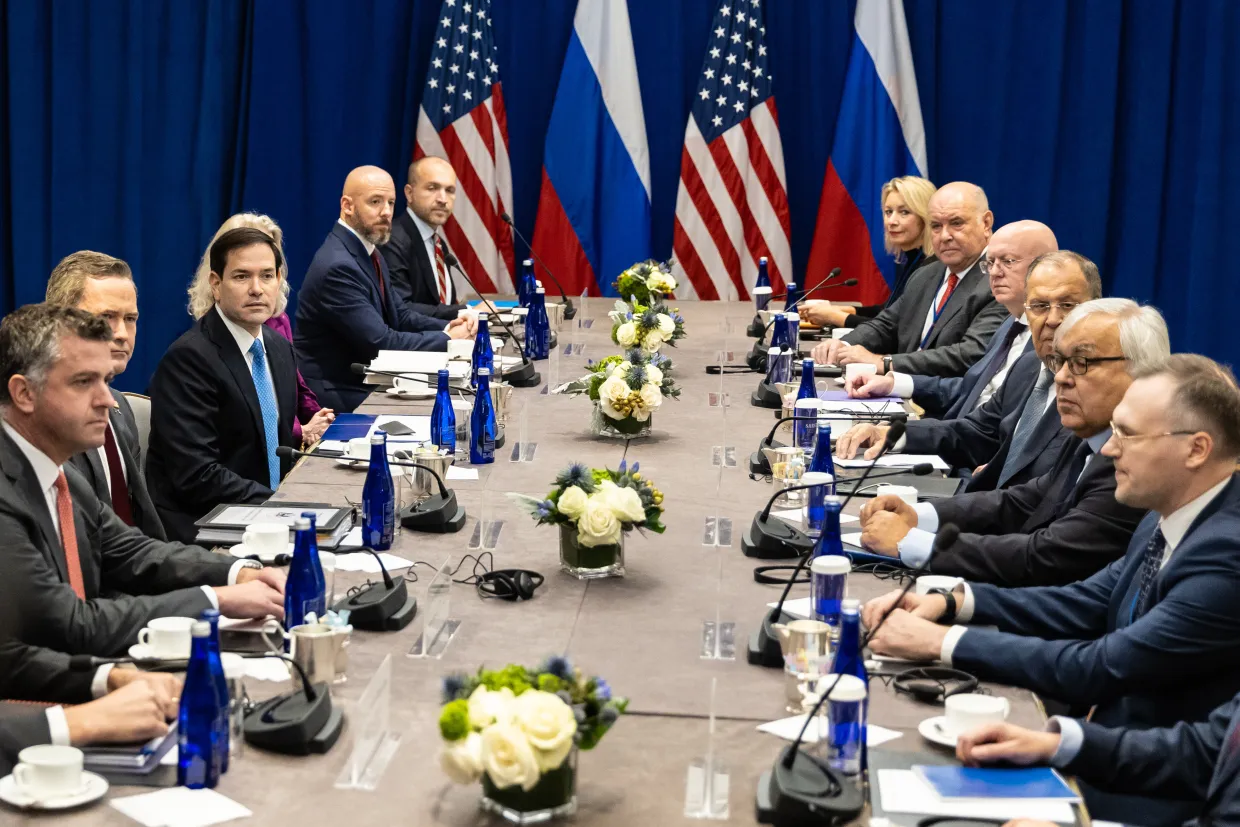
The Western Arctic nations currently participate in meetings with Russian officials in many other multilateral fora. As noted above, the Council’s present operating guidelines allow virtual engagement but not direct in-person Working Group meetings. This practice is more restrictive than that which the Western governments follow in the United Nations, its specialized agencies (e.g., the International Maritime Organization), and in a host of other international organizations. Under the Central Arctic Ocean Fisheries Agreement,14 for example, delegates from all ten parties including Russia have met at in-person Conferences of the Parties every year since the Agreement entered into force in 2021.
AP Photo/Stefan Jeremiah, Pool
U.S. Secretary of State Marco Rubio, center left, meets with Russian Foreign Minister Sergey Lavrov, center right, as part of the 80th session of the United Nations General Assembly at the Lotte Palace Hotel, Wednesday, September 24, 2025, in New York.
The Arctic Council is critical to monitoring Arctic climate change and advancing adaptation measures. The Arctic plays a key role in regulating global oceanic and atmospheric systems, but it is under extreme pressure. The Arctic is warming three to four times faster than the global average, depending on the metrics used. The extent and volume of summer sea ice have diminished markedly; some scientists predict that the Arctic Ocean will approach ice-free status in the summer within the next decade. Climate science needs Arctic data of the sort generated or compiled through Arctic Council processes to validate and accurately model climate change at a global level.
Moreover, through the Arctic Council, nations can best analyze whether Arctic atmospheric and oceanic systems may be approaching potential “tipping point” thresholds, which can cause abrupt, self-reinforcing, and irreversible changes to the global climate system. The Arctic Resilience Report15 identified 19 interconnected “regime shifts” in Arctic ecosystems as a key systemic risk. Key tipping point risks16 include:
Rapid summer sea ice loss, which can trigger further warming through albedo decline and amplify midlatitude weather disruption
Abrupt permafrost thaw events and seabed methane releases, which release significant quantities of methane and CO2 and dramatically accelerate climate change
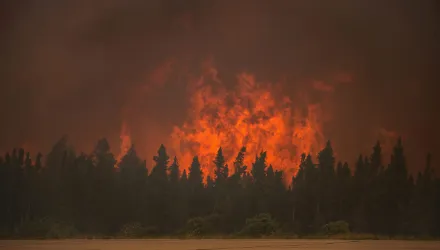
Boreal forest burn-offs, which endanger lives and turn a global carbon sink into a carbon source
Greenland ice sheet instability, which, if severe enough, can disrupt oceanic systems and accelerate sea-level rise
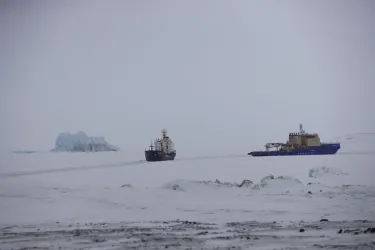
Arctic Ocean circulation changes and current collapse, which alter global weather and could trigger a new Ice Age in Europe
Russian data is of urgent interest, and the Arctic Council has been an essential conduit for scientific access. Natural processes of the sort outlined above cannot be reliably tracked or modeled without Russian data. Missing data from Siberia, the Laptev and East Siberian seas, and the Russian Arctic interior weakens scientific understanding of when thresholds might be crossed, how quickly feedback processes might accelerate, and which responses to pursue. The Arctic Council is—or at least was until February 2022—the best avenue for accessing Russian climate data. Remote sensing and other techniques for estimating the extent and pace of climate change in Russia cannot fully replace data gathered in situ in Russia.17
Current Chairship priorities are ambitious but will depend on Russian participation to be fully successful. The Kingdom of Denmark’s stated goals emphasize deepening Indigenous participation, improving health, and youth engagement; improving gender-informed data; advancing sustainable development through connectivity; undertaking blue bioeconomy research; and supporting the energy transition. Other targets highlight robust climate and environmental monitoring, including in relation to permafrost, sea ice, biodiversity, black carbon and methane, as well as shaping action in international climate fora. Oceans objectives center on spatial planning, emergency preparedness, and reducing pollutants and underwater noise, among other things. Biodiversity efforts are to include leading implementation of the Kunming-Montreal framework in the Arctic, expanding circumpolar monitoring and assessment of invasive species, and improving data policy consistent with Indigenous data sovereignty. Many of these efforts, such as expanded permafrost monitoring and marine spatial planning, would require functional Russian participation to be fully successful.
Current Challenges
The lack of meetings at the Ministerial level limits the Arctic Council’s diplomatic gravitas and its degree of ambition. While geopolitical circumstances make biennial Ministerial Meetings inconceivable at this time (and probably for some time to come), failing to hold such meetings has significant consequences. Without high-level Minister buy-in, the Arctic Council and its work attract less attention and support. This circumstance has reversed the upward trajectory in public attention that the Council had merited in recent decades. Absent Ministerial-level attention, the Arctic Council is less likely to undertake major, innovative endeavors to address the region’s issues and to improve its own capacity to do so.
The lack of Senior Arctic Official meetings deprives the Working Groups of strategic direction and oversight. Prior to February 2022, meetings of the Members’ Senior Arctic Officials (SAOs) and their delegations—also attended by all Permanent Participants, Working Group chairs and secretariats, the Arctic Council Secretariat, and Arctic Council Observers—performed key functions. These meetings, which occurred 2–3 times each year, made it possible for the SAOs and Permanent Participants to receive updates on ongoing projects and programs, provide direction and oversight to the Working Groups, and engage with Arctic Council Observers. On the margins of such meetings, participants brainstormed new project ideas (including projects that involved two or more Working Groups), built relationships with each other and with incoming personnel, and interacted with their host communities and local media.
Absent such meetings, the Arctic Council Chairship team and the Working Group chairs must bear the much heavier burden of performing these functions on their own—and now almost entirely virtually. For their part, the SAOs from governments other than Russia can coordinate with each other at Arctic events such as the Arctic Circle Assembly in Reykjavik and the Arctic Frontiers Conference in Tromsø, but they cannot make formal decisions or interact in a structured manner with the Working Groups. More generally, reduced interaction between SAOs and Working Groups makes it more difficult for the SAOs to effectively oversee the real work of the Arctic Council.
The absence of in-person meetings has hampered progress. The relegation of Working Group meetings to a virtual format impedes their effectiveness. First, the spread of time zones across the top of the world makes it impossible to run a virtual meeting for more than a few hours without requiring some participants to work during the nighttime. Second, the Far North’s inadequate telecommunications infrastructure makes connectivity a problem, particularly for participants logging in from remote communities. Virtual meetings are therefore prone to screen freezing, lag times, and related frustrations. Third, the many Arctic Council Observers have only the most limited ability to engage in virtual meetings. In former years, they participated actively during in-person Working Group meetings and would meet informally with delegates on the margins of such meetings. Finally, and perhaps most importantly, the virtual format precludes the sort of exchange of ideas and relationship building that occurs organically during in-person meetings. There is simply no adequate substitute for face-to-face human interaction.
Funding cuts to the Arctic Council Secretariat is creating coordination problems. The Arctic Council Secretariat (ACS) is essential to effective communication between Arctic Council participants, so decreasing its capacity has adversely affected engagement. In particular, the ACS formally served as the main vehicle for communication and engagement with the many Arctic Council Observers. That function has been greatly reduced, due primarily to ACS funding cuts, which is adding to the frustration of many Observers regarding their ability to contribute to the Council and its endeavors.
Geopolitical tensions are both causing these operational challenges and complicating much of the Council’s substantive work. Russia’s ongoing aggression has undoubtedly cast the largest pall over the current activities and future prospects of the Arctic Council. Russia has also remilitarized its portion of the Arctic and engaged in a wide range of hostile actions against the Western Arctic nations. For their part, the Western Arctic nations have ramped up sanctions against Russia and have stepped up their military presence and capabilities in the Arctic. Finland and Sweden became NATO members, increasing the threats Russia perceives from its adversaries. These developments have, understandably, significantly undermined the cooperative spirit in which the Arctic Council formerly flourished and impose new barriers to its effectiveness.
Continued Russian engagement should not be presumed. As Russian Foreign Minister Lavrov made clear, Russia’s continuing commitment to the Arctic Council is not guaranteed.18 Russia has indicated that it intends to remain a Member only so long as it finds the Council “constructive.”19 As if to emphasize this point, Russia withdrew from the Barents-Euro Arctic Council, a similar multilateral forum, in September 2023. Russia has reduced references to Arctic governance institutions in its strategy documents and has pursued collaboration on Arctic matters outside of the Arctic Council with non-Arctic nations.20 In June 2023, for example, Russia announced plans for a Svalbard research community separate from Norway’s main center in Ny-Ålesund, claiming interest from China, Brazil, India, Turkey, and Thailand.21
The second Trump administration has also complicated Arctic geopolitics. Under President Trump, the United States has weakened the close alliances and shared political agendas that previously underpinned the relations it maintained with Canada and the Nordic nations. President Trump’s statements that the United States should acquire Greenland have raised alarm in Greenland and among many NATO Allies. He has also stated that Canada should become the 51st state of the United States, prompting outcries from the Canadian government and its citizenry.
The Trump administration’s climate policies are diametrically opposed to those of the other Western Arctic nations. The United States has again withdrawn from the Paris Agreement and is pursuing actions likely to make climate change in the Arctic (and elsewhere) worse. At the transition between the Norwegian and Danish Arctic Council Chairships in May 2025, the Trump administration objected to any direct references to “climate change” in the outcome document.
More broadly, the “America First” foreign policy approach, with its emphasis on bilateral and transactional relations, is particularly ill-suited to making progress in the region. Successful Arctic diplomacy has for several decades depended primarily on multilateral relations of the sort carried out through the Arctic Council and on the development and maintenance of long-term relationships among government and Indigenous representatives, civil society, and other stakeholders.
Recommendations for Revitalizing the Arctic Council
In consideration of the foregoing, we offer recommendations for revitalizing the Arctic Council, both in light of its current operational constraints and in hopes that those constraints may diminish, at least gradually.
1. Maintain institutional continuity
In the absence of meetings at the Ministerial or Senior Arctic Official levels, and with its Working Groups only able to meet virtually, the Council must find other ways to maintain some degree of institutional continuity that previously grew organically out of regular face-to-face meetings.
Responsibility for maintaining the Council’s continuity falls, now more than ever, on the Chairship teams, the Working Group chairs and secretariats, and the Arctic Council Secretariat.
1a. Clarify and communicate the Council’s practical value
One place to start would be for the Arctic Council chairship, in collaboration with Member States and Permanent Participants and with the support of the ACS, to develop and implement a more robust communications strategy. The goal of the strategy would be to raise broader awareness of what the Council has meant to the nations and peoples of the Arctic and to make clear that the Council intends to continue as the “pre-eminent” forum within which to address common Arctic issues. That strategy could reinforce the Council’s three unique assets:
A proven collaborative venue within which Arctic governments and Indigenous Peoples can address shared transboundary Arctic challenges through ambitious projects and programs
Inclusion of Indigenous Peoples in decision-making, project development and implementation, as well as integration of Indigenous Knowledge
Production of high-quality, in-depth assessments on the current state of the Arctic and its trajectories that are both regionally and globally relevant
Ideally, communicating the value to policymakers, Arctic residents, and other stakeholders could also provide an opening for additional, practical steps to strengthen the Council.
1b. Allow Working Groups to meet in person
Most Council work takes place at the Working Group level. As such, steps to strengthen the Council must seek to sustain Working Group operations and prevent (or at least limit) project decay, i.e., the loss of attention and commitment to ongoing projects due to the lack of in-person meetings, weakening expert-level relationships, and diminished political-level support.
One obvious step would be to allow each Working Group to meet in person at least once during the current Chairship. Clear benefits include:
The possibility of more meaningful exchanges of ideas unconstrained by connectivity and time-zone challenges that limit virtual meetings
In-depth delegate interactions on the margins of meetings otherwise impossible in a virtual format
Potential active engagement with the full range of Arctic Council Observers who would, in turn, be more likely to offer support for projects and programs
We recognize that in-person Working Group meetings would entail the participation of technical experts from Russia and the provision of visas and other necessary accommodations. While not minimizing the gravity of Russia’s full-scale invasion of Ukraine and its ongoing aggression, we also note that Russian technical experts—and indeed much higher-level Russian officials—routinely receive visas and other accommodations to participate in in-person meetings in dozens of multilateral bodies worldwide on a weekly if not daily basis. As noted above, in-person conferences of the parties have occurred under the auspices of the Central Arctic Ocean Fisheries Agreement every year since that treaty entered into force. If Arctic governments are willing to allow in-person meetings in that context and many others, why should they apply a different standard to arguably vital Arctic Council meetings?
If in-person meetings under the auspices of the Council prove too politically contentious at present, Working Groups might instead convene on the sidelines of other multilateral bodies’ in-person meetings. For example, members of the Working Group on the Protection of the Arctic Marine Environment might meet on the margins of a session of the International Maritime Organization, or members of the Working Group on the Conservation of Arctic Fauna and Flora might meet during a Conference of the Parties to the Convention on Biological Diversity.
1c. Leverage the Strategic Plan for new opportunities
Another tool for maintaining institutional continuity is the 2021–2030 Arctic Council Strategic Plan. While current geopolitical circumstances may not generate much appetite for significant institutional change, the Strategic Plan offers a roadmap for creatively and incrementally improving the Council, its structure, and its procedures. The Strategic Plan includes commitments that provide at least modest opportunities for this Chairship and the two ensuing ones.
1d. Support and expand Permanent Participant engagement
With Senior Arctic Officials and other government experts regularly rotating in and out of assignments to engage in Arctic Council work, Indigenous representatives have long served as the glue and institutional memory of the Council. Moreover, the role of the Permanent Participants has, since the inception of the Council, strengthened and legitimized its work and kept much of its focus on the real needs of Arctic residents, many of whom are Indigenous.
Those who work within the Arctic Council structure have long recognized the profound contributions that the Permanent Participants have made and continue to make to the Council’s undertakings. They also know that the Permanent Participants struggle to find adequate financial and other resources to perform these functions. One sure way to maintain institutional continuity in the Council, therefore, would be for Member states and Observers to increase the resources available to Permanent Participants, either directly or through the Indigenous Peoples Secretariat, or by some other means.
1e. Increase inter-Chairship coordination
While recognizing that relations between Russia and the other Arctic Council Members will likely remain highly problematic for some time, which complicates long-term planning within the Council, it should nevertheless be possible to strengthen coordination across Chairships. Over the years, the Council has experimented with several approaches to tackle problems in the region whose solutions depend on continuous efforts extending beyond the span of a single Chairship. To do so effectively requires coordinated leadership. The current Chairship team accordingly should meet regularly with the incoming Chairship representatives—and even with the representatives of the Chairship after that—to plot a course for sustaining long-term projects and improving, at least incrementally, the working procedures and structure of the Council.
2. Use all available discretion within current operating guidelines to push work forward
Current Council operating procedures do not permit in-person Working Group meetings or meetings of any kind among all SAOs or Ministers. While these constraints hamper the Council’s effectiveness, it may be possible for the Chairship team, the Working Group Chairs and secretariats, and the Arctic Council Secretariat to take full advantage of what the operating procedures do permit—and what they do not prohibit—to minimize the effects of the Council’s current constraints.
2a. Leverage Working Group authorities where possible
For example, the six Working Groups each maintain subsidiary bodies. If the operating procedures do not prohibit in-person meetings of those subsidiary bodies, they should be allowed to convene in person if participation by Russian experts can be accommodated. Another idea would be to invite all SAOs—who presently cannot meet on their own—to join virtual Working Group meetings. This would have the dual benefit of engaging SAOs on Working Group efforts while also increasing contact among the SAOs themselves.
2b. Allow external project proposals
To remain responsive to the needs of Arctic residents, the Council must maintain a robust process for seeking, considering, and adopting new project proposals. Perhaps due to the difficult state of Arctic geopolitics, the Arctic Council Members are not generating new project ideas at the same rate that they did in past years. To help fill this vacuum, the Arctic Council should be more open to receiving new project proposals from its Permanent Participants and Observers.
2c. Use tacit approval
The Arctic Council makes decisions by consensus. In past years, the Council took a significant number of decisions by processes involving affirmative approval by its eight Members. But “consensus” is generally understood to mean “the absence of formal objection” and should not necessitate acts of affirmative approval in most situations. The Council—particularly through its Working Groups—has used various “tacit approval” procedures for many years. For example, Working Groups have routinely circulated draft reports with indications that, in the absence of objection by a date certain, the reports will be considered final. This may be a time to expand the use of tacit approval to include as many categories of decisions as possible.
3. Enhance engagement with other institutions
At a time when the Arctic Council is operating at less than full capacity, its Members can still act—individually and collectively—to advance Arctic objectives through other regionally relevant intergovernmental institutions. To do so would, in fact, represent a continuation of previous efforts that the Council and its Members have made over the years. Now may be a time to step up such efforts.
3a. Collaborate via other multilateral institutions
For example, Arctic nations led the initiative at the International Maritime Organization (IMO) to secure adoption of the Polar Code, a set of binding measures to strengthen safety and environmental standards for shipping in the Arctic.22 Looking ahead, the Arctic Council can make use of its multiple institutional relationships with the IMO23 to advance projects and programs on Arctic shipping, particularly those under the purview of the Working Group on Protection of the Arctic Marine Environment.
Similarly, the Arctic Council can collaborate with the many institutions involved in Arctic science to advance common agendas. Indeed, it may be possible to strengthen such ties with bodies such as the International Arctic Scientific Committee, UArctic, the Intergovernmental Panel on Climate Change, and the Association of Polar Early Career Scientists. The Arctic Council, principally through PAME and the Working Group on Conservation of Arctic Fauna and Flora (CAFF), could also contribute further to the development of the Joint Program of Scientific Research and Monitoring launched pursuant to the Central Arctic Ocean Fisheries Agreement.
Finally, the Arctic Council should explore ways to expand interactions with non-governmental bodies involved in Arctic issues. One such body is the Arctic Economic Council (AEC), comprised of private sector entities doing business in the Arctic. When the Canadian government spearheaded the establishment of the AEC during its Arctic Council Chairship in 2014, the two bodies were intended to have an active working relationship. While the AEC provides advice and a “business perspective” to the work of the Arctic Council, more might be done to foster connections between the bodies on topics such as critical mineral development, telecommunications, and tourism (to name just a few fertile areas).
3b. Pursue BBNJ Agreement implementation with the Arctic Council
The entry into force of the Agreement on Biodiversity Beyond National Jurisdiction (BBNJ Agreement) presents another opportunity for the Arctic Council to integrate its environmental protection work with that of a global regime. The BBNJ Agreement provides for the development of environmental impact assessments concerning human activities in high seas areas. Several high seas areas exist in the Arctic, including a sizeable one in the Central Arctic Ocean. Recently, the Arctic Council contributed to a comprehensive Ecosystem Assessment of the Central Arctic Ocean24 that could inform environmental impact assessments developed pursuant to the BBNJ Agreement.
3c. Continue to use Arctic conferences as opportunities for informal relationship-building
In the absence of in-person Working Group meetings—and in the absence of any meetings at all at the political level—the Arctic Council should continue to take advantage of gatherings organized by non-governmental organizations, such as Arctic Frontiers, the Arctic Circle, and the Arctic Encounter Symposium, to convene informally and to advance agendas. That Russian government representatives typically do not attend such meetings obviously limits this strategy somewhat. Still, those Arctic Council participants who do attend can use the opportunity to push forward projects in which Russia is not involved, brainstorm future projects, and build relationships with the broader community of Arctic policymakers and experts. Expanded collaboration through conferences might eventually incentivize Russian participation, assuming Russian experts were allowed visas and accommodations.
4. Keep Russia involved to the extent politically feasible
In managing their relations with Russia, the Western Arctic nations have competing interests in this time of complex geopolitics. Each has committed to keeping Russia diplomatically isolated for its ongoing aggression in Ukraine, although the U.S. National Security Strategy issued in November 2025 suggests the need to de-escalate tensions.25 On the other hand, the Western Arctic nations have also committed to maintaining the Arctic Council as an effective forum for addressing circumpolar issues—a goal that requires them to keep Russia at least somewhat engaged in Council activities.
To date, Russia has chosen to maintain its Arctic Council membership, although it has since 2022 suspended payment of its modest share of the annual costs of the Arctic Council Secretariat. In 2025, Russia also blocked a proposal by the Netherlands that was supported by other Arctic Council Members to host an Arctic Council Working Group workshop on a search and rescue coordination and disaster relief initiative. Through these actions, Russia seems to be reinforcing the signal that its commitment to the Arctic Council should not be taken for granted.
Balancing these competing priorities and finding the proper level and modalities for working with Russia in the Arctic Council context is therefore challenging. Complicating the task is the fact that, among the Western Arctic governments, opinions differ on how best to strike this balance. During its 2023–2025 Chairship, the Norwegian government successfully navigated this terrain through quiet, backchannel communications with Russian officials.
4a. Find additional modes to engage Russia
The Danish Chairship team has now taken on this responsibility. Unlike Norway, however, Denmark has neither a common border or fishing grounds nor a long tradition of practical cooperation with Russia notwithstanding political friction. As a result, the Danish Chairship team will need to find other bases for pursuing productive communication with the Russian government. Some of those communications could occur on the margins of any non–Arctic Council scientific or “Track 2” events relating to the Arctic at which Russian government officials are present.26
Similarly, Arctic Council Working Group chairs and secretariats may also have the opportunity to interact quietly with Russian experts on the margins of such non-Arctic Council events. In that connection, some of those individuals may also be involved in preparations for the International Polar Year 2032–2033, an initiative that in past decades has managed to transcend—or at least skirt—fraught geopolitical circumstances. To be successful, IPY will once again need to include Russian participation, including in the preparatory phases.
4b. Expand non-problematic Working Group projects—especially those of particular interest to Russia
As for the Arctic Council itself, it is worth noting that quite a few Arctic Council projects and programs do not involve direct Russian participation and ought to be able to continue—and even expand—without political difficulty. Another reality is that many Arctic Council projects and programs are quite technical in nature and can be continued or even expanded with low-level participation by Russian experts without accusations of a return to “business as usual.”
To the extent that tensions with Russia subside even marginally over the coming months, the Western Arctic nations should consider some modest steps to increase the level of their engagement with Russia in the Arctic Council. During this Chairship cycle, one avenue to do so may exist within the PAME Working Group. Given that a Russian official currently chairs PAME, the Russian government may have a particular interest in promoting successful projects through that Working Group. It may be worth allowing Russia to claim a degree of credit for leading those efforts, in exchange for Russian cooperation in delivering project results satisfactory to all participants.
4c. Use remaining funds in the Project Support Instrument for new projects
Another opportunity may arise in connection with the largely dormant Project Support Instrument (PSI). In past years, the Arctic Council used funding contributed to the PSI—largely by Russia—mostly to undertake large-scale environmental cleanup activities in the Russian Arctic that also benefitted the region as a whole. The PSI mostly stopped functioning during the height of the pandemic; at present, some Russian funds remain frozen within the PSI. Should relations with Russia begin to improve, it may be possible to explore unlocking those funds for use in small-scale projects that benefit multiple Arctic Council Members including Russia.
Conclusion
In considering these recommendations and other options, officials in Western Arctic governments would do well to recall that no government is monolithic, including Russia. It is tempting to accept the common media representation of Russia as solely focused on domination of Ukraine and otherwise confronting Western interests in Europe and beyond.
Experience within the Arctic Council has since its inception revealed a much more nuanced picture. Those who have taken part in Council activities over that time understand that there exists a significant cadre of experts within Russia who view the Council essentially just as their counterparts in other governments tend to view the Council—as a valuable forum for collaboratively addressing shared problems in the Arctic.
We, too, believe that the Council can remain a valuable forum, despite the current geopolitical headwinds it faces and the resulting constraints on its operations. With perseverance and some creativity, people of goodwill can continue to generate and implement Council projects useful to the people of the Arctic and lay the groundwork for a brighter future for the Council and those who depend on it.
Recommended citation
Balton, David and Stirling Haig. “Revitalizing the Arctic Council.” Belfer Center for Science and International Affairs, February 24, 2026
Agreement to Prevent Unregulated High Seas Fisheries in the Central Arctic Ocean, Oct. 3, 2018, 58 I.L.M. 213 (2019) [hereinafter referred to as the Central Arctic Ocean Fisheries Agreement].
See Arctic Council, Chapter 3: Arctic regime shifts and resilience, in ARCTIC RESILIENCE REPORT (eds. M. Carson & G. Peterson) (2016), Stockholm Environment Institution and Stockholm Resilience Centre.
International Code for Ships Operating in Polar Waters (Polar Code), adopted Nov. 15, 2014, entered into force Jan. 1, 2017, 54 I.L.M. 826 (2015).
All eight Council Members are IMO Members as well. In 2019, the IMO became an Arctic Council Observer. Since 2021, the Inuit Circumpolar Council, one of the Arctic Council’s Permanent Participant organizations, has also been an IMO observer.
See White House, THE NATIONAL SECURITY STRATEGY OF THE UNITED STATES OF AMERICA (Dec. 4, 2025), 25.
Track 2 diplomacy refers to informal, non-governmental dialogue involving private citizens, former officials, and civil society actors. It can help build trust, explore ideas, and develop policy options difficult to pursue via official channels.