
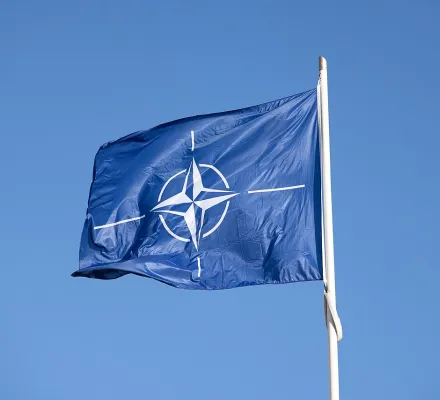
Belfer Reading Brief | NATO at an Inflection Point
NATO is at an inflection point not because its core mission has changed, but because the conditions under which it must carry out that mission have been altered dramatically. Collective defense still anchors the alliance. But deterrence now depends on a broader and more demanding mix of readiness, industrial capacity, technological adaptation, cyber resilience, and political cohesion. Russia’s war against Ukraine has accelerated that shift, exposing both NATO’s enduring strengths and the costs of delay.
In July 2026, the Belfer Reading Brief examines the military balance on NATO’s eastern flank, transatlantic burden sharing, defense production and innovation, the lessons of Ukraine, and the continuing relevance of Article 5. Taken together, these readings invite readers to see NATO not as a fixed inheritance, but as a political and military project whose credibility will depend on adapting while preserving cohesion.
Director's Note
NATO is at an inflection point not because its core mission has changed, but because the conditions under which it must carry out that mission have been altered dramatically. Collective defense still anchors the alliance. But deterrence now depends on a broader and more demanding mix of readiness, industrial capacity, technological adaptation, cyber resilience, and political cohesion. Russia’s war against Ukraine has accelerated that shift, exposing both NATO’s enduring strengths and the costs of delay.
The alliance has adapted before. After the Cold War, NATO moved beyond a largely static model of territorial defense toward crisis management and out-of-area operations, from the Balkans to Afghanistan. That experience is not a direct template for today’s return to defending allied territory. But it offers a useful lesson: NATO adapts best when political consensus, military doctrine, institutions, and resources move together—and struggles when ambitions outrun capabilities.
There are encouraging signs that European governments are responding to American pressure and a far more urgent security environment. Defense spending is rising, procurement is accelerating, and the political debate has shifted. Yet the key question is whether this movement will generate meaningful military capacity quickly enough. Budgets must become trained forces, munitions, air and missile defenses, logistics, and an industrial base able to replenish equipment at scale.
A stronger European pillar will require adjustment on both sides of the Atlantic. Washington has long pressed Europe to assume more responsibility, but more capable and self-reliant allies are also likely to exercise greater independent judgment. The United States may have to decide whether it is as comfortable with greater European agency as it has been insistent on greater European effort. Europeans, meanwhile, must build capability without deepening friction over procurement, industrial advantage, threat priorities, or the respective roles of NATO and the European Union. The goal should be greater scale, interoperability, and resilience—not fragmentation or institutional rivalry.
The readings in this month’s Belfer Reading Brief examine the military balance on NATO’s eastern flank, transatlantic burden sharing, defense production and innovation, the lessons of Ukraine, and the continuing relevance of Article 5. Taken together, they invite readers to see NATO not as a fixed inheritance, but as a political and military project whose credibility will depend on adapting while preserving cohesion.
Director of the Belfer Center for Science and International Affairs
July, 2026
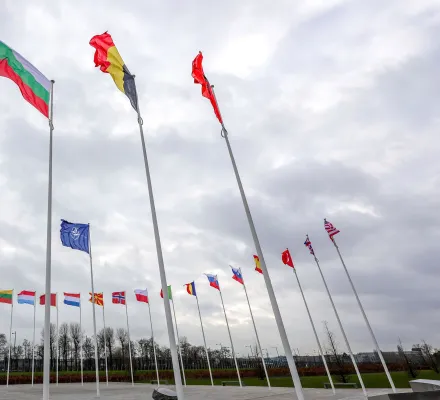
Belfer Reading Brief | July 2026
Understanding the threats to NATO, what adapting the alliance would look like -- from capabilities, cohesion, and strategic role, without losing its core purpose -- and why NATO still matters.

Russian Threats to NATO’s Eastern Flank: Scenarios, Strategy, and Policy for European Security
From Defense, Emerging Technology, and Strategy

Ukraine’s New Momentum?

Watch: NATO Deputy Secretary General Radmila Šekerinska
From Europe and the Transatlantic Relationship

A New Transatlantic Bargain: The Case for Building a Strong European Pillar
From Europe and the Transatlantic Relationship
Technology is transforming defense. Rapid adaptation cannot be separated from the nuclear and escalation risks surrounding the war in Ukraine.


NATO’s Article 5 Explained: How Collective Defense Works and When It’s Triggered
From Defense, Emerging Technology, and Strategy

NATO is Vital to U.S. National Security
From Europe and the Transatlantic Relationship
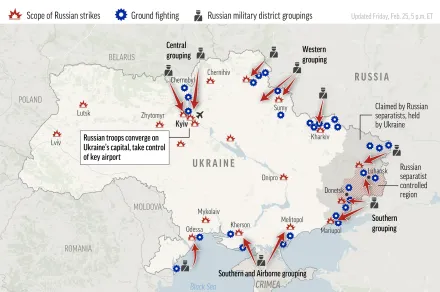
Updated Weekly: The Russia-Ukraine War Report Card
NATO’s choices cannot be separated from conditions on the ground in Ukraine. This weekly tracker brings together military, political, economic, and diplomatic indicators to show how the conflict—and the strategic environment around it—is evolving.