Resilient Arctic Communities
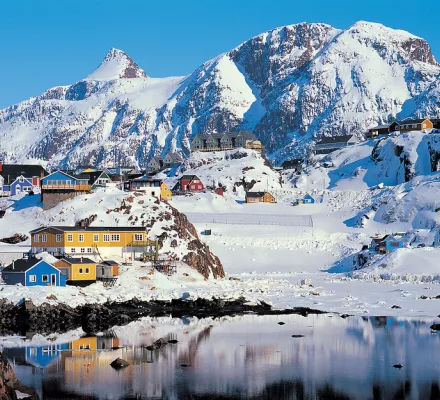
Arctic communities—which are often small, remote, and/or Indigenous—have long histories of adaptability, but the pace and scale of change today is unprecedented, from climate change to economic shifts to public health challenges. The Belfer Center's Arctic Initiative supports Arctic leaders to foster healthy and resilient communities, strengthening their ability to not just bounce back from stresses and shocks, but to bounce forward, and to learn from and improve with every challenge.
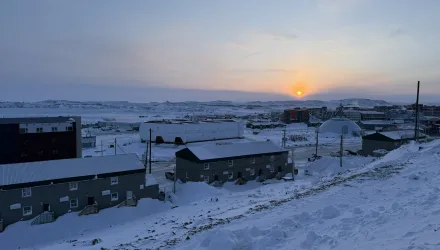
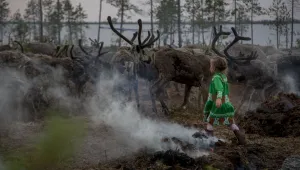
Modeling Impacts of Food Security Initiatives in the Canadian Arctic
From Arctic Initiative
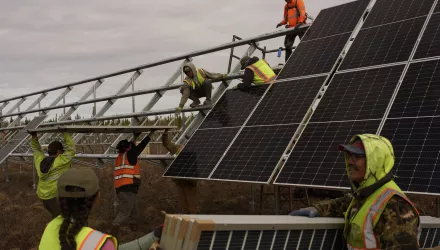
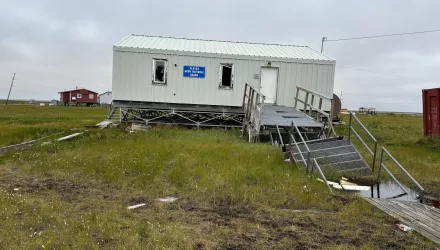
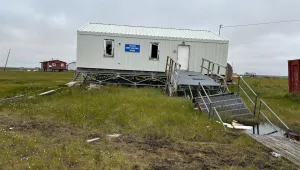
Solar Energy in the Arctic: A Case Study of Northwest Alaska
From Arctic Initiative
Public Health
Climate change is a healthcare emergency. In the Arctic, rapid warming is exacerbating pre-existing health inequities and introducing novel threats to health, particularly among rural and Indigenous populations.
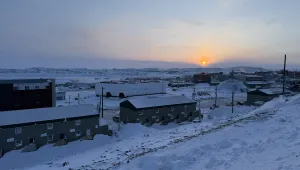

Advising Federal Responses to Rapid Climate Change in Alaska
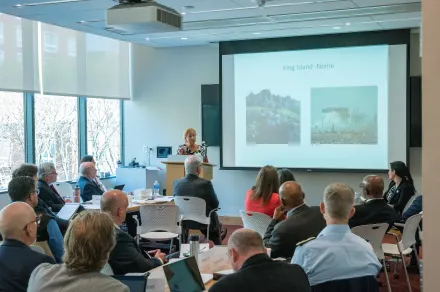
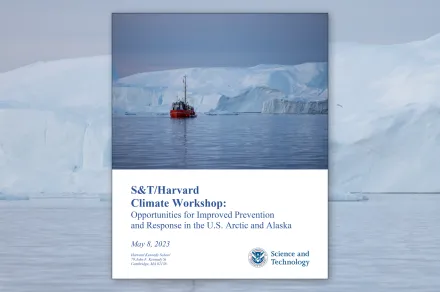
In May 2023, the Arctic Initiative co-organized a workshop with the U.S. Department of Homeland Security (DHS) focusing on improving the capabilities of the Coast Guard, FEMA, and other DHS components to address the impacts of climate change in Alaska.
The workshop represented an opportunity for Arctic Initiative experts, as well as partners from Woodwell Climate Research Center, the Alaska Institute for Justice, and Alaska Native organizations, to provide analysis and recommendations to the federal government to inform policies for combating the climate crisis in the U.S. Arctic.
The Arctic Initiative prepared and presented a set of seven issue briefs at the workshop to DHS officials.
Opportunities for Improved Prevention and Response in the U.S. Arctic
DHS’ Science and Technology Directorate later produced a report based on the workshop and their further considerations. The Arctic Initiative also published a summary of the workshop’s findings on ocean issues, infrastructure, human health and security, and cross-cutting science and technology solutions.
The Arctic Resilience Forum
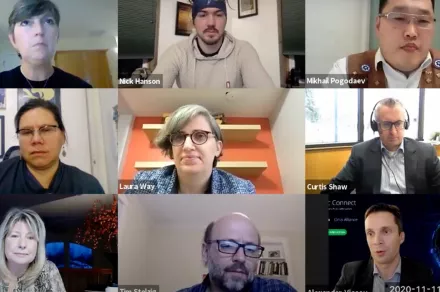
In 2020, the Arctic Initiative partnered with the Sustainable Development Working Group of the Arctic Council and the Council’s Icelandic Chairmanship to organize the Arctic Resilience Forum 2020 (ARF2020), an event dedicated to taking stock of progress, identifying crucial gaps, and building on the successes of the Arctic Resilience Action Framework.
An Overwhelming Response
Over the course of 10 weeks, the Arctic Resilience Forum brought together scientists, policymakers, youth leaders, doctors, Indigenous representatives, private sector executives, finance experts, and many more to discuss a wide range of issues, including food security, gender issues, renewable energy, human health and pandemics, socioecological systems, broadband connectivity, infrastructure, finance, and Indigenous knowledge.
Despite an unplanned pivot to a virtual format due to the COVID-19 pandemic, the forum drew nearly 1,500 participants from 39 countries, engaged over 50 organizing partners, and featured 85 speakers from every Arctic state.
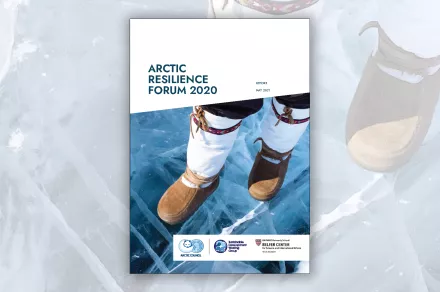
Arctic Resilience Forum 2020 Report
Together with the Sustainable Development Working Group, the Arctic Initiative co-authored the Arctic Resilience Forum 2020 Report, which was published by the Arctic Council Secretariat and delivered to Senior Arctic Officials. The report highlighted key findings from each session and proposed a series of next steps to build on the momentum of ARF2020.