In-Person
Seminar

Book Talk with Malika Zeghal: The Making of the Modern Muslim State

RSVP Required Harvard Faculty, Fellows, Staff, and Students

Join us for a book talk on The Making of the Modern Muslim State: Islam and Governance in the Middle East and North Africa with author Professor Malika Zeghal, hosted by MEI Faculty Chair Tarek Masoud

RSVP
Poster for Middle East Initiative Book Talk with Malika Zeghal including book cover

About the Event

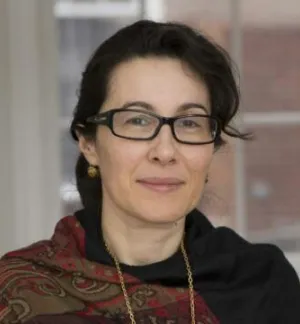
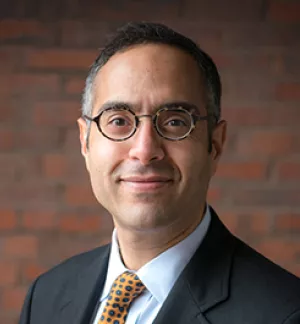
Join us for a book talk on The Making of the Modern Muslim State: Islam and Governance in the Middle East and North Africa with the author, Malika Zeghal, Prince Alwaleed Bin Talal Professor in Contemporary Islamic Thought and Life at Harvard University, hosted by Tarek Masoud, Faculty Director of the Middle East Initiative and Ford Foundation Professor of Democracy and Governance at Harvard Kennedy School. 

HUID and RSVP Required | RSVP Here

About the Book

In The Making of the Modern Muslim State, Malika Zeghal reframes the role of Islam in modern Middle East governance. Challenging other accounts that claim that Middle Eastern states turned secular in modern times, Zeghal shows instead the continuity of the state’s custodianship of Islam as the preferred religion. Drawing on intellectual, political, and economic history, she traces this custodianship from early forms of constitutional governance in the nineteenth century through post–Arab Spring experiments in democracy. Zeghal argues that the intense debates around the implementation and meaning of state support for Islam led to a political cleavage between conservatives and their opponents that long predated the polarization of the twentieth century that accompanied the emergence of mass politics and Islamist movements.

Examining constitutional projects, public spending, school enrollments, and curricula, Zeghal shows that although modern Muslim-majority polities have imported Western techniques of governance, the state has continued to protect and support the religion, community, and institutions of Islam. She finds that even as Middle Eastern states have expanded their nonreligious undertakings, they have dramatically increased their per capita supply of public religious provisions, especially Islamic education—further feeding the political schism between Islamists and their adversaries. Zeghal illuminates the tensions inherent in the partnerships between states and the body of Muslim scholars known as the ulama, whose normative power has endured through a variety of political regimes. Her detailed and groundbreaking analysis, which spans Tunisia, Morocco, Egypt, Turkey, Syria, and Lebanon, makes clear the deep historical roots of current political divisions over Islam in governance.

About the Author

Malika Zeghal is the Prince Alwaleed Bin Talal Professor in Contemporary Islamic Thought and Life in the Department of Near Eastern Languages and Civilization (NELC) at Harvard University. She is also a member of the Committee on the Study of Religion and a senior scholar at the Harvard Academy. Her research focuses on the interaction between Islam and politics in the modern Middle East. She is particularly interested in studying modern Muslim states and their religious institutions, as well as the intellectual and political genealogies of Islamist movements in the region. She also has an interest in modern Islamic intellectual history in the Middle East, Europe and North America.

An alumna of the Ecole Normale Supérieure de la Rue d'Ulm (Paris, France), Malika Zeghal holds a Ph.D. in political science from the Institut d'Etudes Politiques de Paris (1994). Before joining Harvard University in 2010, she was associate professor of the anthropology and sociology of religion at the University of Chicago Divinity School. She is a member of the scientific council of the Tunisian Academy of Sciences, Arts and Letters (Beit al-Hikma).

Malika Zeghal has published a study titled Gardiens de l'Islam. Les oulémas d'al-Azhar dans l'Egypte contemporaine (Presses de Sciences Po, 1996), of the Egyptian ulama of al-Azhar since the 1950s and of their various forms of engagement with politics . She has also published a volume on Islam and politics in contemporary Morocco titled Islamism in Morocco: Religion, Authoritarianism, and Electoral Politics (Markus Wiener, 2008), which highlights in particular the role of Shaykh Yassine's political mysticism in the Islamist political opposition to the Moroccan monarchy, and has won the French Voices-Pen American Center Award. She has also edited a special issue of the Revue des Mondes Musulmans et de la Méditerranée, Intellectuels de l'islam contemporain. Nouvelles générations, nouveaux débats, on contemporary liberal Muslim thought. Her most recent book The Making of the Modern Muslim State: Islam and Governance in the Middle East and North Africa (Princeton University Press, 2024) traces the continuity of the state’s custodianship of Islam as the preferred religion in the Middle East and North Africa.

With a team of graduate students in NELC, she is currently building a digital map of Islamic intellectual networks in the Maghrib and Egypt in the 1920s and 1930s. This project, called Afkar, is supported by a grant from the Lasky-Barajas Dean’s Innovation Fund for Digital Arts and Humanities at Harvard University.

Malika Zeghal
Author

Malika Zeghal