Audio - WBUR
The ‘Pivot to Asia’ Continued
On the threshold of trouble in Asia, have a look around the Western Pacific and especially back at US history there. It’s several thresholds actually, and different risks of trouble: Rewriting trade and banking rules is one thing, compared to policing empty islands in the South China Sea, a far cry from the clear and present chance of nuclear missiles flying out of a desperate regime in North Korea that has no good relations with anybody.
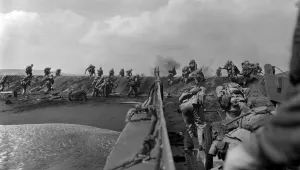
When anxiety about Asia rises, it can be our memory that gets knocked out first. Barack Obama as president four years ago announced a ‘pivot to Asia,’ barely noting that we’d been there before, in Vietnam, in his lifetime. But even principals in the Vietnam War had a way of forgetting not just the facts but what they’d said about them.
Graham Allison, veteran foreign policy analyst at Harvard’s Kennedy School, warns us about the dangers of new power players caught in an old game. The so-called “Thucydides Trap,” Allison explains, is a predictable pattern of conflict that crops up when rising and declining powers meet on the staircase of international hierarchy. Whether it’s Athens and Sparta in Thucydides’s day, or the U.S. and China today, the conflicts in these scenarios seem almost inevitable.
For more information on this publication:
Belfer Communications Office
For Academic Citation:
“The ‘Pivot to Asia’ Continued.” Audio, May 4, 2017, posted by “WBUR”.
- Recommended
- In the Spotlight
- Most Viewed
Recommended
Audio
- Radio Open Source
JFK in the American Century
Analysis & Opinions
- Foreign Policy
The Realist Case for the Non-Realist Biden
Journal Article
- Quarterly Journal: International Security
Network Connections and the Emergence of the Hub-and-Spokes Alliance System in East Asia
In the Spotlight
Most Viewed
Policy Brief
- Quarterly Journal: International Security
The Future of U.S. Nuclear Policy: The Case for No First Use
Discussion Paper
- Belfer Center for Science and International Affairs, Harvard Kennedy School
Why the United States Should Spread Democracy
On the threshold of trouble in Asia, have a look around the Western Pacific and especially back at US history there. It’s several thresholds actually, and different risks of trouble: Rewriting trade and banking rules is one thing, compared to policing empty islands in the South China Sea, a far cry from the clear and present chance of nuclear missiles flying out of a desperate regime in North Korea that has no good relations with anybody.
When anxiety about Asia rises, it can be our memory that gets knocked out first. Barack Obama as president four years ago announced a ‘pivot to Asia,’ barely noting that we’d been there before, in Vietnam, in his lifetime. But even principals in the Vietnam War had a way of forgetting not just the facts but what they’d said about them.
Graham Allison, veteran foreign policy analyst at Harvard’s Kennedy School, warns us about the dangers of new power players caught in an old game. The so-called “Thucydides Trap,” Allison explains, is a predictable pattern of conflict that crops up when rising and declining powers meet on the staircase of international hierarchy. Whether it’s Athens and Sparta in Thucydides’s day, or the U.S. and China today, the conflicts in these scenarios seem almost inevitable.
- Recommended
- In the Spotlight
- Most Viewed
Recommended
Audio - Radio Open Source
JFK in the American Century
Analysis & Opinions - Foreign Policy
The Realist Case for the Non-Realist Biden
Journal Article - Quarterly Journal: International Security
Network Connections and the Emergence of the Hub-and-Spokes Alliance System in East Asia
In the Spotlight
Most Viewed
Policy Brief - Quarterly Journal: International Security
The Future of U.S. Nuclear Policy: The Case for No First Use
Discussion Paper - Belfer Center for Science and International Affairs, Harvard Kennedy School
Why the United States Should Spread Democracy