Testimony
Situation in Iraq and the Administration's Strategy
To view summary and full text, please visit: http://fsi.stanford.edu/publications/situation_in_iraq_and_the_administrations_strategy_the/
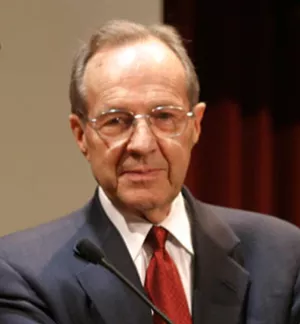
The full committee heard testimony from William Perry, co-director of the Preventive Defense Project at CISAC and former secretary of defense; Ambassador Dennis B. Ross, counselor and Ziegler Distinguished Fellow at the Washington Institute for Near East Policy, former director for policy planning in the Department of State, and former special Middle East coordinator; and General John M. Keane (retired, U.S. Army), former Army vice chief of staff.
It has become clear to the American public that we need a new way forward in Iraq. In December the Iraq Study Group (ISG), a bipartisan group formed by the Congress, concluded nine months of study and proposed a new way forward. The ISG proposal recognized that the key actions needed in Iraq must be taken by the Iraqi government and the Iraqi Army, and provided the incentives for those actions. The ISG proposal also recognized that we needed to begin the redeployment of our overstretched ground forces in order to meet our security responsibilities outside of Iraq.
Perhaps most importantly, the recommendations of the bipartisan ISG provided an opportunity for the nation to come together on Iraq. Last week President Bush announced what he called a 'New Way Forward' in Iraq that does not follow the ISG ecommendations. He has instead chosen a course of action that I believe is not likely to succeed because it is tactical, not strategic; because it does not entail real conditionality for the Iraqi government; and because it will only deepen the divide in the country. So in my testimony today I will explain the differences in the two approaches, and why I believe that the ISG proposals better serve the interests of the United States.
Want to Read More?
The full text of this publication is available via the original publication source.
For more information on this publication:
Belfer Communications Office
For Academic Citation:
Perry, William J.. “Situation in Iraq and the Administration's Strategy.” January 25, 2007.
- Recommended
- In the Spotlight
- Most Viewed
Recommended
Audio
- Radio Open Source
JFK in the American Century
Analysis & Opinions
- Foreign Policy
The Realist Case for the Non-Realist Biden
Analysis & Opinions
- The New York Times
U.S. Diplomats and Spies Battle Trump Administration Over Suspected Attacks
In the Spotlight
Most Viewed
Policy Brief
- Quarterly Journal: International Security
The Future of U.S. Nuclear Policy: The Case for No First Use
Discussion Paper
- Belfer Center for Science and International Affairs, Harvard Kennedy School
Why the United States Should Spread Democracy
To view summary and full text, please visit: http://fsi.stanford.edu/publications/situation_in_iraq_and_the_administrations_strategy_the/
The full committee heard testimony from William Perry, co-director of the Preventive Defense Project at CISAC and former secretary of defense; Ambassador Dennis B. Ross, counselor and Ziegler Distinguished Fellow at the Washington Institute for Near East Policy, former director for policy planning in the Department of State, and former special Middle East coordinator; and General John M. Keane (retired, U.S. Army), former Army vice chief of staff.
It has become clear to the American public that we need a new way forward in Iraq. In December the Iraq Study Group (ISG), a bipartisan group formed by the Congress, concluded nine months of study and proposed a new way forward. The ISG proposal recognized that the key actions needed in Iraq must be taken by the Iraqi government and the Iraqi Army, and provided the incentives for those actions. The ISG proposal also recognized that we needed to begin the redeployment of our overstretched ground forces in order to meet our security responsibilities outside of Iraq.
Perhaps most importantly, the recommendations of the bipartisan ISG provided an opportunity for the nation to come together on Iraq. Last week President Bush announced what he called a 'New Way Forward' in Iraq that does not follow the ISG ecommendations. He has instead chosen a course of action that I believe is not likely to succeed because it is tactical, not strategic; because it does not entail real conditionality for the Iraqi government; and because it will only deepen the divide in the country. So in my testimony today I will explain the differences in the two approaches, and why I believe that the ISG proposals better serve the interests of the United States.
Want to Read More?
The full text of this publication is available via the original publication source.- Recommended
- In the Spotlight
- Most Viewed
Recommended
Audio - Radio Open Source
JFK in the American Century
Analysis & Opinions - Foreign Policy
The Realist Case for the Non-Realist Biden
Analysis & Opinions - The New York Times
U.S. Diplomats and Spies Battle Trump Administration Over Suspected Attacks
In the Spotlight
Most Viewed
Policy Brief - Quarterly Journal: International Security
The Future of U.S. Nuclear Policy: The Case for No First Use
Discussion Paper - Belfer Center for Science and International Affairs, Harvard Kennedy School
Why the United States Should Spread Democracy