Good afternoon, everybody. Thank you for coming to this panel on the Israeli elections. I'm Edward Djerejian. I'm a Senior Fellow at the Middle East Initiative, and I'll be introducing our panelists. What we intend to do is perhaps have an hour of discussion and then open it up to you because I'm sure you have many questions and we'll try to accommodate as much as we can. Obviously, these Israeli elections come at a very significant and relevant time, not only in Israel, but in the Middle East. It's a region at war, Israel's at war. The Israeli prime minister says there are at least seven fronts that Israel is fighting. He also includes in that the eighth front, which is social media. And so there is a great deal of dynamism, both in the region and within Israel in terms of Israel's own political, internal domestic politics, the rule of law and many other issues, and including the great issues of war and peace in the region as a whole.
We had a Palestinian elections panel about 10 days ago, and it was a very successful discourse. And I'm going to put my panelists here on the defensive a bit because at that panel, the panelists actually predicted what has happened. And I'm going to expect exactly the same from you, who's going to win the Israeli elections, what the implications are for the future of Israel and the region. So we want to put you to that test. Actually, at the Palestinian legislative panels, one of the conclusions, the major conclusions is that these Palestinian legislative elections will probably not be held. And just two days ago, the president of the Palestinian Authority announced that they will be deferred until September 2027. And the other major recommendation was that the elections should coincide not only with the legislative Palestinian elections, but with the Palestinian presidential elections. And that's the other decision that was made.
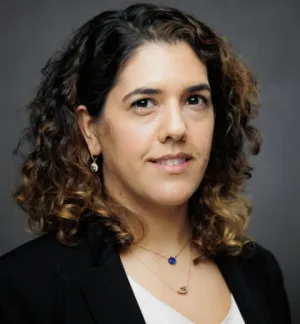
So you have the burden now of being as accurate for the Israeli elections. Let me introduce our expert and wonderful panel. We have Professor Anwar Mhajne on my left. She is a native of Umm al-Fahm, is an associate professor of political science at Stonehill College. She specializes in international relations and comparative politics, and her research focuses on feminist security studies, critical cybersecurity, disinformation, and Middle East politics. And she is the co-editor of Critical Perspectives of Cyber Security at Oxford University Press.
To her left is Barak Sella, who is a senior research fellow at the Harvard Kennedy School's Belfer Center. And his research, he's also heading a new program at the Middle East Initiative at Belfer on Israel, Israel's political whole array of Israel's situation today. His research explores especially US-Israeli relations, the evolving relationship between American Jews and Zionism, and the role of civil society in strengthening people to people relations between Jewish and Muslim communities across the United States and the Middle East.
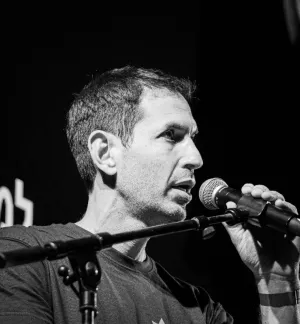
On my right is Eran Schwartz, he is a research fellow at Harvard Kennedy School's Middle East Initiative and Belfer Center and a PhD candidate in political science at Tel Aviv University. His research focuses on democratic resilience, civic mobilization, and coalition building in polarized societies. Eran is the founder and former CEO of Democracy Headquarters, the civic coalition that led Israel's largest pro-democracy mobilization. So welcome to the panelists and I'm going to start- What I'd like to do is the first part of our discussion will be on the strategic implications, the big picture of the meaning of the Israeli elections and consequences. And then the second part will be more in the nitty-gritty of the electoral issues and what the polls are showing and what the prospects are of end results. So let me start by asking, I'm going to give each panelist maybe if you will four minutes to answer this question: Do you agree that this is one of the most consequential elections in Israel's history and why? So Eran, I'm going to start with you.
So my answer is quick. It will be less than four minutes. It's no.
No, I mean, unfortunately I'm not sure it will be the last election soon. So therefore, for sure these elections are not that crucial as elections. But I do think that Israel as a society, as a country is in a crossroad, that the election symbolize this crossroads, which is maybe a collide that started or ended in a sense in Rabin's assassination a few decades ago, but the climax arrived I think after 7th of October with a jurisdictional overhaul. But overall it's a long process that these elections kind of signifying a bigger question, what is the identity of Israeli society? And this crossroad is super dramatic in its understanding in Israel of today. And I think there are generally two binary options. One of them is a democratic, liberal, relatively equal society, which with all what it means. And the other one is what we see that this government leads us to, which is a society that believes that doesn't matter what, we will have seven, eight, nine, maybe 10 open fights all around, that we will always be isolated people around the world, that we are prior to other people in the region.
And this is a very scary and problematic future in my view. Obviously I have a position here, but I think this is what the elections are symbolizing. And like any or every good movie, you have also symbolic people that are leading this unfortunate real movie that in one hand you have Bibi, Prime Minister Netanyahu, and the other hand, probably the real opposition is Gadi Eisenkot, which is completely the negative of Netanyahu in many sentences, in many ways. One is very charismatic, used to be handsome.
But that's not the main issue. But I would say that he was perceived as a security person. This is how he built his role, Netanyahu, as the security defense of the Israeli and the Jewish nation. But a very good success for maybe the best politician ever created in the sense of Machiavellianism and politics. He understand politics much better than any of us- So when I led the protest movement, we had room bigger than this with people who consulted us. What's Netanyahu next move? Netanyahu next move was none of them because he's so sharp, he's brilliant in his fierce politics. But part of it is lying a lot and building machines that lies a lot. And from the other part is Gadi Netanyahu, which is in my view, the complete opposite of him in many senses. He's a guy that lost his son in the war that sacrifices a lot, was a general.
He represents, he's very not charismatic. If you hear his, I don't know, people heard his speaks, you fall asleep in the middle maybe. It's slow. Sometimes you're not even sure where he goes, but he's an honest person. In a sense, he's even anti-AI at times because he has so many flaws in the way he present himself, the way he is, but in the same times he's a very serious, strategic, smart person. So these kind of people- but in their own selves, kind of different option of Israeli society. And we'll see what's going on next.
Thank you very much. Okay. Anwar?
Okay. So I am going to represent the perspective of the Arab/Palestinian minority inside of Israel and I'm going to use Arab instead of Palestinian just for clarity because we had the Palestinian election panel and then I'm going to use Arab parties just for clarity kind of what we're discussing here. And obviously there's a whole discussion about using the term Arab/Palestinian that we can get into later if that's something you guys would like to do. So what I'm going to talk about for this election, for Arab community inside of Israel, the Palestinian minority inside of Israel, this is an important election and we are viewing and people are viewing it as such. One, this is post-October 7th obviously, but also last election people claimed that don't go vote because it doesn't matter what happens. It doesn't matter if it's Netanyahu, it doesn't matter if it's Lapid-Bennett, it doesn't matter, the outcome is going to be the same.
In a lot of cases, I believe so. I believe that if we have a new government with Eisenkot or Yair Golan or whatever it is, it's not going to end the occupation. The situation in Gaza is going to be still vague and unclear what's going to happen next. Palestinian sovereignty is not going to be granted. But one thing that could happen is a freeze, a pause in settlement, a freeze in violence, right? And then maybe that will open up a room for other dialogues and other issues to discuss. So that's on the Palestinian prisoners in prison. Obviously the situation since Ben-Gvir took over with the recent government has been dire. So there are these things that are happening and will be affected. That's one. Two, for the Palestinian/Arab community inside of Israel, there are a lot of issues that are going to happen, a lot of things that are important.
After October 7th, surveillance increased. Ben-Gvir took over home demolitions. So he's been increasing home demolitions in the community. Recently in the Negev, I think they demolished a lot of homes. Gun violence. In 2022, gun violence, the fatality rate was 186, I think something around, or 168. And in 2023 it doubled when Ben-Gvir became the Minister of National Security, and the numbers are going up. Now people are assuming that it's an intentional policy, right? Additionally, we have issues related. So I mentioned housing, campaigns, massive campaigns demonizing Arab community members, elites, doctors, voters, Knesset members, everybody. It's massive campaigns. I'm noticing more and more of them. And he mentioned disinformation, and I'm noticing massive campaigns online. And there's also a few Israeli organizations that have been documenting a lot of these cases, including the FakeReporter, which I highly recommend following the reporting, or the Israel Internet Society.
So again, we see tension between the two communities is increasing and not just because of what's happening in Gaza and the West Bank, it is very important, but also within these institutions that are allowing settler violence, that are allowing the increase in settlement, that are justifying expulsion and killing of children are the same institutions that are allowing gun violence in the community, that are allowing surveillance, that try to disqualify Arab candidates and Arab parties recently. So again, is it the most consequential? No, but it is consequential in a lot of ways. So I'm going to leave it here.
Well, I think I can't think of an election where we haven't said before it's the most consequential we've ever had. So in that sense, it's true and always true. And there's a lot of things that are always true in any election that are true in this one as well. Every election is about asking the question, what is the division of power in a society and what are the lines that divide those camps? Are they religious lines? Are they political lines? Are they issues of security? Is it economy? So a few things that I think are going to be on the ballot in this election. So first of all, we have to remember that this government, which surprisingly was the most stable government in a long time in Israel's history, this government that barely had a majority, most far right wing government in the history of Israel was able in many ways because of their instability and because no party had a reason to go and dismantle the government before the election date, the government actually was able to come to term.
October 7th is obviously a mega event, but one of the things that I think we should focus on is what October 7th did in many ways and what happened after is it put up to question, what is the social contract of Israel? What is the contract between the government and the society? So of course the security failure of October 7th opens that social contract. The government, the state is supposed to protect its citizens. Corruption scandals that we've seen in Netanyahu, but of course also the issue of Qatari influence in Netanyahu's office, which also brings up the question of social contract. And of course the issue of the draft, of the Haredi men being exempt from the draft. And since October 7th, we've had hundreds of thousands of men and women, but mostly men, and majority of them secular, who have been taking the weight of reserves, people my age who have been basically two years in the army, which is insane.
And what is the social contract between them and the state? And so that is something we're going to see a lot. And another issue is that we have to remember, look, Israel is at the end, a very, very small country with a very limited strategic depth, a relatively small population, and a growing increase of threats. Israel's ability to resolve, to be resilient was always on its ability to resolve its internal tensions in negotiating with the external tensions. And whatever you think about Israel's conduct, there's no argument that the external pressures are immense. Attacks from many, many fronts, foreign intervention, international pressure. And Israeli society has a big test of what are the decisions that it will make and how it will reconcile these pressures. The US-Israel relationship, which is again, coming at a time where we're up to these crucial midterms, with changing public opinion on Israel and the US.
Will Israel society prioritize that, make decisions and say that it's important? Rising violence in the West Bank, rising violence in the Arab sector, the threats from Iran, the Houthis, Hezbollah, which is still there, Hamas, which is still there. Israeli society will have to prioritize not only how it deals with security threats, because when it comes to security, many of the candidates are saying similar things with nuances, but I agree very much with Eran. It's a question about the character of Israeli society, about the identity and what the public will say to its politicians that it is their top priority.
Thank you very much. Let me drill down a little on what you've all said. The usual trope in the headlines and commentary on these elections is that it's sort of like what Bill Clinton said during the elections, "it's the economy, stupid," but that it's about October 7th. And it seems to me to a bit oversimplify the context in which these elections are taking place. But I'd like to get your reaction, all of you, on do you agree that this election is mainly about October 7th? And to go a little further, how much is it also about Netanyahu's political legacy that Eran mentioned? How would you react to, if anyone asks you, is it really about October 7th basically and/or Netanyahu? Eran?
I think it goes together. First of all, for sure, October 7th is a traumatic event in modern Jewish history and Israel history for sure. But what we miss very much when you ask, "Is it about that?" The answer is yes. First of all, when you have polls, if you follow the polls, this is one of the main topics obviously, but the question is how each camp looks at the understanding of what does it mean? Yeah, both of them will vote and will say, "Yeah, this is crucial for us." But then each one builds a different narrative. And that's where I'm going to Netanyahu now, because Netanyahu is master of narratives. And even the fact that he was the head of the government who led the policy, paying the Hamas money in order to gain strength, weakening the Palestinian Authority as an agenda, open agenda. And in spite of all of that, managed to, as was mentioned, to lead the most stable government until today in the last few years shows a lot on his ability to recover and build a narrative.
And what is the narrative that each camp has? And that's the main thing that while Barak was mentioning a few of the narratives, actually I could have just said, okay, what he's going to vote just because what the narrative he mentioned. Why I'm saying that, because from one side of the camp, people looking at the corruption and looking at other things and saying, "How come he led this policy," and whatever. And this is enhancing the thinking that he should not keep leading, but he built a narrative that actually it's the deep state. Actually, he was not wakened in the time to respond to the 7th of October because the head of the Shabbat, the Shabbat is the equivalent to the Israeli FBI, didn't wake him up and the military didn't wake up. And all of these people who work together with the people of the protest in order to prevent him to rule, in order to prevent him being very aggressive towards the Hezbollah, Hamas, the Iranian and the Houthis and everything.
And then he builds a narrative that actually, thanks to him, he saved Israel from a second or third holocaust or whatever by the fact that he was aggressive with Iran, the fact that he showed the world that he's the protector of the enlightenment people. And what I'm trying to say by that, yeah, it is about the 7th of October, but each part of the camp is being fed with a very different narrative that make each person understand completely different what is the next move. And therefore, he still have a strong support. It's not a huge support, it's not a majority, but it still exists.
So I have a poll from IDI that was in August and it said for Jewish voters, 68% think October 7th is very important. Their decision for Arab voters, only 32%. Now I'm going to make the argument that it's not just October 7th, it's the environment that October 7th created or the divisions that it helped kind of sharpen in the communities. So post-October 7th, obviously it increased the tension between the two communities, Arab/Palestinian community inside of Israel, plus the Jewish community inside of Israel, the first surveillance, the violence that targeted the community, and I named a few since Netanyahu's government. Obviously that started before October 7th, but it got kind of sharpened and highlighted more after October 7th. So it is about that system that is becoming more and more obviously segregated. It's not segregated in terms of you see a place where just for Arabs or just for Jews, but if you go to towns and you go to an Arab town versus a Jewish town, you can tell easily just by walking to the entrance and see the amount of investment in resources, structure, infrastructure, et cetera.
But it's also the fact that people experience racism on buses today. There is a recent story of a Druze girl who was on a bus that got attacked for speaking Arabic. And this is again, not new. We had that communal tension in 2021 where violence between both communities erupted in mixed cities. And again, we're calling them mixed, not shared cities for obvious reasons because they're not fully shared. And then we see that highlighting the fact that now we see election campaigns saying the way to antagonize against opposition party for Netanyahu is to call them pro-Arab parties or putting them next to Tibi, no Gadi without Tibi kind of narrative, to demonize the community as an election strategy. Again, this is not new, but it has been amplified drastically. Statistics show that Israel is adding about close to 600,000 new voters 18 to 22. Again, I think the majority are Jewish. I don't know the percentage there, but the majority of them are leaning right. Israeli society is shifting to the right.
So the left, a lot of people view the left in Israel as more like center and the right has been moved to the extreme right on the other side. So a lot of this is moving to the right, even with the different coalition that we could think about and do it. Three, it's about partnership with Arab parties and the willingness to do so. The fact that even Eisenkot is not coming out to say, "I'm willing to engage with Ra'am or include him in a government coalition," he said maybe with conditions is very interesting because maybe this, again, and maybe this will change after the elections and their votes and there's no election strategy. The votes are not that important now it's the strategy forming the government.
But the fact that they can come out and say we are willing to engage with these Arab parties, that is alarming for a variety of reasons. The joint list is now targeting Jewish voters and they have a campaign in Jewish communities. Even Balad include Orly Noy, like seat number five, we see Ra'am, for instance, changing their election strategy. They separated from the Shura Council. Ra'am is the political wing of the southern branch of the Islamic movement. They used to kind of tie the political party with the Shura Council, which is the movement's kind of elective or counseling body, I guess, but they separated to allow Jewish, Druze, and other candidates, and they actually have a Jewish candidate now who is known to be tough on crime and they are kind of trying to communicate and engage with the Jewish community. So we see a lot of fascinating stuff happening on the Arab side.
The other thing, the Arab community is also more pro being part of the government coalition. I think polls say 70 something percent, or supporting from the outside, and that's what the Joint List said. They're willing to support Eisenkot from the outside rather than be part of the government. So we see a lot of shift on the Arab side and more pragmatic approaches while on the other side, even with the opposition side, we see that that's not the case. Obviously Yael Golan is an interesting exception because he was willing, he publicly said he would include Ra'am, yet he supported the exclusion of Sami Abu Shehadeh from Balad. So there's a question mark about him as well right now. I'll stop here.
I want to touch on some of the things and also challenge some assumptions. So first of all, about October 7th, I'm very happy you brought up that IDI poll because there's another part of that poll which I think is really important. Yes, when asked is October 7th part of your considerations in the elections, it's higher with Jews compared to Arabs. But if you look inside the Jewish population, there's a very difference between religious levels. So secular people, 81% said that October 7th is critical in their voting. For Haredi Jews, ultra Orthodox, only 26%. National Zionists or national religious, somewhere in the middle, was 56. And I bring this up because it's important to understand that the driving force and way I see it of political identity today is religious identity. And religious identity is one of the best characteristics to look at, to understand a person's voting patterns, his or her relationship with Jewish identity, with Jewish tradition, with religion.
And that is something that we're seeing sort of shifting in Israeli society. So two assumptions that I want to challenge. One, there was this narrative after October 7th that people are becoming more religious, which by the way, makes sense. After a traumatic event, it would make sense to observe more people turning to their faith. But that's what's not actually what statistics show. It actually showed that people's own religious identities just became more emphasized. Secular people, young secular people became more secular, young religious people became more religious. And also when it comes to Israel drifting to the right, while I agree with this claim, I think there's an important caveat. When we talk about left-right, I think the unfairness of looking at the Israel political system is that we only judge it according to security. We don't talk about social issues, about economics.
When we judge left and right in Europe and in the USA, we talk about gender issues. We talk about economics, unionizing, public health, things like that. In Israel, we only check the security issue, and that is true. Israelis have become more hawkish. If you are a 24-year-old Israeli who was born in 2002, here are a few things that have happened since you were born. Over 60,000 missiles have been fired on you since in that time. You were born into the second Intifada, you were in the second Lebanon war, four operations in Gaza, October 7th, another war in Lebanon, two wars with Iran, and not to count the countless terrorist attacks and knife attacks. So I don't know. I think many young people who grow up in this environment with the type of leadership that they have will become more hawkish. Now, the question is, where are we going? Because again, when we're looking at young people in Israel, yes, they are more right wing, but that's because they are more religious because there's a rise in the demographics.
So if you look at 60 to 64, ages 60 to 64, we have 17% of religious and Haredi. Among young people, ages 18 to 22, it's up to 29%. So this is the big challenge of Israel, and we see this around the draft bill, is how do you have a democratic society of 10 million people that is not only multiethnic or maybe dual ethnic, but also have multiple religious identities and is able to govern in a democratic way. That is a huge challenge that is not going anywhere because as we've seen, the religious identities are just getting more emphasized. And the big challenge that we're going to see, and again, I really agree, the issue with the Arab voters, with the Arab parties, with the Haredi parties, those are the questions. If you ask a lot of average Israelis, they might say, "Well, I would prefer a government without the Haredian and without the Arabs." And then you have about a 70, 75-seat government of the Zionist coalition.
But obviously then you're excluding, you're basically serving sort of Netanyahu's position where he said years ago about Israel's economy. Israel's economy is doing great if you exclude the Arabs and the Haredim. So you could say, "Well, Israel can have a political democracy if it excludes the Arabs and the Haredim," these sort of contentual points that create a problematic tension for the central narrative. But that is going to be the big challenge. And we're seeing what Anwar said about Ra'am putting a number two former Jewish police chief. We're seeing movements in the Haredi party. By the way, even Haredim who are voting more right wing, like for Itamar Ben-Gvir, in my book, there's an advantage to that because you're seeing less control of the rabbinate over the young Haredi voters, which I think In the long term, it's good for the democracy.
Let me pose this question in terms of the Israeli body politic writ large. Obviously this election is going to be a verdict on Netanyahu's policies. And we've seen, you've all mentioned some of the domestic issues that are there, especially the rule of law, which is really a critical issue in Israel. Before October 7th, we knew we were preoccupied with the Supreme Court rule, the attorney general's rule, et cetera. But what strikes me is that Netanyahu, and this is my professional deformation as a former diplomat, has weaponized Israeli foreign policy and national security policy. And I don't know how much of this is the heritage of Jabotinsky, his father and all of this influence on him, but it's like he can't see a war that he doesn't want to get into. We know some of the reasons for that is that an Israeli prime minister who's leading a country during war, he can bypass a lot of the legal issues that he has, the three major litigations that he has against him.
But fundamentally, when you look at the big picture, Netanyahu's policies have really weaponized Israeli diplomacy because the war against Hamas after October 7th is totally understandable. We can debate Israeli's actions in Gaza, that's a major debate, but fundamentally that's one thing. But then the war in Lebanon, resuscitating this war in Lebanon that Israel has been at in 1982 with disastrous results in many ways. And then Syria, expanding territory in Syria, at one point dealing with the pro-Iranian militias, the two wars as you've all mentioned on Iran, which is very significant. To me, a major miscalculation of American foreign policy, but that's a separate issue. But the Houthis, et cetera, he has absolutely weaponized Israel's foreign and security policy. Is this a focal point? What are Israeli attitudes toward this? Is there a general support of this policy? Anyone wants to take that.
Well, so yes and no. Okay. Let's look at-
You're acting like a diplomat.
No, no, no. Well, because there's a real split. Look, I would say for general policies, many things you mentioned, there is a level of support. There was this general idea before October 7th of containment, of "Israel will have strong presence, strong intelligence, and we will live with Hamas on our border. We will live with Hezbollah on our border and we will be able to contain them." That was sort of the security paradigm in a sense. And by the way, the Netanyahu paradigm was "we will bypass the Palestinian issue through regional agreements, and at the same time, containing the threats." October 7th blew that up in the face and now sort of the security, the prevailing security doctrine that is developing is from containment to active engagement. So basically, if I see motivation and capability and intent, which are the three sort of things that you're looking at for a threat, is there motivation?
Is there motivation and intent? Is there capability, and is there opportunity? So basically the security doctrine now is they're not waiting for opportunity. If there's motivation and capability, then we want to engage. And there's a lot of broad support for that in the public. Now, where are we split and where is there a problem? The issue is really about the Palestinian issue for one. So you see the split is the two-state solution is now not something that is discussed in Israeli politics. Support for the two-state solution is very low. Support for peace with other countries is extremely high, about in the 70, 80%. What is the discussion now? It's more about if you ask the voters, so Netanyahu voters, the majority of them support annexation to some level. There's also 50 shades of annexation of what do people prefer. And then if you look at Eisenkot voters, the majority of them support separation and only a minority of them support annexation.
So there is a question of, do we want to control the Palestinians or do we want to separate from them? That's I would say where we're now split and we have to make a serious decision. And again, in the sense of Netanyahu, look, Netanyahu is interesting because Netanyahu is actually historically a prime minister who tried to avoid conflicts, tried to delay conflicts in many way. That's why in his governments, he traditionally also always had someone to his center left. But Netanyahu of today is one of Netanyahu in an extreme right government and that is his decision. The whitewashing of Ben-Gvir is Netanyahu's doing. And second, Netanyahu under corruption trials has a different set of calculations that might set him. And again, I don't think it's fair to claim that Netanyahu engages in wars because of his personal legal situation, but it's hard to separate the man and his personal anxieties and tensions from a prime minister that has to make decisions.
I'll just say one last thing that we should look at about do people support this? Look, a quarter of Netanyahu's voters have left Likud. A quarter have left. More or less, half of that quarter went right and they went right because they were disappointed that Netanyahu's government didn't go all the way with judicial reform. And they feel that we won the wars now and they want to win more. They want more power, more strength, more aggressiveness. And about half of these voters that left, left to the opposition and they left because of the draft issue and they left because they think that we did not win the war. Asking Israelis did we win the war or not win the war is very crucial. And there's a really interesting survey that HaMedad did where they basically said, look, you have to look at two graphs. It's either do you want the government to do the same or different and do you want the government to do more or less?
So basically the right wing block is in the same and more. We want same and we want more. And there's about, I would say 45% of Israeli society that are there, maybe 40%, 45%. And then you have the other part of this Israeli society which wants different and more, but also maybe they want some of what Netanyahu is doing, but less, not the same aggressiveness. And most of Israeli society is there. The problem is, can that part of Israeli society, which is the majority, build a winning coalition? Because every poll shows that Netanyahu's current coalition does not have a majority, even his most favorable polls. Netanyahu's current coalition does not have a majority. The question is, will the rest of the country be able to form a coalition that can withstand his relatively cohesive coalition?
Yes, and then Anwar can...
Sorry. Okay. So I have to add a few things. According to JPPI, from 2024 to 2026, there is an increase in the percentage of Israelis that want annexation, more control over the West Bank. It's like from 38% initially to 48%. And again, you can divide it by voters and camps and that will look differently. And I have to say this focus on the West Bank and Gaza, the fact that a lot of people who are supporting Netanyahu, as you said, left the camp, Netanyahu's camp, they think that Israel didn't do enough in Gaza. They didn't go all the way. They did not kind of finish the job as they might say.
We're talking about the causes of this. One is okay, maybe these people obviously have witnessed October 7th, they've witnessed missiles, have witnessed wars. But then, I mean, the root causes of this is the fact there is a system in place that will lead to this. The occupation, the fact you justify the occupation of millions of people and the military service kind of funnels in people there, whether they like it or not, at the age of 18, you're going to serve, that creates this tension. The fact that you have to maintain a system like this requires a person like Netanyahu or a person who is willing to justify this. And the fact that things have been getting radical and radical, the statement, the rhetorics, the justification for all this violence has been going more and more kind of extreme, it creates something. It does something to the society itself.
If you're a kid and a teenager who's going through social media and seeing these statements and AI videos and all this justification for this war, obviously you're going to lean to the right. This is something that we've witnessed in different contexts, not just in Israeli context, but now the security situation adds more to that. The other thing that I wanted to say is when it comes to also the idea of kind of the West Bank, Oslo has been... I know Palestinians critique Oslo, but Israel is critiquing Oslo, and there's actually now people in the Knesset who want to do away with Oslo because they think it guarantees some Palestinian sovereignty. So what are we moving? Even let's say Eisenkot comes and we're maintaining the situation. Is it really going to lead to a situation that is going to push us forward or are we just going to get stuck for a while until something else happens that is dramatic?
The other thing when it comes to Netanyahu, I honestly believe there's that diversionary theory of war where people who are facing issues domestically will start engaging wars outside. Barak said there's no opportunity, but I think actually with the Trump and the election of the Trump administration, it was easy, like, "Okay, let's start a war with Iran and convince Trump to join." And guess what? It happened, right? So even though the US, I don't even see a viable way of them going out looking like they're winning this war unless something more radical that could happen after the midterm elections. So again, all of these things interact together. So I think Trump, the fact that there's an opportunity to also distract from the failure of October 7th. So oh, we assassinated the leaders of Iran. We targeted the nuclear facility. So you move away from the fact that you failed on October 7th.
We have territory, now we're in Syria that goes to Western Daraa, right? We are now in the Litani River in Lebanon. So you can claim that as a success despite the major failure that happened on October 7th. And honestly, some people who support Netanyahu say, "We don't think he failed. We don't think it's his problem. It's the general's problem, not him." So I think it's important to pay attention to all these different dynamics as well.
I'm glad you brought that perspective in. Eran.
I have problems with surveys because what it makes us, we stop thinking about values. We stop thinking about the future. We stop thinking about leadership. And I'm saying that because we do all these analytic calculations all the time and we're going to be in five, 10 years, wars, Netanyahu will be out. It's not all Israel. And Israel is a country with 10 million people. We have the Palestinians, we have the Israelis, we have the Arabs, we have the Jews, we have all of them. And then we need to ask ourselves, what future are we thinking for our kids? This is the question. And then when you're on this question, you have few alternatives. And that's why for me, the calculation about Netanyahu that goes there, he goes left, he goes right, Netanyahu will do everything in my view. He has much simpler operational system, which is to stay in power.
This is motivation. I mean, few years ago, he was the one who approached to Ra'am and offered them to be part of the coalition, which is the Arab party that now is going all full force against.
He's morally very flexible, but very determined to be in power. And therefore I'm saying to play to his flute is not a question that we need to ask ourselves in the future of the Israeli society. And also, and I'm saying that in another level, people changing their minds, depends who's the leader, what is the question, what future can you paint them? And as Barak said before, the contemporary Israeli woman or a man faced a very severe life, a very bad life. Same with the Palestinian from the other side of the road. And if you just focus on that and you have the leaders that just focus on the pain on fighting for all their lives, obviously the service will show you that these people don't believe that there's any chance to anything. So yeah, the surveys do reflect that, but I'm trying to say, okay, the question is what can we offer on what people can offer? Can Eisenkot offer something?
And this is the main question. I just want to emphasize that because there is a lot... We don't need to be determinist on just looking at the service and say, "This is it." No. I assume you were in time of Sadat coming to the Israeli Knesset, I think nobody here before, if there was a panel like that in HKS, he was the president of Egypt and he came to the Knesset before there was a peace agreement between the Egyptians and the Israelis, and he came to give a speech that changed everything. It's one of the most stable peace agreement we have. So I think these kind of things, we need to think about also this part and not just surveys.
Couldn't agree with you more. Shimon Peres once told me when I was in Israel, he said, "Surveys and polls are like French perfume, very nice to smell, but difficult to swallow." I want to pick up on what you've all just said now, because I think it's really critical, not only in terms of Israel's identity, but its future. But we're in the 80th year now of really this conflict, this neverending conflict. And when you talk, Eran, about your children and we talk about our grandchildren, the point is, is there a sense in the Israeli body politic that yes, we've had successes. We've had the Jimmy Carter broker agreement with Egypt and then Rabin with King Hussein, the Israeli Jordanian Peace Treaty. When I was in office, I think we successfully concluded the Madrid Peace Conference, the first time Israel was able to sit at the table in direct negotiations with its Arab partners.
There have been successes, but there've been more failures. And the point is, is there a sense in the body politic in Israel that this really can't go on like this? I mean, Israel has to become an integral part of the Middle East. It's in the Middle East geographically. And as we say, there are 7.2 million Palestinians, 7.2 Israelis, they have to share this land. Even the most radical of each side is not going to be able to exterminate the other. And so they have to divide the land and it has to be land for peace. So the question I'm asking, is there, despite all the surveys and the concentration on who's going to get what and how, is there a growing feeling maybe amongst Israeli youth that there is a better way? Is Israel going to remain a garrison military state in the Middle East or are we going to elect leaders who will be able to change the equation? I know it's a difficult question, but-
I'll say a few things that might sound contradictory, right?
Because this is a confusing and very difficult situation. So one, when it comes to the Middle East, look, I have to differ with you. I think Israel is actually more integrated today in the Middle East than before October 7th in many ways. The Saudis are making serious requests from Israel to support them in their war against the Houthis. This is something unbelievable years ago. Fly Dubai, Dubai, flights from Israel to the Emirates have been stayed open the entire war. We're three years after October 7th, the peace agreement with... Every peace agreement Israel has still stands. Lebanon is trying to do peace with Israel. Syria and Israel are sort of playing footsie under the table. So there's actually when it comes to integration in the broader Middle East, I think from that position, Israel is actually in a better position in some ways. When it comes to the body politic, the public, Israelis and Palestinians living together, look, there's a lot of despair there.
There's a lot of dehumanization that has happened on both sides. I think even I'll give the example of Iran. I was in Israel during the both rounds of war with Iran, and those were scary. I really don't wish on anyone to be in a situation like hearing a... And I can imagine Iranians experience the same thing and I talked to some of my Iranian colleagues, but when I talk to Israelis, I cannot find almost anyone in Israel that has animosity towards Iranians as a people. On the opposite. There's an attraction to the Iranian culture, the Iranian nation, the Iranian history. When it comes to Israeli and Palestinians, we have such deep animosity and mutual demonization that we've ungone. It's going to be a long process. We're going to have to have really brave leaders on each side that are willing to step out of the comfort zone and to take risks. Look, the last Israeli leader that did that paid with his life. I think many Palestinian leaders are refraining from doing that from the exact same reason, that they don't want to pay with their life.
And we know that any Palestinian leader who will honestly engage in negotiations with Israel is going to have death threats from his societies as well, but the same way in Israel. If Gadi Eisenkot gets elected and goes into serious negotiations with the Palestinian, he'll have threats on his life. And we have to understand that we're not playing games here, but we're going to have to make brave decisions to reeducate a generation, a generation that was not like me and Eran. I know because we went to the Jewish education systems in the 90s when we're taught on peace. This is a different reality and we have a responsibility to create a better reality for our kids so that they can see... And Palestinians and Israelis see each other as humans because I don't think young Palestinians see Israelis as humans and the other way around. I think that's the biggest problem that we have. We have to enter in a process of re-humanization.
When Barak said that Israeli is integrated in the Middle East because of all the normalization agreement, I remembered the World Cup in Qatar. There was this Israeli journalist and he's interviewing people. He was interviewing a Moroccan, and as soon as the Moroccan found out that the journalist is from Israel, he looks at him and he walks away. So the Israeli journalist looks at him and is like, "Well, your government just signed a normalization agreement with us." And he just waved him off and went away. So I think yes, there is normalization agreement with the UAE, Morocco, Bahrain, and people are talking about expanding it, et cetera. But does that mean war and peace? Is that our definition of integration, right? Does that integration mean an agreement? There are agreement. There's cold peace with Jordan, cold peace with Egypt. We have that, right? Does that mean integration? I don't think that truly means integration, right?
And integration requires paying attention to what people are asking for. If we keep undermining the Palestinian issue, and Barak mentioned the fact that there's dehumanization, and he also mentioned the fact that a lot of young Israelis have witnessed a lot of conflict, but think about the Palestinians. The same argument could goes to the Palestinian side. They've witnessed so much violence, checkpoints, et cetera, that radicalization, it's obvious why it would happen, right? And again, you got to go through explanation, doesn't mean justification, et cetera. But it is, there's a structure in place and young people are going to pay attention to it. There are grievances that are going to develop and they see what's happening in Gaza and they see. The PA has always said, "We're willing to negotiate." It's not like they sit and obviously can argue about Hamas, but the PA has said, "We're willing to negotiate." There are partners, but why would Israel, that's my question, with the upper hand, the support and the military power compromise?
There's no incentive at all on the Israeli side to do so because you can't use the human rights argument. It's always going to be the security argument. And even if somebody is in support of kind of giving some sort of sovereignty to Palestinians in the West Bank or Gaza, they're not talking about connecting them together. They're not talking about establishing a full on state because they call it state minus, I guess that's the argument. They still want to control the border with Jordan. They still have to control mobility. So I don't... See, the problem is we don't have an incentive to move forward, and that's a big problem.
I'm going to ask two more questions before we go to our audience. One very quick one, what do you see as the role of the United States and particularly President Trump's support and non-support, for example, of Netanyahu on the outcome of these elections? Eran?
I think as of today, the US is less important than it was in the beginning of Trump's term. I think now he's facing his own challenges with the midterm, and I think his love affair with Bibi, it's not something I would recommend to any couple. So in my view, the US, because Trump is a unique guy, it's less important than it was a few years ago. A few years ago for sure, like a year, a year and a half ago, a few months ago for sure. So in that case, and also in the Israeli, I think internal outlook, Trump is not a good card anymore. We need to understand. I mean, same with Netanyahu. So it's kind of the two guys are not invited to any party anymore don't even want to hang out together. So in that case, I would say that would not be the main issue.
The main thing that was for Israel and Trump did his part, whether you can like it or not, was with the hostages and the exchange with the prisoners agreement. And the more that part was done, I don't see where the US is very crucial. There is a big debate regarding the support, the funding of the military part with Israel, which it's another topic, but it's for sure not in the top.
Look, I agree with Eran. I think Trump had amazing support in Israeli society after the hostage release. That support has dipped in a way. And so people in Israel, I think, are more aware now of who Donald Trump is. If there's something the last three years has created a lot more interest in Israel in American politics and looking at that situation. So that's maybe a plus, but look, maybe let's add another complicated layer. The future of Israel and the political future of Israel is in many ways related to the future of the US and the Middle East, and that is something that is currently up for grabs and unclear. It's unclear what role the United States wants to play in the Middle East. I mean, if you look at Trump's national security program, it is pretty clear what role he wants to play. Will he be able to execute that role?
We're in a changing world economically, militarily. We have entered maybe after 70 years of Pax Americana type of sort of peace since the Ukraine-Russia war, we're in a new era of conflicts, and the United States has to also make decisions about what its role will be in the world, and that will have a deep impact on where Israel will go as well. So I don't think Trump has any electoral power unless he makes some kind of surprising move. I don't think that's going to have... He's playing it safe, but I do think the US-Israel relationship is going to be critical for any future government.
Well, I feel like that's-
Yeah, I'll be short. I think if you look historically at the different types of US government and its support to Israel, even with public denouncement of the settlements and everything, the US has maintained its military relationship, its support to Israel, regardless if it's Trump, if it's someone else, the Biden administration, all of them, even the Biden administration itself was more or less willing to do something about what's happening in Gaza than the Trump administration, right? So is Trump relevant or irrelevant? I think at this point there's this sense that this military aid is going to be there. So it doesn't matter who it is. If it's Trump or someone else, the relationship is there. We know that it's stable. We know that it's guaranteed despite all the sanctions that are being posed from different countries. JPPI actually now just created a map with different sanctions, like countries with sanctions and map.
I think it's interesting to look at it, where the sanctions are coming from. But again, it's a wider thing that EU and other places that are affecting that. And also, I think this is Barak's area, is American support for Israel in general and how Israelis are viewing that. I think that's more important. For some it's more important than others, but I think that's the biggest change that is happening, not at the presidential level, but local level, and eventually that's going to translate into Congress, right? So we'll see how that's going to play out.
I'm going to turn to the audience. Please raise your hand. I'll identify you. Selmon will give you the mic. The gentleman here.
Thanks to all of you for your insight. I wanted to ask on what we think is going to happen the day after the elections with regards to the coalition negotiations. I think there's fluctuation in the polls, but as far as we can tell, it's clear that neither block is going to get a majority, and I think Eisenkot will be lucky if his block ends up with something in the mid 50s. So if he's looking at this map right now, we know that Bibi's already thinking about how he can figure out how to block a government from forming. All he needs to do is block Eisenkot from forming a coalition and then just go back to elections. That's his worst case scenario. But Eisenkot, he's not committed to sitting with Ra'am for maybe political reasons that are maybe understandable, albeit unfortunate.
What are his actual options here? Is he thinking, "Can I sit with the Haredim?" Is he thinking, "Can I form a minority government with the Arab support?" Because it's not looking good for him, at least as far as I can tell, having followed the polls the last couple years.
Who wants to take the... Eran?
Yeah, first of all, you're right. I think there was one big strategic mistake that you mentioned. It's also a moral mistake in my view, but it was a strategic mistake for sure that they played again the narrative that Netanyahu put on the table, which is the Arab Jewish thing. And instead of looking and saying, "Listen, all human beings are human beings, let's ask what they're saying, and then we decide that Ra'am is not as well as other party. We can argue if we agree or not, but okay, let's see what they're saying and then decide if we can have a coalition with them," which Netanyahu himself, as I mentioned before, was really happy and ready to bring them to the coalition because he understood that he will not have a coalition back 10 years ago.
So in my view, they already made a mistake by playing by his own narrative. In spite of that, Eisenkot, if you listen to his speeches, he put demands, but he does not say very clearly that he will not have them there. And he does it because he's politically wise. I'm not saying I would do the same, but morally it's more moral question, but politically, he does not close the door. He says, "I have three conditions." I'm not getting into them, but in this condition, if Ra'am will be part of this condition, they can be part of this government. And not by chance, as was mentioned before, there was number two in Ra'am now in the Muslim Brotherhood is a Jewish police officer, that this is the number two in his party because they understand that they might not get these 61 that they want to have, and then they might form a minority majority.
I don't know how you call it in English, but that it will be less than 61, but it will be still a majority or the only coalition that can happen. And in that case, I believe they will say goodbye to Netanyahu. They will form a government, a short-term government, and they will call election again, but from position of power. And after, they will legislate few basic laws, one of them will be a national committee to investigate 7th of October. So in that case, I think this is like a state commission. So this is, I would say, a plausible coalition if they will not manage to get to 61, which most of the polls are showing what you are saying. But I don't see the opposite. I don't see how Netanyahu is capable of forming one. So it's like in soccer, it will be either tie or win for the other side, but it will not be decisive.
And the big problem is, as you said in the beginning, it will be the day after, because you have a coalition of people with very different agendas besides of being against Netanyahu. And then how do you really create reforms? How do you lead to all of that? That's a big challenge for democracies in generally after doing the U-turn back to democracy. And this is something we need to face.
Thank you each for offering your perspective. I had a question about legacy. So the Yom Kippur War, Golda Meir, the war was ultimately a success, but it was seen as a failure of her government in the early days. And ultimately she was forced to resign, I believe. Why do you think that in today's environment, October 7th taking place is not just disqualifying for Netanyahu in the upcoming elections on the one hand, and on the other hand, even if there was another right wing figure? And on the other hand, why do you think at this stage, Netanyahu, the son of a great historian and the brother of a national hero has not kind of decided to exit the stage with legacy in mind?
I want to answer about the October 7th thing. I don't know about Netanyahu's personal convictions and I don't want to get into that. But look, after October 7th, there was a sentiment in Israeli society and even people on the right were basically saying Netanyahu is done. And Netanyahu, like a phoenix, he's somehow really a political phoenix that finds a way at every corner. I think there's a few things. One, I think there's more time needed. Yom Kippur War was an intense war. So more Israeli soldiers were killed in the Yom Kippur war than in the last three years of war, but it was over a period of a few weeks.
So you had these young men and women who got this traumatic experience in a very short time and then came home and there was a protest movement, et cetera, et cetera. People who are fighting since October 7th, many of them still fighting, PTSD rates in Israel are... It's even ridiculous to talk about how high they are. And so I think it's going to take time for the political societal effects of October 7th to manifest themselves politically in political movements. It might take another few years. And I think another difference from Yom Kippur is narrative and media and the way media is used today. The literacy people have, I think the last 15 years of social media have completely changed how people process reality.
And so again, Netanyahu can have half of the people hate him, but he has the tools to create a narrative that half of the people will believe him. So if you get more than half, that's enough. So I think that's maybe the differences that we're seeing. And again, Netanyahu is no Golda Meir person.
Just a fact about that. No, no, it's very quick. Golda Meir's party won after Yom Kippur. It was in '74. She won again. Not she, but her party. The change happened just in '77 with the Likud coming to power. So it takes time, as Barak says.
David Patel (Audience Member #3):
Thank you. So I don't know much about Israel, but I know it's an advanced industrial democracy. Well, I know it's an advanced industrial democracy, and if you look around the world at other advanced industrial democracies, the far right is winning about 25% of the vote, right? That's true in Germany with AFD. In France, Le Pen's getting low 30s, UK reform. Even here in the US, 20% of adults in a recent YouGov poll identify themselves as MAGA. So the places where the far right isn't getting that is because you have a strong center right candidate or party that holds them back. So here's the question. If Netanyahu loses, why wouldn't we expect the far right in Israel's vote share to basically shoot up to 25 to 30% like it is in all other advanced democracies? And if that happens, what does Israeli politics look like going forward?
Well, first of all, David, thank you for that. There's an article I wrote about that day after having this conversation with you that I recommend people, but you're right. Again, Netanyahu's voters, a majority of them, about I think 70% of Netanyahu's voters said they prefer annexation. That is a far right position. Ben-Gvir and Smotrich are together at around 15%. I think the far right in Israel is more close to 20, maybe low 20% of the population. That is a reality that we will have to live with, the same way I think European societies and the US is trying to come to terms with. I would not say that Israel is different. The challenges are different, but the political patterns of we're all living in the same ultra connected digital world, I don't think that the political patterns are necessarily much, much different, especially when religious identity comes into play.
Wait, sorry. So you're not viewing Netanyahu as an extreme right?
No, the voters that vote Netanyahu.
They're voting from Ben-Gvir and him, not just him.
Thank you for being here with us. My question is not from a knowledgeable place, but Barak, you alluded a little bit to identity politics in Israel. And aside from the security argument, is there anything in identity politics that would influence elections now or in the future?
Yes, that's a great question. So an issue we didn't really talk about is what we call in Israel religious and state. So different from the US, Israel does not have a separation between church and state. So we have Israel, for example, funds rabbinical positions, also funds imams, right? There's mosques and synagogues that are funded by the state. So Israel has a much more complicated relationship with the state and that creates a lot of tension about many, many issues, not only about the draft line, are religious men allowed to go study Torah while secular men have to pay taxes and go to the military, but also about questions about transportation on the Sabbath and questions of what is taught in the curriculum and what place does Jewish identity have and how do we treat certain Jewish historic sites in the West Bank? What is our relationship to them?
These are a lot of complicated issues. I think that they are more, the left in Israel has more of incentive to talk about them and are more worried about them. I don't know if they will influence this current election as much as maybe many people would think. I think even the draft bill, which I talked about several times, will have less of an impact than we might have hoped. Micah Goodman was here, I think a year ago and was talking about the new divide is between the serving people and the non-serving people. I think that was something people were trying to sell. I don't think it stuck enough to really show this is the divide between... Most of Netanyahu's cabinet did not serve in the military. It's like absurd. Yeah. Ben-Gvir, Smotrich, Deri, his Haredi partners. It's pretty ridiculous.
So these are huge, huge tensions. Israel hadn't, I would say we have other tensions between different Jewish ethnic identities and there's a lot of identity tension between Arabs and Jews. But I would say if you look at the Israeli Jewish society, the relationship between state and religion is extremely important and will be crucial moving forward.
Thanks very much. This is really fascinating. Going back to one of the first areas that you talked about, what is affecting the voters, there are two issues that I'm wondering about, although they may be submerged with everything else. The first is the independence of the judiciary and how that might be impacted by the election. The other is the loss of, I don't know what word to express, but sympathy for the country and identity with the country by let's say the European economic community or the EU, even the diaspora having turned against it. How does that affect the electorate and what do they think about that?
So the second is how it affected. What was the first again, sorry?
Okay. So as a person who led the protest against what Netanyahu did there, I can say that I care about it a lot, but if you look at the polls, even the same poll that you mentioned, people don't care about it, which is interesting, but people didn't care about it before. That's the point. The reason we went to the streets and luckily enough, many people went is because we saw what happened around us in Hungary, in Poland, and we understood that this is one step that we have to act strongly and decisively in order to prevent a change in the regime to areas that are not democratic anymore, that it will be very hard to come back from. That's why we responded that way. But Netanyahu never put it on his top three agenda when he went to his poll to vote in his elections and he never put it afterwards.
In a sense, he did it because he had, in my view, he had his own interest in changing it because he is visiting the court once in a while and not as a persecutor. So we had this agenda, but the public itself, after 7th of October, all that, they are about 27 percentage care while the 7th of October is around the 70s. So in that sense, the Israeli public, they're afraid that the democracy will change, but nothing to that. Regarding the second question about the international, this is something very important that they see that every time it's... I'm asking what's the motives of the people who are putting more and more pressure on Israel, because in my view, it's counterproductive because it feeds exactly the narrative that Netanyahu and his camp trying to say. They say, "Look, everyone are against us. It doesn't matter what we'll do. It's antisemitism. It's anti-Zionism. It's against the state of Israel. It's against the legitimacy of the Jewish people. It's double standard," and all that story.
And in my view, it only enhance, as much as there will be a pressure before the election, which it just serves him. It helps him to be this leader against all of this movement. I think it's really not productive and I think it's even pushing more Israelis to that direction. Even Israelis that were completely in the peace camp, besides of what happened 7th of October, that there was a waking of the conscious, so people lost their last naiveness regarding their relationships. And then from there, you need to build. But besides of losing this naiveness, the moment that people encounter, even as myself all around that you are being canceled just by the fact that you are from Israel, that you are a citizen of Israel's society, it creates a counter effect.
It pushes me to the right. It pushes people from the left to the right. And I think also historically, but here there are people who know much better than me, I don't know how it helped besides of maybe in South Africa.
Thank you. Thank you very much for your insights. I was wondering if we can hear a bit more about the recent rumors of attempts to create a coalition between Eisenkot and Netanyahu. I saw reports and Bennett mentioning something and then canceling what he mentioned. But isn't that the most probable scenario, assuming there's a second round of elections, not now?
It's statistically the most probable scenario. It's like there's almost a 98.9% of the poll. If you look at all the polls, that would be the easiest government to form. It would require Netanyahu to either be a minister, I don't know, finance minister or something, or for Eisenkot to be Netanyahu's defense minister. Both are very hard to see them happen and both would have to, in many ways, one person would have to break a very serious campaign promise. But I think after these elections, I honestly think everything is going to be game. I think all the political campaign promises, it's for Netanyahu, for the opposition. So it might happen. The President Herzog sort of hinted that he might support that direction. We might see it. Will we see Netanyahu play number two? Could happen. I don't know.
Yeah, that's what I thought.
Do we have any other questions?
Maybe you're right. I don't know.
Can I just mention something? I think the ambassador said that he told us that we need to come up with a prediction as good as the Palestinian panel.
Well, that's my last question to all of you. Who's going to win the Israeli elections? And this is recorded.
So I have to say it's a tougher task. With the Palestinian elections, the last one was 2006 and the conditions that prevented the elections previously are still consistent and they're getting worse. For Israel, that's just a whole ball... It's a different ball game because tomorrow, Netanyahu could give up everything and go talk to Ra'am, right? Or somebody from Netanyahu's camp could break from it and go join Eisenkot. Those scenarios are possible, very possible. And people make compromises after the elections, more willing to make compromises than before. So we will see. I can't make a prediction. I don't know.
One last question and then we'll...
Hi everybody. Thank you guys very much. So I often hear people say getting Netanyahu out is the first step. We just need to get Netanyahu out and that's the thing we need to achieve. So I'm wondering, what do you all believe that those voters believe would concretely change post-Netanyahu and then just in general, what do you think that voters with the available alternatives are hoping to build and achieve in Israel if there is a post-Netanyahu?
Again, I think people, if you're talking about the opposition voters, I think one, they want to see a better relationship between Israel and the world. I think they want to see stability. They want to be stopped called for the reserves. They want to see Israel saying something to our neighbors. It doesn't have to be we agree in two-state solution and support. To have a leader that says something progressive, progressing towards some kind of resolution. And I think they want to see a leader that takes off the burden that is currently on the sort of serving secular part of the population to put less division, less polarization, and create some kind of sense of stability. Yeah, I think that's something that the voters are looking for.
Very quickly about this. Eventually Netanyahu, it is democracy who was voted in. People vote for him and the day after he leaves, these people are still there. And this is what you're saying. And what I want to say is that we need to understand it's not just because he is a magician, but not just because he's magics. It's because these people decided that they want to vote for him and they're still there. And I'm saying that in order, not to make life easy for everyone to think, "Oh, the moment he will disappear, everything will be beautiful and unicorns will jump." No, it's a tough reality with people are, some of them are extremist in their views, some of them are racist in their views. There's all these two sides that was mentioned before here.
So all of that needs to be addressed. And in that sense, it will not go away after Netanyahu. Therefore, the question about maybe it will be Netanyahu on steroids might be. It's something dangerous, but now this is a question of leadership on the other side and what can we offer? This is what I tried to say before.
Okay. So I mean, our bar is very low, honestly. At this point for us, for the community, at least I'm going to speak for the... It's consequential because we will have hopefully less violence, a government that is more willing to listen to the problems and willing to address them, maybe less of a racist rhetoric that could change public opinion. Yes, he was voted in, but there's a whole machine that is there to convince voters and implement racist narrative, create division. And honestly, there's also campaigns from Iran and from abroad to use those divisions, like in any elections, like in the US and anywhere, to use these divisions against the state itself. And they don't care which side they're supporting, like pro-Netanyahu or not, as long as it creates that tension. So these divisions need to be addressed and maybe even the way that leaders are talking about these issues are important, even if it's not going to cause any major development right off the bat. That's my two cents.
Please join me in applauding our excellent panel today, and thank you very much for coming.