Edward Djerejian:
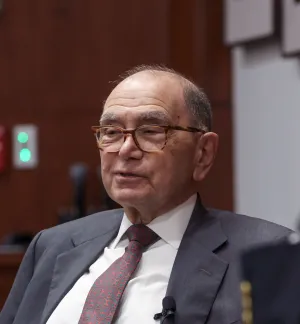
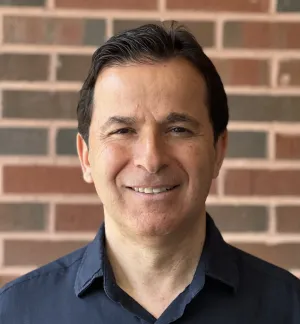
Okay. Good afternoon, everyone. I'm Edward Djerejian, a senior scholar at the Middle East Institute here at the Belfer Center. And on behalf of the faculty chair of the Middle East Institute, Tarek Masoud, I want to welcome you all warmly tonight to this session on the Palestinian elections. As you know, we're having a two-part series on the Palestinian elections which will be followed by one three weeks from now on the Israeli elections.
I want to recognize the wonderful staff at MEI, Julia Beth Martin, Josh Jessiman, and Selmon Rafey and Laura Boehm for the work they've done in putting this all together. Actually, this idea came from the staff, I think Josh, so I commend them for doing this.
We are recording the session, so be kind in your questioning.
Let me begin by a brief introduction to give some context to our discussion.
Despite broader regional and often intertwined conflicts, both Israel and the Palestinian Authority are as now, and we're not sure whether there'll even be elections, especially on the Palestinian side, will be holding national elections this fall, which could prove to be highly consequential given the situation in the Middle East.
For Palestine, this is significant as this is the first election of the legislative council since 2006, but being held amidst continuing conflict in Gaza and the West Bank, humanitarian crises and chronic economic difficulties to say the least.
For Israel, the political context is equally fraught: domestic political polarization, military conscription, judicial reform, the US-Israeli relationship, and conflicts now ranging from Gaza to the West Bank, to Lebanon and to Iran. These are all obviously major issues.
So we will be addressing the Israeli elections in a subsequent panel on October 13th, and you're all welcome obviously to attend that.
One may safely assume that the results of one of these elections may well influence the other given the interconnectedness of each and the political security issues both Israelis and Palestinians face.
The last Palestinian national elections were in 2005 for the presidency of the Palestinian Authority and in 2006 for the Palestinian Legislative Council. In that election, as you know, Hamas won a majority of seats.
Mahmoud Abbas, the president of the Palestinian Authority, called the legislative elections for May 2021 and for presidential elections for July 2021, but they were both postponed before voting took place. There have subsequently been local municipal elections held in April 2026, this year, in parts of the West Bank and in Deir al-Balah in Gaza.
In the West Bank, the turnout was 56% and the results showed strong performance by candidates and lists affiliated or supported by Fatah, although many candidates ran as independents or on local lists.
In Gaza, understandably, turnout was only 23% and of the 15 seats, six went to a party called Nahdat Deir al-Balah backed by Fatah, two went to candidates regarded as aligned with Hamas, and seven to unaffiliated local lists. Hamas did not formally participate and boycotted the elections in the West Bank.
It should be noted that these local elections, I think my colleagues on the panel will agree, are not ipso facto a barometer of what national elections will hold.
But looking ahead, President Abbas has issued a decree in July of this year setting November 28th, 2026 for the election of the Palestinian Legislative Council, and a presidential election scheduled to be held in the first quarter of 2027.
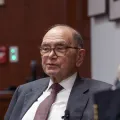
So to discuss the prospects of these Palestinian elections, we're very pleased to note that we have outstanding panelists. You'll be having a video from Khalil Shikaki, he's the founding senior fellow at Brandeis University's Crown Center for the Middle East Studies. He has directed the Palestinian Center for Policy and Survey Research in Ramallah since 2000, and he has conducted more than a hundred polls among Palestinians in the West Bank and Gaza Strip since 1993. He is the predominant expert on polling and has his finger really on the pulse of Palestinian public opinion as anyone does.
So he will be making a recorded video presentation giving his views. He's an outstanding individual and I, during my career, have relied on him a great deal on getting to know what Palestinian opinion is.
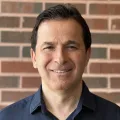
We are very fortunate to have here with us Dr. Nadya Hajj is a faculty affiliate with the Middle East Initiative and an associate professor and Director of Peace and Justice Studies at Wellesley College.
Nadya Hajj:
Full now.
Edward Djerejian:
Former. Okay.
Nadya Hajj:
No, no, no. I'm full.
Ihab Khatib:
Full, full.
Edward Djerejian:
Oh, full.
Ihab Khatib:
Not former.
Edward Djerejian:
Oh, we have to update the CV. Oh.
When did that happen?
Nadya Hajj:
In May.
Edward Djerejian:
Oh.
Nadya Hajj:
Yeah.
Edward Djerejian:
Congratulations.
Nadya Hajj:
Yes.
Edward Djerejian:
Congratulations. Okay. I'm sorry.
And I have to treat you with even more respect.
Nadya Hajj:
No!
Edward Djerejian:
And her research focuses on conflict transformation and public good provisions amongst marginalized communities like refugees.
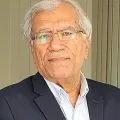
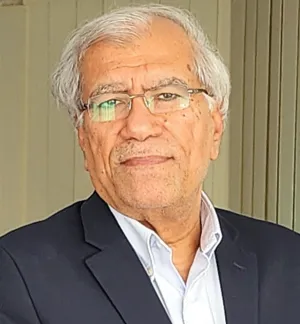
On my immediate right is Ihab Khatib, is a fellow at the Belfer Center's Middle East Initiative, a senior fellow at the Harvard Negotiation Project, and a founder and executive director of the Negotiation Strategies Institute, which is a nonpartisan institution based in Jerusalem.
With that, the introduction of our panelists, I'm now going to ask our staff to put on the video. We gave Dr. Shikaki some questions and he will now present his assessment to us.
VIDEO
Khalil Shikaki:
It's a pleasure to be with all of you. I'm sorry I can't be with you in person.
The issue of the Palestinian elections and the questions that the ambassador have sent me regarding these elections begin with the most important issue, which is will they take place on the 28th of November as the Palestinian expect? And the answer is it's not easy to predict that, although I think the likelihood that they will take place, as stated, is close to zero. And there are very good reasons for that.
Most important are issues related to Israel and whether Israel will allow elections in East Jerusalem or even other parts of the West Bank in Area C and certain parts of Area B. This is not just about what the State of Israel officially does, but also about the settlers and what the State of Israel might want the settlers to do to impede or prevent these elections from taking place in certain parts of the West Bank, where the Palestinian Authority really has very limited to no jurisdiction or control, actual control, on these areas. So settlers and the Israeli army can basically stop any efforts by the election commission to organize elections in certain parts of the West Bank.
And of course, the Israeli army has checkpoints all over. There's about 1,000 checkpoints throughout the West Bank and you can't leave your village or town without the Israeli army allowing you to do so. And so if the army decides that people on that day will not be able to travel using not just main road, but even side roads, then the entire process is going to be halted.
And of course, there is the issue of Gaza as well. The Israelis might say they're not going to allow elections to take place in Gaza.
Israel might decide that it's not in its best interest to allow these elections to take place for various reasons. One, for example, would be that Israel doesn't like some of the candidates of the electoral list. For example, let's imagine that Hamas decides that it wants to participate in these elections under its own name with some of its leaders on a list. Israel could... By the way, I don't think this is likely to happen, but it is possible that under these conditions, Israel would say they will not allow elections in which Hamas is participating.
There is a second issue that is not related to Israel, but is related to Gaza and the ability of the Palestinian Authority in Gaza to organize these elections. The Palestinian Authority right now has zero police presence in Gaza. Zero. Who has police presence in Gaza right now? It is Hamas. So who is going to protect the entire process in Gaza? That is, who is going to police the stations, who is going to protect boxes, who is going, et cetera.
Now, imagine that it is a Hamas policeman who is protecting the police station. Would the Israeli army then come and kill them? Would the Israeli Air Force be sending rockets on those policemen? Who is going to be standing in line to receive these missiles and bombs that the Israeli army, Israeli Air Force, will be landing?
Perhaps I'm exaggerating a little bit, but the idea is if the Palestinian Authority has zero police presence in Gaza and if Hamas is the only authority that has police, then you have a choice. Either do the entire process without police or allow Hamas police. Israel is not going to allow Hamas police. So in other words... This is just one example of conditions in Gaza.
Of course, conditions in Gaza are immensely difficult and people live under unbelievable conditions and so on top of all of that comes the issue of how to organize elections and how to protect the entire process. And that I think is extremely difficult right now without significant preparation on the ground, including the issue of deploying police who is acceptable to the Israelis on the one hand, but also have the capacity to be able to enforce law and order around the election process.
There is another impediment regarding how inclusive this process is going to be. I would say there is one condition that has been imposed on these elections for the first time, and this is a political condition that could be used to exclude certain groups.
The decree that was issued by President Abbas states that in order for you to be a candidate, you have to accept, endorse the PLO political program. You have to accept the PLO as the sole legitimate representative of the Palestinian people, and you have to accept the PLO National Program. Well, now that includes the two-state solution, that includes peace with Israel, that includes recognition of the State of Israel, that includes the Oslo agreement.
Well, there is a significant number of people among the Palestinian public who are opposed to all of those. And there are factions, including Hamas, but also some on the left who are opposed to these conditions. If they decide to participate and endorse all of this would be, of course, a significant change on their part. I doubt very much that anybody in these factions would be willing to accept these terms. So the question is going to be whether the election commission, or the Palestinian Authority for that matter, will say, "Well, these people cannot participate because they really have not agreed to the terms that have been set in the decree."
So this is a question about inclusion and how I talked earlier about the geographic inclusivity. Now, this is about the people and their political views. You hold the elections so that people can present their own ideas. There are people who hate these ideas that the PLO has been struggling with for the last 30, 40 years and they want to change them. You're basically asking them, "No, you can't change them. You have to get in, participate in the elections, and you have to endorse these things." And so how are they going to campaign in these elections then if their own positions are totally opposed? So the question, as I said, is then whether the PA or the election commission for that matter will say, "Well, you have not met the conditions and we're sorry, therefore, you cannot participate."
Now, who is likely to participate? I think the likely forces that will participate will include three factions from Fatah. I might be wrong about that. Fatah is currently trying very hard to ensure that all Fatah factions are included, but we already see that there is going to be at least three Fatah factions.
The official Fatah under Abbas is going to be one. Then there is the Dahlan in Gaza and in the West Bank, of course, but his base is mostly in Gaza and he has been removed from Fatah by the official Fatah leadership, although they have technically restored his membership in the party. Still, he did not participate in the last Congress that Fatah organized a few months ago. And it is highly unlikely that there will be any rapprochement between the official Fatah and the Dahlan faction in the next few weeks before the elections and the November deadline for these elections.
And there is thirdly, and most importantly, the faction in Fatah that has competed almost in all previous elections independent of Fatah with the exception of 1996, and that is Marwan Barghouti's faction. Marwan Barghouti is the single most popular Palestinian leader today. He's in jail. He's, to the Israelis, he's a terrorist. For the Palestinians, he's there Mandela. He is seen as a national hero. There is absolutely no doubt that if there is going to be presidential elections sometime early next year...
Remember these elections are just about electing the legislature that is a parliamentary election. Presidential election is scheduled for the first quarter of '27. Barghouti will definitely, if he decides to run, and I believe he is almost definitely clearly going to run, then he's going to win these elections.
This is a very serious threat to Abbas' ability to continue to control the Palestinian Authority and the PLO because Barghouti is, by far, the most popular. Abbas' popularity has plummeted since October the 7th until today. Somewhere between 80 and 90% of the public demanded his resignation.
So these are three factions within Fatah.
Then the next most important faction could be, not a Hamas faction - I doubt very much that Hamas will participate in these elections under its name. Instead, I believe Hamas will support figures among independents and some people who are close to Hamas, but not really from among Hamas leaders as part of a coalition, that officially there has been a statement a few weeks ago by Hamas and Dahlan's faction that they will run on one electoral list.
That is one possibility. It's by no means certain.
And they still have a lot to go before that we really can say this is real and it could happen. Hamas wants on the cover to be able to participate and they have actually cooperated with Hamas since October the 7th, sorry, with Dahlan since October the 7th in terms of the delivery of humanitarian aid. And so they probably can work together and form such an joint electoral list. Now, they have also to agree on who is going to be first, who's going to be second, and so on. But this could be a very strong electoral list that could participate assuming, as I said, Hamas decides that it will not run on its own ticket, which as I said, is the most likely scenario.
There's thirdly the left. We have four or five leftist political forces that when combined, they can probably win anywhere between 10 to 20% of the popular vote. In a survey we did in August, they were actually able to win 18% of the popular vote. This is very impressive. I think it's early to tell whether this is what they will actually get. But these forces include the PFLP, for example, which does not agree to all the terms set, including acceptance of the PLO National Program. So we'll see what happens with that.
Finally, the fourth force that will participate, I think, will be new groups. These will be mostly coming out of civil society activism. The likelihood that they will do well is really not high but of course, somebody could emerge as a really strong candidate if they have that faction or that list has a charismatic leader. So far, we really have not seen that in previous attempts by civil society to try and put out an alternative electoral list or political force. They have basically failed miserably. I would still... I think there will be a lot of these, but the chances that they will do well I think is not very high.
I actually wrote a piece a couple of weeks ago in which I suggested postponement of these elections until early next year, but under one condition that they, that is the legislative or parliamentary elections, must be combined with presidential elections. So we would have one day for both the presidential and the parliamentary.
The reason I suggested that is because the first thing that an elected parliament is going to do is to turn to the president who has lost his electoral mandate 15 years ago, 15 years ago, and he's still the president and he is going to be giving orders and asking the parliament to do things. The parliament is going to say, "Who the hell are you? We need to have presidential elections immediately now. You should get out."
No matter what forces emerge to form a coalition and a new government, I think the disparity in terms of legitimacy, between the elected parliament and a president who lost his electoral legitimacy 15 years ago, is going to be a huge impediment to really have a strong new Palestinian leadership. The parliament and the president are not going to be able to work together effectively. We're not likely to have a new leadership of any kind under these conditions. However, if we have both parliamentary and presidential elections, then we will have a new legitimacy, a new legitimate political system under new leadership that will have a mandate from the public. That I think is the best thing to do.
The reason I suggested that it should be early next year is not only because early next year is the date set for presidential election, but also because it is a question of timing that is related to the Israeli elections.
I started with the impediments where Israel is the primary force that impedes these elections. One reason is because this current Israeli government will most likely be still in power in November. Yes, Israel is going to have elections in 27th of October. However, I think Israel will probably need two to three or even four months before a new Israeli government is put in place. And once a new Israeli government is put in place, a new Israeli government can then be approached by the Palestinians and by the international community, which has been pushing for these elections, so that there would be some coordination regarding all the issues that I've mentioned earlier, including Jerusalem. I think this would put us in a much better position to go to these elections.
And because these elections will be a combined presidential and parliamentary elections, this will indeed mean a new Palestinian leadership, one that is not tainted in the eyes of the public with illegitimacy that has been prevailing since the prior president has prevented the holding of elections during the last 15 years.
Edward Djerejian:
Okay. Well, that's quite an assessment, very negative in many aspects, but I think a good analysis of the various factions and players.
Ihab, I turn it over to you for your overall assessment and whatever you want to say about Khalil's presentation.
Ihab Khatib:
Thank you, Ed. And thank you everyone for being here.
I'll be slightly optimistic, not on the zero level as Khalil, but I want to start with something that...
I've been staring at the poster that is being circulated around campus and trying to make sense of the poster, and I just realized that one election will produce change, that is in October, that's the Israeli election. Hopefully, there will be a change and there will be a new leadership. Our elections in November will not lead to a change yet if it happens.
I'm optimistic, slightly optimistic not because of internal factors but because of regional and international pressure. There's the Saudi effort towards pushing the Palestinians to change, to elections, and to reforms. There's the Trump 20-point plan plus, wishful thinking, but it's there. It's supported by the National Security Council. So even if President Abbas will be reluctant to do the elections, I think pressure will come and it'll be held.
But having said that, I want you to walk with me a little bit in the streets and the villages and the cities of the West Bank. Put Gaza aside. Why would a Palestinian go out and vote? Why would a Palestinian go, spend time, line up, and vote? This is probably... I don't think there's anything like it, this democratic process, which is important, I'm not undermining, we need it. But in order for a Palestinian to go out and vote, he or she needs to feel that change is happening.
So here's the context. Elections under Israeli occupation, elections under effective annexation, now the birth of the farms, settlers' farms, who has a rapid widespread land grab. You don't need to build, you don't need to bring caravans. You just mark the land and bring goats and it's yours. Geographical and political fragmentation of Palestinian villages and cities and the division within Hamas- not Hamas, the division within Fatah, and also very low trust in the political leadership.
There's a low trust in the leadership in Ramallah. There is a low trust in the other factors or other sources of either in diaspora or in Gaza. That's why when you ask people, probably three out of 10 will tell you, "Yes, I'm going to go vote." And the rest will be asking to what purpose. "State building?" Which state? We're losing it. There's no space. The space is shrinking. This is fundamental for us to understand even before getting into the structures and feasibility of doing elections.
There will always be off-ramp, and this is where the risk is, the Jerusalem excuse will be an off-ramp. So Israelis won't allow us to do elections in Jerusalem? Elections cancelled. If the coalition, Dahlan, Hamas, other factors in Gaza show strength, that could be another off-ramp for postponement or cancellation.
The other thing is the laws have changed and the decree law that was inked in 2007, it's an open invitation for the current president that was done in 2021 to cancel the elections.
And it's also being used as selective representation. Not anyone can run for office, not anyone can join a list. Yes, there is the... Khalil mentioned that they need to adhere to the PLO, which by the way, doesn't exist anymore. It's a misleading. We only have Palestinian Authority that doesn't have an authority and there's no inclusivity in that authority. And by the way, there's no longer the factions that we used to have in the past, that they had strength and they had a voice. Fatah is no longer Fatah, it's fragmented, and Gaza changed everything, not only locally but regionally and internationally.
This is the environment where this impossible ask to hold elections, and it is something that in the past we were yearning for elections because we wanted reconciliation between Fatah and Hamas. That isn't the case anymore because Hamas doesn't really hold what it used to hold in the past. And now you need another effort to reconcile among Fatah.
I'm not optimistic regarding third parties or independents that might rise. We are almost like the Americans. We're not innovative like other countries. We're either Republicans or Democrats. Either we're Fatah or Islamist. Doesn't mean Hamas, it doesn't have to be Hamas, but Islamist background.
So my wish, my hope is that regional actors, the U.S., will make sure the elections happen. But at the same time, they need to show the Palestinians that it is worth something. I'm voting for a change because that change will bring me freedom, will end occupation, and will end in some sort of a resolution.
Edward Djerejian:
Thank you.
Nadya Hajj:
Okay.
Edward Djerejian:
Nadya, well...
Nadya Hajj:
Yeah.
Edward Djerejian:
Give us some optimism.
Nadya Hajj:
Okay. I don't know that I have optimism to offer, but thanks again for letting me speak today.
I wrote out four propositions that I would take away, and I'll share that my perspective as someone trained as a comparativist and a political scientist that's done work on electoral politics, actually an economics type paper on vote buying in Honduras and clientelism. And also most of my work with Palestinian refugees is located in the communities outside, yaani, khaarij, or outside the West Bank and Gaza, as I've documented and shared in other spaces with MEI since 2024, my family and most of my network lives in Nahr al-Bared, in the refugee camps in Lebanon, and my work is centered in Lebanon, Jordan, and Syria. And also working with Palestinian diaspora communities much further beyond that, those in the United States, Europe, all the places we've ended up in the world. And so I'll speak to four propositions.
The first three I think, or the first two are very much in alignment with what's already been said, but I'll say it in a political sciencey way for those of you that think about elections in this way, which is that I do think the modal outcome remains non-occurrence or at least a truncated vote, which would suggest that the public prices history, meaning the fact that elections were abandoned in 2010, '12, '14, '18, '21, there's a smart Palestinian population that doesn't believe this is going to happen. So I'm in agreement.
If it does happen, I do agree that the likelihood of people actually physically getting to the polls or even feeling safe enough to stand in a line suggests that there would be a truncated vote. And so I think that's an important thing to signal agreement with.
The second is I think when we see the polls that show a decline in support for Hamas and their methods, we shouldn't interpret that, in an alignment with Ihab's comments, as these votes are going to then go to Fatah. I think that if an election were to happen, this is an incumbent versus system election. That is... Another way of putting it is there's a legitimacy deficit that this is a referendum on the entire system, not on one party or another. And also I think the new list rules make it likely that or plausible that no block could actually govern given how the list of the voting would occur.
Now, my last two points I think are slightly different than my previous colleague speaking.
I think one thing that I found most interesting about Palestinian public opinion right now is that we do see a drastic reduction in support for violence and an uptick in support for negotiations. And as a peace studies scholar that teaches peace at Wellesley, that was like, "Ooh, yay, some good news to share with folks."
I think though that we also should take a pause that though there's increasing support for a negotiated settlement, the actual outcome that Palestinians want hasn't changed. That is the instrument by which people want to reach that outcome through violence has decreased. There's been decreased support. Obviously, people have seen what's happened in the world. However, that doesn't mean that they've abandoned their desires for withdrawal to pre-1967 borders. And given the likelihood of Israel actually doing that with what we see settlers doing right now, I think that's a lot important to note.
The last thing I think is both a methodological and a legal and political issue. Last year, I mentioned in a conversation with some folks at MEI that I've been very honed in on this legal paper that Rabea wrote on the Nakba as a legal concept. And I'm sure some of you, if you Google it or I encourage you to read his law review paper, it was suppressed and then another law review agreed to produce it.
But he makes the claim that a lot of the way we understand what Palestinian wants is a very limited definition of the population of Palestinians. So if you look at Shikaki's polls and most people's understanding of what Palestinians want, who they're supporting, Fatah or Islamist, it only defines a Palestinian as those in the West Bank and Gaza.
That is legally untrue. The vast majority of Palestinians live in the refugee camps in Lebanon, Jordan, and Syria, and further in countries of second and third resettlement. And even me today, I count as a Palestinian refugee. I have never rescinded or given up that right.
I think that definition of the population methodologically, that we only think of the population of Palestinians inside the occupied territories as those that should be voting in the 16 governance and the clusters there, well, that's the result of a political outcome of the Oslo Accords that segmented Palestinians from those inside to those outside and in doing so, by researchers, only looking at those inside the occupied territories, I think we're making a mistake in not counting what the diaspora has to say.
So my argument is this... And I would love for someone else to write the paper on it because right now I'm not, and I know there's some great graduate students here. So there's a very rich literature on diaspora votes. In fact, my colleague at Wellesley, Chipo Dendere, studies diaspora vote influence in different countries in Africa and has an amazing set of interviews and data on this.
But when you have... If you think of Albert Hirschman's canonical piece on exit, voice, and loyalty, if Palestinians have forcibly been pushed to the exit outside of the occupied territories, how is it that they can then express support or loyalty for some segment or some semblance of a Palestinian state?
And I think that my work has shown in the absence of aid agencies and state failures in providing public goods for Palestinians, who is actually funding what's going on in refugee camps and even in Gaza, the proliferation of crowdfunding. Well, by the way, Palestinians have been engaging in mutual aid for decades upon decades.
That economic influence also has a political influence, and it has been documented that those Palestinians living in Europe, for example, that are really good at voting in European elections are talking to Palestinians online and digitally saying, "Hey, you too should be doing this. You can do this." There is both an economic but political and social remittances that are flowing that are influencing Palestinian public opinion.
And I think that by not defining the population to include the vast majority of Palestinians outside of the West Bank and Gaza, we're getting a very limited picture of what the Palestinian population actually wants.
That's my fourth and final proposition, and I want us to have time for people to ask questions and talk.
Edward Djerejian:
Drawing on the last comment, what do Palestinians want? I remember being in Ramallah a few years ago with Khalil Shikaki, and I also had a meeting with the young Palestinians from NGOs, and it wasn't very uniform what younger Palestinians want.
I was very struck by one conversation when this young Palestinian told me, "I'm against the creation of another Arab autocratic state called Palestine, like all the other corrupt Arab states in the Middle East. Why should I be repeating what the other Arabs are doing? I'm a Palestinian. I believe in democracy. I want to live in one state with equal rights."
Now we know what the Israeli reaction to that is, one state with equal rights. The definition of Israel is a democratic Jewish state. It has all complexities as well. But the point I'm trying to make is what do the Palestinians want? And do we really have our hands on the pulse of young Palestinian thinking?
Ihab Khatib:
Again, going back to not only the young, but also the people-
Edward Djerejian:
Right. I don't want to-
Ihab Khatib:
... who lost faith in the potential of anything positive that will come out of the authority. But let's not forget that, you agree or disagree, some people lose their way in a journey, but when we had the elections in 2005 and people went to President Abbas and they told him, "It doesn't look good. We're losing," and he said, "It's a democracy. I'm not going to cancel." And then he'd been preaching nonviolence and coexistence since he started and the people on the ground experience a different thing. So by time he lost popularity because he was undermined. He was undermined by the Israelis, he was let down by other actors.
But we are here in 2026 and people do not have trust in anyone. We don't have that someone, that group that inspires and can rally the people. Marwan remains a credible name, but I think it'll have to be a group effort because of the geographical fragmentation. He is the one, and Hamas is no longer what it used to be, but he is the one that Hamas would have, could have listened to because he holds something that none of the other leaders hold. But he's in jail, Hamas is no longer Hamas, and Gaza is in a different space.
Going back just to the core of the question, if you ask young people their immediate answer, they want to live free. They want to be like anyone else. They want to exercise the right to live in their land and because they are seeing the Israeli system closing in on them, they're saying, "Hey, fine, you want this? Don't tell me where to go or where not to go. My solution is a one state solution. I want to have breakfast in Ramallah. I want to dine in Nazareth. I want to sleep in Jerusalem."
If the Palestinians in the West Bank have seen something positive that came out of the marathons of negotiation, and they see that still there's a space for them to make something out of it, I think the answer would be different. They would tell you, "We want our own state. We want to live side by side, two-state solution," and all of that. But the street and the living experience is different.
And every nation wants safety and security. Villages are being attacked by terrorists, by the settlers, and we have armed, well-trained national guard, police, preventive security that are not allowed to leave the base to go protect that family in that village. So people are saying, "Why are you even do exist?"
The last five, I would say decade, and it's been on steroids for the past two years, people are indifferent. They lost trust in a potential two-state solution and they also lost faith in the current leadership.
Edward Djerejian:
Let me ask you both one thing. You mentioned Marwan Barghouti and a lot is made of the individual changing history, but let's assume, and this is a big assumption, that the Israelis let him out of jail and that... Well, first of all, that he is a candidate. He does seem to have the charisma and the political backing, as you've indicated. Can that really change things? Can that change things?
Now, I'm very skeptical that the Israelis will ever let him out of jail because certainly this government, the Netanyahu's government and with Ben-Gvir and Smotrich in the government, they definitely don't want a charismatic Palestinian leader to emerge on the West Bank and in Gaza.
But let's assume that he puts his name up. And he may. He may be... Can this be a catalyst for the beginnings of some change or not? Or am I being totally idealistic?
Ihab Khatib:
Can I answer real quick?
Nadya Hajj:
Of course.
Ihab Khatib:
Let's say... He's out, right? He was let out by the Israelis, so the Israelis do agree that he leaves prison.
So certain conditions needs to be met. A serious Israeli partner, American enforcement, and direct regional engagement.
Edward Djerejian:
Those are three important... Yeah.
Ihab Khatib:
He cannot do it alone.
Edward Djerejian:
No, understood.
Ihab Khatib:
Yeah.
Edward Djerejian:
Yeah. Okay. And I accept that.
Nadya, did you want to make a comment on that?
Nadya Hajj:
I would agree that...
I guess there's two things. First, regarding what the Palestinian youth want, I think we should go to where the conversations are happening amongst Palestinian youth. And I think from those in the, the camps in Lebanon, Jordan, and Syria, those conversations are happening in digital spaces-
Edward Djerejian:
Good point, yeah.
Nadya Hajj:
... and they're connecting with one another, those also in the West Bank and Gaza and they're connecting with those outside in Europe, in the United States, and other places.
I think there is evidence that many of the progressive ideals that we see being pushed forward in the U.S., by the youth vote here are consistent in terms of economic, gender and sexual identity, which I have a chapter in my book from 2021 that talks about how a lot of these conversations that we, in traditional Palestinian society, could never imagine having with your jiddo or baba nearby, they're definitely happening in digital spaces and people are open to those things.
I actually think that is something that might unite other youth populations, potentially one in Israel, but that would be something for those experts. I think I've met a segment of those progressive people, but not as much maybe because I see some audience members shaking their heads. Certainly, the Israeli government has made a claim that they're welcoming of different gender identities and things like that. But whether that's in fact true, I think can be debated but I think that is one place to look for where the conversations are happening among the youth.
Regarding Marwan Barghouti, the polls are clear that he is the clear frontrunner if he were allowed to run. And I would agree that no person can do it alone, that the sequencing matters, that it doesn't really make sense that the elections would be now, that I do believe that the simultaneous elections of a legislature plus presidential elections must happen. As we were speaking before, it seems completely pointless. Who would the new legislature be reporting to?
Edward Djerejian:
Right.
Nadya Hajj:
He makes that same point.
And I think that the Israeli situation has to settle down, whatever will come after their elections in October, to have a realistic situation for Palestinians to go in voting safely.
Edward Djerejian:
Last comment I'll make. We'll go to the audience now, but the comment I make, we had this study group last year, my RA is here, Erik, with Salam Fayyad.
Salam Fayyad is one of those very few Palestinian leaders during his premiership who really devoted himself to state building. The premise of Palestinian statehood has to be built on building up the institutions of a credible Palestinian state, which are highly deficient for all the reasons that we've discussed.
But hopefully, hopefully, hopefully, there's a new government in Israel that there will be space given for a new Palestinian leadership to come to power, that can initiate the process of state building so that one day there could be credible negotiations between Israel and a Palestinian authority that is truly credible. That's my last statement.
Going to questions. Roy.
Roy Schwartz Tichon:
Hi, thank you so much.
Edward Djerejian:
Identify yourself, Roy.
Roy Schwartz Tichon:
Roy Schwartz Tichon, I'm from the Middle East Initiative. I want to ask you two questions. Obviously, I'm coming from Israel, so my prism might be wrong, but that's why I ask you a question to understand better.
Really don't... You need it for the... Okay, good.
The first question is about what are the incentive to have the elections? From my perspective, as I see it, I wouldn't say that the Americans have been very happy with Arab elections in the Middle East quite recently from the Palestinian elections to 2006 to the Egyptian election after 2011. And moreover, you said that Saudis are incentivizing elections in Palestine. It seems a bit rich coming from them, I would say.
So why do you see this incentive from international actors and local politics to have Palestinian elections instead of just, I don't know, some grandson or something just becoming a dictator or something like that?
And the second question, Mr. Shikaki said that people wouldn't run in the elections because of the PLO mandate that says two-state solution, etc. From an Israeli perspective, it wouldn't be the first thing that people think about the PLO. I would assume most people don't even know that. Is it really common or Palestinians when they think of the PLO think, "Oh, they're pro two-state solution?" That's like, "I'm not going to run under this mandate." Thank you so much.
Edward Djerejian:
Either one.
Nadya Hajj:
I would agree that the incentive to have them is tied to "the peace deals." There's the French pressure to run the elections. So I think that this is... A very big international push is part of a diplomatic effort post "ceasefire" to recognize a state internationally. And I think for those actors, like Macron and Trump, supposedly, the push is if we're going to have a state, it has to be a democratic state. And so I think the biggest incentive is this, this international pressure, in my view, because some of the logic of the timing doesn't make sense, as we've already stated before.
I think regarding views on the PLO and Fatah, yes. Most people identify them with that, and there's great anger amongst many, I won't say all, significant groups of Palestinians about the Oslo Accords.
You mentioned Dr. Fayyad. In a private dinner with him once when I was speaking, I was like, "What is this about? Has there been a memory loss or forgetting of the rest of the Palestinians, like those in Lebanon, Jordan, and Syria? Where are you? Where has the..."
Edward Said he has this very beautiful, as you would imagine, writing about the imaginary hugs and kisses you extend to your cousins in the camps all over. And Dr. Fayyad tells a story. If it's true, I don't know, but I think you were there where he said in his last conversation, deathbed conversation with Arafat. Arafat said, "Don't forget your brothers and sisters in the camps," referring to those in Lebanon. And I know people were at that dinner that are shaking their head that heard him say that.
And so I do believe a lot of people feel forgotten. A lot of Palestinians feel forgotten, and they do identify that party with that political and legal agreement that has fragmented them from their brothers and sisters in other parts of the world. And I would agree with you that they're not particularly relevant or salient to a lot of Palestinians and who they would vote for initially because of this.
Ihab Khatib:
The incentive is a bit of a puzzle. Back in the '90s, the rush for elections, which was the first in Palestine, 1996, I don't think the Americans or anyone else was eager. There's no democracy in the Middle East. You could say you're a democracy. There's no Arab democracy in the Middle East. So let's have Palestine as the model for democracy. That wasn't the reason.
The reason was that they wanted... Oslo Accords happened, people agreed and disagreed, and they wanted a representative approval of the Accords with Israel. So that was the...
Now, fast forward 2026, I think it's the same thing. They're looking for... Because the current leadership is not representative. All of us know what happened in Gaza. There is Trump 20-point plan and the Americans are pushing for... They're not calling deal of the century. So far, it's labeled 20-point plan for some sort of a resolution that fits a regional normalization with Israel. So they need a representative Palestinian.
And it's the same conditions. You need to adhere to the... In the past, it was the quartet. Now, it's gone. It's no longer. In the past, the PLO, Fatah and Hamas did the charter, other factions said no. But again, I'm just saying it's really misleading to say the PLO because unfortunately, the PLO doesn't exist.
And part of what is required as an incentive by the regional actors, especially the Saudis, is for the reform. The reform includes elections, and it comes under the reform ask.
Roy Schwartz Tichon:
Thank you so much.
Edward Djerejian:
Yes.
Speaker 6:
Hi.
Ihab Khatib:
Also, sorry, just one point.
The context have changed. 2005, Hamas was a very strong movement socially, politically, and everything. Today, after what happened in Gaza, they have lost, not because of Israeli, they have assassinated all the people that they could assassinate, it's not because of that, because responsible Palestinians... I have Gazans telling me, Gazans, that Hamas brought evil to us. So it's being thinking of them as not a responsible movement or a leadership.
Sorry.
Nadya Hajj:
And I think you need to underscore how low that support has gone in the last 10 months when you might imagine, "Oh, things have at least slowed the level of violence." But this is from Shikaki's own data, partisan support for Hamas stands at 24% as of the most recent survey polling from these 16 clusters, down 11 points in 10 months, and with the West Bank falling from 32 to 18% and Gaza specifically from 41 to 33%.
We had debates at MEI in the middle of it and people were like, "Oh, Hamas is having unprecedented support." I was like, "That's not true. Everyday people don't feel that way." Well, now I think the polls are showing it, but there was some lag in that.
Ihab Khatib:
Exactly.
Roy Schwartz Tichon:
Thank you.
Edward Djerejian:
Gentleman.
Eliav:
Hi, my name is Eliav. I'm a second year master of public policy student here, also from Israel.
Professor Hajj, thank you very much for this panel, I'm intrigued by what you said about the Palestinian diaspora and just also there's another country with a very involved diaspora right next to Palestine. Israel. I'm interested in what do you think, just looking a few years into the future, if, say, Palestine has elections and there's new leadership, what role do you think Palestinian diaspora, both in the refugee camps and in Europe and other countries, what role will they play in a future Palestine?
Nadya Hajj:
I think I disagree a little with the ambassador's statement that Palestinians don't have robust state institutions or state building experience maybe.
Ihab Khatib:
How dare you?
Nadya Hajj:
No, no.
Edward Djerejian:
That's right. I have diplomatic immunity. Anybody can criticize but I have diplomatic immunity. Go ahead.
Nadya Hajj:
When I think classic state building, I think property rights, enforcement of property rights. We're going classic political theory and understanding of what... States came about to defend property, not the reverse, not the flip.
My first book looked at the formation of property rights in refugee camps in Lebanon, Jordan, and Syria, And Palestinians know, even in the absence of an official state, there are one could say proto state institutions. There's al-lajna shabiya, like a council, in which different families, religious leaders, and political parties have representatives on those councils. They govern the sale of properties inside the camps.
When there is a dispute, it is extremely rare that it would devolve into violence. While in my... I think I've conducted personally 1,500 interviews in some of these camps many times over many years, the same resampling to have validity and reliability. And these communities have relatively low rates of violence. People within, even though they legally don't own that property, they own the right to use that land. There's a robust property right and economic system suggesting, "Look, people know how to do things in democratic nonviolent ways. They just haven't had the opportunity to actually make that happen at a broader scale."
Edward Djerejian:
Or under occupation.
Nadya Hajj:
And that they can do it in spite of political parties that have abandoned them since the Oslo Accords, that they are still doing it imperfectly, but it's happening. And so I just want to make a point about that.
And it relates to your comment about, well, what can the diaspora do? So I want to make a distinction between those that are in the refugee camps that haven't had second, third, or fourth resettlements and haven't gained legal citizenship in other countries. Those in the refugee camps are highly educated. That data also exists, that the Palestinian diaspora has a large number of people with master's degrees and PhDs. I think in terms of thinking of a reverse brain drain, not that there's a brain drain there, but you will have a super smart population ready to perform those functions of a state should the opportunity be offered to them.
The other thing is that I'm never going to make a claim, whether someone like me or another person would go back home, even though we have legal papers that show we owned our home in 1948.
I do though imagine just like someone in the West Bank that might want a one state solution so they could go to Nazareth, go to Jerusalem, go wherever, I have never been. Part of that is a political choice that I don't want to go to a place where I don't feel safe and I don't feel like I can fully be myself, but I would love the opportunity to get to go hang out with my friend Sa'ed Atshan, who's a professor at Swarthmore, but I would love to sit with his family and have a tea. I would love to go meet someone, your family and have that experience. I think the dignity involved in having even the opportunity to go would matter.
Just as when I had a conversation with Barak the other time and I was describing how much I enjoy Beirut, I did, and he's like, "Wow, I would love to go there sometime." Well, wouldn't that be an ideal? I think that's a dream of peace that many in the diaspora continue to hold onto. Yeah, thanks.
Edward Djerejian:
Ron. Identify yourself. Wait for the microphone.
Ron Witte:
Hello, I'm Ron Witte. I'm an architect. I'm not at the Kennedy School.
The picture has been pretty consistent that this is a tough moment, and so I'm led to think, and it's a kind of obvious point, but also cart before the horse moment. In other words, the election's happening too soon. I'm wondering in particular about the number, the statistic that three out of 10 or something, a very low number of Palestinians will be voting. What does it take to move that to six or seven out of 10? In other words, partly I'm thinking is it external circumstances next door in Israel? Is it the midterms here? Is it elsewhere in the Middle East? Is it somewhere else? Is it internal? Is it something having to do with Abbas, for example, or a redefinition of his role? But what does it take to move the needle to six out of 10 as opposed to three out of 10?
Edward Djerejian:
That's a very good question. I was going to ask that question.
Nadya Hajj:
Yeah. This is you. You should answer.
Edward Djerejian:
But just adding to Ron's question, does the Palestinian authority have the will, intent, and the capability of fostering a turnout, a voter turnout? Can they do anything to really increase voter turnout?
Ihab Khatib:
It's all of the above of what you just mentioned.
But I get feel of the land by just driving and going places and I have this theory called follow the yellow... It's not a yellow, it's an orange taxi, orange taxi. It's a West Bank taxi that drives either south to Bethlehem and Hebron or north to Nablus. So follow the taxi driver, sit with a taxi driver, and just be with him on a journey.
So if that taxi driver and everyone else, he is driving south, center, or north, they feel the difference. They feel there's a change in their environment and they're hearing positive messages coming out of, first of all, the Israelis.
There's something that haven't been used by any Israeli leader for the past, I forgot how many years, is the word neighbors. They don't even consider us neighbors. So even if they start with using positive language, and then again, you have the regional effort and you have the American enforcement, this will encourage people to go out and instead of having three out of 10, you will have probably seven out of 10 or six out of 10, seven out of 10. But this is what will...
Yeah. But unfortunately, you talk about sequencing, there's now... It's election season in Israel and the hard you hit, the more votes you get. The harsh reality of this taxi driver is hell, is literally hell. So it's really difficult.
And then let's say there's a change in Israel and there's October 27th brings us a new leadership. It's not a switch. It's not a switch between October 27th and November 28th. It's not a switch because...
I've been talking to a lot of Israelis from the opposition and they know. No one is running on a peace ticket. No one is running on... Two-state solution is not even in the...
So even if they are thinking of a formula to change the paradigm, to change the context, it's going to take them time and we're going to pass the November and then...
Ron Witte:
Can I follow up?
Related to that and related to your observation, Ed, about what do Palestinians, young Palestinians perhaps, but all Palestinians, what do they want? Can such a question be asked right now? Is it possible to ask that question until two or three of these other events takes place?
Ihab Khatib:
And you will be surprised. It's not their own freedom. It is not a two-state solution. It's two things. Settler terrorism to be wiped out and Gaza to be relieved. They want the people of Gaza to be like them, at least, under siege, under whatever, but at least to be able to do the things that they're doing. This is what's on their mind. And if you ask people, you will find eight out of 10 that will give you these two answers.
Edward Djerejian:
Let me see who we have this gentleman here and then David.
You in the blue. Yes.
Arthur Maserjian:
Thank you. My name's Arthur Maserjian. I'm a current graduate student at the Kennedy School.
I've been blessed to know a few nonagenarians in my life, one in particular sharper than you and I, others not so much and I was wondering, one, if there's any indication that Abbas might not be fully in control of his faculties at his current age during the electoral process. And then secondly, given the timing of the two elections this year potentially, to what extent, if at all, are Palestinians in the West Bank perhaps following the Arab vote in Israel proper, the issues that are important to the community there and perhaps the incremental Mansour Abbas' parties entering more and more of the Israeli electoral mainstream?
Nadya Hajj:
I honestly could not hazard a guess even about his mental wellbeing. Can we really even do that in our own country? I think even medical experts are not allowed to make comment on these things even if they can diagnose patients. And so I wouldn't know that about him, and so I'll just say that.
Did you want to take the second question?
Ihab Khatib:
I'll take the second question.
Nadya Hajj:
Yeah. But unless you know his mental health.
Ihab Khatib:
No. What I know is very well much in control and aware, not as active as he used to, but still there and he's still in control.
Regarding the second question, it's actually the opposite. We follow and it's interesting to watch for Palestinians pointing at that and saying, "This is a good example why it can work, Palestinians and Israelis," because at the end of the day, Mansour Abbas is a Palestinian citizen of the State of Israel.
But they're following actually something else. They're following who's going to push Bibi out of office. They're following which block, which coalition that would push Bibi out of his office, out of his seat.
Again, going back to the taxi driver and that taxi driver sees change. For us, I think the Israeli elections is way much important than the Palestinian for now because it affects the people's livelihood. It's about their safety and it's about their security.
Edward Djerejian:
Is there a lady in the back that I have not recognized that... Yeah, here you go, please.
Jena:
Thank you. Hi, I'm Jena. I'm a first year urban planning student at the Graduate School of Design.
I wanted to bring it back to the elections and ask what your views are on Mustafa Barghouti and how I see him as uniting the left wing and the left front that's running in the elections, and maybe how that dynamic might oppose or work with Marwan's front and then also against the Fatah or the Hamas front. Thank you.
Ihab Khatib:
Mustafa is a very credible, solid name. He's someone that has devoted his life to do whatever it takes to represent Palestine, represent Palestinians, and be the defender.
We're on record, but it's fine.
Edward Djerejian:
Yeah, it's on the record.
Ihab Khatib:
The only unfortunate reality goes back to Salam Fayyad, by the way, talking about Salam Fayyad. He's not Fatah. That's the thing.
But he definitely can be a credible force with Marwan and with other actors.
Nadya Hajj:
I would agree with that.
And I just wanted to share from the latest polling, for those of you that are wondering that it asked in a separate close-ended item, who would be most suitable to succeed Abbas. 39% say Marwan Barghouti, 16% al-Hayya, then 15% Dahlan. And to get to the point about Mustafa, 6%.
That's not nothing, right?
But I think it lends credence to his point, your earlier point as well.
Yeah, good question.
Edward Djerejian:
Any other questions?
Nadya Hajj:
I think David had a question.
Edward Djerejian:
David left.
Speaker 11:
He had to go.
Nadya Hajj:
Oh, he had his guitar lesson.
Speaker 11:
Yes.
Edward Djerejian:
We have no other... Yeah, please, Erik. Yes. Yes.
Erik:
We've been talking a lot about the legislative election, but on perhaps what we understand here with the potential election in the first quarter of 2027, I'm curious, what should we keep in mind leading up to that as signposts on whether or not it will take place and will take place successfully?
And the second part of that, I think, if I understood his argument correctly, Shikaki in the video was talking about how in his mind these two elections should be paired together. I'm curious what the panelists thought is on that as well.
Ihab Khatib:
I'll start with the second one.
I think we should start with presidential elections and then have the legislative to make sure that we are not held behind another 10, or 15, or another 20 years with decrease of postponement according to whatever is happening.
Edward Djerejian:
That's a good point.
Ihab Khatib:
So that's my point.
Nadya Hajj:
I would agree with that point.
What was the other question? I'm sorry. Sorry.
Eric:
In order... What should we be following-
Nadya Hajj:
What might be the-
Erik:
... for this to actually take place? Yeah. What are the things necessary?
Nadya Hajj:
In November?
Erik:
Preconditions. Yeah.
Nadya Hajj:
In November or the reorder?
Erik:
Until the presidential elections.
Nadya Hajj:
Honestly, I have such low confidence that the legislative election is going to happen.
I think if that's postponed, it might be a sign in fact that people are listening, people in power above or those pulling the strings internationally and willing to say, "Okay, let's push pause, wait for the Israeli elections, for the dust to settle, and then-
Edward Djerejian:
See.
Nadya Hajj:
... see." Meaning if we hear an announcement that they're going to postpone November, I think that's the clearest sign that it will happen that the presidential elections might coincide.
And it might be an age thing as well, that it's like you're running down the clock on Abbas sunsetting out of power.
Ihab Khatib:
Also, you have five-
Nadya Hajj:
I'm trying to be diplomatic.
Ihab Khatib:
Five million... Is it five million? Registered? No, it can't be. I forgot the exact number.
But there's a certain number of registered voters, which half of them are eligible to vote. But if you take the population between the West Bank and Gaza and East Jerusalem, there's the high likely that 2.5 million Palestinians out of 5.5, I'm going to debate, will not be participating. So this is East Jerusalem and the vast majority of Gazans. So that by itself is...
Nadya Hajj:
A sign it won't happen.
Erik:
Thank you.
Edward Djerejian:
All right. Well, I think this has been a very good discussion and debate.
I just want to make a comment on some of the absurdities of statecraft as practice today. We have the United Nations General Assembly and the United States government has given limited visa permission to the Iranian delegation to come and has prohibited Abbas from coming, the Palestinian Authority, which is an integral part of the Board of Peace, which is an integral part of the administration's approach to making peace and some of the absurdities.
There's an aspect that we haven't discussed here is the whole aspect of statecraft and the process of U.S. foreign policy formulation toward the Middle East and this issue that leaves a great deal to be desired.
Thank you very much for coming and thank you, our panelists.