Speaker: Spenser A. Warren, Stanton Nuclear Security Postdoctoral Fellow, International Security Program/Project on Managing the Atom
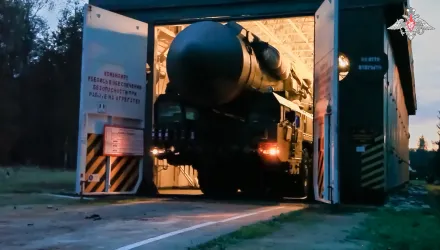
Russia is modernizing its nuclear arsenal. In this seminar, Spenser Warren explores the causes and consequences of Russian nuclear modernization. He argues that security concerns and status ambitions drive Russia’s nuclear modernization. Specifically, nuclear modernization hedges against the future development of U.S. ballistic missile defense and conventional counterforce capabilities that could erode Russia’s nuclear deterrent, which Russian leaders perceive to be the ultimate guarantor of Russian sovereignty and territorial integrity.
While Russia’s perception of a U.S. threat can explain why Russia is modernizing its nuclear arsenal, it cannot explain why it prioritizes particular systems over others, as multiple weapons systems may increase the survivability of the Russian nuclear arsenal. Nor is it sufficient for explaining why Russia invested heavily in novel, exotic weapons systems when cheaper ICBM, SSBN, and long-range aviation investments would have achieved Russia’s strategic goals. The speaker argues that the Russian government prioritizes weapons that they can use as status symbols, such as novel weapons and those with some superlative claim. Other domestic factors cannot be ruled out but play a marginal role, at most. Russia’s defense industry, specifically, played a much reduced role in this wave of modernization relative to Soviet-era nuclear modernization initiatives.
Russia’s nuclear modernization strengthens Russia’s nuclear deterrent by enhancing the arsenal’s survivability and ability to penetrate missile defenses, creating a more secure second-strike capability even if U.S. ballistic missile defense (BMD) and counterforce investments materialize. However, they do not pose a new or even significantly increased threat to the U.S. nuclear deterrent of nuclear command, control, and communications infrastructure. Russia’s modernization programs, especially its novel systems and long-range aviation modernization, may also marginally improve Russian conventional and limited nuclear warfighting capabilities at the regional level.
This seminar draws policy implications from these findings, recommending that U.S. and Allied policymakers focus on addressing Russian nuclear modernization’s impacts on regional, conventional, and intrawar deterrence rather than their impacts on strategic nuclear deterrence.
Admittance is on a first come–first served basis. Tea and Coffee Provided.