Presentation - Council on Foreign Relations Press
Should the United States Continue Supporting Pakistan's President Pervez Musharraf?
Online Debate with Hassan Abbas and Moeed Yusuf
Online Debate
The United States draws frequent criticism for supporting a military ruler in Pakistan's Pervez Musharraf. As Musharraf's popularity has suffered in recent months, and as violence and religious extremism have increased, these criticisms have grown steadily louder. Pakistan's October 6 presidential elections present a crossroads, with the possibilities of genuine democratic reform or continued military dominance both in sight. The question of U.S. support for Musharraf remains of utmost importance, particularly given anti-American sentiment in Pakistan. The perception of Musharraf's closeness to Washington could harm both his credibility and U.S. efforts to root out militants in the region.
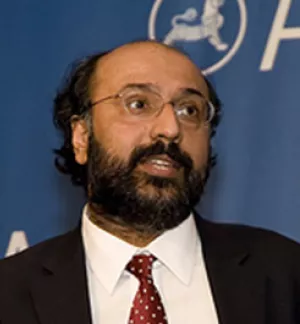
Hassan Abbas, a research fellow at Harvard's Kennedy School of Government, and Moeed Yusuf, director of strategic studies at the Islamabad-based think tank Strategic and Economic Policy Research, discuss whether United States should continue its support of President Musharraf.

Want to Read More?
The full text of this publication is available via the original publication source.
For more information on this publication:
Please contact
Managing the Atom
For Academic Citation:
Abbas, Hassan, and Moeed Yusuf. “Should the United States Continue Supporting Pakistan's President Pervez Musharraf?.” Presentation, Council on Foreign Relations Press, October 1, 2007.
- Recommended
- In the Spotlight
- Most Viewed
Recommended
Audio
- Radio Open Source
JFK in the American Century
Analysis & Opinions
- The Washington Post
This Summer's Black Lives Matter Protesters Were Overwhelmingly Peaceful, Our Research Finds
Analysis & Opinions
- Project Syndicate
Post-Pandemic Geopolitics
In the Spotlight
Most Viewed
Policy Brief
- Quarterly Journal: International Security
The Future of U.S. Nuclear Policy: The Case for No First Use
Discussion Paper
- Belfer Center for Science and International Affairs, Harvard Kennedy School
Why the United States Should Spread Democracy
Online Debate
The United States draws frequent criticism for supporting a military ruler in Pakistan's Pervez Musharraf. As Musharraf's popularity has suffered in recent months, and as violence and religious extremism have increased, these criticisms have grown steadily louder. Pakistan's October 6 presidential elections present a crossroads, with the possibilities of genuine democratic reform or continued military dominance both in sight. The question of U.S. support for Musharraf remains of utmost importance, particularly given anti-American sentiment in Pakistan. The perception of Musharraf's closeness to Washington could harm both his credibility and U.S. efforts to root out militants in the region.
Hassan Abbas, a research fellow at Harvard's Kennedy School of Government, and Moeed Yusuf, director of strategic studies at the Islamabad-based think tank Strategic and Economic Policy Research, discuss whether United States should continue its support of President Musharraf.

Want to Read More?
The full text of this publication is available via the original publication source.- Recommended
- In the Spotlight
- Most Viewed
Recommended
Audio - Radio Open Source
JFK in the American Century
Analysis & Opinions - The Washington Post
This Summer's Black Lives Matter Protesters Were Overwhelmingly Peaceful, Our Research Finds
Analysis & Opinions - Project Syndicate
Post-Pandemic Geopolitics
In the Spotlight
Most Viewed
Policy Brief - Quarterly Journal: International Security
The Future of U.S. Nuclear Policy: The Case for No First Use
Discussion Paper - Belfer Center for Science and International Affairs, Harvard Kennedy School
Why the United States Should Spread Democracy