Introduction
In a world characterized by geopolitical tensions, the Arctic has been a unique region in which countries engaged in peaceful cooperation and worked together to tackle the challenges of living in a harsh, unforgiving climate. Today, this era of exceptionalism is ending. The media is replete with stories focusing on competition over resources, national security concerns over territory, and outright threats to seize the lands of neighboring countries. A region that was once isolated from the posturing of great powers, now seems to be a focus of their international aspirations. The goal of this article is to explore the scope and character of what is happening in the Arctic and to paint a more objective picture of the security and economic dynamics that are changing this region.
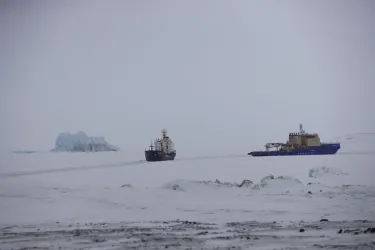
The Arctic is warming at a rate four times greater than that in lower latitudes. The polar ice is melting, and the permafrost has begun to thaw. Ocean shipping routes that were previously unnavigable are becoming potential shortcuts between continents. Minerals that were unreachable are now potential sources of enormous economic value. Russia has broadened its plans to develop its Arctic regions. Following claims of its status as a “near-Arctic” state, China announced its intention to establish a Polar Silk Road, thereby extending Xi Jinping’s Belt and Road Initiative into the region. If judged by China’s Arctic White Paper, China seems intent not to be left behind in the pursuit of Arctic influence.
In the third decade of this century, geopolitical tensions have increased. U.S. President Donald Trump has demanded that Denmark sell Greenland to the United States because of the island’s strategic security importance. Since its full-scale invasion of Ukraine in 2022, Russia has ratcheted up its rhetoric around Norway’s activities in Svalbard, which lies within 120 kilometers of Russia’s military base on Franz Joseph Land.
The post-Cold War thaw in relations and the fall of the Soviet Union allowed for the establishment of the Arctic Council (AC). The AC, which for over 20 years convened the eight Arctic nations (A8) and Permanent Participants to discuss non-security issues, is in disarray due to Russia’s invasion of Ukraine and the United States’ heavy-handed efforts to force Denmark to give up Greenland. A region once characterized by exceptional cooperation is now characterized by growing geopolitical uncertainty.
Popular narratives around the Arctic include a possible stampede of new mining projects, with a recent focus on rare earths, as well as rising great power rivalry and the possibility that China and Russia will compete with NATO countries for both economic and strategic dominance. We explore these narratives and assess whether they hold true.
The paper starts with a short overview of Arctic governance. We begin by looking at the great power initiatives—those of the United States, Russia, and China—and what they might tell us about the future intentions of these countries. Next, we assess the likelihood of a rush of both countries and private entrepreneurs into new Arctic mining initiatives. We will use the case of the proposed Malmbjerg molybdenum mine in eastern Greenland to examine both the opportunities and the uncertainties around such investments. Finally, we will conclude by assessing the options for reopening channels for multilateral dialogue among the eight Arctic nations.
Continue Reading on the Publisher's Website