U.S. President Donald Trump’s April 1 address to the nation on the war on Iran offered a torrent of lies and no solutions.1 Far from freeing the United States from “the specter of nuclear blackmail,” it appears that this war will leave a greatly weakened but embittered and harder-lined Iranian regime that is more determined than ever to build a nuclear deterrent. Although on-again, off-again talks are still underway, as of late April, Iran still retains much of the material and equipment needed to do so. That includes enough weapons-usable highly enriched uranium (HEU) for more than 10 nuclear bombs.
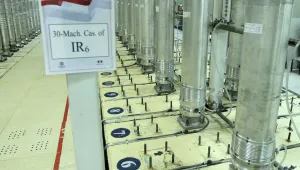
The issue is not just the HEU, however. After decades of effort by thousands of people, Iran has an array of material, equipment, and expertise that, although damaged, cannot be fully bombed away. The war will leave Iran’s government less able to defend itself but the danger of Iranian nuclear weapons will remain.
It is worth remembering how we got to this point. Under the 2015 Joint Comprehensive Plan of Action (JCPOA), better known as the Iran nuclear deal, Tehran agreed to stringent limits on its uranium enrichment, exported 97 percent of its enriched uranium to Russia, and accepted inspections going far beyond usual International Atomic Energy Agency (IAEA) safeguards.2 But Trump pulled out of the deal in his first term, freeing Iran to produce HEU, develop more advanced centrifuges, and abandon the deal’s inspection provisions....