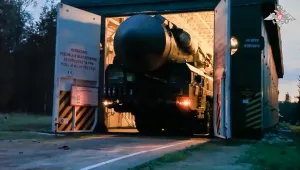
Article
from Perspectives on Politics

Rethinking the Deterrence-Disarmament Dichotomy: The Complex Landscape of Global Nuclear Weapons Preferences

In 2023, the authors conducted the most wide-ranging academic public opinion survey on nuclear weapons to date. They polled 27,250 people across 24 countries on six continents. Their findings challenge decades of practitioner and scholarly assumptions about nuclear politics. Namely, around the world, people back the possession of nuclear arsenals for deterrence purposes and also simultaneously want nuclear arms to be eliminated. They express support for the taboo against nuclear weapon use, yet still approve of nuclear strikes in certain scenarios. This isn’t an idiosyncratic contradiction. It’s the global norm and understanding what drives it matters significantly for policy in an increasingly dangerous nuclear landscape.

READ FULL ARTICLE
Bar Graph

Backers of nuclear deterrence are thought to use strategic logic, while nuclear disarmament advocates are believed to embrace moral reasoning. Yet policy makers and diverse publics may hold both—ostensibly contradictory—preferences. Recent studies find that publics in Western democratic countries support the nuclear strikes underpinning long-standing conceptions of deterrence policy. But other scholarship indicates that these very same publics want to abolish nuclear arsenals. A lack of comparative analyses across the Global North and the Global South limits the generalizability of these claims. Does a categorical dichotomy between nuclear deterrence and disarmament really reflect global public views on the bomb? What explains a multitude of seemingly inconsistent scholarly results? 

In this reflection essay, we argue that deterrence and disarmament are not necessarily incompatible tools for reducing nuclear dangers. We point to several ways that individuals might simultaneously accommodate both pro- and antinuclear weapons policy positions. To investigate this proposition, we offer a new observational dataset on global nuclear attitudes from a survey we conducted in 24 countries on six continents (N = 27,250). Unlike isolated studies of these phenomena, our data strongly confirm that publics do not subscribe to categorical views of nuclear weapons. This headline finding and novel dataset open new possibilities for studying nuclear politics.

Recommended citation

Sukin, Lauren, J. Luis Rodriguez, and Stephen Herzog. “Rethinking the Deterrence-Disarmament Dichotomy: The Complex Landscape of Global Nuclear Weapons Preferences.” Perspectives on Politics, 2026.

Want to read more?

The full text of this publication is available via Perspectives on Politics.

J. Luis Rodriguez
Author

J. Luis Rodriguez