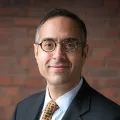
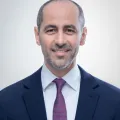
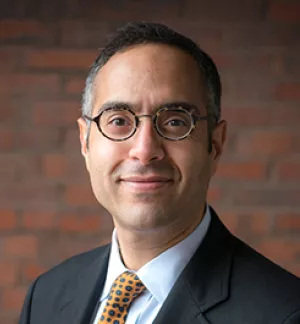
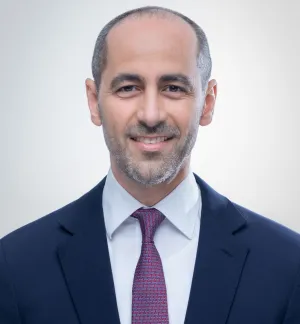
Tarek Masoud:
Welcome, everybody. The countries of the Gulf Cooperation Council have long occupied a central position in our thinking about the political economy of energy. Before the current war, Gulf countries exported approximately 17 million barrels of crude oil and petroleum products every day, which is equivalent to about 15% of global oil consumption and more than 20% of the world's seaborne oil trade, as well as 23% of globally traded liquefied natural gas. If you know me, you know that these are not statistics that I have at my fingertips, but luckily, I was able to ask Claude. Now, most of these exports pass through the Strait of Hormuz, a 20 to 60 mile wide outlet from the Arabian Gulf to the Indian Ocean, that the Islamic Republic of Iran has proven willing and able to close, or at least disrupt significantly. And in addition to disrupting the traffic of oil through the strait, Iran has also proven quite willing to target oil infrastructure in the Gulf countries directly, with repeated drone and missile strikes against refineries and production facilities across the GCC.
Few countries have experienced these dangers more directly than the state of Kuwait. With proven oil reserves of about 6% of the world's total, and accounting for roughly 3% of global exports of oil and petroleum products, Kuwait's security is synonymous with global energy security. And since the outbreak of the war, Kuwait's security has suffered significantly. It has been the target of repeated missile and drone attacks. At least two Kuwaiti soldiers were killed and dozens more wounded, and there have been dozens of documented attacks on non-military infrastructure, and particularly oil and energy infrastructure. It's therefore obvious that we should be listening closely to the Kuwaiti perspective on these events and on the future of global energy security.
And the importance of the Kuwaiti perspective actually extends far beyond just its centrality as an oil producer or its unfortunate position now as a target of Iranian aggression. Kuwait is a remarkably forward-thinking country. In 1953, Kuwait started the world's first sovereign wealth fund. We hear a lot about the PIF in Saudi Arabia, or the various Emirati sovereign wealth funds. They're just playing from a hymn book that was written by Kuwait. Kuwait really has taken the lead in thinking about how to convert limited oil revenues into enduring national wealth. So this history of long-term national economic planning together with Kuwait's considerable exposure to the present conflict makes Kuwaiti thinking and outlook especially valuable to us as we consider both the immediate challenges of energy security and the longer-term future of global energy markets. And so it is a great pleasure that we have with us the one person on the globe who is positioned to talk about all of this, Shaikh Nawaf Saud Al-Sabah, the Chief Executive Officer of the Kuwait Petroleum Corporation, who will talk about energy security in a changing geopolitical landscape.
Now, since 2022, Shaikh Nawaf has served as Deputy Chairman and Chief Executive Officer of the Kuwait Petroleum Corporation, overseeing the country's oil and gas operations, from exploration and production to refining and international sales. And this role is the culmination of more than 25 years at the Kuwait Petroleum Corporation, during which he gained experience in virtually every part of the oil business. Before taking his current job, he headed KPC's overseas investments; he led the company's international oil and gas exploration, where he doubled production; he served as KPC's chief lawyer; he headed its Washington office; and before doing all of that, he practiced corporate law in Los Angeles. I thought it might be entertainment law, but probably not. Okay.
Now, he's a graduate, unfortunately, of Princeton University, but luckily he redeemed himself and earned a degree from Harvard Law School. The only thing that he has not yet done is do a degree at the Harvard Kennedy School, but maybe we'll give him an honorary degree at the end of this. But that definitely makes this visit something of a homecoming, and we are really thrilled that he, His Excellency, was able to give us some of his time, and very much looking forward to his perspective on these events. So, with that, please join me in welcoming Shaikh Nawaf Al-Sabah.
Nawaf Al-Sabah:
Thank you. Thank you, Professor Masoud.
Is it on? I think I flipped the switch on. It's green, can you hear me? You can hear me? That's good? Yes, yes, perfect.
Thank you very much. It's great to have a homecoming. While I was not privileged enough to have gone to, or gotten a degree from the Kennedy School, I was privileged enough to have taken one class while I was at law school, have taken one class here, and it was National Security Decision Making with Robert Blackwill. An absolute great class, and I loved it. There was just one thing that, in that class, it was in, in, I don't remember the room, it was a relatively large room, there's easily 50 students in the class.
And the very first day, we were talking about policy, and what does policy mean? And how do you define a policy? So, people were - mostly Kennedy School students - were tossing out ideas. And I said something towards the end, and I said, “yes, it's- it is a set of things that are designed to reach whatever it is as an outcome.” And he said, he looked at me, he said, “you're the one.” And I said, “what do you mean?” And he said, “I knew I had one law student in this class.” And it was always the- it's always going to be the guy who actually can play with the words correctly to, you know, to come up with, you know, with the definition. So it actually, it was, it was a lot of fun. I enjoyed- I enjoyed my time, at the Kennedy School. I actually wish I'd taken more classes here.
The two topics I'd like to discuss, however, you know, briefly, hopefully, so that can allow as much time for questions and discussion, and please, disagreement, if you have it. First of all, as Professor Masoud said, what we're doing, what we're facing in Kuwait, how we're responding to the current crisis. But then, to move beyond that short-term vision to a longer-term vision of, where's energy moving? We started off on a quest before this war started, to undergo an energy transition. Well, what's happened to the energy transition? Where is it now, and is it still valid, and how do we progress further? And that's the second part of the lecture, if you'll allow me.
So, since I'm here, I have to start off with a quotation from the Kennedy School. So, I'm starting off with Ash Carter, rest his soul. And this will tell you almost everything that I have to say today, and that is that "the freedom of navigation is critical to the world's commerce, and therefore to keeping the world peaceful, and prosperous.” So, it's freedom of navigation. This entire discussion right now that we're having today is over that very point. It is- and the lawyer in me can quote you, I think it's Article 44 of the UN Convention on the Law of the Sea that talks about the sanctity of transit passage through international strait. And the Iranians will argue on the flip side of that, that, well, they never signed UNCLOS. So, therefore, they're not bound by it, but someone in his first 10 minutes in law school can tell you that there are certain things that rise to the level of customary international law, and this is one of them, that regardless of whether you signed a treaty or not, you are bound by customary international law, which includes transit passage. And I'll close off with a point on that at the end.
So, as Professor Masoud said, yes, we faced tremendous attacks, from Iran and its proxies, to be certain. The proxies primarily have come from what is called, Hashd al-Sha’bi, the, popular… mobilization - mobilization, thank you very much - in southern Iraq. They are straightforward Iran proxies. They attacked various infrastructure, pieces of infrastructure, in Kuwait, critical infrastructure, other than army bases and military infrastructure. The civilian infrastructure included the top left, the passenger terminal at Kuwait Air- at Kuwait Airport, where, unfortunately, there was loss of life among passengers trying to fly in and out of Kuwait that day. And the middle section is the Public Institute for Social Security, that's the Social Security building in Kuwait that was attacked. How that becomes a military target nobody can figure out, other than, it riled up all of the retirees in Kuwait against Iran. But, the resilience that you have in Kuwait. That was attacked at midnight on a night. The Social Security Administration came out on Twitter about maybe an hour or two afterwards, and said, we'll be open at 7 a.m. for everybody working out of our remote locations.
The one on the right is our building, KPC. It's actually one floor below my office. We took two cruise missiles into- into that building. And, same thing. We were attacked, at midnight. We were operating fully at 7 AM out of our alternative location, so we have plans to deal with this type of aggression. None of those plans anticipated the severity and the longevity of this crisis. So, we then started getting attacked on our shipping. And this is not the first time Kuwait has suffered attacks on its shipping from Iran. Back in the 1980s, when the Iran-Iraq War was raging, Iran specifically targeted Kuwaiti shipping going up and down the Gulf. And in response, we re-flagged our vessels under international flags so that they can be escorted up and down the Gulf. People mostly remember that they carried American flags, and that's probably more than half the fleet, was re-flagged with American flags, but people quickly forget that it wasn't just an American flag. It was, at the time, Soviet - the 1980s - British, French, Italian, Dutch, and other flags. It was an international effort. It was an effort where the world community responded to attacks against just this one small country up in the Gulf, and it reversed the effect of Iran's aggression against us at that time.
So aggression then continued. And this was from a different perspective, this was Iraq in 1990. What we're facing right now is the biggest test that we've had since the Iraqi aggression. Iraqi aggression, of course, destroyed all of our infrastructure, military and civilian. And again, same point I'm going to come back to: it was an international response that reversed that aggression. Again, led by the United States, but also with the contribution, actual contribution of military personnel from over 30 countries. I'm trying to remember whether it was 32 or 37. I should know this, but I should know this because on Saturday, we are inaugurating the Gulf Wa- or it's now the Desert Storm Memorial on the National Mall in Washington, D.C. So that is a memorial that's principally sponsored by the state of Kuwait, but contribution from all around the United States to honor the sacrifices of everybody who contributed to the liberation of Kuwait. So this is something that we faced. Not the first time we've faced adversity, and not the first time we've recovered from this adversity.
As Professor Masoud said, he's got all his numbers correct, as usual. And, I just round, usually to the round up or down, but you can see from, from this, everybody will tell you and this is sort of a statement from over the past 8, 9 months, almost, that 20% of the world's hydrocarbons come through the Strait of Hormuz. Yes, okay, absolutely true. But, also 20%, 19%, if you will, 20% of the world's LNG comes through the Strait. Now, you can build pipelines to cater for crude oil that goes through the Strait. Right now, the Saudis have the east-west pipeline. I think it moves around maybe 7 million barrels a day, into the Red Sea; it faces its own challenges now in the Red Sea. The Emiratis have the Habshan to Fujairah pipeline. That moves just under 2 million barrels a day of crude around the strait; again, facing attack by Iran. It has been attacked multiple times. But you cannot build a pipeline to transport LNG. LNG can only be transported by ship.
Moving on: fertilizer. Somewhere between a quarter to a third - it's closer to about a third - of the world's fertilizer moves through the Strait of Hormuz. You cannot build a pipeline for fertilizer. It's got to move by ship. The point of all of this is, however much you try to design a policy to lessen the importance, the strategic importance, of the Strait of Hormuz, you cannot eliminate the strategic importance of the Strait of Hormuz for safe passage. Because all of these other products cannot move unless they move through that Strait. So I think it is important, as you design your policies, to understand this central focus, that there is no substitute whatsoever to free navigation through the Strait of Hormuz.
So how did we respond when we were first attacked? And we sit way up at the top of the Gulf with no natural port outside the Arabian Gulf, so we have to rely completely on shipping, and when that stopped, our production, we took our production down gradually and safely from somewhere around 2.7 million barrels of oil a day in production, to the nadir there is basically what we needed only for domestic consumption and limited sales, and we actually made a brisk business during that period of sales within the Gulf. So we were actually selling product - mostly diesel, jet fuel, fuel oil, gasoline - to our partners inside the Gulf, whose refineries shut down or were attacked and had to shut down. At some point, we were- we sold a number of cargoes of gasoline to our brothers in Saudi Arabia; talk about selling ice to the Eskimos. It is- but it is exactly how we envisioned the Gulf Cooperation Council to work, that we cooperate with each other: we had product that they needed, and we traded for that. So, there was some- there were some sales within the Gulf, but really nothing that was being exported outside the Gulf.
So when we started working with the U.S. Navy to move our tankers through the Strait, late May into June, we quickly ramped up our production. Now, our constraint is not being able to go back to where we were before this war started, in terms of production, is due to one reason and one reason alone, and that is the inability to get enough commercial ships to enter the Gulf, sail up into Kuwait, to collect product. So, we have been able to ramp up our crude oil production, almost to the point- our crude oil sales, let me be precise, to almost the point where we were before the war, all of our customer- crude oil customers were- are now receiving their allotments and their requests on crude. It is on product that we're not able - excuse me - we're not able to continue at the pace that we were before this war started, and that is simply because there's, there are not enough product carriers in the market that can come in. And two, that insurance rates have gone sky high, where it is not feasible, not economic. And three, owners of commercial vessels are not letting their tankers come into the Gulf because they get hit.
What we're doing is we've used our strategic tanker fleet that we've developed over the number of years, simply to do shuttling services, outside the Gulf. So, we are- where we used to- excuse me- we used to use our tankers to take our product from Kuwait all the way to, as far as China and Japan and Korea. We have to pull them all back, use them just to shuttle crude and product outside the Gulf into the Arabian Sea and Gulf of Oman, do what's called ship-to-ship transfer onto commercial vessels that will then move on to customers around the world. And our tankers will come right back in. And, do this all over again. Which, which makes them susceptible to Iranian attacks every single time they come through the Gulf. And we have been hit, and we've been hit numerous times, but our commitment to the international community, our commitment to everyone around the world, including our customers, is that we will take those risks, and we are now asking our partners around the world to help bear that, and shoulder those risks with us.
So we were able to come back relatively quickly. Quickly. But the problem is, not on crude, because there are pipelines, as I said, through Saudi Arabia and Oman, and we're able to shuttle out crude because we just have a lot of crude carriers, more so than we have product carriers, in terms of ships. You have somewhere around 4.5 to 5 million barrels of refining capacity that is bottled up inside the Gulf. And principally, it's in Kuwait. We have the largest ratio of refining capacity to crude oil production, almost anywhere in the world. Because we made the investments to build refineries in Kuwait, with refining capacity at 1.4 million barrels a day, that goes all the way up, that'll go up to 1.6 soon, but compare that to our production of about 2.7, it is just over a half of our production, we don't even sell as crude oil, we refine internally in Kuwait and then sell as product.
So, when we're not able to export 1.4 million barrels a day of product. What happens to the product market? Of the 1.4, I can tell you right now, we're only refining about 800,000. We have 600,000 barrels a day of refining capacity that is shut in because there are just simply not enough ships that are calling on ports in the Arabian Gulf, to pick up that product. What results then is what you see on the right there. Crack spreads going through the roof. “Crack spreads” meaning the profit that a refinery will make off of sales of, of product, where it used to be a few dollars, if you get anywhere near $10 of refining margin, that is- that's a boom time for, for a refinery. What you're seeing right now, and numbers have gone eye-wateringly high, close to $100, in some cases. And that is because, principally, because Kuwait is not in the market.
That is the- that is the strength of the system in Kuwait, that by having mostly Kuwait out of the market, you're seeing this huge dislocation in the product market, and you're seeing it here in the United States in diesel prices and jet fuel prices. Most of you don't actually buy diesel or jet fuel, but you buy everything that results out of it, including airline tickets and food at the grocery store, all of which relies on those fuels. That is a huge dislocation, and it's something that needs to be addressed and needs to be understood by the international community, because we're asking the world to help with the freedom of navigation through, through the Strait.
Why is this important? And it's not because, you know, you can say it's oil, and it's all about transportation, and we're gonna go to EVs, and it's gonna be the end of the story. Life sciences, I'm just- I just chose one of many uses for hydrocarbons, but life sciences, almost everything that a surgeon touches in an operating room has some connection to petroleum products. Those are now more and more missing from the international market. By the way, before I even move on to this, I mentioned fertilizer and how much fertilizer comes to the Gulf. I never knew anything about crop yields until this year, until this year. But, when a third of the fertilizer in the world goes missing at the beginning of the planting season, before the summer came about. And now we're in the, in the season where we're reaping what we've sown in the, in the months before, you're now seeing crop yields suffer. And the result, again, is food prices increasing. Not so much in the United States, because you are relatively, obviously the country's wealth and strength shield you to a certain extent, but think of the Global South. Of places in Africa, South Asia, where a lot of the food is hand-to-mouth, and that becomes unavailable because the prices become so expensive, and the supply is much less. That becomes, and again, another world problem.
So what have we done in KPC in Kuwait to shield ourselves, at least, from that? And I talked about resilience. I use two words usually with cases like this. It is resilient, and defiant. We're a defiant sort, and we're a resilient sort. We have not, as I said- we don't have access to ports outside the Gulf, but we're gonna build those, and we're gonna build pipelines working with our friends in Saudi Arabia and the Emirates, to build pipelines that give us access. But in the meantime, what we've done is have a strategic tanker fleet that will take the risks going through the strait, as we continue to do so, build out our refineries outside the Gulf. We have 3 major refineries in Vietnam, Oman, and Italy, that combined can take 630,000 barrels a day of Kuwaiti crude. We'll build out storage with all of those and move that out. We've built strategic storage in East Asia; we'll build out even more. We're talking to the Europeans about building, and storing more products, like jet fuel and diesel.
We also rely on our international operations that Professor Masoud mentioned that I had the privilege of leading for a certain period of time. That's actually where - during the depths of this crisis - where KPC was making all its money, through our operations outside Kuwait. And those of you who have been through Europe, especially in Italy, will recognize our stations there under the Kuwait brand. You'll see them in the Benelux region, you'll see them in a number of other European countries. Those were strategically important to us through this period.
And then as we look into how we unlock the future, we get to a realization that we're going to have to do things differently than we did in the past. As I said, pipelines we're going to have to build out more of, more strategic storage, and then we do deals differently, and how we finance these deals will happen quite differently. We're now talking to infrastructure funds. And, we have recently concluded a $16 billion pipeline lease and leaseback deal; that was really beautiful innovation in the region. First of its kind, using insurance capital for the first time in this industry, to unlock capital, and then- and also have that deal happen in July of this summer, when Iran was again lobbing missiles and drones at us on a daily basis, that we had 3 major infrastructure companies, specifically Brookfield, Blackstone, and KKR, come invest about $8 million- $8 billion of cash to form a $16 billion joint venture in Kuwait, at a time when all of this was happening, it was a huge vote of confidence in Kuwait and in KPC that we can deliver on our plans.
So that's the oil side. Let's talk about what happens in the future then. We talked about energy transition. It's not energy transition anymore - it's energy augmentation. And there's a quotation here from Pulitzer Prize-winning author, Dan Yergin, talking about transition: you can't transition a $100 trillion world economy in the span of anyone's lifetime. And that is what people are trying to do, and we're saying this takes more time, but we can get there. So, here's the first realization: world energy demand will increase between now and 2050 by about 50% from where it is now. So, oil now accounts for something around a third of energy demand. All the other ones are, gas renewables, coal, much dirtier than oil. But we think, and all estimates are that that will increase by 50%. A lot of that will be picked up by renewables by other sources of energy. But you still have somewhere about a quarter of that larger pie that is still oil.
And then the question becomes, okay, well, whose oil is it going to be? We're all using more oil, even; we're all using more energy, let me be precise. We're using more energy on a daily basis as humans, as we live, and as the population continues to grow. You see the graph on the right shows you that energy demand increases faster than population growth, and that's because we're more wired, and this is really before you factor in all the AI numbers where energy demand will continue to soar even much faster than that. And then it becomes a question, can you even meet that energy demand?
So, I push - I'm at a major university, and I do this every single time I am at a university - and say, you've got to work together. And fortunately, it's usually in universities where there's a huge backlash against the fossil fuel industry, oil especially, a lot, strangely enough, more against oil than against coal. But- and there are two types of arguments that people use. One is, stop any production, and any investment in existing fields right now. That's the extreme case. And if you do that, natural declines in fields every year, you need to continue to invest in production to maintain that production capacity. The natural decline in that field will put you on that black curve as you fall down. The top line there shows you where how much energy you need, how much oil is going to be needed, to fulfill that quarter wedge of the pie that I showed on the slide before. So, you're still around 100 million barrels a day of demand over the next couple of decades. If you stop investing in oil fields right now, it'll be a precipitous drop in supply. And you have a- you open up a yawning gap of, of energy deficit, and that's where people die.
So then, perhaps a second argument then is, “okay, well, continue to invest in existing fields, but don't invest in any new fields.” So, where the first one was the extreme case of extreme, sort of, environmentalist groups. The second one was actually adopted by a number of European banks that refuse to lend to new oil fields, a new discovery of oil fields. And that strikes me as quite odd, because you only end up at the red curve. You're still dropping precipitously, because world decline rates for production of existing fields are somewhere around 3%, 3-5%. None of us, thankfully, is a math major, but we can all figure out that 3% to 5% of 100 million barrels a day is somewhere around 3 to 5 million barrels. And I already told you that Kuwait was producing 2.7, our production capacity is actually 3 million. So you actually need to replace or bring on a new Kuwait every single year, just to stay where you are, in terms of oil supply. This is before you talk about increasing supply, it is just to stay where you are. And if you say that I'm gonna stop investing in new fields, then you're robbing the world of that additional supply. So therefore, you also have a gap in energy.
So what are we doing about it in Kuwait? We are committed to decarbonizing our barrel. We start off from pole position. So, this shows you a slide- this slide shows you the carbon emissions associated with every barrel of oil production from around the world. We start off on the way left side, which means we produce somewhere around 5 kilograms of CO2 per barrel of oil produced. It's the lowest in the world. And we share that position with a couple of other countries in the Gulf region. Moving quickly out of the Gulf, you see numbers move up to the mid-teens, and that's where - mid-teens to 20s - and that's where a lot of international oil companies are. I was on stage right after my friend Mike Wirth from the CEO of Chevron who spoke very proudly, and he was absolutely right to- had every right to do so, about how he's reduced CO2 emissions in his shale production in the United States from somewhere, you know, north of 20 kilograms to somewhere in the 15 to, you know, 17 kilogram range. And I came on stage right after he was done, and I said, that's all great. I'm a third of where he is right now, and I haven't even started. And that's- it just means that the world will continue to rely, and it would have to rely on Gulf barrels, because they are not only the lowest in cost, but also the lowest in carbon intensity.
So how are we going to then further decarbonize that barrel? We're doing it through a 2050 net-zero strategy that has three main pillars. It's beyond the scope of this discussion to get too involved in those, but let me summarize it in this way. I'll come back to this slide in a second. It is this. This is how we intend to reach our target, and we'll spend about $110 billion to do so. 50%, almost, 47% to be precise, under our estimates, of the CO2 that we have to remove- this is basically- let me start off a different way. If we do nothing, at 2050, we'll be producing somewhere around 58 metric tons of CO2, a million tons of CO2. For us to reach our climate goals, we have to reduce that down to zero. Half of- basically half of that will be reduced by CCUS. CCUS being Carbon Capture, Utilization, and Storage Techniques.
Now, the world's figured out how to do carbon capture and storage without the U. Texas, you do that. Various other places around the world, you do that, and that works. Problem is, you need to inject that carbon into usually a depleted reservoir to store that carbon away forever. We've been producing oil in Kuwait since 1938, when it was first discovered, and exporting it since after the World- after the Second World War. It's a good problem to have: we don't have a single reservoir that is depleted in Kuwait. So, we don't actually have a depleted reservoir. We don't have underground caverns in which we can store, CO2. So CCS is not feasible for us in Kuwait. We would actually like to use that carbon to stimulate further production of oil. So we would inject the carbon to maintain reservoir pressure. Normally, we inject gas. Gas is a very dear commodity now. We would rather use that gas for other purposes. So, injecting CO2 makes more sense. The miscibility of the gas increases the production. It is a much more efficient production method.
The problem is that CO2 is going to come right back up with the oil production, and need to be separated again. And CO2 has a corrosive effect on metallurgy, on the steel that we have built. I see a lot of people nodding their heads, hopefully they understand this much better than I do. But suffice it to say that we've built, and everybody around the world has built, facilities for billions of dollars, not designed to cater for this much CO2. So once you have all the CO2 coming through, a facility that was designed to work for 15 to 20 years now needs to be replaced after 3 or 5 years. And these are multi-billion dollar facilities, so what we're doing, and I mentioned that I have this discussion on university campuses, is trying to work with research institutions to help us solve for that problem. And you know what, the biggest problem that we have when we talk to people, especially at universities, about this, is, for the most part, universities say, “we don't want to touch this.” Because it has something to do with oil production. And therefore, it- it is- if there's anything, even if you decarbonize. And we don't have a prob- and if you look at the last COP coming out of- actually, the previous one- coming out of the United Arab Emirates, it was targeting not CO2 emissions: it was targeting oil production. Now, if I can tell you that we can decarbonize the barrel and you get CO2 out of the system, why are you still attacking the oil barrel? And I think that's one of the biggest problems that we have in this discussion, because we seem to be, talking about shipping and getting hit, but we seem to be two ships sailing in the night, again, past each other, and not having a good discussion about this.
So, CCUS, once we solve for that problem, and we have a way to do this, that will take away half of our carbon emissions. The rest you can see up there, straightforward stuff. It is feasible, doable, and that will then move us to, essentially, where we are now. It is, that we will continue to optimize our hydrocarbon endowment. We will make it available to people and customers around the world. We will take the risks that we are now taking to supply the world with the energy that it needs to survive and then to grow. So I'd like to then finally close, since I am a recovering lawyer with one of the fathers of international law. It's a straight- you can read the quotation, but the most important thing is it reaffirms that the sea is common to all. That it is not- it can never be owned, and a strait can never be owned, by any one party or group of parties. It is international law. It is also national security for almost every country around the world. And with that, I'm happy to hear any disagreements that you have, or questions, or comments that you do.
Tarek Masoud:
This is great. Thank you.
Alright, so, we have about 40 minutes for questions, and I'm gonna sort of abuse my position and ask a couple of questions. The first is, I would love it if you could, Shaikh Nawaf, just tell me, how do you see- you know, you've described in great detail the serious costs to Kuwait, and indeed to the world, of the current war. And obviously, the proximate cause of these costs is the Iranian targeting of oil infrastructure and of civilian targets, as you pointed out. I had not known, for example, that the KPC's offices were targeted. But, that's the proximate cause, but the ultimate cause, of course, is the decision of the American president to wage this war in the first place. What is your perspective, or the Kuwaiti perspective, on the decision - President Trump's decision - to start this conflict?
Nawaf Al-Sabah:
This is a- this is a war that we did not want. This is a war in which we are not participating, but we are suffering the consequences of it. And, we work with our allies around the world, and the response from our allies all over the world, honestly, was to rush to Kuwait to help with our air defenses. And, we're now, looking at, at various methods to help, with, sort of, the egress passages through, through the Strait. But, this is, you know. It's a neighborhood in which we live that has been, unfortunately, subjected to decades of instability.
Tarek Masoud:
You know, there's not a single leader in the Gulf to whom I have spoken who has not articulated some version of what you just said, Shaikh Nawaf: that this is not a war that we wanted. And how do you- and given the centrality of the Gulf, to, you know, not just global energy, but indeed, I would say to some of the foundations of the American economy, how do you explain the disregard in Washington or in the White House for what they must have been hearing from not just the Kuwaitis, but the Saudis and others in the Gulf?
Nawaf Al-Sabah:
I don't know. I think you need to understand, and I've heard quite a number of people talk about the United States, “well, you know, the U.S. being self-sufficient” is the word that was used “in oil, and therefore doesn't need the Gulf like the rest of the world needs the Gulf.” This is not- just this admi- coming out of this administration, but every- but almost every administration before it, for the past 3 or 4 administrations. Especially since the shale boom in the United States. But I remind people that the shale boom made the United States a net exporter of oil, not self-sufficient in oil. Huge difference. The difference here is that the United States was producing, and I'll get the numbers wrong so I won't actually try to say them, but the United States was producing and, mostly from imports, and, and those imports used to come from the Gulf, it used to come from Venezuela, because other places, before political issues in Venezuela. And the refining in the United States is heavily geared- the refining capacity is heavily geared towards a heavier barrel, a relatively more sour barrel, than a shale barrel. A shale barrel is a lighter barrel.
Those of you in the room, and I see a couple of heads nodding, will understand the refining business, that you don't simply put any type of crude into a refinery. A refinery has to be designed for a certain type of crude, and I mentioned the three refineries that we have outside of Kuwait. All three of those are specifically designed to take 100% Kuwaiti crude. You can move- you can process similar types of crude, but you can't process any type of crude through those refineries. So the yields change, the outcomes change. So, I think the realization has to be that you're not actually self-sufficient. You may be a net exporter, but you are still importing barrels to process in the refineries in the United States. So getting that realization then starts to remind people that it is not sort of a Gulf that's over there and has nothing to do with the U.S. consumer. It has everything to do with the U.S. consumer.
Same thing when we talk about, especially, product. You talk about crude, is a different story, because of the quality of the crude, and the specifications of the crude that I just- that I just explained. But when you move to diesel, it's pretty much one type of spec. When you move to jet fuel, Jet A1 is exactly one type of spec internationally, because all the planes use the same- use the same fuel. You can't have different types of fuel for commercial aviation. So you use Jet A1, if we get cut off, as we have, you're seeing that reaction in the world economy. Crude is available in the market right now; product is not. And that is because of- because crude can flow through those pipelines that I mentioned, but product doesn't. So you can have all the crude that you want in the world, but you don't have the refining capacity to process that crude to satisfy the world's demand, then you see this huge dislocation in prices. Crude prices are relatively, you know, stable at $100 a barrel, more or less, but it's the product prices that have gone through the roof. So, once you start understanding that this is a world that is interconnected completely, both economically and strategically, then you start coming to a different realization that it actually does all matter, how we respond to this.
Tarek Masoud:
So, you know, I started this by saying that, you know, you have a degree from the Law School, not one from the Kennedy School. I will say, I have learned more in the, you know, about the oil industry in this session than I've learned in 18 years at this institution. And, you know, I'd always seen the term “crack spread,” had no idea what it meant, and you explained it beautifully. So, Kuwait, as you said, has a lot of refining capacity, so you produce a lot of product. And so you're not able to move a lot of that product, but the profitability now is so high, I'm wondering, what is the impact of this on the Kuwaiti bottom line?
Nawaf Al-Sabah:
There is a huge impact. There still is quite a large impact. Because oil prices- because, principally, we weren't able to move any product really for a few months from when the war began. We're trying to make up for that right now. And it's just, you know, it's not happening fast enough to our liking. But that's why we continue to work with our partners, to try to get more ships in. And by the way, our customers now are responding to this, and we've had some of our customers step up and say, “we now hear you, and while we were at first relying on you to take all the risk, and then just sell us the product outside the Gulf, we're now willing to take our tankers in to the Gulf.” It is of tremendous importance that they are doing that, because it shows that this is a concerted response, and that the Iranians cannot dictate the outcome of it.
Tarek Masoud:
And they're willing to do that, what, because of the U.S. Navy, or what is making them more risk receptive?
Nawaf Al-Sabah
More ships starting to move: there's safety in numbers to a certain extent. The U.S. Navy has been very helpful, but as I said, it's not 100% effective, and they'll be the first to admit. The problem is, if a tanker gets hit, then it's out of commission, for, depending on how serious that hit is, a serious amount of time. And in some cases, it may never come back. And that is- so you don't only lose that ability to export that one shipment, it is every shipment that that tanker was going to do. So, it is a risk. We have- and first and foremost is the risk on the crews- we have our own tankers and our own crews on those tankers. Most nights in Kuwait, I will spend the night with our operations center, watching our tankers go through, talking to our crews, making sure everybody is safe. And I'm happy to report that, as of now, we haven't had any injuries yet, but I know that others from other countries in the Gulf have not only had injuries, but fatalities to their crews, and that has been something that we don't take lightly. So it is- it's a dangerous business, but it's the responsibility that we have, that we shoulder on ourselves, because of where we fall into the international system.
Tarek Masoud:
Okay, so, you know, I have other questions I want to ask, but I do want to provide an opportunity for folks to ask questions, so why don't you raise your- I'm going to ask one more question first, and then I'm going to come to you. I'm just getting you now to prepare and to word your question as sharply and as succinctly as possible. You know, you talked in the second part of your talk about, sort of, the future of global energy, and there were two questions that really came to mind. The first is, you talked a lot about the billions, I think $100 billion that Kuwait is going to invest in decarbonizing its barrel of oil.
Nawaf Al-Sabah:
Yes.
Tarek Masoud:
And this is a question that comes from my abject ignorance here: where does the pressure for that come from? Presumably, Kuwait could just say, “yeah, we're not gonna do any of that, and there's demand for our product, and so we're just gonna keep doing it the way we've always done it.” Where does the pressure for that decarbonization come from? Or is it just from a conviction that some of the projections of climate change and the subsequent catastrophes that would result from that are real, and Kuwait wants to be part of the solution to that problem?
Nawaf Al-Sabah:
The climate crisis is real.
Tarek Masoud:
Yeah.
Nawaf Al-Sabah:
And we are doing our part in ensuring two things: that energy is affordable- Actually, it's three things. It's, it's energy is affordable, and available, and also is clean. So, we will- we are investing that. One, because we firmly have a conviction that we have to do this. This is our part in humanity. Second, honestly, it makes money. Nobody actually- look, you're not- let me be absolutely clear: no one's ever gonna get to climate goals by legislation alone. You can legislate all you want, day and night, if there is not an economic incentive for consumers to act in a certain way, they're just not going to do it. And, let me use a case in point. The Norwegians are some of the most, sophisticated citizens in the world on, climate issues. And Norway, one of the largest oil producers in the world, at the same time has 98, 99% of its electricity generated by renewables. What they did was try to phase out, essentially, the internal combustion engine by heavily subsidizing sales of EVs. So it became cheaper for the consumer to buy an electric vehicle than to buy an internal combustion engine vehicle. So, EV sales skyrocketed faster almost than anywhere else in the world. And then when the- and when it was almost full absor- new car sales in Norway were almost all EVs at that, at one point, the government decided to scale back the subsidies. And here's where every economist decided to take a look and see how does the consumer react. And it would be to sort of no one's- no classical economist's surprise to find out that consumers then started to say, “oh, well, you know, maybe the internal combustion engine isn't so bad after all.” And this is some of the most sophisticated and developed consumers out there. They're gonna follow the economics. So, for us, it's the same point. We- the way we see it, consumers are going to demand an oil barrel that is lower in carbon, and they will either pay a premium for it, or they will pay less for a quote-unquote “dirtier barrel.” So we want to make sure that our barrel remains the most sought-after barrel in the market.
Tarek Masoud:
Okay, let me, let me now turn to questions, and so, I'll take this gentleman over here.
Audience Member #1 (Erik Dalaker)
Thank you so much for coming to speak, very insightful. My name is Erik Dalaker, I'm a senior at the college and a research assistant at MEI. I was wondering if you could speak a bit more about KIA that Professor Masoud talked about in the beginning, particularly where you see its role in the current moment, its role of resilience. There was a bit of amendments, I believe, earlier, a couple weeks ago.
Nawaf Al-Sabah:
Very recently, yeah.
Audience Member #1 (Erik Dalaker)
And where given that it has traditionally had a bit of a different mandate than some of the other funds in the Gulf, where you see this going forward. Thank you.
Nawaf Al-Sabah:
Happy to do so. If you don't mind, should I- I'd rather stand up. Go ahead, yes, I can't see you as well.
Tarek Masoud:
Would you like me to take a couple of questions at a time, or-
Nawaf Al-Sabah:
No, I'll take these, I'll take these, that's fine. I'll try to be brief, so we can get as many questions as we can. The KIA, yes, you're absolutely right. KIA: one of the most sophisticated investors in the, in the international community. Thankfully, I am not privy to how much they have under- assets under- in assets under management, so whatever number I tell you will be absolutely wrong, so I'm only going to use what is reported. So, and you asked the question about what's its role in this crisis. So, using a number that's reported, widely reported, that they have about a trillion dollars that they manage. The budget of the state of Kuwait is about $84 billion. So again, I love simple math because I never took a math class in college. Off a trillion dollars, all you need is for it to get $84 billion a year, you need a return of 8.4%. Now, if you're one of the largest sovereign wealth funds in the world, and you can't figure out how to get 8.4% every year, that's another issue. But they are getting, they are getting really great returns.
And that's assuming that we're not selling any barrels. Which, of course, we are. So, assuming that no barrels of oil are produced and sold- and by the way, under the current, system and the current budget, KPC's oil sales account for something around 91-92% of government revenue. So, if we take that down to zero, the KIA needs to get - and that's an extreme example - they need to get somewhere around, you know, 8.5% or so percent return every year, so that they don't even have to touch the principal just to to satisfy the, you know, the budget demands. If you fully fund the budget, even. So they have a tremendous role to play, and that's why the, the law now was changed in Kuwait very recently, as you, rightly noted, and it allows the KIA to lend, not bring out- not sell down its principle, but lend to the government. Up to a certain percentage, and there are all kinds of limitations, designed to keep it from tapping into the principal to help the government essentially through a period such as this.
So the role that it plays, and this was, you know, this sort of the rainy day fund, that was designed, back in the 1950s. It was used twice to huge effect, the first time in 1990, when we were invaded and occupied and had no other source of income. And the fund, again, provided a loan to the government, and the government paid it back after the liberation. So, it is a fund that's for future generations, and it's designed to stay that way. So, it's a great- it's a great role that they play, in all that. I think I- did I answer everything, or the last- the last part? Will the mandate change? Well, you know, we have this discussion, and thankfully, again, I'm not on their board, and I don't have to- I don't have- I'm not privy to that discussion, but there's always a discussion within Kuwait. If it's the front for future generations, when is that generation, you know, who's the future generation? But it's a fair question. It's sort of, you know, here we're at Harvard, and we've got the Harvard endowment. It's there to provide continued support for the university. That essentially is one of the reasons that the KIA exists, and it's there to provide security for the state going forward. Thank you.
Tarek Masoud:
Well, right over here. Yes. The beard.
Audience Member #2 (Jad Hani)
So, thank you, Shaikh, for the very insightful discussion. This helped me learn a lot about the whole oil process. I'm Jad Hani, I'm from Lebanon. I would like to start by expressing a deep solidarity with the people of Kuwait and the broader GCC. My question is more about the root cause of the issue of security in the Middle East. And I would like to specifically ask, does the Kuwait and the broader GCC countries fear the re-emergence of the Ayatollah regime following the war on Iran? For example, if we wake up to a deal between the U.S. administration and Iran, without- without actually, effectively, pursuing the goals of why the war started: does this bring any feeling of uncertainty to the GCC? And if we also, in the context of the uncertainty that has been re-emerging, if we wake up to the resuming of a full-scale war between the US and the Israeli alliance against the Iranian regime, will there be any efforts by Kuwait and the broader GCC to support this escalation? Thank you.
Nawaf Al-Sabah:
We recognize that we are in this region for the rest of time. We're not going anywhere, neither is anybody else in the region. Things may change in the region, but the countries will not, as countries. So we... we have to be good neighbors. And, Kuwait, GCC, and Iran had excellent relations in the past, there have been periods where there have been, there have been tests of that relationship, but when you look at it right now, the Iranian ambassador in Kuwait is still in Kuwait. There is- We have not cut off diplomatic relations. We think that there's a tremendous room for dialogue, to move into, sort of, the next phase. I know it's not a, you know- it's not much to go on on where we are right now, but it is also a realization that, that relationships must continue in accordance with international law, mutual respect, and recognition of the inviolability of interference in other countries in the region. And that is something that we absolutely believe in.
Tarek Masoud:
When the Emir calls the Iranian ambassador to explain why they hit the headquarters of the Kuwaiti Petroleum Company: what did the Iranians say?
Nawaf Al-Sabah:
The, the foreign ministry, the foreign ministry calls in the, the Iranian ambassador. I am not privy to that discussion, so I don't actually know what they- what the response is. So I, I, I don't know.
Tarek Masoud:
Okay, other questions? Yes, Cal.
Audience Member #3 (Cal Gorvy)
Thank you very much. My question, was you mentioned that during the crisis, you sold refined products to your Saudi brothers, and, I know, I think I'm right in saying you also bought Qatari LNG at the same time. And now you're cooperating with the Emiratis and Saudis on your recent pipeline deal. Do you see that as the beginning of some sort of GCC integrated grid and further cooperation? And if that is the aim, what do you see as the main obstacles in the way of achieving that?
Nawaf Al-Sabah:
You know, there's a lot of integration amongst the GCC, and we have been beneficiaries of that. One of them has been actually a unified GCC grid, electricity grid. And we've had issues on power generation in Kuwait for a couple of summers, where we drew electricity from that unified grid. So it was- that's- that's essentially what one of the things that the GCC is designed to do. It was- it was created to do these types of things. The GCC is now moving, very seriously, to build out a railroad network, that connects all the countries in the GCC, and that will also further integrate along the, throughout the GCC countries. When times become difficult, it is- it's- the GCC finds a way to pull together.
And, you know, I'll go back to 1994, when I was writing my undergraduate thesis, from that university where you- from which you graduated. I was, I was writing about Kuwaiti national security policy, and I interviewed the former Secretary General, the very first Secretary General of the GCC, and he was Secretary General of the GCC during the Iraqi invasion, occupation, and the subsequent liberation of Kuwait, Ambassador Abdullah Bishara. And I remember his- I remember the quotation that I used in my thesis, from him. Very clear, he said: “Look. The GCC worked better than it was, that we ever thought it would. You know, there’re always discussions, disputes, as you would have in any family, but when there's an outside pressure coming onto the GCC, we find a way to pull together and cooperate.”
Tarek Masoud:
Charley. Yeah, go ahead, please. We have a microphone here? Right here in front.
Audience Member #4 (Charles Landow)
Thank you. Charley Landow from the Belfer Center team here, I want to thank you for being here, and commend Professor Masoud and our MEI colleagues for continuing this great series of dialogues. You mentioned some of the measures that KPC and Kuwait have taken in the current situation where the Strait of Hormuz does not have the reliable passage that it once did, and understanding Kuwait has taken some impressive steps that have enabled you to continue exporting to a certain degree. Is there a broader conversation going on about the question of whether it's not just the Strait of Hormuz that is vulnerable now, but all infrastructure: pipelines, other things which may be a good patch at the moment, but may not last themselves forever, and how does that strike you? What kind of conversation is going on at the moment about, you know, just the broader world of vulnerability that we may be living in well beyond Hormuz?
Nawaf Al-Sabah:
We're- I think everybody recognizes that vulnerability has increased. All the way up and down the value chain. And one of them is- I mentioned- and what we're doing about it is, for example, I mentioned how we're going to do pipelines, but we're also going to do increased storage, both in Kuwait and outside Kuwait. We're going to build out a tanker fleet that can come in and out of the Gulf with more reliability than a commercial fleet does, in normal circumstances. And we're looking at all the various options that we can, that we can build into that. Now, storage outside the Gulf makes a lot of sense to a certain- in certain cases, but it's a non-replenishing storage if interdiction of traffic continues. So, you can use it for a certain time, it's a buffer, and the world has used that buffer over the past few months, but that buffer is basically gone now. And there's not much- and you're, you're seeing now, the world react to say, Strategic Petroleum Reserve in the United States is, is down to- approaching, not yet, but approaching, critical stock, dead stock levels, essentially. You're seeing the Europeans now, put out, diesel, into the market, out of their strategic storage. Again, every barrel that you remove out of storage and into the market, is one less barrel that you have as a buffer for the future.
So, what we're doing about all of that is looking at how we're gonna build this pipeline, for example, I'm not- we're not gonna do it using our balance sheet. We are now- because I mentioned, and I had a slide up there where I mentioned, the infrastructure project that we did in Kuwait, the first one that we did, it was the $16 billion, JV. Now that we've breached that, that gap that we had in the past, we recognize that these funds are ready to invest. And you know what? We'd like to have these types of funds invest in that pipeline. And that brings in international investment in the, in the Gulf, and brings in international capital that is tied to the security and stability of that system. So, when we plan for the future, we're gonna have to look at all of that, and see how we can create more resiliency in the system. And also create, more international, let's say, buy-in in what happens in the Gulf. So, what we do in the future is going to be quite different from what we are doing right now.
Tarek Masoud:
Okay, questions? The lady in the back, yes.
Audience Member #5
Hi, Shaikh, thank you so much for speaking with us. I have two quick questions. So, the first, you mentioned that crude exports are about the same as they were before the war, but I was wondering if you could say a little bit more specifically, how much of a hit refined product exports have taken out of Kuwait? And then secondly, if you could also talk a little bit more about future plans for non-seaborn routes, in your partnership with Saudi Arabia and the Emirates?
Nawaf Al-Sabah:
Sure. So I mentioned that we're exporting just over a million barrels a day of crude, which is where we were- probably about 100,000 barrels below where we were before the war started, so we're practically where we were before the war started. On the refining side, I mentioned that we are about 600,000 barrels a day below where we were before the war, and that, again, is simply because the exit route is not available. There are no pipelines that transport product, and not enough ships are able to enter. So, I'm not sure that, you know, there's any more that I can say on that, in response to that first point. Remind me, please, your second point was- Yes, partnerships with- we are in the design phase, or the engineering phases, and planning out the pipeline routes. And once we have something concrete, I think, to announce that we'll announce it, but it's something that we're taking very, very seriously with our partners. Thank you.
Tarek Masoud:
So, I'm gonna take one more question, but I'm gonna sneak in another question as well, just because so many of the questions here are really- I mean, they're all excellent, but there's so much about the present situation, and, and I am- was very taken by the entire talk, but the points you make about the future, I think some of them were extremely important, and that graph that you showed about how, oil produc- you know, our, you know, the- if we did not invest in existing fields, we would, you know, the sharp decline in oil supply would be extreme, but even if we invested in the Egyptian- in existing fields, there would still be a sharp decline, and so consequently, we need to invest in exploration, etc. That seems to be premised on a set of assumptions about what's going to happen with renewables. And I guess the question is, what would you say to somebody who says, “well, if we don't do this investment, and we have this high demand, that's just going to incentivize investment and innovation in the renewable sector. And so, by putting our money in existing fields or in exploring new fields, we're actually retarding the potential growth of the renewable sector.” Why would that be wrong?
Nawaf Al-Sabah:
It's wrong because of this, of this graph. Okay. The gray area here, that I was trying to show is every other source of energy. And that's- That's where-
Tarek Masoud:
That's today.
Nawaf Al-Sabah:
That's today. Right. So, moving to the future, and I think we made- let me redesign this, the next time I'll redesign the, this, this, because this has to be a 50% larger pie, than this one. So imagine it being a 50% larger pie. The, the grey area, we've given credit for every renewables project that's out there, that's not only design- not just those that are being implemented right now, or in operation, but even in the design phase, and most of the ones that are at the concept phase. And you put all of those in there, you're still missing... I'd call it a quarter, maybe we're calling it here 29%, let's call it a quarter. You're still missing a quarter of what is demanded in the future in energy, that cannot be met. Now, if something changes, yes, let's have that discussion then. But are you willing to bet humanity on perhaps something changes? And I- and I've used this line before- that type of thinking is like someone jumping out of a plane and trying to invent a parachute on the way down. You can do it, perhaps, chances are you're gonna go splat. And this is not something that is easy, that, you know, the world can take lightly, because of- there we go. This- no. moving back, but it, it, it was the- This, this slide. It's because, If you don't actually have the energy when you need it, you don't have the life that you need.
Tarek Masoud:
I guess I'm just trying to get you to steel man the position of the most ardent critic of this notion that we still need to invest- you know, might that they say that, ”well, you know, I don't expect OPEC-” because those numbers you showed are from OPEC, “you know, I would expect OPEC to have a very, a very stingy set of projections about the growth in renewables.” And, like, in other words, like, what do the most serious critics of your position say when confronted with the argument that you just make? We- because you're saying, “No, I am starting from a very generous assumption about where renewables are going.” And, you know, again, I'm not an expert in this field, so I can't anticipate what they would say, but I'm sure they would say something.
Nawaf Al-Sabah:
Honestly, what they say is, “but we have to.” And there's no other way other than we have to. And I say, great! When you're falling out of that airplane without, without your parachute, yes, you have to invent that parachute, but are you willing to do it at this point?
Tarek Masoud:
Or able to.
So we had a question here in the back, the gentleman with the sunglasses, and I think this will be our last question.
Audience Member #6
Thank you so much, Shaikh Nawaf, for coming, alhamdulillah, salaam, and for sharing the helpful and informative insights. I'm a Master of the Law student at Harvard Law School, and it's maybe a good question to wrap up this session with. I wanted to know more, how did you find the transition from being a lawyer to a business decision maker? Usually, like, we are, as lawyers, are viewed, and maybe sometimes we are, we feel more comfortable to be advisor- advisor and counsel to the business decision maker, but not the decision maker themselves. So, maybe, can you please talk a little bit about the transition, how it was for you? Thank you.
Tarek Masoud:
That's a great question. Can I, can I just get another question as well, and you can- maybe the other question will be about the subject of the talk? Yes. If you just speak up, it'll work.
Nawaf Al-Sabah:
Sorry, you’re-?
Audience Member #7 (Harriwan Mahdi)
Hi, I'm Harriwan Mahdi, I'm a MPA student-
Nawaf Al-Sabah:
Ah, okay. Nice to meet you. Nice to meet you.
Audience Member #7 (Harriwan Mahdi)
You talk about the remarkable Kuwait resilience during these attacks, and the investment you are making to protect the energy infrastructure in Kuwait. But I wonder if there's a limit to what resilience can alone achieve. If countries continue to invest in billions to protect their infrastructure, without addressing the underlying issues: sources of insecurity in the region, whether proxies or Iran itself. Are we actually achieving energy, or simply learning to live with a permanent instability?
Nawaf Al-Sabah:
You're absolutely right. If you don't mind, I'll answer that question first, and then close out with the previous one. You're absolutely right. Whatever you do right now, unless you solve for the problem itself, you’re- you're essentially putting a band-aid. These are very expensive band-aids. The, the infrastructure that we have, is billions of dollars, of, of investment, and it's not easy for us to- for anybody in the world, to keep throwing money at it, when another side is throwing missiles at it. And you have to, you have to solve for the actual problem. That's why I say, you know, to one of the previous questions is, we're gonna be in this region for time immemorial, and we're gonna have to sit down and understand how we have those discussions, there will have to be based on international law. That's how, countries negotiate, that's how countries live. And that's why we have international law. It is to keep us from a Hobbesian notion, moving it to, let's say, Locke and others, where you actually have a rules-based system. You've seen- and since I'm at the Kennedy School, I can actually say this- you've seen, a, a, an alarming erosion of the rule-based international system over the last decade or two. The pinnacle of the rule-based international system was actually the Iraqi invasion and occupation of Kuwait, the response to that, because that's the only time the United Nations worked like it was supposed to do, to work. And it was an international response that worked to do that. So you're absolutely right. We can solve for- we can mitigate against certain problems right now, but we can't solve for them unless we solve the issues that we have.
To the previous question, if you will. I mentioned earlier that I'm a recovering lawyer. It's because, this is just, you know, moving on to the sort of the personal side. When I actually- it depends on why you went to law school and why you studied law. I studied law because I wanted to learn to think like a lawyer and never wanted to practice law. And instead, I realized that the only way I can really learn to think like a lawyer was actually to practice law for a certain period of time, and I did that at an international law firm in Los Angeles, not doing entertainment law. Unfortunately, yeah, exactly. But, when I moved back to Kuwait, and I interviewed at, at KPC with the then-CEO, at the end of the interview, I said, look, do you really think I should- that you see me as a lawyer for the rest of my career? Because I actually went, as Professor Masoud said, you know, as an undergrad at Princeton, my major there was public and international affairs. I was always thinking that I was going to go into national security policy, diplomacy, never really into legal field or transactional law, especially. So, please tell me if you think I'm going to be a lawyer for the rest of my career, I won't come. I won't come, I won't accept a job offer. And his response was, “if you told me that you were going to be a lawyer for the rest of your career, I actually wouldn't hire you.” Instead, as it turned out, I ended up 15 years in the legal department, ultimately becoming general counsel before I ultimately moved out. But it made- it informed my thinking and the way I looked and tackled problems. And why did I want to actually learn to think like a lawyer? It was because I wanted to be able, like an engineer, to find a problem, break it down into its constituent parts, and then solve for those problems. Now, an engineer does it using math and using brain power. Lawyers do it, hopefully with some brainpower, but also with a lot of words. And, that's where I was hoping to add to my country's development. So, with that, thank you very much. Thank you, Your Excellency.
Tarek Masoud:
You know, we started this session by noting the rather dire costs that the state of Kuwait has suffered, economic but also human- the human toll that this war has taken. And, we obviously express our total solidarity with the people of Kuwait. And I have to say that after this talk, I think everybody here will agree with me that with leaders with the degree of insight and vision and brilliance that you demonstrated here, I'd rather think that Kuwait will be okay. So everybody, please join me again in thanking Shaikh Nawaf Saud Al-Sabah.