Backgrounder




Findings from Senior Practitioner Interviews1
Executive Summary
The practices of statecraft will be drastically altered by increasingly capable artificial intelligence (AI) systems, but the shape of potential future AI developments is poorly understood. Across the private and public sectors, AI systems are increasingly supporting analytic and decision-making tasks.2 Diplomatic negotiation — a pillar of the practice of statecraft — faces several challenges that slow adoption, from restrictive information environments to low risk tolerance and a vast range of consequential outcomes for citizens and non-citizens alike. But what can AI systems currently do that could impact the world of diplomatic negotiations? What could they do in the future? What should they do? This working paper draws on an initial round of interviews with former cabinet-level officials to begin answering some of these questions.
Building on our prior conceptual foundations, this paper examines where practitioners think AI may be best suited to enter the workflows and processes that underpin diplomatic negotiations.3 Interviewees saw the clearest initial opportunities in research and analysis, while emphasizing the importance of human judgment and relationships. This paper highlights the need for more interdisciplinary investment and focused study, not just of AI for government, but diplomatic contexts specifically. The development of AI systems should consider the nuances of diplomatic contexts and, conversely, ensure that diplomatic teams are equipped to effectively adopt domain-specific tools as they emerge.
Introduction
AI has made its way into government, from supporting the provision of services to augmenting intelligence operations.4 Foreign ministries have undertaken nascent efforts to use this new technology and are grappling with how to integrate AI in ways that make their teams more effective. The challenge is how to do so without undercutting the uniquely human aspects or compromising the often classified and idiosyncratic information ecosystem in which they operate. This working paper presents evidence from a first phase of interviews with experienced, high-level practitioners, highlighting how they themselves reflect upon their practice in diplomatic scenarios and the role AI could play in future negotiations.
This working paper relies on interviews with ten former cabinet-level practitioners, who discussed their experiences with diplomatic negotiations, covering topics ranging from domestic political issues to complex deals with adversarial nations. In doing so, these interviews provide real-world insights needed to guide technical progress in AI in diplomacy.
Across these interviews, there is clear demand for some form of AI augmentation in diplomacy, provided that it is targeted and suits the needs of practitioners and their teams. This interest is driven by a desire to ensure that their teams are as competitive and effective as possible, as well as a fear, voiced by interviewees, that failure to adopt new AI tools will put teams at a disadvantage when compared to counterparts who use AI.
Methodology
This working paper features a preliminary series of ten interviews with former cabinet-level officials5 from the United States and Europe, conducted over the 2025-26 academic year. Each conversation focused on their approach to diplomatic negotiations, with the goal of understanding how AI could augment their work. This paper builds upon an existing conceptual framework that introduces a task-based architecture and maps the landscape of diplomatic tasks in order to articulate areas where AI systems can support human teams, and where human judgment should remain decisive.6
Our conversations revealed common themes, where practitioners tended to agree about the opportunities and risks presented by AI tools, as well as areas where no clear consensus emerged.
Every practitioner acknowledged that AI will be a part of the diplomat’s job, albeit with differing levels of enthusiasm for that prospect. Most agreed that AI could help supplement their team’s capacity, especially in the early part of the negotiation, such as setting up the process, researching, and producing meaningful insights and analysis. Similarly, every interviewee highlighted the importance of “the human element” in negotiations: personal and interpersonal interactions that AI cannot replace. These aspects, each practitioner told us, can change the course of negotiation, but they are hard to articulate, measure, or predict. This makes them a poor fit for AI augmentation, at least at the current level of model capability.
Beyond the uniquely human component of negotiations, interviewees highlighted that there is often psychological resistance to overcome when considering where AI can supplement their negotiations. The sensitive nature of the topics and the risk to personal reputation inherent in leading controversial and high-stakes encounters create a reasonable aversion to introducing tools during the negotiation that record conversations in the room or rely on detailed transcriptions, which many AI tools do.
While the demand for AI augmentation across diplomatic negotiations was clear and consistent, the interviews revealed a need for a more robust and interdisciplinary approach that designs the right products, integrates meaningfully into workflows and invests in relevant change management regimes in order to actually make AI useful and adoptable in diplomatic contexts. Doing this well requires more than just knowledge of IT systems or the latest AI models; it demands a genuine understanding of the constraints and resources of ministries and high-level negotiation processes.
Opportunities for AI augmentation
These interviews helped inform the program’s whitepaper, which posited a taxonomy of analytic tasks to classify work done by diplomatic teams.7 This conceptual approach drew on computer science, international relations theory, and the lessons from practice to decompose complex processes into discrete, but often overlapping, tasks under the following six families: setup, research, analysis, strategy, execution, and monitoring.
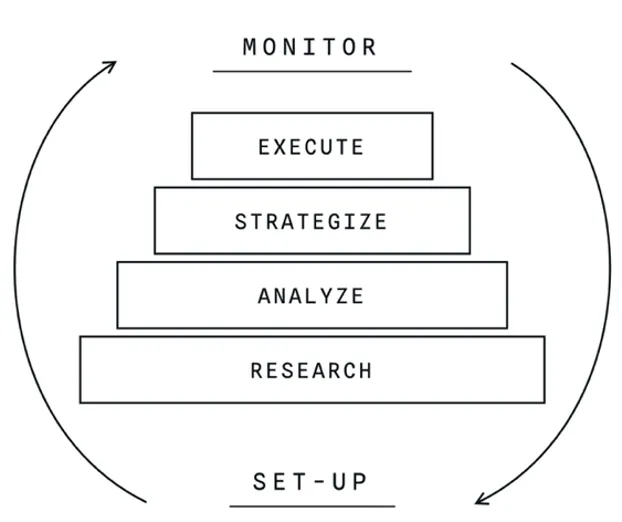
While opportunities for AI augmentation exist across the entire life cycle of a diplomatic negotiation, the research and analysis task families have, among the interviewees, the broadest initial support and the clearest model for how AI could be useful.
Below we explore opportunities for AI integration into the six families of the Computational Statecraft task taxonomy.
Setup
As parties prepare for negotiations, they must turn an ambiguous situation into a common understanding that can be reasoned about by a range of team members. Mapping the structure of the negotiation, working out measures of success, detailing the key internal and external parties, and building first estimates of alternatives to agreement are all crucial elements of setting up a negotiation.
Every interview highlighted the importance of establishing structure. At the outset, teams also need to work out their mandate, the rules of the forum, and the measures of success. Several interviewees described this process as having to “figure out what the actual boundaries are”, as well as the conditions under which an operation would come to an end. There is often a wide range of internal and external counterparts who need to be aligned. One interviewee noted the multi-layered nature of negotiations, explaining how they had to “negotiate inside the U.S. government… with the U.S. Congress… with allies…, with the negotiating teams…, and with [the main counterpart], both bilaterally and multilaterally. So it’s not just one negotiation, it’s multiple negotiations to get to the conclusion.”
Many discussants framed identifying initial counterpart positions as a key issue. One participant described the start of a complex multi-party negotiation by highlighting how “the first meeting… turned into five different breakout meetings. After that, State wanted to talk with me… The coordinating body wanted a one-on-one meeting. The officials wanted a one-on-one meeting. So it became about gathering information on priorities and what each party’s priority was and then bringing that information together to the table.” Interviewees also stressed the highly ambiguous nature of existing relationships, with one noting: “any [AI] model is going to have to be flexible enough to recognize… reluctant allies, adversaries… and third parties who fall somewhere in-between.”
AI tools could add value here by mapping large volumes of procedural information into an overview of the institutional process. Practitioners described two kinds of setting where this would be most useful: highly structured, institutionalized negotiations, such as those in the United Nations or European institutions, and time-bound negotiations with a specific goal, such as conflict mediations with a fixed deadline and desired output.
Research
Research tasks retrieve and assemble wide ranges of evidence. They may collect, validate, and structure data or documents about a given issue, synthesizing materials for principals and colleagues. Most practitioners agreed that research is an area with clear and compelling opportunities for AI augmentation. A wide range of tasks in this family often surfaced in our interviews, including common analyst responsibilities like providing counterpart biographies or learning about the history and mechanisms of a specific domain.
Biographical briefings on counterparts were raised numerous times as an area for potential AI augmentation. These briefings currently draw from summaries of multiple historical sources, like speeches and public statements, as well as sources of internal and external intelligence. Participants posited that AI systems could be used to increase the depth and breadth of these briefings, potentially by finding information from “past negotiations on similar topics” or “more biographical material written about them”.
With the centrality of interpersonal relationships, these briefings provide insights about a person that could give the negotiating team an advantage. One expert articulated how essential this element was in a past negotiation: “It was so much psychology... It would have been better to have a degree in... psychology than international relations to do what I was trying to do—to get inside his head and understand his perspective, his vanity, his needs, his vulnerabilities... I got to know him. How do you build trust that is deep enough to give someone confidence that you are helping them be a better leader?”
This kind of background information is often important to ensuring a successful negotiation, but it takes significant analyst bandwidth to compile and is not always a top priority. This presents an opportunity for AI to add value by freeing analyst capacity that can be dedicated to other tasks. Current language-based AI systems can also help find relevant information and summarize large corpora of text-based information. Such briefing support could provide major benefits to senior practitioners.
A consistent attribute of the negotiation processes shared across interviews was that the sheer volume of materials generated in the form of notes and other meeting collateral led to an inability of teams to keep up or adequately leverage it all. We heard from one expert, “AI can save tons of time and introduce a decision maker to pieces of information he is unaware of. [It can] buy him more time to consider information in order to make the right conclusion... If I need speaking points in one hour, and AI does the primary job of sourcing raw material instead of me in 30 seconds, it means I will have 59 minutes 30 more seconds to analyze it, to see, to improve it, and to make the conclusions. If I spend 50 minutes on research, I will have only 10 minutes left for drawing conclusions and analysis.”
Several practitioners highlighted that continuity of knowledge across a long negotiation was a common problem due to turnover within negotiating teams. They posited that AI tools could help to train new teammates and provide a stable source of insights and onboarding for teams.
The value of AI augmentation at the research stage appeared especially clear for resource-constrained negotiations, such as a one-time under-resourced conflict mediation or in cases of legislative or institutional negotiation with just a few staffers. Despite the common tasks of diplomats, differences in available resources create different needs for AI support depending on the negotiation, delegation, or country. As one interviewee noted, “we all—all diplomats—do the same job everywhere... it’s the size of the service and the resources available that makes it different.”
The value proposition for AI integration was less intuitively understood and the need less pronounced for those practitioners representing high-stakes global deals between countries where negotiating teams were well-staffed and operated with the direct support and mandate of departments and ministries back home.
Analysis
Analysis tasks convert an evidence base of research into tractable assessments; these may include descriptions and diagnoses of situations, or predictions and projections about the future. In negotiations, this includes inferring positions from actions or words, or estimating the consequences of different arrangements. Analysis tasks help a team understand the situation they are in, as well as where they may end up.
One use case was using AI to find patterns in data or language. Parties produce and consume large amounts of data, particularly in longstanding diplomatic negotiations. AI systems can support a wide range of analyses –– economic, political, social, military –– in a short period of time. As one practitioner put it, there is lots of “information that never gets analyzed, and that which gets analyzed always gets analyzed in a particular point of view by analysts. They do an amazing job… but there are 90 different ways to cut the cookie. And if they only do five of them, the other 85 are not. And that’s what AI could do.”
When it is time for a principal or their team to synthesize ideas and develop proposals or compromises, AI tools can help teams enumerate and evaluate potential future scenarios. This includes developing potential future situations and analyzing what each delegation “gets” from each. This is especially helpful for mediators, who occupy an important role in coordinating activities, aggregating positions, and managing communications. It is worth distinguishing between negotiators, who defend their interests, and mediators, who try to find common ground. One interviewee said that it would have been helpful to have a tool that could identify different positions across the negotiation and synthesize them, noting “I would have been very helped by trying to establish what’s the common ground between.”
Crucially, while practitioners saw value in having AI support their teams in this kind of analysis, they were careful to clarify that AI support should be supplemental and not a replacement for talented analysts. In fact, AI may be helpful in identifying where additional human support is needed. One interviewee stated it clearly, “No, I wouldn't call [AI] another voice in the room... it would help you know which voices who are not in the room you should be talking to, to learn what it is that you need to know.” In this framing, AI supercharges a team’s analysis; it does not take it over.
Strategy
Where analysis maps the space of possible agreements, strategies detail the sequence of actions that chart a path to a chosen outcome. This includes deciding which arrangements to pursue, what to offer, and in what order. Draft agreements are usually large and detailed, undergoing multiple rounds of negotiations, and there is room to have AI support teams in identifying the “theoretical optimum” through multiple rounds of revisions.
The process of aggregating party positions from drafts, identifying optimal arrangements, and mapping distributions of concessions is a highly difficult part of a diplomatic negotiation, and practitioners agreed that a tool to aid in this process would be useful. As stated by one interviewee, “...the theoretical optimum would be the stuff you put in there to get people to agree, across the issues that were most important to them... the relationship between that optimum and what we were able to do is something I'd be super interested in thinking more about, but I don't know what that relationship is, and that's where you hope that potentially the technologies of the future would have something to say.” Depending on the goals given to an AI tool, it could optimize across parties and positions, or help the team identify its own optimum before entering the room with counterparts.
The same tool could then be used to look at proposed compromises and compare them to the original position mapping, analyzing which parties would be satisfied more than others. This would help to decide which compromise to table, and in what order. This was described by one practitioner in the following terms: “... a draft text is negotiated with Y and all the various players in Y and then that draft text is brought... and then the question is how do you reconcile? And that's the most important moment in negotiation is when those texts get merged.”
However, it is important to note that, while practitioners expressed openness to integrating such a tool and understood why it would be valuable, most also expressed skepticism that such a tool exists, or that it would work as promised if it did.
Execution
When a strategy has been set and it is time to execute by translating strategy into proposals, tracking counteroffers, and deciding what to put forth at any given point in time, this phase is ripe with opportunities for micro-adjustments to the negotiation teams’ way of working that, in aggregate, could lead to significant gain in efficiency. This could include using AI for real time translation, in context where, “...it's very, very hard to have a fruitful dialogue when you're stopping every sentence for someone to translate. There's no flow, there's no personable connection with anyone.”
Execution support could also include tracking specific language across positions and proposals in real-time in the room. One interviewee captured this when they said, “I know something that AI does frequently is a note-taking function. If there had been some way to transcribe all of the progress and then also work that into a document that people can make live edits on, that would have been useful.”
In the stage of execution, much of the work consists of many small, repeated, manual tasks where well-integrated AI could support the team and expand their overall bandwidth.
Monitoring
Only a few practitioners organically brought up the work that happens after a negotiation is finalized, when the outcomes are tracked and monitored for adherence to the agreed terms. However, when it did come up, there were clear places where digital monitoring tools were already adding value. For example, as one practitioner explained of a past negotiation: “...I received a daily dashboard of our numbers... so I could see immediately if things were working and we would see if they stepped up cooperation as we had requested... there were ways to measure concretely whether the agreement we secured was working. And if it wasn't working... we'd have to show them the data and we'd have to come up with a new idea.”
As a general note, the Execution and Monitoring task families came up less often in practitioner interviews about their current workflows and potential for integrating AI. This presents an opportunity for further focused study, as these areas of a negotiation are where the actual success or failure of good strategy can either disintegrate or solidify. Furthermore, given that they appear to be less in the focus of the core diplomatic negotiation team, some high-value tasks may simply not be getting done or are being treated as an afterthought in current workflows. This presents an opportunity for AI to expand the pool of tasks being completed, rather than competing with existing team bandwidth for tasks already covered by human analysts.
More focused research into the needs of these task families, novel model training and evaluation, and bespoke product development to support these phases of the diplomatic negotiation process is worthwhile and should be a follow up to this work.
Perceived limits of current AI support
In addition to areas where diplomatic negotiators appear ready to absorb AI with relative openness, we encountered common themes where the same practitioners agreed that some aspects of the job simply cannot be done—or even helped—by the introduction of AI. These fell into a few main categories.
Tasks where trust or psychology present barriers to real adoption
A recurrent theme in our conversations was a sense that, even if a diplomatic negotiation team was told that AI “could” do a given task, they simply don’t trust it to. An example of this was wanting to know exactly what sources a research tool drew from, and the ability to uncover its reasoning before relying on it. Many practitioners proactively brought up concern about “hallucinations”, where AI models present entirely fabricated facts as truth. In these negotiation environments, where so much of the success of a team rides on credibility, relying on a tool that you can’t question in the same way that you can question your analyst team exposes you to significant reputational risk.
Another theme that emerged was the fact that secrecy is often important in a negotiation context. Adding tools that record or surveil a process — a necessary precondition to many real-time AI solutions functioning well — was a source of unease. As one interviewee told us, “... [finding a] technical solution was easier than making people overcome psychological barrier to being recorded or surveilled...” This is especially true in contexts that demand the use of classified information, which is both held to a higher standard of security, and siloed across multiple data stores, making it difficult to access and risky to introduce any automated or recording-based tools.
Problems where enhanced R&D could close the gap someday, but AI is not there yet
As AI improves, some of the trust problems described above may be resolved. Others will require focused development and research, aimed at solving the specific problems of these practitioners, to support them well.
For example, when it came to the idea of replacing technical experts who are staffed directly to the negotiating team, it was clear that participants did not believe that AI would be able to provide the same value. Many viewed the role of AI as helping get non-experts up to a very low level of familiarity and believed it could be useful in that way if they were assured that the model was using reliable sources and avoided hallucinations that could mislead the team. However, even in that case, having a member of the team present and staffed to the team, who could proactively draw from their educational background or decades of experience, allowed those teammates to proactively identify novel areas of inquiry or potential risks. One example that arose was the way in which a subject matter expert, like an experienced scientist with niche domain expertise, might be able to support a deeply technical negotiation in such a way that no non-expert could replicate by pulling from even the strongest and most reliable AI models.
This is an example of something that is true for the current state of AI models today but may not capture the future potential for how AI models can augment diplomatic negotiations with proper training and focused R&D. Arguably, the gap between human expert and AI assistant is one that could be overcome. A future AI agent in the room could be proactively supportive as the domain expert in the room with a negotiating team, if built to do so and with the right safeguards in place.
The question would then become whether negotiating teams actually want this kind of AI expert support. From the interviews, there is great comfort and camaraderie derived from proceeding in a negotiation as part of a team, with the ability to draw on your peers to talk through an issue and invite sanity checks around the compromises being considered. Even if AI model capability caught up to expert levels and was able to provide similar proactive support to these teams, these kinds of tasks may continue to face the kinds of psychological barriers discussed in the previous section.
Irreducibly human problems that practitioners could not imagine being replicated with AI
Finally, there emerged a clear aspect to negotiations where practitioners remained unconvinced that AI could ever close the gap, to either meaningfully augment or replace the human negotiation team. “The human element” came up in almost every interview, a combination of instincts and behaviors that are the heart of diplomatic practice and the core of how negotiators in these contexts frame the value that they personally bring to complex and high-stakes environments. Interviewees emphasized the importance of human intangibles such as forming bonds through shared traits, reading and responding to the subtle emotional shifts of the room that require instinct and intuition, and establishing interpersonal fondness and comfort with counterparts. These appear both in the relational dynamics among the negotiating parties and in how the team incorporates influences from “outside the room” or “away from the table”.
The most recurrent theme from this category was the importance of relationship building to the success of diplomatic negotiations. As counterparts form respect and eventually fondness for one another, the nature of the negotiation begins to change, and outcomes begin to emerge that were not possible before. Interviewees highlighted that identifying and leaning into shared attributes with their counterparts was an important precursor to bonding and establishing trust. Some examples they shared were bonding over having gone to the same institutions or swapping tales of being new grandparents. Often, this is enough to defuse tense moments in a negotiation and bring opponents closer to the same side of an issue, even when their official positions or “best alternatives to a negotiated agreement” (BATNAs) haven’t changed.
Practitioners also identified an important benefit of getting to know one's counterpart, which is the ability to predict how that person’s identity may operate as a driver of their behavior. They articulated that a negotiator needs to be sensitive to the influence of their counterpart’s —and their own—personal identity markers and be able to anticipate the ways in which those markers may shape their emotions and decision-making during the negotiation, informing how parties prioritize and make decisions. As one interviewee said, “But ultimately, at least for a lot of the folks there, I don't really know how to separate those things from the much larger, decades or centuries long project that each one is pursuing, and that is, in many cases, can be wrapped up in how they see their identity.”
Another element of negotiations that emerged as a place where AI would not — in its current forms and formats — be able to assist the negotiating team was incorporating away-from-the-table influences into the negotiation. This included both parallel processes—how other agencies or dialogues needed to act upon the negotiation in the room—and the importance of Track II diplomacy and the social and cultural sway that such activities could have. These influences, which occur out of sight or control of the primary negotiation, shape the reality in which negotiators are operating, and require human judgment and networks to understand what they mean and how they should update or refine strategy.
All of these are examples of how a negotiator relies on instinct to respond to subtle, intangible shifts. Successful negotiations are sensitive and responsive to very small changes in the atmosphere of a room. This can be as simple as understanding when the team in the room is tired or reaching their limits, or as complex as observing how the makeup of the teams is distinguishing the tone and flow of a given round of negotiation from other past ones. One interviewee described the ways in which gender balance in a negotiating room can change the course of the negotiation. It’s unclear if, even given the right information, models would be able to identify and respond effectively to such subtleties.
Discussion: Contradictions and Projections
In some places, even when practitioners raised similar themes, they differed in their assessment of whether or not AI could be useful, or how. One example was the uneven assessment of how public opinion influences a negotiation. Some practitioners described public opinion as a decisive influence while others described it as irrelevant. Knowing which scenario a specific negotiation was operating in was described as a matter of instinct, the negotiator themself would need to know the sensitivity, context, and value of incorporating public opinion signals in the room. This requires the negotiator’s personal instincts and is not well-suited to being done by AI. That makes this a different problem from simply weighing a known input, as it draws from tacit knowledge of the political stakes and personalities involved, all of which is often not discoverable in documentation or data and is therefore not structured in a way that is conducive to AI support.
One limitation of this interview series comes from the seniority of participants, whose experience was largely at the top of large, hierarchical organizations. Their focus was more on the interpersonal execution components, as opposed to the analytic work. Their accounts may therefore underrepresent the needs of analysts and less senior staff. The small sample, drawn from the United States and Europe, also limits the transferability of the findings.
Uneven resource capacity may shape the distribution of benefits from AI augmentation. If the demand for AI augmentation is inversely related to delegation capacity, then smaller teams may have greater incentives to adopt AI, although resource constraints may also limit uptake. This hypothesis warrants further testing and should be considered alongside the international relations literature surrounding the analytic capacity limitations within small states.8
Conclusion
Solving the toughest geopolitical questions warrants the use of our best technological tools. The trajectories of future technological development will always present uncertainty, but practitioners, technologists, and academics must imagine new frontiers grounded in what we do know. New technologies can be decisive as instruments of national power, but they must be shaped by institutions, and their makers given guidance and accountability. For this to work, institutional representatives—including diplomats—must engage meaningfully, taking the latest technologies seriously and updating their way of working.
In return, technologists and academics should invest in a research agenda that is in touch with practitioners’ needs and creates research, evaluations and products that are in line with, and constantly updated by, practitioner input. On an ongoing basis, this research agenda should lead to regular interviews with diplomatic leaders, co-design sessions with analyst teams and the teams that build AI, and standing technical working groups focused on the specific needs and context of statecraft.
Bibliography
Bick, Alexander, Adam Blandin, David J. Deming, and Tyler R. Schumacher. “What Work Does Generative AI Do?” NBER Working Paper no. 35677. National Bureau of Economic Research, 2026.
OECD. Digital Government Outlook 2026: From Foundations to Transformational Impact. Paris: OECD Publishing, 2026.
Panke, Diana. “Dwarfs in International Negotiations: How Small States Make Their Voices Heard.” Cambridge Review of International Affairs 25, no. 3 (2012): 313–28.
Pozniak, Charlie. A Conceptual Framework for AI-Augmented Statecraft. Belfer Center for Science and International Affairs, August 2026.
Recommended citation
Ancheva, Slavina, Charlie Pozniak and Sameera Salari. “Perspectives from Practice: AI in the Future of Diplomatic Negotiations.” November 20, 2026
Footnotes
- Quotations have been lightly edited for legibility.
- Bick, Blandin, Deming & Schumacher, “What Work Does Generative AI Do?” (2026). The share of US workers using AI at work rose from 33% (Aug 2024) to 45% (May 2026). Among US workers, key tasks included: reading documents to gather technical information (61.3%), preparing research reports (60.7%), and analyzing data to identify trends (57.5%).
- https://www.belfercenter.org/research-analysis/conceptual-framework-ai-augmented-statecraft
- OECD, Digital Government Outlook 2026 (2026), ch. 4, “Adopting and Governing AI in Government.” Among OECD countries, 97% use AI but only 36% use AI to inform policymaking.
- In some cases, we also interviewed a member of the official’s supporting team—who worked directly and closely with the official on the diplomatic negotiations being discussed.
- Charlie Pozniak, A Conceptual Framework for AI-Augmented Statecraft (Belfer Center for Science and International Affairs, August 2026).
- As an overview: (i) Setup captures the preliminary work for teams, such as the parties, fora, and rules, and working out their initial interests and preferences. (ii) Researchinvolves assembling the relevant information from disparate sources, validating, structuring, and synthesizing it to be usable. (iii) Analysisconverts descriptive research into diagnosis and prediction, exploring both general and domain-specific dynamics using both quantitative and qualitative methodologies. (iv) Strategy turns evidence into plans of objectives and moves to secure a party’s interests. (v) Execution refers to the mechanics by which a team translates strategy into outcomes amidst counterparts. Finally, (vi) Monitoring keeps track of implementation milestones after an agreement is reached.
- Panke, “Dwarfs in International Negotiations: How Small States Make Their Voices Heard,” Cambridge Review of International Affairs 25, no. 3 (2012): 313–328



Up Next