
Middle Powers
-
Principal Investigator

-
Principal Investigator

About the Middle Powers Project: Intellectual Framework
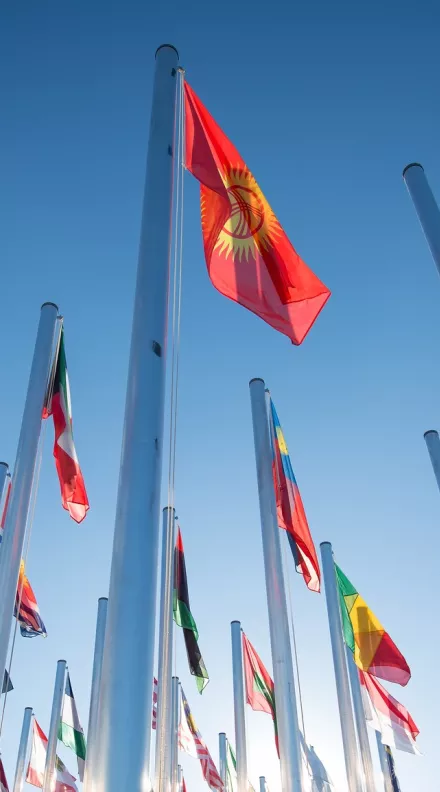
Middle Power countries are carving out a consequential place in an increasingly divided world. Standing amid – and apart from – the Great Powers of the United States and China, these countries are challenging the idea of a unipolar or bipolar international system. Even though Middle Powers are not a coherent bloc and hold widely varying positions on key global issues, they frequently exert influence through fluid coalitions. By leveraging their willingness and ability to work with multiple partners simultaneously, Middle Powers are crafting unique strategies to advance their national interests, to influence global issues, and ultimately to shape today’s evolving international order.
The Middle Powers Project of Harvard’s Belfer Center for Science and International Affairs, in collaboration with the Ash Center for Democratic Governance and Innovation, is rigorously examining these countries—Brazil, Egypt, India, Indonesia, Kazakhstan, Nigeria, Pakistan, Saudi Arabia, Singapore, South Africa, Turkey, United Arab Emirates, and Vietnam—in recognition of their growing importance in today’s shifting international system.
The project combines a historical and theoretical basis with the timeliest scholarly and policy-facing insights, drawing on original research composed by renowned experts on each country.

Case Studies
Middle Powers research spans 13 countries, covering security, energy, technology, and other topics central to a changing world amid great power competition.
Please see published case studies here!






Brazil
Brazil, with a mighty geography and population, seeks to pursue its global ambitions amid an uneven economic trajectory, only modest influence in its region, a massive trade relationship with China, and a mixed view of U.S. leadership.
Case Study Author: Oliver Stuenkel, Associate Professor at the School of International Relations at Fundação Getulio Vargas and Belfer Center Visiting Scholar
Egypt
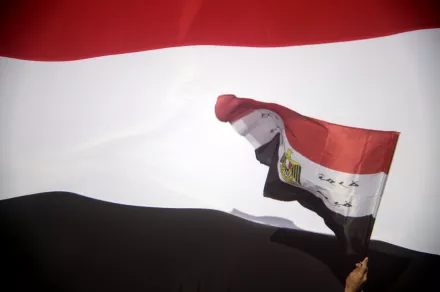
A geographic hub and longstanding center of influence in the Middle East and North Africa, Egypt seeks to intensify its ties with China while maintaining its core U.S. security partnership in a volatile region.
Case Study Author: Karim Haggag, Professor of Practice at the School of Global Affairs and Public Policy at the American University in Cairo
India
India has the population, potential, and ambitions of a great power and a history of distance from the United States but also significant tension with China; its policy choices stand to be among the most consequential factors in shaping the international order.
Case Study Author: C. Raja Mohan, Non-Resident Distinguished Fellow at the Asia Society Policy Institute and Visiting Research Professor at the Institute of South Asian Studies of the National University of Singapore
Indonesia
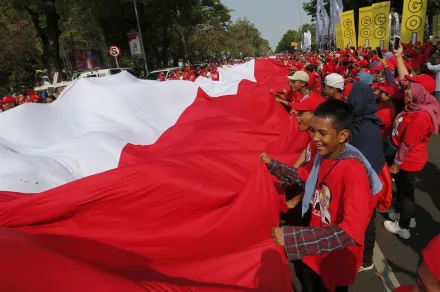
A large, populous, and richly endowed pillar of Southeast Asia, Indonesia faces high stakes in an intense U.S.-China competition over technology, natural resources, and the geopolitical future of the Asia-Pacific region.
Case Study Authors: Muhamad Chatib Basri, Former Minister of Finance of Indonesia and former Chairman of the Indonesian Investment Coordinating Board, and Evan Laksmana, Senior Fellow for Southeast Asia Military Modernization at the International Institute for Strategic Studies
Kazakhstan
Kazakhstan, the largest economy and most ambitious geopolitical actor in Central Asia, pursues a multi-vector foreign policy that aims to balance historical ties with Russia, the gravitational pull of China, and the attraction of the United States.
Case Study Author: Nargis Kassenova, Senior Fellow and Director of the Program on Central Asia at the Davis Center for Russian and Eurasian Studies at Harvard University
Nigeria
Nigeria, rich in natural resources and projected to become the world's third-most-populous country, aspires to cement its position as a leading actor in Africa, across the Global South, and beyond.
Case Study Author: John Kayode Fayemi, Visiting Professor at the African Leadership Centre at King’s College London and former Governor of Ekiti State and Nigerian Minister of Mines and Steel Development
Pakistan
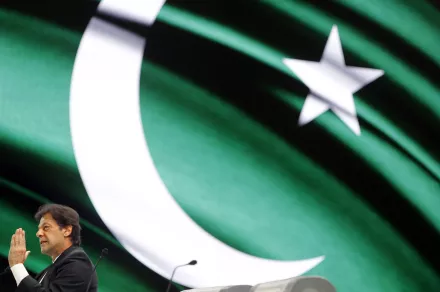
Pakistan, a nuclear power with a history of close partnership with both the United States and China, combines geographic and strategic importance with persistent economic uncertainty.
Case Study Author: Moeed Yusuf, Vice Chancellor of Beaconhouse National University and Belfer Center Senior Fellow
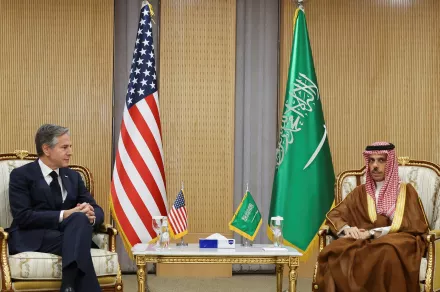
Saudi Arabia
Saudi Arabia, one of the world's leading oil producers and a longtime U.S. security partner in the Middle East, seeks to diversify its economy as it navigates the complex geopolitics of its region and the world.
Case Study Author: Bernard Haykel, Professor of Near Eastern Studies at Princeton University
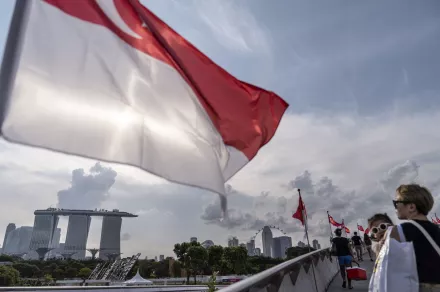
Singapore
Singapore, a prosperous and open economy sitting astride vital sea lanes, has long experience balancing relations with the United States and China and occupies a central position amid today's geopolitical shifts.
Case Study Author: Joseph Liow, Dean of the College of Humanities, Arts, and Social Sciences and Tan Kah Kee Chair in Comparative and International Politics at Nanyang Technological University
South Africa
A top economy and democratic pillar of its continent, South Africa seeks to capitalize on trade opportunities with both China and the West as it pursues influence in African peace and security and in global forums.
Case Study Author: Anthoni van Nieuwkerk, Professor in International and Diplomacy Studies at the Thabo Mbeki African School of Public and International Affairs of the University of South Africa
Turkey
Turkey occupies a vital geopolitical position at the crossroads of Europe, Asia, and the Middle East--and as a NATO member that nonetheless seeks autonomy from its Western allies.
Case Study Author: Senem Aydin-Düzgit, Professor of International Relations at the Faculty of Arts and Social Sciences at Sabanci University and Pierre Keller Visiting Professor of Public Policy at Harvard Kennedy School
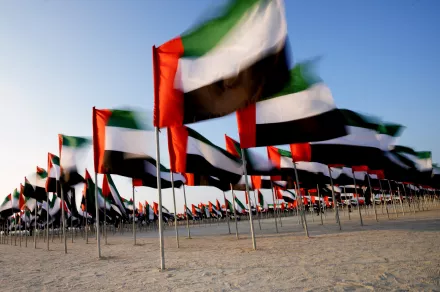
United Arab Emirates
The UAE is a geographically small but ambitious country whose wealth and strategic position have propelled it to influence in regional and international security, technology, and more.
Case Study Author: Ebtesam Alketbi, President and Founder of the Emirates Policy Center
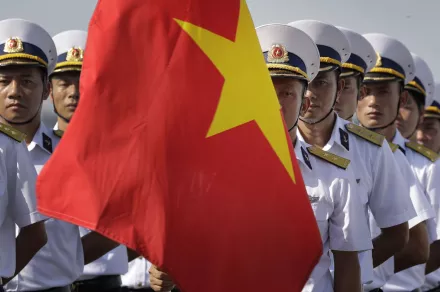
Vietnam
Vietnam, a fast-growing economy at the heart of Southeast Asia, is pursuing its ambitions for prosperity and geopolitical stature against a complex history with both the United States and China.
Case Study Authors: Vu Thanh Tu Anh, Dean of the Fulbright School of Public Policy and Management at Fulbright University Vietnam, and Huynh Trung Dung, Lead Faculty for Public Policy at the YSEALI Academy of Fulbright University Vietnam